What if your work wardrobe could spark joy, express your personality, and command respect—all while staying perfectly professional?
13 Crazy Business Casual Outfits You Need To See Today
Redefine professional style with these groundbreaking 2025 workwear combinations that balance innovation with office appropriateness
Business casual outfits have undergone a radical transformation in 2025. The line between professional and personal style has blurred, creating exciting opportunities for self-expression while maintaining workplace appropriateness. Research shows that 51% of women now wear business casual clothing such as blouses, dress pants, or dressy jeans most days, while 30% have shifted to even more casual attire [web:19].
This year, fashion silhouettes embrace a dynamic blend of structure, volume, and nostalgic flair, with structured minimalism leading the trends. IWG’s Workwear Reimagined Report reveals that quiet luxury (18%), office siren (10%), and streamlined staples dominate 2025 workplace fashion, with Gen Z and Millennials leading the transformation [web:18].
If you’re still pairing basic button-downs with traditional chinos, you’re missing out on the most innovative business casual outfits that are redefining professional dressing. From unexpected color combinations to revolutionary fabric pairings, we’ve curated 13 groundbreaking ensembles that will transform your work wardrobe and make you excited to get dressed each morning.
What Exactly Is Business Casual in 2025?
Business casual has evolved from a confusing dress code into a sophisticated style category that balances professionalism with comfort and personal expression. In 2025, business casual represents a “sweet spot of grey where comfort meets professionalism”—it’s approachable but controlled, tailored but comfortable [web:14]. This style allows you to present yourself in a polished, well-groomed manner without the need for a full suit and tie [web:17].
The pandemic accelerated the shift toward casual dress, with a 2023 Gallup poll finding that 41% of Americans wear business casual attire while 31% wear street clothes [web:21]. Suits now appear antiquated and out of place in many workplaces. Data from Visa shows a 5% growth in clothing and accessories spending for 2024, compared to 2.4% in 2023, indicating renewed interest in professional wardrobe updates [web:21].
The definition varies slightly across industries. Creative fields like marketing or design embrace more relaxed interpretations, while traditional sectors like finance maintain more conservative standards [web:15]. The modern business casual wardrobe has expanded to include elements previously considered too casual, including certain types of denim, minimalist sneakers, and knit polos when executed correctly [web:14][web:16].
This evolution reflects broader workplace changes, especially the hybrid work model that splits time between home and office. The 2025 business casual aesthetic prioritizes versatility, with pieces that transition seamlessly from video calls to in-person meetings to after-work social engagements [web:15].
How has your workplace’s dress code evolved since 2020? Share your experience in the comments below—we’d love to hear how business casual looks in your industry!
The Psychology Behind Dressing Well for Work
Your clothing choices impact more than just first impressions. Research consistently shows that what you wear influences your confidence, productivity, and how colleagues perceive your competence. The phenomenon known as “enclothed cognition” demonstrates that wearing professional attire can actually improve focus and performance.
The IWG Workwear Reimagined Report reveals that Gen Z and Millennials are most stressed about what to wear to work, with many adopting unofficial “work uniforms” for in-office days to reduce decision fatigue [web:18]. This strategy combines psychological comfort with practical efficiency.
Dressing intentionally for business casual environments sends signals about your professionalism, attention to detail, and respect for workplace norms. When you feel confident in your outfit, that confidence radiates in meetings, presentations, and daily interactions. The key is finding the balance between expressing your personal style and meeting professional expectations.
Modern business casual outfits allow for this balance better than traditional corporate wear. You can incorporate personality through color choices, interesting textures, and contemporary silhouettes while maintaining the polished appearance that commands respect in professional settings.
The Foundation: Building Blocks of Business Casual Outfits
Before we explore the groundbreaking outfits, let’s establish the essential pieces that form the foundation of a versatile business casual wardrobe. These investment pieces serve as the building blocks for countless combinations.
For Women: Essential Capsule Pieces
The modern woman’s business casual wardrobe should include these core pieces that embrace current trends while maintaining versatility [web:15][web:16]:
- A tailored blazer in a neutral color: This remains your most versatile piece. Choose quality wool or a performance blend with perfect shoulder fit.
- Well-fitted trousers: Include both wide-leg and slim-fit options. High-waisted pants elongate the legs and look sharp tucked with button-downs or silk blouses [web:16].
- A pencil or midi skirt: Midi silk skirts work beautifully for the office—sleek and professional [web:16].
- A basic neutral-colored dress: Choose one that works with and without a blazer for maximum versatility.
- Comfortable yet dressy shoes: Elegant flats continue as a strong trend, offering comfort and classic style [web:13].
- Solid-color dress shirts: The crisp white button-down remains the foundation of business casual [web:16].
- Quality knitwear: Elevated comfort fabrics that allow movement are priorities in 2025 [web:15].
For Men: Essential Capsule Pieces
The essential business casual pieces for men include [web:14]:
- Well-fitted chinos or dress slacks: Choose neutral colors like navy, khaki, gray, and olive for maximum mixing potential.
- An unstructured blazer: More comfortable than traditional tailored options while maintaining professional presence.
- Quality button-up shirts: Oxford button-downs remain classics. Include both long and short-sleeve options.
- A merino wool polo: Bridges casual and formal while offering temperature regulation and odor resistance.
- Smart footwear: Leather loafers, minimalist sneakers, or Chelsea boots that bridge casual and formal.
- Quality sweaters: V-neck and crew neck options in merino wool or cashmere blends.
Investment Strategy
Allocate 40% of your budget to blazers and outerwear, 25% to shoes, 25% to trousers and core pieces, and 10% to basic shirts and accessories. This prioritization ensures quality where it matters most while allowing refresh of frequently worn items.
13 Groundbreaking Business Casual Outfits for 2025
Now for the main event: 13 innovative business casual outfits that push boundaries while maintaining professionalism. These ensembles incorporate current trends, unexpected pairings, and sophisticated styling techniques that will elevate your work wardrobe.
1. The Asymmetrical Power Ensemble
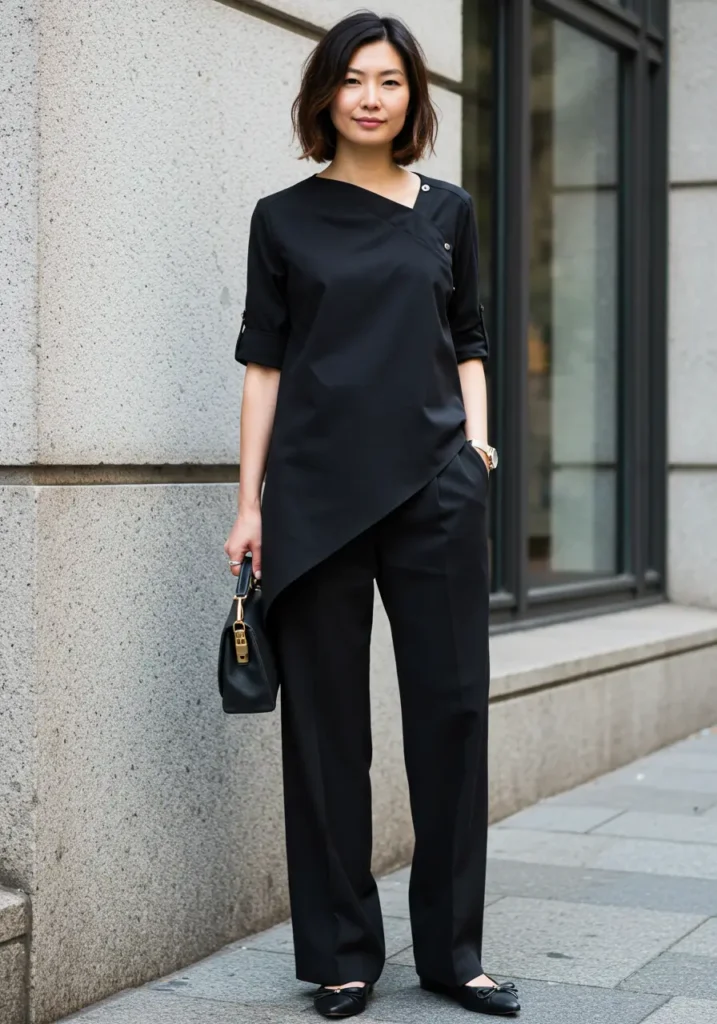
For Women: This show-stopping outfit features a professional yet slightly asymmetrical top paired with wide-leg trousers and elegant flats [web:16]. The asymmetry adds visual interest and modern flair while maintaining a polished appearance through tailored elements and luxe fabrics. Asymmetrical tops from brands like & Other Stories or COS add just the right amount of edge without losing professionalism [web:16].
Why it works: This look proves that business casual outfits can be fashion-forward without sacrificing professionalism. The asymmetry creates a focal point that’s conversation-starting yet appropriate. Wide-leg trousers balance the visual weight and provide comfortable all-day wear.
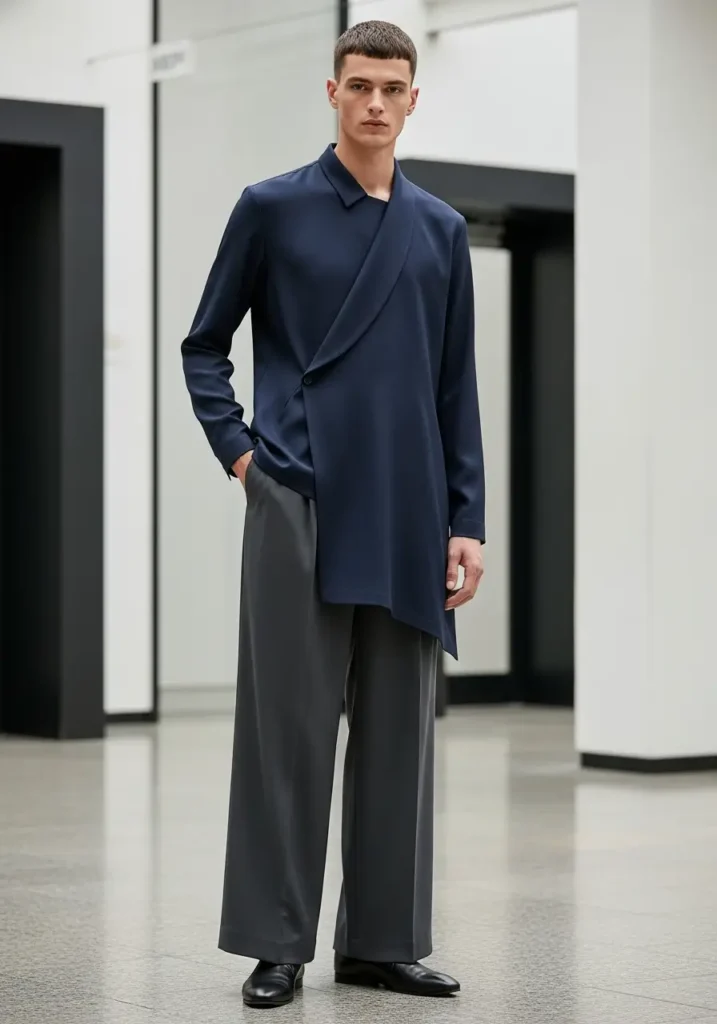
For Men: Men can achieve this asymmetrical aesthetic through layering—an unstructured blazer worn with one sleeve slightly pushed up, paired with tailored trousers and minimalist sneakers. The key is intentional asymmetry that looks styled, not disheveled.
Styling tip: Keep accessories minimal with asymmetrical outfits. The clothing creates enough visual interest without competing elements.
2. Modern Prep School Revival
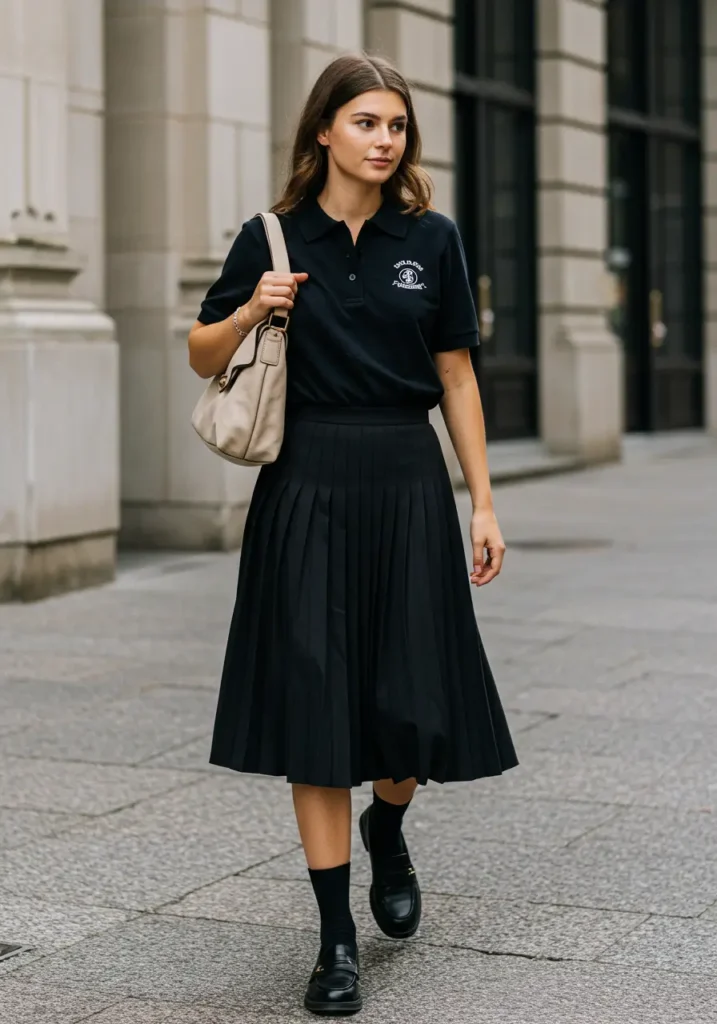
Think pleated skirts, polo shirts with collars, and loafers with socks [web:13]. This nostalgic yet contemporary take on academic style brings structured sophistication to business casual. The 2025 version features updated proportions—slightly fuller pleats, more relaxed polo fits, and sock choices that range from traditional knee-highs to fashion-forward sheer options.
The modern twist: Today’s prep style incorporates unexpected colors and materials. Try a leather pleated skirt instead of traditional wool, or choose a knit polo in a rich jewel tone rather than classic navy. This updates the nostalgic silhouette for contemporary workplaces.
For men: The prep revival works beautifully with chinos, a polo shirt (especially merino wool), and penny loafers. Add a V-neck sweater for cooler weather. The key is impeccable fit and quality fabrics that elevate these classic pieces.
Where to wear it: This outfit shines in creative industries, casual Fridays, or workplaces with younger demographics that appreciate nostalgic references.
3. Elevated Knitwear Pairing
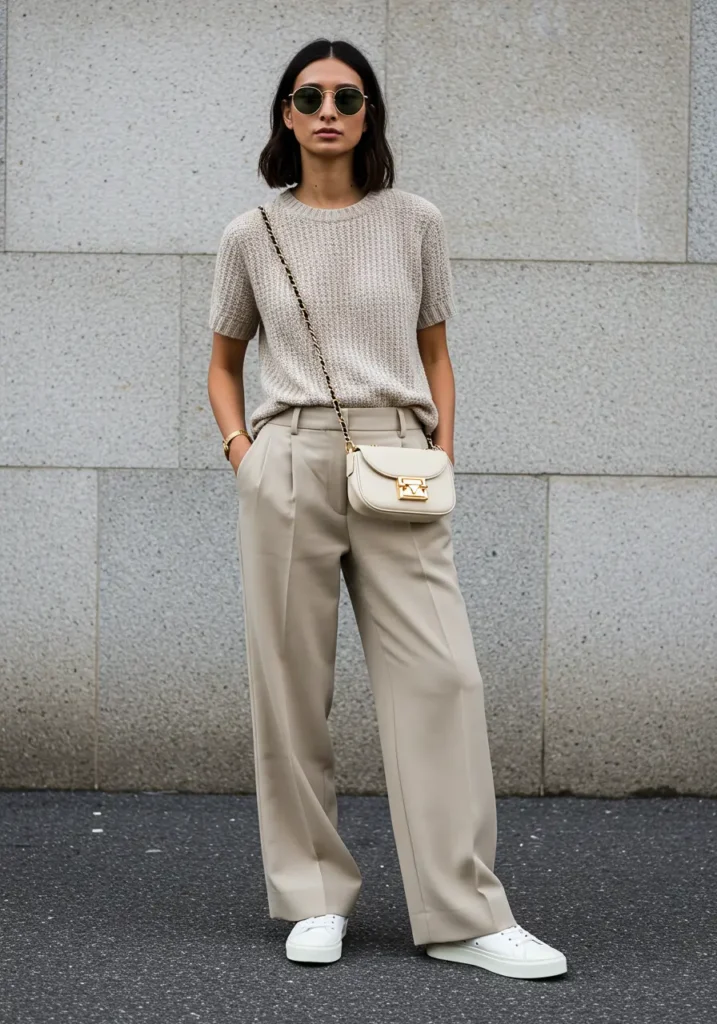
This outfit combines a knitted t-shirt with wide-leg pants and fashion-forward sneakers [web:13]. The magic lies in the juxtaposition of casual knit fabric with tailored trousers and minimalist sneakers that walk the line between athletic and elegant. This ensemble perfects the art of looking put-together while prioritizing comfort.
Fabric matters: Choose structured knits that hold their shape—not thin t-shirt material. Merino wool, cotton-cashmere blends, or performance knits provide the right balance of comfort and polish. The elevated comfort trend dominates 2025, with women prioritizing fabrics that allow movement [web:15].
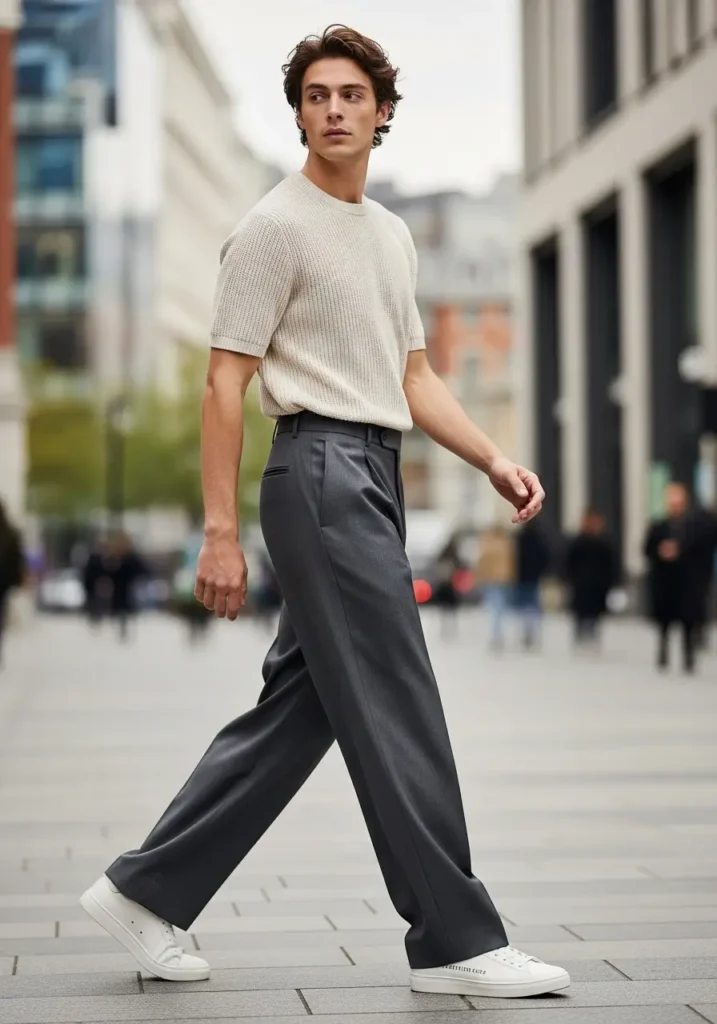
For men: A merino wool t-shirt or knit polo paired with dress slacks and white leather sneakers achieves this balance. The key is choosing sneakers with clean lines and premium materials—leather or suede, not canvas or mesh.
When it works best: Hybrid work days, creative team meetings, casual Fridays, or tech industry environments where comfort and style intersect.
4. The Unexpected Color Block
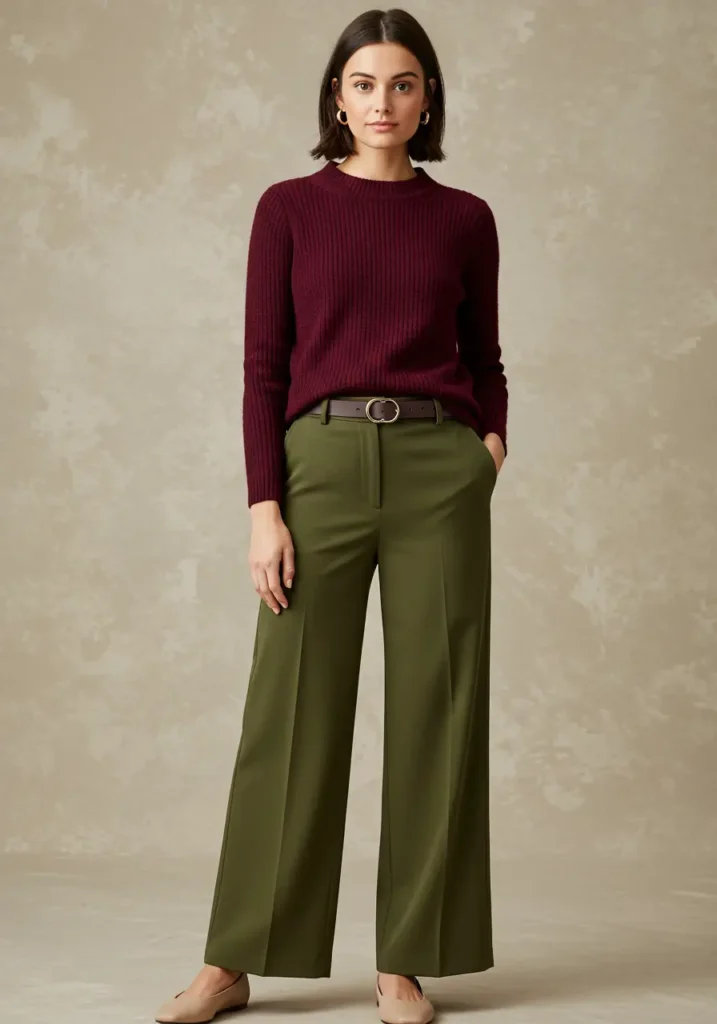
Featuring olive green wide-leg pants with a rich burgundy sweater and neutral flats, this outfit demonstrates how to incorporate 2025’s trending colors effectively [web:13]. The earth tone palette feels both sophisticated and current, while the strong color combination makes a statement without overwhelming in professional settings.
Color psychology: Green and burgundy together create visual harmony through complementary warm tones. This pairing feels intentional and styled rather than random. The neutral shoe grounds the look and prevents color overload.
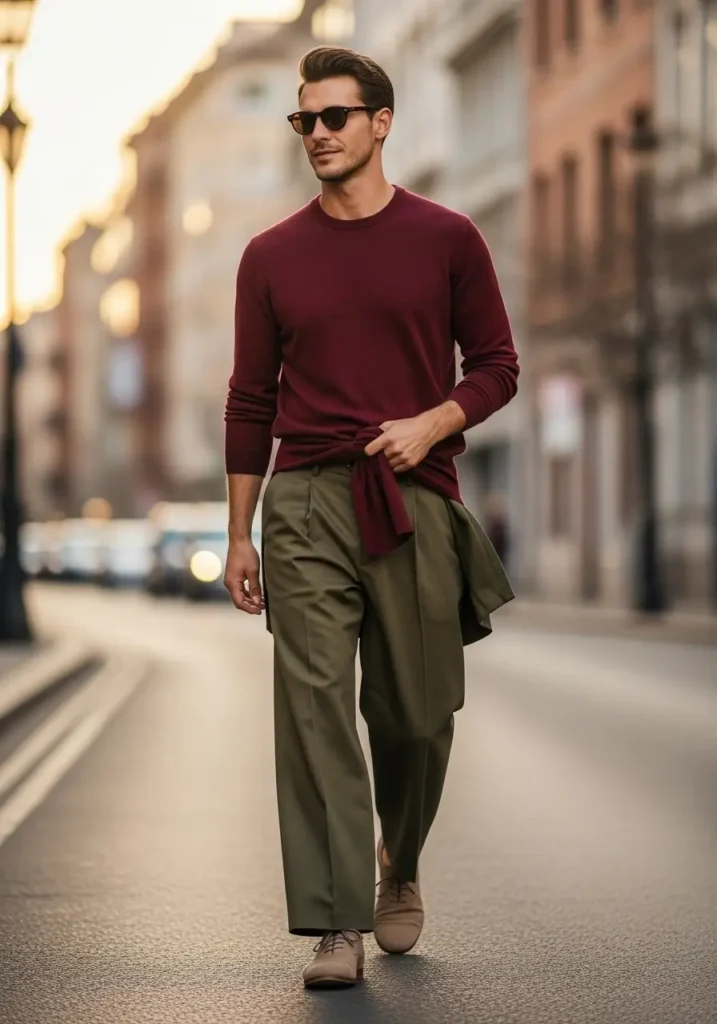
For men: Olive chinos paired with a burgundy knit sweater or button-up creates the same sophisticated color story. Add brown leather shoes and a belt to complete the earth-toned palette.
Trend note: Green dominates 2025 trends, with versatile shades from pistachio to olive that pair perfectly with neutrals like cream, navy, and brown [web:13]. Red and burgundy add energy to traditional professional colors [web:13].
5. Leather Accent Innovation
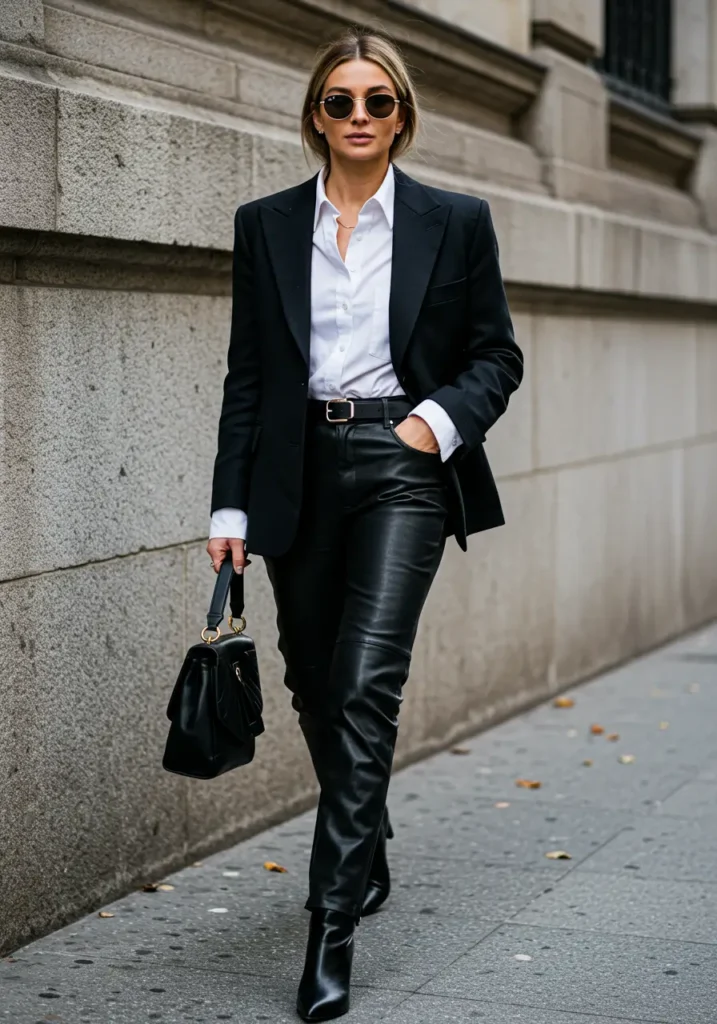
Leather is one of 2025’s favorite fabrics, and this outfit incorporates it through leather pants or a jacket paired with more traditional business pieces [web:13]. The key to making this work is choosing leather pieces with clean lines and minimal hardware, ensuring they read as sophisticated rather than edgy.
Leather selection: Choose leather trousers in classic cuts—straight leg or slightly tapered. Avoid overly skinny styles or those with zippers and embellishments. The leather should look refined, not rebellious. Pair with a silk blouse or fine-gauge sweater to soften the look.
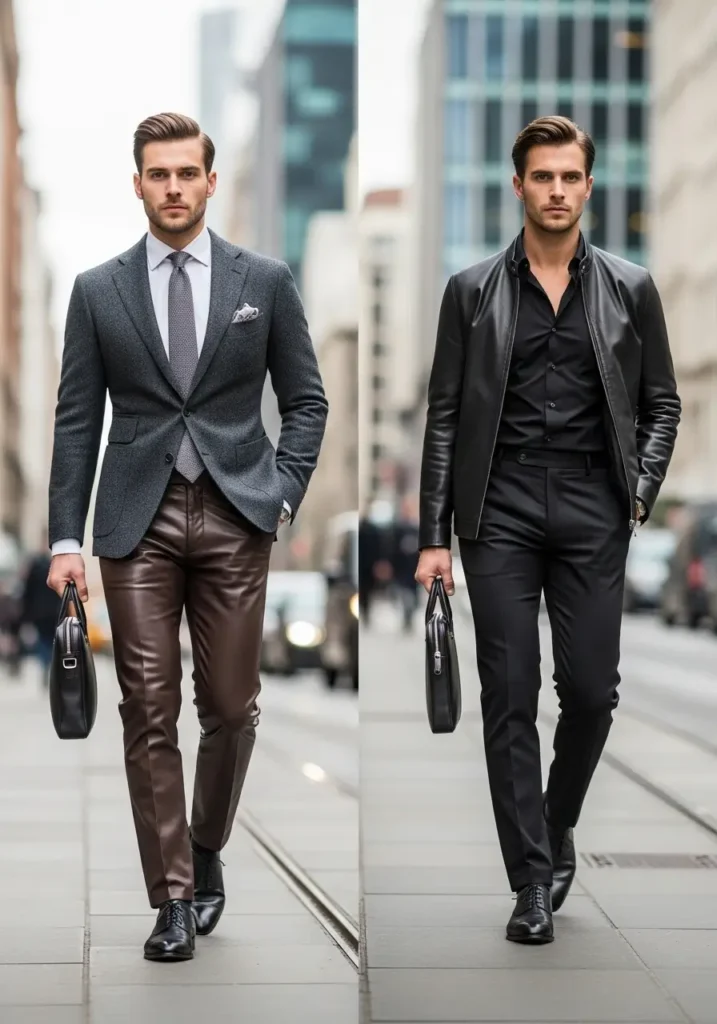
For men: A leather bomber or moto jacket in black or brown, worn over a button-up shirt and chinos, brings texture and edge while maintaining professionalism. Keep the leather piece simple—no studs or excessive zippers.
Vegan alternatives: High-quality vegan leather now rivals genuine leather in appearance and durability. This allows you to embrace the trend regardless of personal values around animal products.
6. Silk Sophistication
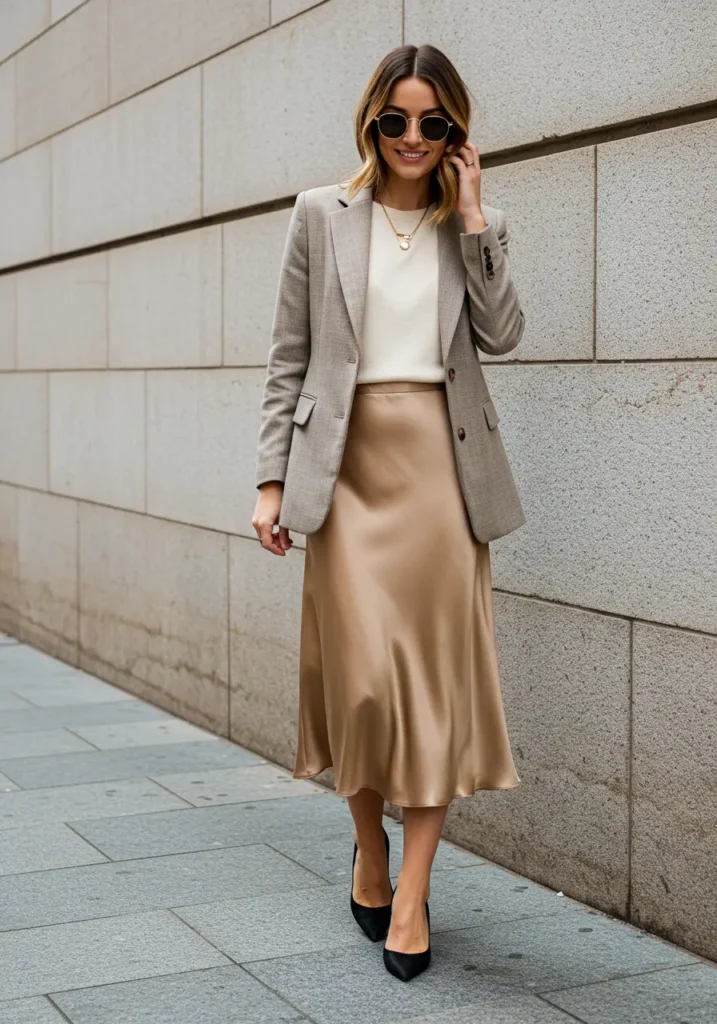
This elegant ensemble features a washable silk skirt, stylish kitten heels, and a tailored blazer [web:13]. The luxury of silk elevates the entire look, while practical elements like machine-washable fabric and comfortable heel heights make it office-appropriate. This outfit transitions seamlessly from day to evening.
Silk trend: Silk fabrics are making a comeback for spring/summer 2025, offering luxury and breathability [web:13]. Modern silk often includes care instructions that allow machine washing, removing the traditional barrier to incorporating this fabric into workwear.
For men: While silk pants might be too bold for most offices, a silk-blend button-up shirt provides the same luxurious feel. Pair with wool trousers and leather loafers for a refined business casual look.
Styling secrets: Tuck the top into the silk skirt and add a thin belt to define the waist. This creates structure within the fluid fabric. Keep jewelry minimal—silk provides enough visual interest through its natural sheen.
7. The Architectural Layer Game
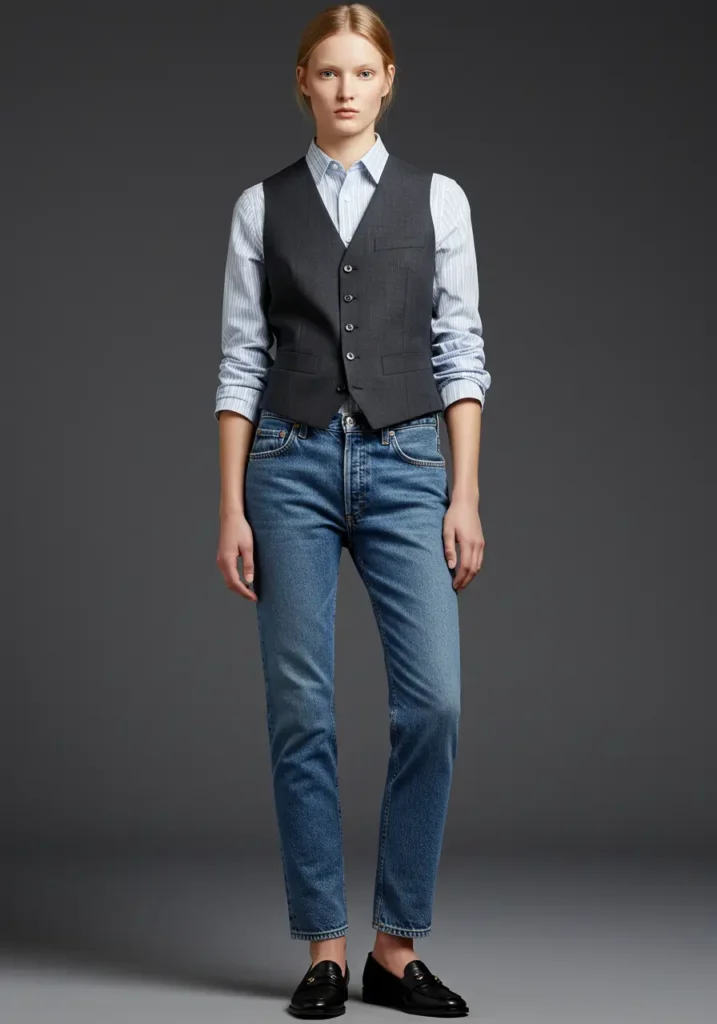
This innovative outfit combines a button-up shirt with a vest and straight-leg jeans, finished with loafers [web:13]. The vest adds a layer of sophistication and structure, transforming the casual elements into a polished ensemble. This look demonstrates how layering can elevate simpler pieces.
The vest revival: Button-up vests have become a summer staple and are office approved [web:16]. They add visual interest and a third layer that reads as intentionally styled. Choose vests in neutral colors or subtle patterns that coordinate with your shirt and pants.
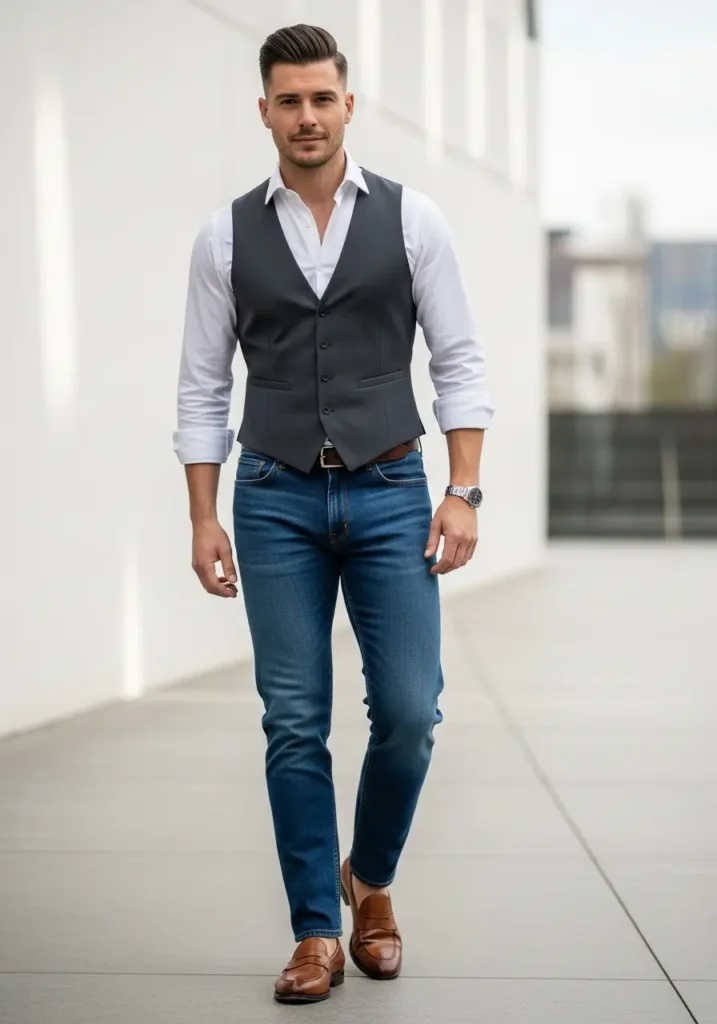
For men: A sweater vest over a button-down shirt creates the same layered sophistication. Pair with chinos and loafers. This look nods to prep style while feeling contemporary through modern fits and fabric choices.
Proportion rules: When layering with a vest, ensure your shirt fits well at the shoulders and arms. The vest should lie flat without pulling or gaping. This precision makes the difference between polished and sloppy.
8. Pattern Mixing Masterpiece
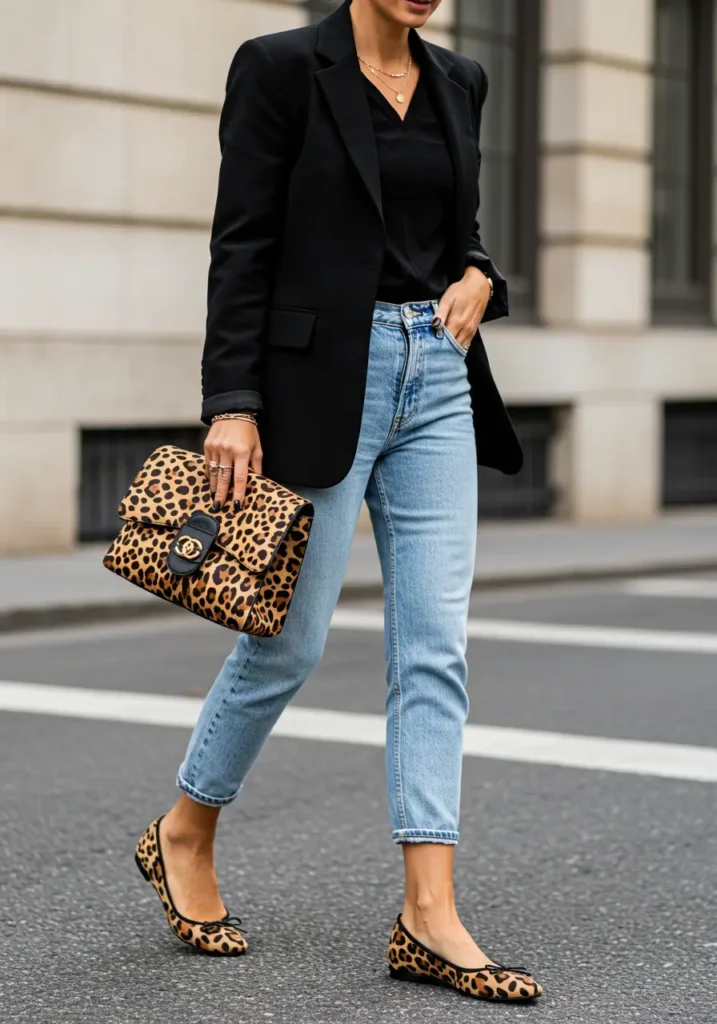
This bold outfit incorporates animal print ballet flats with light blue jeans and a black blazer [web:13]. The subtle pattern mixing through accessories adds personality without overwhelming, demonstrating how to incorporate trends while maintaining professionalism. Leopard print continues as a timeless yet trendy pattern in 2025.
Pattern mixing rules: Start with one patterned piece and keep everything else solid. Animal prints work as neutrals when the scale is small (like shoes or a belt). Avoid mixing multiple competing patterns unless you’re experienced with advanced styling techniques.
For men: A patterned pocket square or subtly patterned socks add personality without risk. Pair with solid-colored suit separates. The pattern should peek out as a detail rather than dominate the outfit.
Color coordination: When incorporating animal prints, choose versions that include colors already present in your outfit. A leopard print with brown tones works with brown shoes or belt; one with gray tones complements charcoal pieces.
9. Textural Contrast Outfit
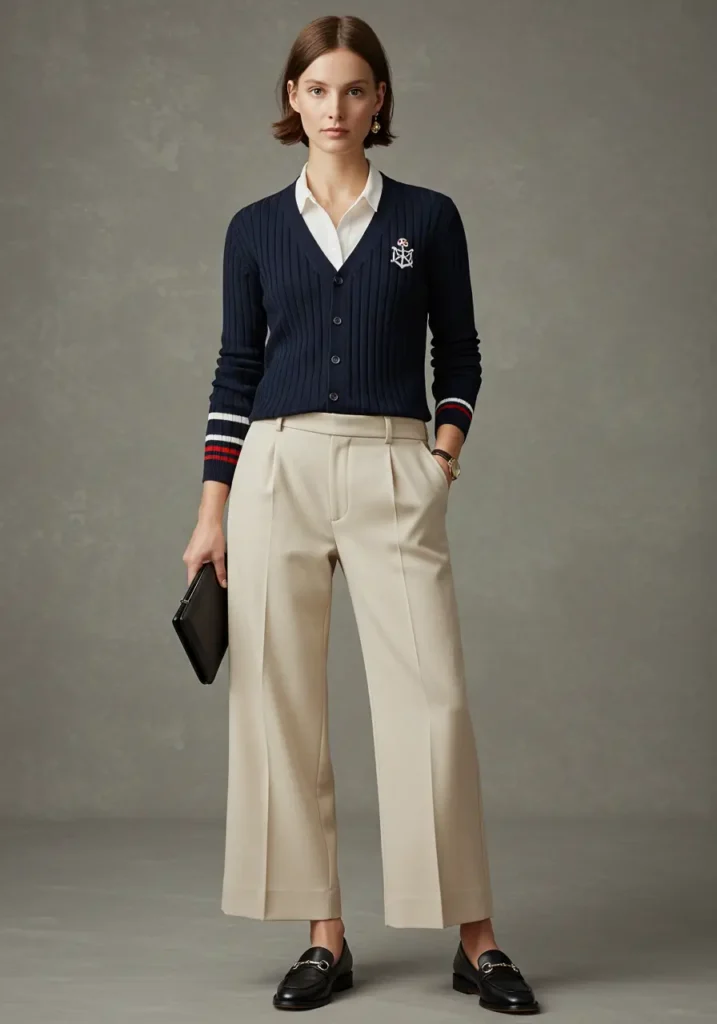
Featuring a nautical cardigan with wide-leg pants and loafers, this outfit plays with texture and pattern in sophisticated ways [web:13]. The ribbed knit of the cardigan contrasts with the smooth fabric of the trousers, while the classic nautical pattern adds visual interest without being distracting.
Texture strategy: Combining different textures creates depth and visual interest in solid-colored outfits. Smooth silk, nubby wool, soft cashmere, and structured cotton each catch light differently, preventing monochromatic looks from appearing flat.
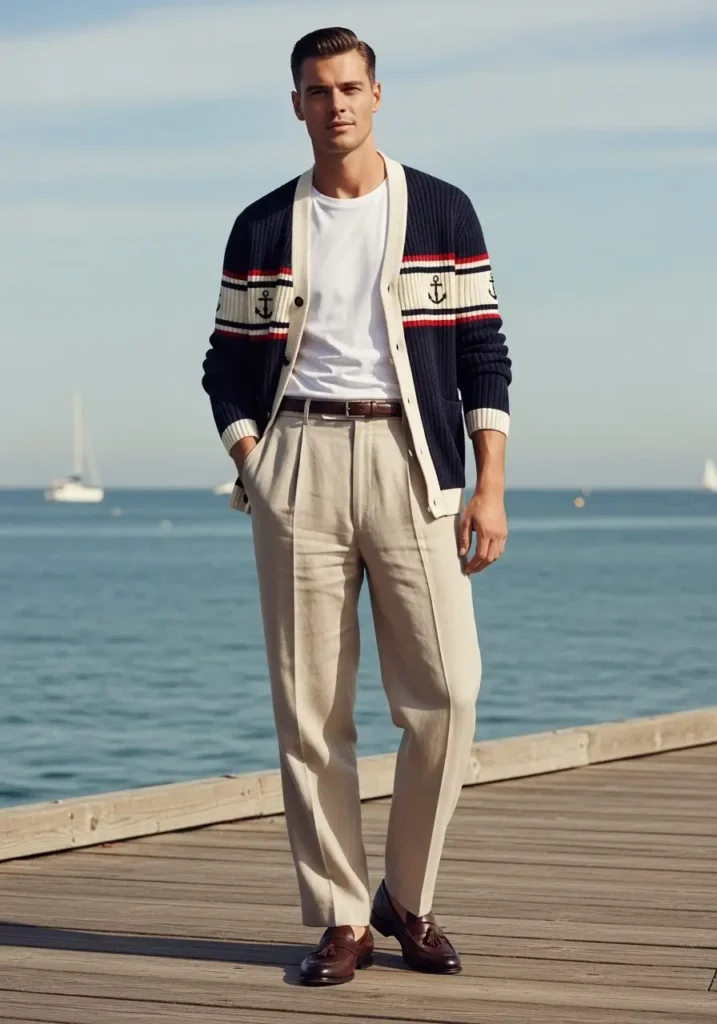
For men: A chunky knit cardigan over a smooth Oxford shirt creates textural contrast. Pair with wool trousers and leather shoes. Each fabric brings its own character while working together harmoniously.
Seasonal adaptation: This outfit works beautifully for transitional weather. The cardigan adds warmth without bulk, and wide-leg pants provide air circulation. Swap to a lighter knit for spring or heavier wool for winter.
10. Modern Utility Chic
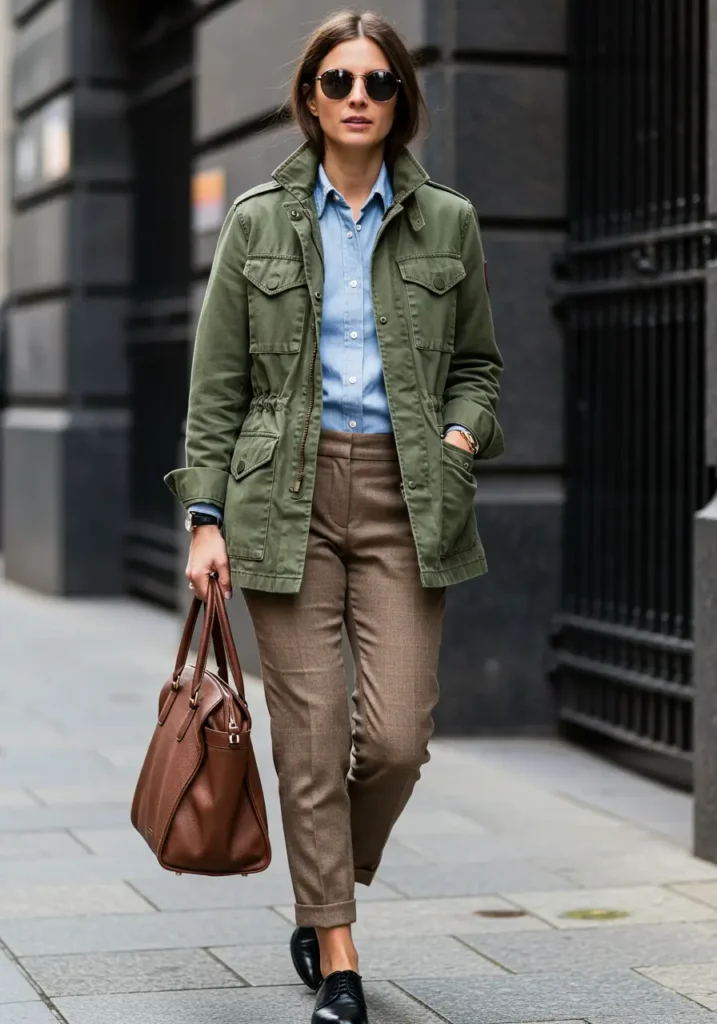
This look incorporates utilitarian elements like a field jacket or chore jacket with more traditional business casual pieces [web:13]. The military-inspired elements add functionality and a contemporary edge while maintaining professionalism through tailored complementary pieces and refined color choices.
Utility trend: Workwear-inspired pieces bring practicality and structure. Choose utility jackets in neutral colors like olive, khaki, or navy. The multiple pockets and structured shoulders add interest without appearing costume-like.
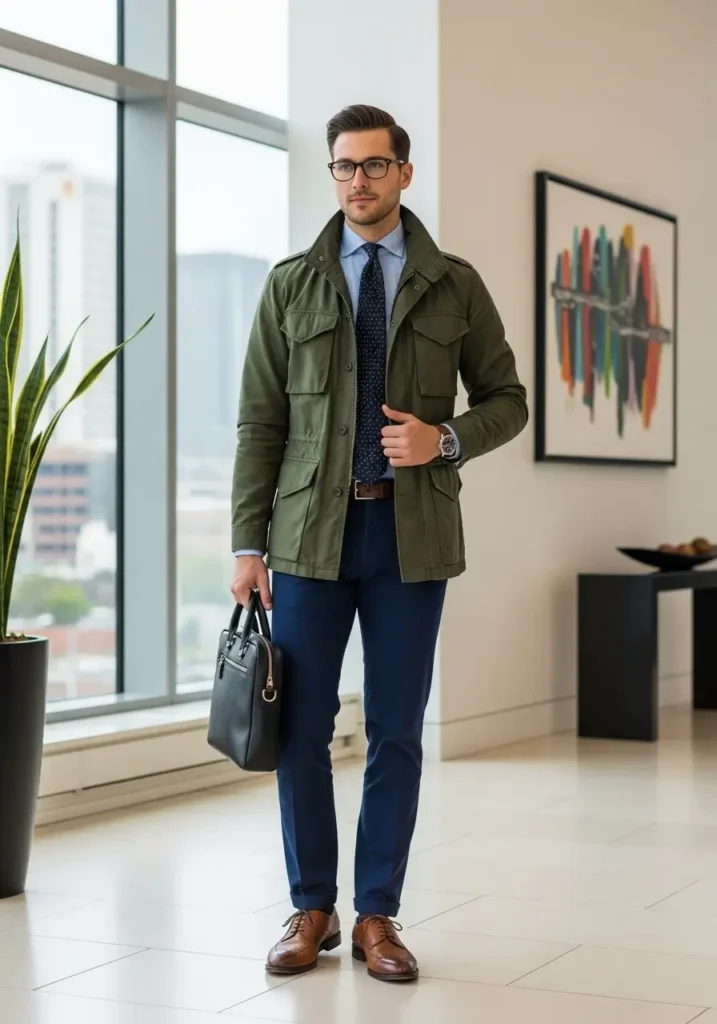
For men: A chore jacket or safari jacket over a button-down shirt and chinos captures this aesthetic perfectly. Keep the jacket simple—avoid excessive pockets or military patches that might appear too casual.
Balance is key: When wearing a casual element like a field jacket, balance it with more refined pieces. Pair with tailored trousers rather than jeans, and choose leather shoes rather than boots. This creates the right professional-casual mix.
11. The Elevated Comfort Ensemble
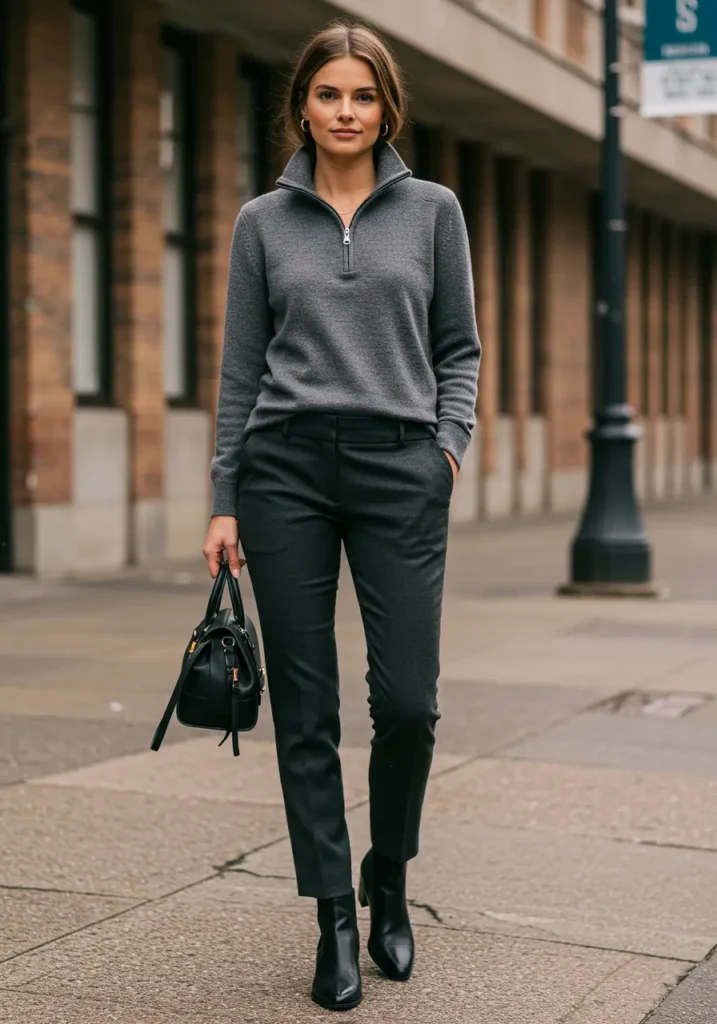
This outfit combines a quarter-zip sweater with tailored trousers and Chelsea boots [web:13]. The athletic-inspired top, when executed in luxury fabrics like merino wool, creates a sophisticated comfort-forward look that’s perfect for hybrid work environments. This ensemble bridges loungewear and workwear seamlessly.
The comfort revolution: The hybrid wardrobe trend reflects many people working in both office and remote settings [web:15]. This means investing in quality basics that can be styled multiple ways—comfortable enough for home, polished enough for the office.
For women: A cashmere or merino quarter-zip paired with wide-leg trousers and ankle boots creates the same refined comfort. Choose rich colors like camel, forest green, or burgundy to elevate the athletic silhouette.
Fabric elevation: The difference between looking athletic versus professional lies in fabric choice. A cotton quarter-zip reads sporty. A merino wool or cashmere version reads sophisticated. This single upgrade transforms the entire outfit.
12. Monochromatic Texture Play
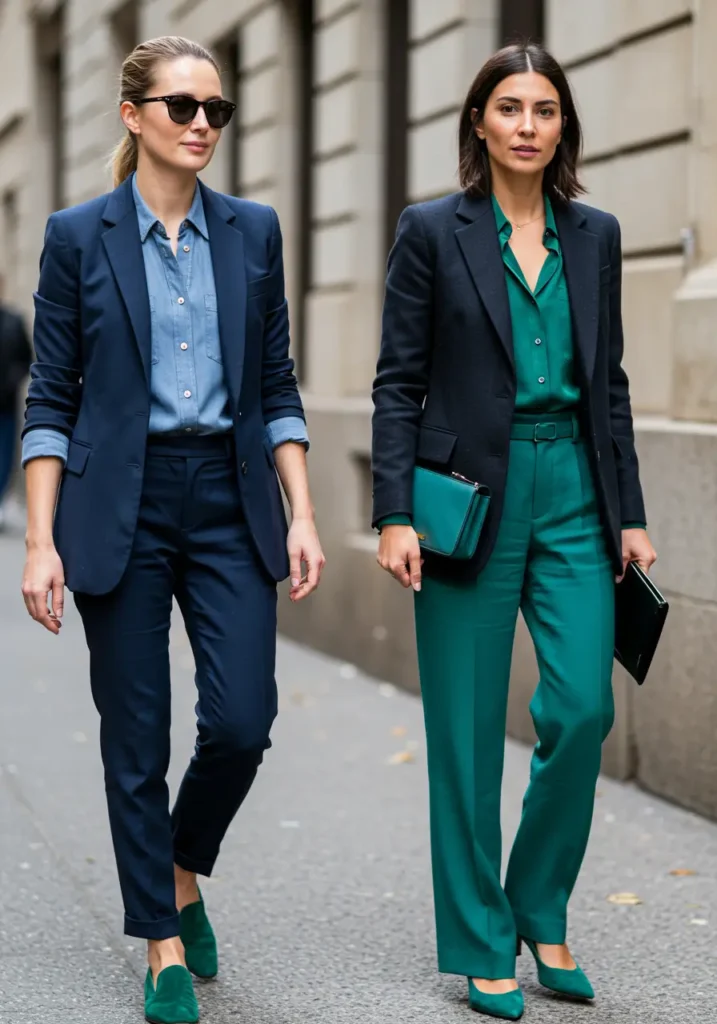
This sophisticated outfit uses varying shades of the same color family with different textures to create depth and interest. For example, pairing a wool blazer with silk trousers and suede shoes in complementary shades of blue or green. The monochromatic scheme reads as polished and intentional, while the textural variation prevents it from feeling flat.
Monochrome mastery: This technique aligns with the quiet luxury trend (18% of workers) and streamlined staples style that dominate 2025 [web:18]. The cohesive color story creates visual elegance, while varied textures add complexity.
Color families to try: Navy to light blue, forest to sage green, chocolate to tan brown, charcoal to light gray. Stay within the same color temperature (warm or cool) for the most sophisticated results.
Texture selection: Combine matte and shiny (wool and silk), smooth and nubby (cotton and tweed), or structured and soft (leather and cashmere). These contrasts create visual movement within the unified color palette.
Accessory strategy: With monochromatic outfits, accessories can either blend (same color family) for maximum sophistication or contrast (complementary color) for a statement. Both approaches work—choose based on the impression you want to create.
13. The Modern Suit Redefinition
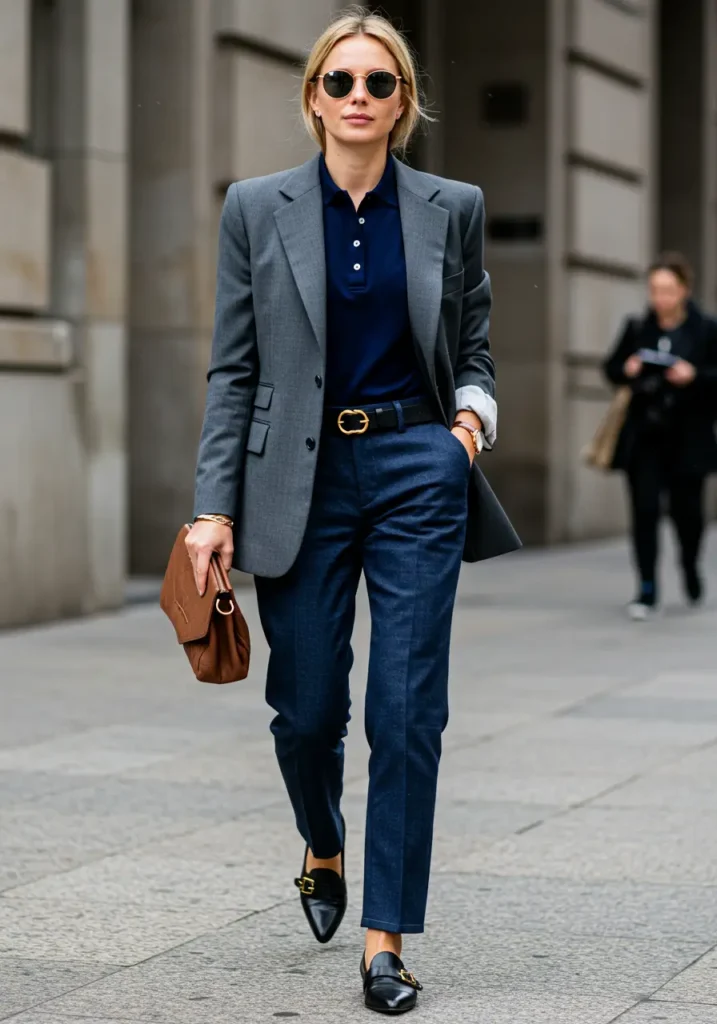
This final groundbreaking outfit reimagines the traditional suit by pairing suit separates with unexpected elements—perhaps the blazer with dark denim or the trousers with a knit polo [web:13]. This approach demonstrates how formal pieces can be adapted for business casual environments through creative styling and complementary pieces.
Breaking the matching set: Suit separates offer twice the versatility of matched suits. Your navy blazer works with gray trousers, dark jeans, or khaki chinos. Your suit trousers pair with sweaters, polos, or casual button-downs. This multiplication of outfit options justifies the investment.
The denim debate: Many workplaces now allow denim when styled appropriately [web:15][web:16]. Dark, well-fitted jeans without distressing, paired with a tailored blazer, read as smart casual rather than weekend wear. The blazer provides the structure that makes denim workplace-appropriate.
Polo sophistication: A merino wool polo under a blazer creates an interesting middle ground between formal and casual. The collar provides structure like a dress shirt, but the knit fabric reads more relaxed. This combination works beautifully for business casual environments.
Related Resource: The Ultimate Guide to Top Coats: Protection, Shine, and Perfection
Which of these 13 outfits resonates most with your personal style and workplace culture? Tell us in the comments which look you’re most excited to try—and how you might adapt it for your specific industry!
2025 Color Trends for Business Casual Outfits
Color plays a crucial role in updating your business casual wardrobe for 2025. This year’s palette offers both versatility and opportunities for subtle self-expression that align with current workplace fashion movements.
Green continues as a dominant trend, with versatile shades from pistachio to olive that pair perfectly with neutrals like cream, navy, and brown [web:13]. This color family works across seasons and industries, offering sophistication without rigidity. Sage green brings calm professionalism, while deeper forest tones command authority.
Red is making a comeback as an accent color, adding energy to traditional professional colors like black, chocolate brown, and grey [web:13]. Use red strategically—a burgundy sweater, rust-colored accessories, or deep wine trousers—rather than overwhelming primary red pieces.
Brown and warm earthy tones are significant trends in 2025, offering versatility and a soothing, professional appearance [web:13]. Chocolate brown, camel, taupe, and cognac create sophisticated foundations for business casual outfits. These warm neutrals feel more approachable than stark black while maintaining professionalism.
The pastel palette will be prominent for spring and summer, providing muted yet personality-infused options for office wear [web:13]. Think soft lavender, pale blue, mint green, and blush pink. These colors work beautifully in silk, cotton, and linen fabrics for warmer weather professional dressing.
When incorporating these trends, remember that business casual outfits typically benefit from a foundation of neutrals with strategic color accents. This approach ensures versatility while allowing you to experiment with current color trends. A navy blazer with olive trousers and a rust accessories creates visual interest while remaining professional. A gray suit with a sage green shirt and brown leather shoes embraces trends without overwhelming.
Color Confidence Formula
70% Neutral: Base your outfit in neutral colors (navy, gray, black, white, beige, brown)
20% Color: Add one trending color through a major piece like trousers, a sweater, or a dress
10% Accent: Incorporate a complementary accent through accessories, shoes, or a bag
Fabric Innovations for Modern Business Casual Outfits
2025 brings exciting fabric developments that enhance both the aesthetics and functionality of business casual clothing. Understanding these innovations will help you make smarter wardrobe choices that serve your lifestyle.
Natural Fiber Renaissance
Natural fibers continue to dominate quality business casual pieces. Silk fabrics are making a comeback for spring/summer 2025, offering luxury and breathability [web:13]. Modern silk often includes care instructions that allow machine washing, removing the traditional barrier to incorporating this fabric into workwear.
Cotton remains a reliable choice, being reimagined in fresh, modern ways with improved weaves and finishes [web:13]. Look for Supima cotton, organic cotton, or performance cotton blends that resist wrinkles and maintain color better than traditional versions.
Linen continues as a summer staple for its breathability, with modern versions offering improved wrinkle resistance [web:13]. Linen blends (linen-cotton or linen-viscose) provide the breathability of pure linen with better shape retention and easier care.
Cold Weather Fabric Excellence
For cooler months, consider richer fabrics that add texture and sophistication. Corduroy with its signature ridges offers warmth and style in deep tones like brown, navy, or burgundy [web:13]. This vintage fabric has returned to contemporary fashion with slimmer wales (the ridge size) that read more refined than the wide-wale versions of decades past.
Wool provides insulation and structure, making it ideal for blazers and dress slacks in dark hues [web:13]. Modern wool technology creates lighter-weight options that work in heated offices without overheating. Look for Super 100s through Super 150s wool for the best balance of durability and luxury feel.
Performance Fabric Technology
Technological advancements have improved fabric performance significantly. Many brands now offer trousers and chinos with stretch fabrics that provide all-day comfort without compromising appearance [web:13]. Look for 2-5% elastane blended with natural fibers for the right balance of structure and flexibility.
Moisture-wicking fabrics originally developed for athletic wear now appear in professional clothing. These innovations allow business casual outfits to be both professional and comfortable throughout long workdays, particularly beneficial for those commuting or moving between locations.
Wrinkle-resistant treatments applied to natural fabrics create low-maintenance professional wardrobes. These treatments allow you to travel with business casual pieces without losing the polished appearance critical for professional settings.
Industry-Specific Business Casual Considerations
While these innovative outfits offer inspiration, it’s crucial to adapt them to your specific workplace environment. Business casual varies significantly across industries and companies, and understanding these nuances prevents fashion missteps.
Creative Industries
In creative fields like marketing, design, or architecture, you can typically embrace more adventurous interpretations of business casual, including fashion-forward silhouettes, bolder colors, and more casual elements like quality denim or fashion sneakers [web:15]. These industries value visual literacy and personal expression, making them ideal environments for the more groundbreaking outfits featured here.
Creative professionals can experiment with asymmetrical pieces, unexpected color combinations, and trendy elements like leather accents or utility-inspired pieces. The key is ensuring your outfit appears intentionally styled rather than accidentally casual.
Traditional Sectors
Traditional sectors like finance, law, or banking generally maintain more conservative standards. In these environments, stick to darker colors, more structured pieces, and minimal pattern mixing [web:17]. The more innovative outfits might be best reserved for casual Fridays or creative presentations rather than daily wear.
For conservative workplaces, focus on the simpler outfits from this guide: the monochromatic texture play, the elevated comfort ensemble with premium fabrics, or the modern suit redefinition with subtle twists. Save the asymmetrical tops and bold color blocking for less traditional settings.
Tech and Startup Environments
Tech companies and startups typically embrace the most relaxed interpretations of business casual. Quality jeans, sneakers, and casual button-downs often dominate these workplaces. However, dressing slightly more polished than the baseline can signal professionalism and ambition.
In these environments, the elevated knitwear pairing, modern prep revival, and architectural layer game outfits work beautifully. You can incorporate comfort and contemporary style while maintaining a put-together appearance that stands out positively.
Reading Your Workplace Culture
The best approach is to observe your specific workplace culture. Notice what successful colleagues wear, particularly those whose style you admire and whose career trajectory you’d like to follow. Pay attention to what senior leaders wear—this often sets the tone for acceptable business casual interpretations.
When in doubt, err on the side of slightly more formal and gradually introduce more adventurous elements as you gauge reactions. Document mentally (or photographically) outfits that receive compliments or positive feedback, then build on those combinations.
Accessorizing Business Casual Outfits
Accessories complete business casual outfits, adding personality and polish. The right accessories can transform a simple outfit into something special, while poor accessory choices can undermine otherwise professional ensembles.
Footwear Excellence
Footwear represents a significant opportunity for expression in business casual outfits. For women, elegant flats continue as a strong trend, offering comfort and classic style [web:13]. Ballet flats, pointed-toe flats, and loafers work beautifully with trousers, skirts, and dresses. Choose leather or suede versions in neutral colors for maximum versatility.
For men, smart trainers with leather or suede uppers and clean designs can work well in many office environments [web:14]. The key is choosing minimalist styles without prominent logos or athletic features. White leather sneakers remain the most versatile option, working with chinos, trousers, and even suit pants in casual environments.
Ankle boots and Chelsea boots work for all genders, providing transitional footwear that works across seasons. Choose sleek silhouettes without excessive buckles or decorative elements for professional contexts.
Bags and Work Essentials
Bags should balance functionality and style. Choose versatile styles that can transition from gym to office to after-work engagements [web:13]. Structured totes, portfolio bags, and minimal backpacks all work for business casual environments.
Your bag should accommodate your laptop, phone, wallet, and work essentials without looking stuffed. Choose quality materials like leather or high-grade nylon that maintain shape and resist wear. Neutral colors ensure your bag works with multiple outfits.
Watches and Jewelry
For watches, opt for classic styles with metal elements and traditional dials rather than smartwatches for a more professional appearance [web:13]. While smartwatches offer functionality, traditional watches signal attention to professional presentation. If you prefer smartwatch features, choose leather bands and classic watch faces that mimic traditional timepieces.
Jewelry should enhance rather than distract. Choose one or two statement pieces—perhaps a watch and earrings, or a necklace and ring. Avoid wearing all your jewelry at once. Match metal tones across your jewelry and watch for cohesive appearance.
The Less-Is-More Principle
When accessorizing, remember that less is often more in business environments. Choose a few quality pieces that complement your outfit rather than multiple competing elements. The goal is to enhance your professional appearance, not distract from it.
One statement accessory per outfit creates focus. If you’re wearing bold earrings, skip the statement necklace. If your shoes make a statement, keep your bag neutral. This restraint reads as sophisticated and intentional.
Building a Versatile Business Casual Capsule Wardrobe
Creating a collection of interchangeable pieces maximizes your outfit options while minimizing closet clutter. A well-planned capsule wardrobe ensures you always have appropriate business casual outfits available without the stress of deciding what to wear.
The Capsule Wardrobe Philosophy
A capsule wardrobe consists of 15-25 essential pieces that all coordinate with each other, creating numerous outfit combinations from a limited number of items. This approach reduces decision fatigue, saves money by preventing impulse purchases, and ensures you always look polished.
For women, a business casual capsule should include: a tailored blazer, tailored pants, a pencil or midi skirt, a basic neutral-colored dress, dressy comfortable shoes, and solid-color dress shirts [web:15][web:16]. These pieces can be mixed and matched to create numerous outfits that span formal to casual within the business casual spectrum.
For men, essential capsule pieces include: well-fitted chinos in neutral colors, an unstructured blazer, quality button-up shirts, a merino wool polo, smart footwear, and a quality sweater [web:14]. These staples form the foundation upon which you can build more adventurous outfits by incorporating trending pieces.
Quality Over Quantity Strategy
When building your capsule, prioritize quality over quantity. Invest in well-made pieces that fit perfectly and are constructed from quality fabrics. One perfectly fitted blazer that you wear weekly justifies a higher price than three ill-fitting options that languish in your closet.
Neutral colors form the foundation—navy, gray, black, white, and beige work across seasons and occasions. Add a few strategic pieces in current colors or patterns to add variety and personality without limiting versatility.
Seasonal Capsule Adaptations
While core pieces remain constant, adapt your capsule for seasonal changes. Summer capsules feature lighter fabrics like cotton, linen, and silk in paler colors. Winter capsules incorporate wool, cashmere, and heavier knits in deeper tones.
Transitional pieces work across seasons: a lightweight wool blazer, versatile trousers in medium-weight fabric, and silk shells that layer under sweaters. These multi-season pieces justify higher investments through extended wear.
Personalization Within Structure
Remember that a capsule wardrobe should reflect your personal style and workplace requirements. Customize the basic formula to suit your needs while maintaining the versatility that makes capsule wardrobes so effective.
If you live in warm climates, emphasize lighter fabrics and short-sleeve options. If your workplace leans formal, include more blazers and structured pieces. If creativity is valued, incorporate more pattern and color. The capsule framework adapts to your specific life while providing the structure to simplify daily dressing.
Key Takeaways:
- ✓ Business casual has expanded to include dark denim, quality knits, and minimalist sneakers in many workplaces
- ✓ Structured minimalism with clean lines and tailored shapes dominates 2025 trends
- ✓ Rich fabrics like corduroy, merino wool, and silk add texture and sophistication
- ✓ Color trends include earthy tones, greens, reds, and pastels for subtle personality
- ✓ Proper fit remains the most important factor in looking polished and professional
- ✓ Quiet luxury and office siren styles lead 2025 workplace fashion movements
Frequently Asked Questions
Are jeans considered appropriate for business casual outfits?
Yes, jeans can be business casual when executed correctly. Choose dark washes without distressing, fading, or holes. The fit should be clean and classic rather than overly trendy. Many workplaces now allow denim when styled appropriately—51% of women wear business casual clothing including dressy jeans [web:19]. Pair denim with more polished pieces like blazers, button-up shirts, or quality sweaters to maintain professionalism. Dark, well-fitted jeans paired with a structured blazer read as smart casual rather than weekend wear [web:15][web:16]. Always consider your specific workplace culture, as some conservative environments may still frown upon denim.
Can I wear sneakers with business casual outfits?
Minimalist, clean sneakers can work well in business casual environments. Opt for leather or suede versions in neutral colors like white, black, or brown. Smart trainers with leather uppers and clean designs are acceptable in many office environments [web:14]. Avoid athletic styles with prominent logos or bright colors. The key is ensuring your sneakers look intentional and polished rather than like you just came from the gym. White leather sneakers have become the most versatile option, working with chinos, trousers, and even suit pants in casual business settings. The sneaker trend reflects broader workplace shifts toward comfort, but execution determines whether the look succeeds professionally.
How can I make my business casual outfits more comfortable without sacrificing professionalism?
Focus on fabric choices and fit. Stretch fabrics in trousers and chinos provide comfort without compromising appearance—many brands now offer these performance blends [web:13]. Quality knits like merino wool offer both comfort and sophistication. The elevated comfort trend dominates 2025, with professionals prioritizing fabrics that allow movement [web:15]. Unstructured blazers and jackets provide a more comfortable alternative to traditional tailored pieces while maintaining professional presence. Finally, ensure all your pieces fit properly—clothing that’s too tight or too loose will always be uncomfortable. The hybrid wardrobe approach reflects workers investing in quality basics comfortable enough for home and polished enough for the office [web:15].
What are the biggest business casual mistakes to avoid?
Common mistakes include: wearing clothing that’s too casual (like t-shirts with logos, hoodies, or sweatpants), choosing pieces with poor fit, incorporating too many trends at once, wearing wrinkled or stained clothing, and failing to consider your specific workplace culture [web:17]. Additionally, avoid overly distressed fabrics, revealing clothing, and footwear that’s too casual like flip-flops or worn-out sneakers. Cropped tops are inappropriate in any office setting [web:19]. The pandemic left many young professionals struggling to identify business casual and create personal style [web:19]. Gen Z and Millennials report the most stress about workplace attire [web:18]. Start by observing successful colleagues and building from neutral, well-fitted basics before incorporating more adventurous elements.
How can I transition my business casual outfits between seasons?
Layering is key for seasonal transitions. Lightweight jackets and cardigans can be added or removed as temperatures change. Consider fabric weights—tropical wool or linen blends work well for warmer weather, while corduroy and heavier wool provide warmth in cooler months [web:13]. Versatile pieces like unstructured blazers work across seasons when paired with appropriate complementary items. Finally, adapt your color palette—lighter colors for spring/summer, deeper tones for fall/winter. Invest in transitional pieces that work across multiple seasons, like lightweight wool blazers or silk shells that layer under sweaters. These multi-season items justify higher price points through extended wear and reduce the need for separate seasonal wardrobes.
How do I know if an outfit is too trendy for my workplace?
Observe your workplace culture for one week before establishing your standard dress code. Notice what successful people wear, particularly those at the level above your position. If senior leaders and respected colleagues wear more conservative attire, reserve trendy pieces for casual Fridays or social events. The safest approach incorporates trends through subtle elements—a trending color in a classic silhouette, textural interest in neutral tones, or modern accessories with traditional pieces. When uncertain, choose slightly more formal options. The quiet luxury trend (18% of workers) and streamlined staples favor timeless pieces over flash [web:18]. You can always remove a blazer to appear more casual, but you can’t add formality if you’ve dressed too casually for an important meeting.
Your Business Casual Journey Starts Now
Business casual outfits have evolved into a sophisticated category that balances professionalism with personal expression. The 13 innovative ensembles we’ve explored demonstrate how creative you can be while maintaining workplace appropriateness. Data shows that 51% of women now embrace business casual as their default work attire, with flexibility and comfort driving wardrobe decisions [web:19].
Remember that the most successful business casual outfits combine quality basics with strategic trend pieces, prioritize perfect fit above all else, and respect your specific workplace culture. The quiet luxury and office siren trends dominating 2025 prove that professionals want clothing that looks sophisticated while feeling comfortable [web:18].
As you update your wardrobe for 2025, focus on versatile pieces that can be mixed and matched, incorporate current colors and textures in thoughtful ways, and don’t be afraid to let your personality shine through subtle details. Build your capsule wardrobe around 15-25 pieces that truly work for your lifestyle, invest in quality over quantity, and perfect the fit through strategic tailoring.
Now it’s your turn: Which of these 13 groundbreaking outfits will you try first? How will you adapt it for your specific industry and personal style? Share your business casual wins, challenges, and favorite combinations in the comments below—let’s build a community of professionally dressed, confidently styled professionals together!