14 Crochet Baby Projects Modern Parents Actually Use
Practical, safe, modern-looking handmade gifts that earn a permanent place in daily life.
What makes crochet baby projects “worth it”: a cute photo, or an item that parents reach for every day?
Handmade baby pieces feel different. They bring warmth, comfort, and the calm pride of making something useful with your own hands.
If you are nesting, planning a shower gift, or building a baby stash for future cousins, you want projects that work in real life.
This guide focuses on modern crochet baby projects that look clean, wash well, and stay safe for tiny hands and mouths.
You will also get yarn tips, finishing tips, and a quick “gift test” for each idea.
The Modern Nursery: Choosing Safe Materials
Yarn choice shapes everything: comfort, wash results, and how the item wears after a month of use.
A beautiful blanket does not help if it scratches skin, pills fast, or turns stiff after the first wash.
Fiber choice (simple rules)
- For skin contact: cotton, bamboo, and soft cotton blends feel cool and smooth.
- For blankets and outer layers: quality acrylic, cotton blends, or superwash wool blends handle heavy washing.
- For teethers and “in-mouth” toys: choose smooth cotton that stays firm and does not shed fuzz.
What “safe” yarn means in practice
- Pick yarn that feels soft against your wrist or neck.
- Use yarn that can handle the wash routine a parent will use, not the wash routine you wish they used.
- If the yarn label lists a safety certification (such as OEKO‑TEX Standard 100), keep the label and include it with your gift.
Safety first: parts and attachments
Babies explore with their mouths and hands. That means loose ends, hard parts, and long cords matter.
- Skip buttons and plastic eyes for items intended for babies and toddlers. Embroidered faces remove the “small part” risk.
- Secure every end with a tight weave-in, then stitch it down through several directions.
- Avoid long ties on sleep items. Keep anything near the neck short and purposeful.
What is your biggest safety worry when you crochet for babies: yarn, washing, or small parts?
Share it in the comments so other makers can learn from your experience.
A “Parents Will Use This” Gift Test
Modern parents want gifts that solve small problems. They also want fewer items that add clutter.
Use this quick test before you start.
If the answer is “yes,” it is a strong project
- Can it go in the wash without stress?
- Can a parent use it without reading directions?
- Does it fit a stroller, diaper bag, or car routine?
- Will it still work when the baby grows for a few months?
- Can it stay safe without plastic parts?
What kind of gift do you prefer to make: “fast and useful,” or “slow and heirloom”?
Both can be great. The best choice depends on the family.
14 Crochet Baby Essentials
These crochet baby projects focus on comfort, development, and daily use.
Each item includes design ideas that look modern and work with simple stitches.
1. The Heirloom Textural Blanket
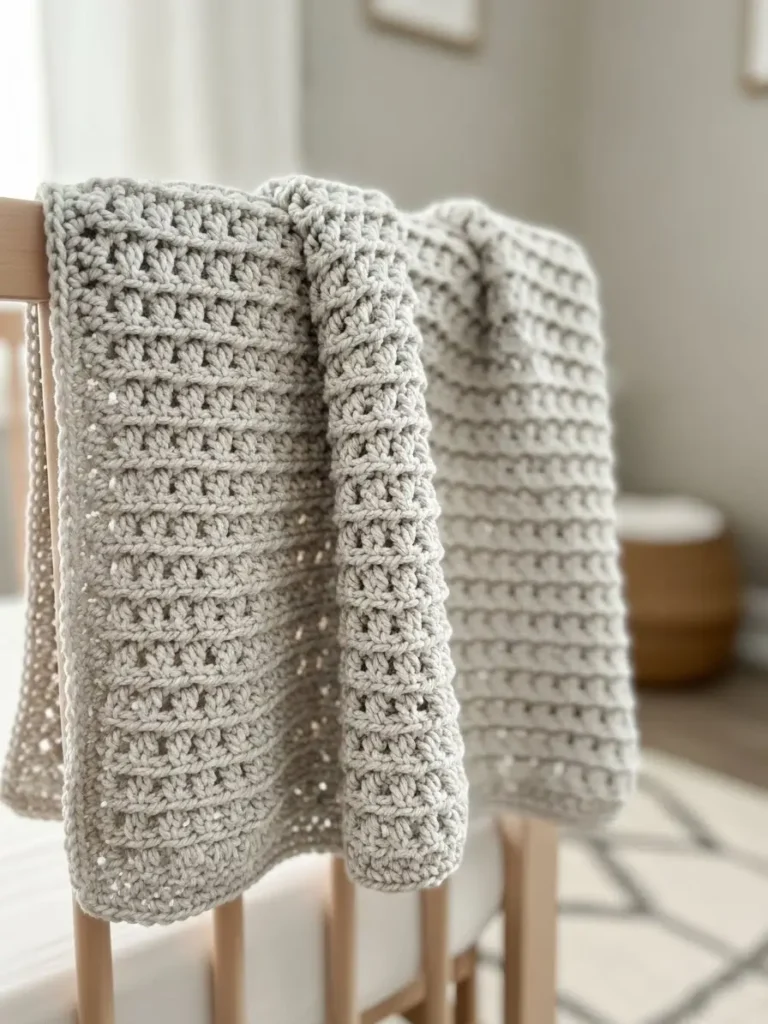
A modern baby blanket does not need complex colorwork. Texture creates the “wow” factor without clashing with nursery decor.
Try waffle stitch, alpine stitch, or a bobble stripe on a solid background.
Keep size practical. A stroller blanket (about 30″ x 35″) fits more places than a large crib blanket.
Parents can use it for tummy time, car rides, and contact naps.
- Best yarn: soft cotton blend, premium acrylic, or superwash blend.
- Modern look tip: pick one calm color and add texture, not stripes.
- Gift test: “Can you wash it weekly?” If yes, it is a win.
2. The Self-Soothing Lovey
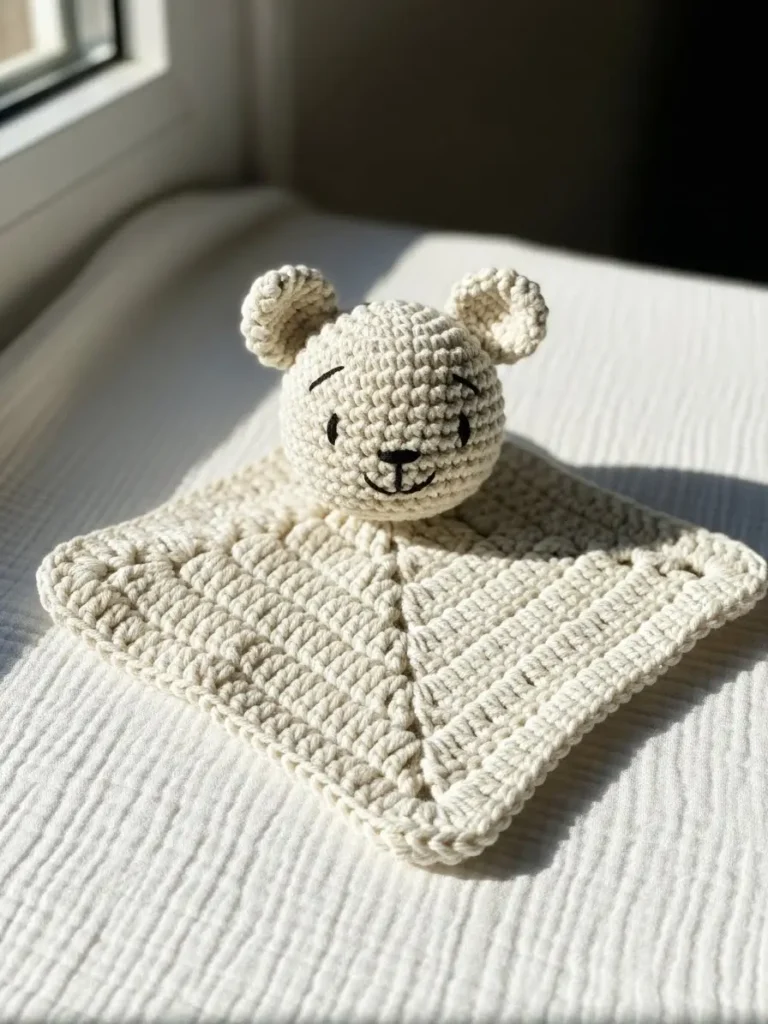
A lovey blends a small blanket with a soft toy center.
Babies can grip the corners, and older babies can use it for comfort during travel.
Keep the face simple and embroidered. Avoid plastic eyes and hard parts.
Use smooth cotton to reduce fuzz and keep it easy to clean.
- Best yarn: mercerized cotton or smooth cotton blend.
- Modern look tip: choose a small animal head in one color with a clean border.
- Gift test: “Would a parent own two?” Often yes, which helps when one is in the wash.
3. High-Contrast Sensory Balls
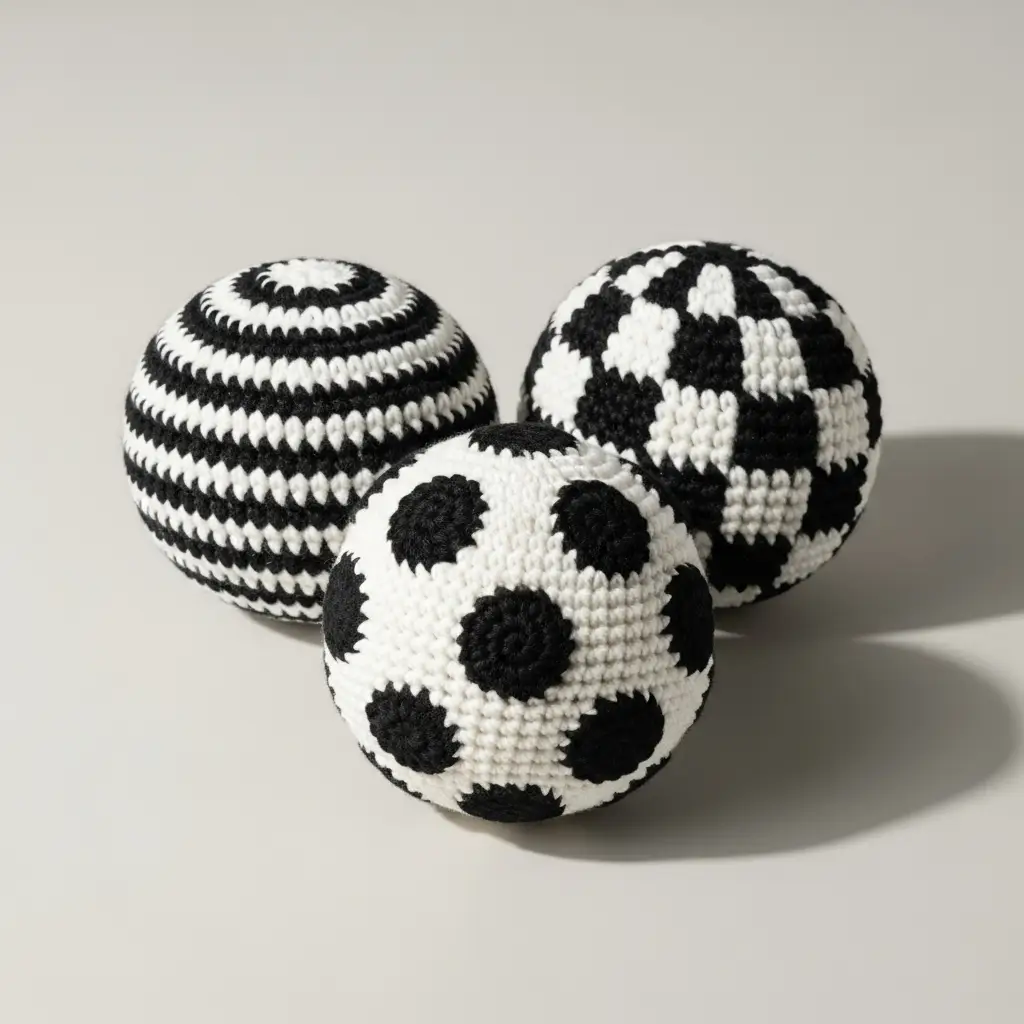
Newborns respond well to strong contrast. Black-and-white shapes keep the design simple and bold.
A soft ball also works as a gentle toy when babies start to grab and pass items between hands.
Crochet the cover with tight stitches so stuffing stays inside.
If you add a rattle insert, keep it sealed and centered.
- Best yarn: cotton (firm stitch definition).
- Modern look tip: keep patterns geometric: stripes, checks, or big dots.
- Gift test: “Does it feel safe if chewed?” Aim for tight tension and smooth yarn.
4. The Modern Bonnet
A bonnet stays on better than a loose beanie. It also frames the face and looks timeless in photos.
Modern versions keep lines simple and avoid heavy ruffles.
Use a soft yarn with good stretch. Make ties short and neat so they do not dangle.
If you gift it, include the age range and head size notes.
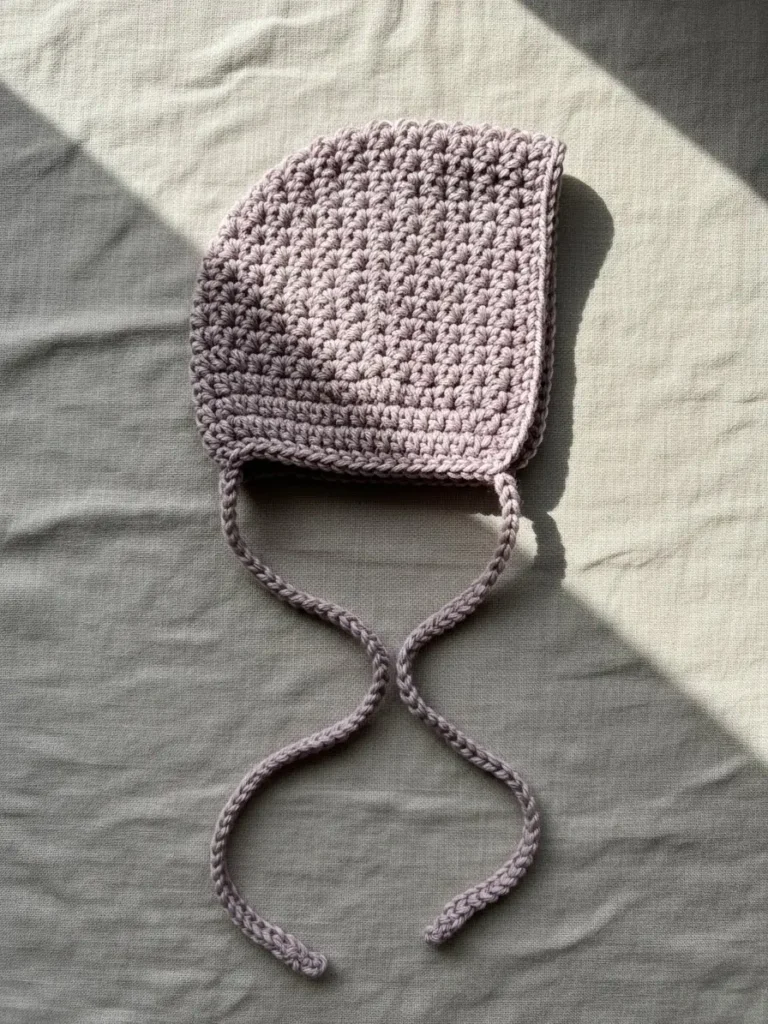
- Best yarn: soft wool blend (for cool climates) or cotton blend (for mild climates).
- Modern look tip: ribbing plus a clean edge beats lace for everyday wear.
- Gift test: “Will the baby wear it outdoors?” Bonnet shape helps.
5. Seamless Kimono Cardigan
Wrap-style cardigans reduce stress during dressing. Parents can avoid pulling tight necklines over a newborn’s head.
That makes this one of the most practical crochet baby projects on the list.
Choose a light yarn so the cardigan layers well and does not bunch.
Keep closures simple. A flat tie or a soft button alternative works well.
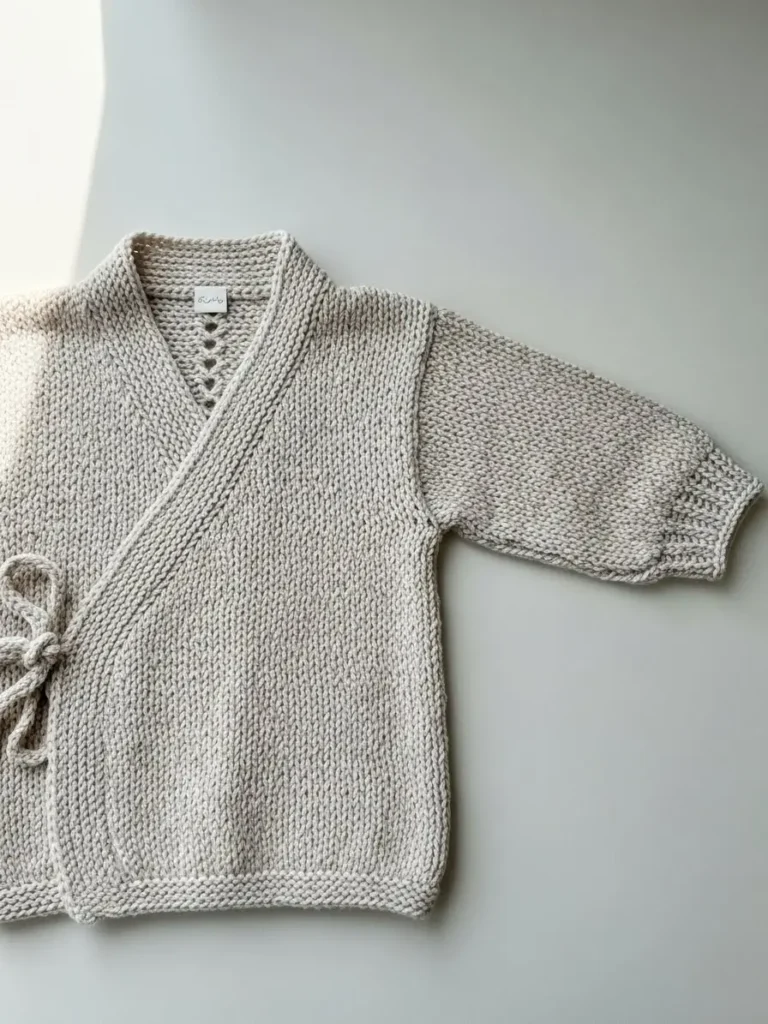
- Best yarn: sport or DK cotton blend.
- Modern look tip: solid neutral with one textured edge.
- Gift test: “Can a tired parent put it on fast?” Yes, which makes it valuable.
6. Stay-On Booties
Baby socks fall off. Booties with an ankle cuff or tie stay put.
You can also shape the heel so it hugs the foot.
For early walkers, you can add tiny dots of silicone fabric paint to the sole for grip.
Keep the sole soft and flexible.
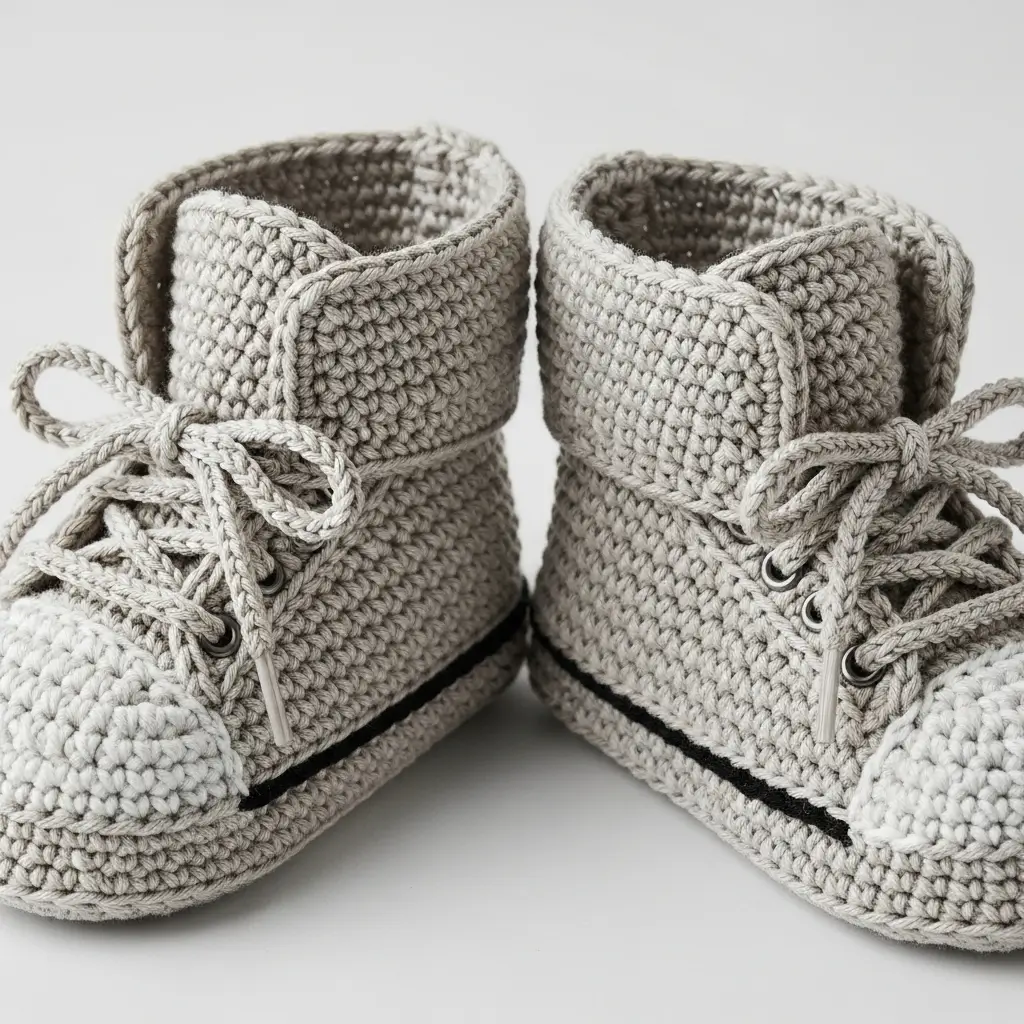
- Best yarn: cotton blend or durable acrylic.
- Modern look tip: sneaker style in one color plus a white “sole” stripe.
- Gift test: “Will this still fit in two weeks?” Add stretch and size notes.
7. Reusable Cotton Washcloths
Washcloths sound simple, but parents use them every day.
They help with bath time, spit-up, quick cleanups, and travel.
Use a stitch with texture, such as moss stitch, seed stitch, or a small waffle.
Make a set of 8–12 and tie it with a care tag.
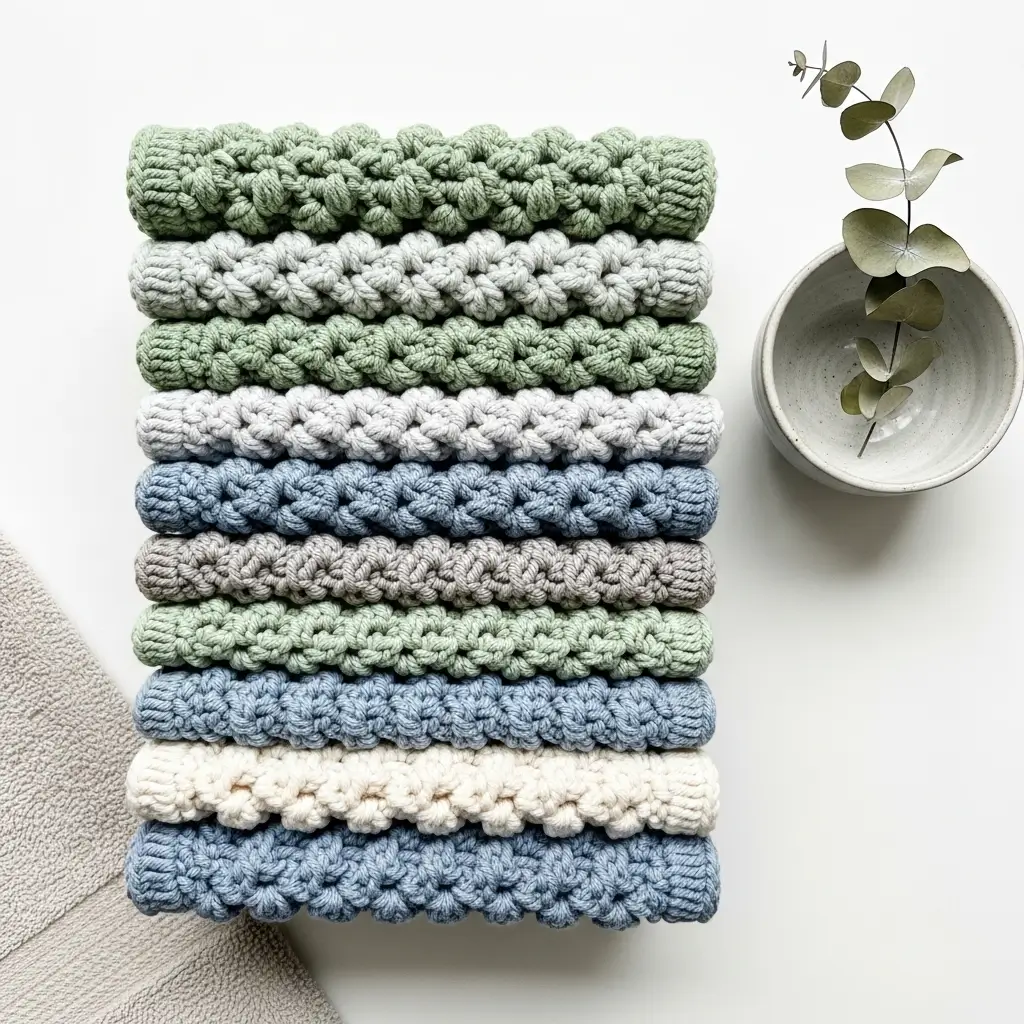
- Best yarn: organic cotton or sturdy cotton.
- Modern look tip: one calm color set, not rainbow.
- Gift test: “Can you own too many?” No. That is why they work.
8. The Cocoon Sleep Sack (Photo + Supervised Use)
A crochet cocoon can create a snug look for newborn photos and calm, supervised snuggles.
Keep stitches dense so toes do not catch.
Use this item as a photo prop and supervised wrap, not a replacement for safe sleep guidelines.
If you include it as a gift, add a short note that explains intended use.
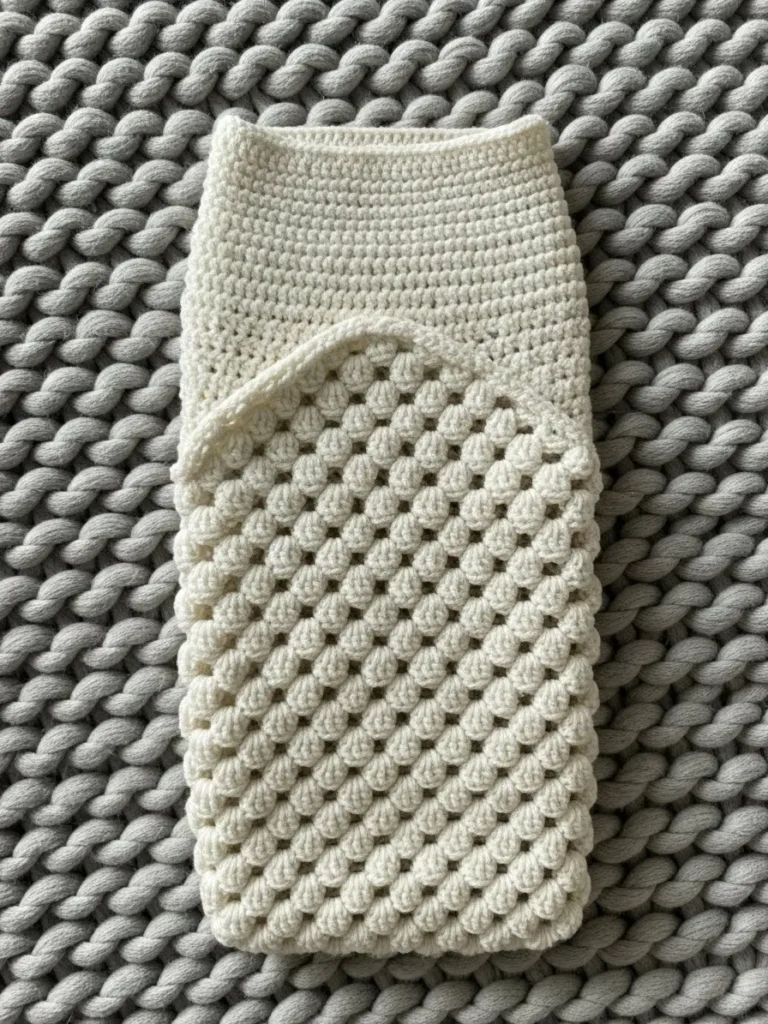
- Best yarn: soft, washable yarn with smooth feel.
- Modern look tip: keep it plain with a clean top edge.
- Gift test: “Will they use it once or many times?” It depends, so pair it with a daily-use item.
9. Amigurumi Octopuses (With Safety Limits)
Octopus toys stay popular because the curled tentacles invite grasping.
They also look cute in nursery photos and can work as a comfort toy.
Keep construction strict: tight stitches, embroidered face, and tentacles that do not stretch too long.
If you plan to donate to a NICU, follow the hospital’s rules first.
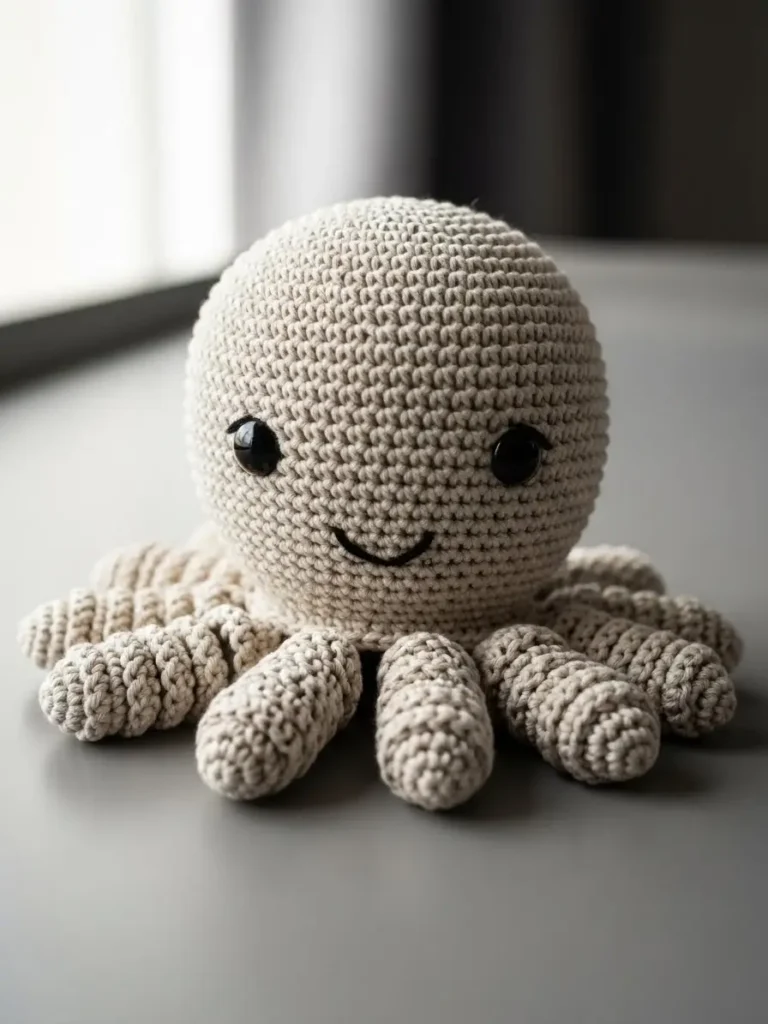
- Best yarn: 100% cotton (tight stitch, easy wash).
- Modern look tip: soft muted tones with one contrast stripe.
- Gift test: “Can you make it safe with no hard parts?” Yes, if you embroider and stitch tight.
10. Diaper Cover (Wool Soakers)
Cloth diaper families love wool soakers. Wool can resist moisture when treated and still stay breathable.
That can help reduce skin irritation for some babies.
Keep shaping smooth so it fits over a diaper without bulky seams.
Include simple care notes since wool care can feel new to many parents.
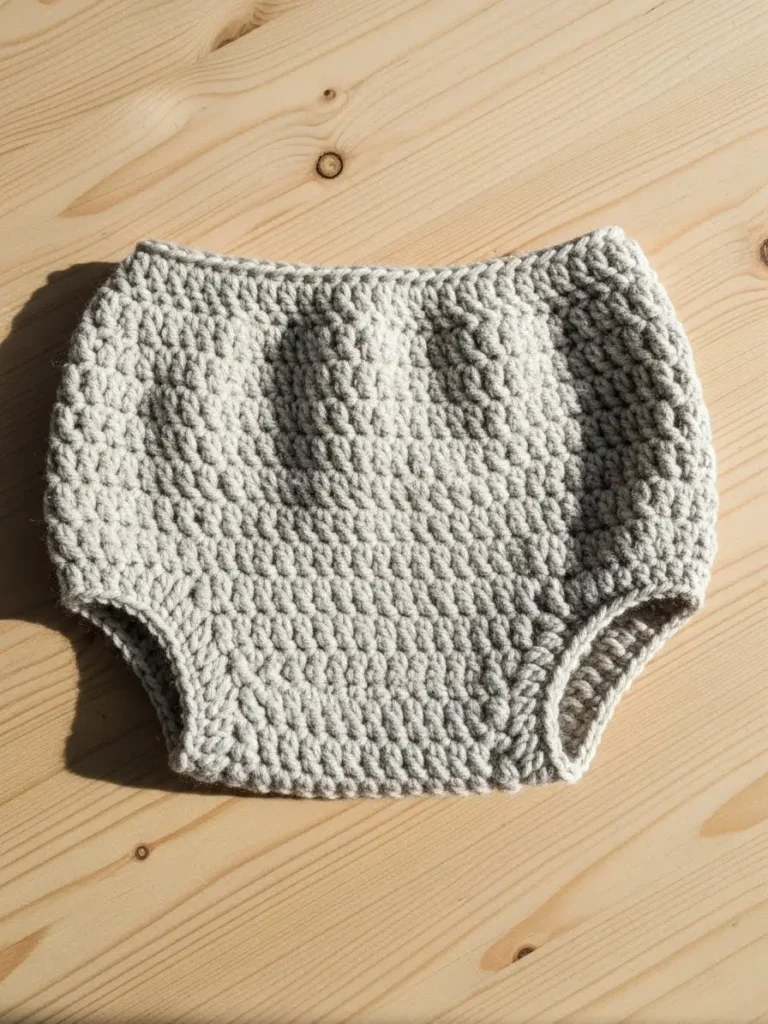
- Best yarn: wool that can handle gentle washing, or a blend made for baby wear.
- Modern look tip: simple shorts shape in a solid color.
- Gift test: “Does this match how they diaper?” Ask first if possible.
11. Teething Ring Rattle (Wood + Crochet)
A wood ring plus crochet cover makes a clean, modern toy that fits a diaper bag.
Babies can grip the ring, explore texture, and mouth the toy.
Use untreated wood sold for baby toys. Use smooth cotton and tight stitches.
Keep the crochet piece small so it dries fast after washing.
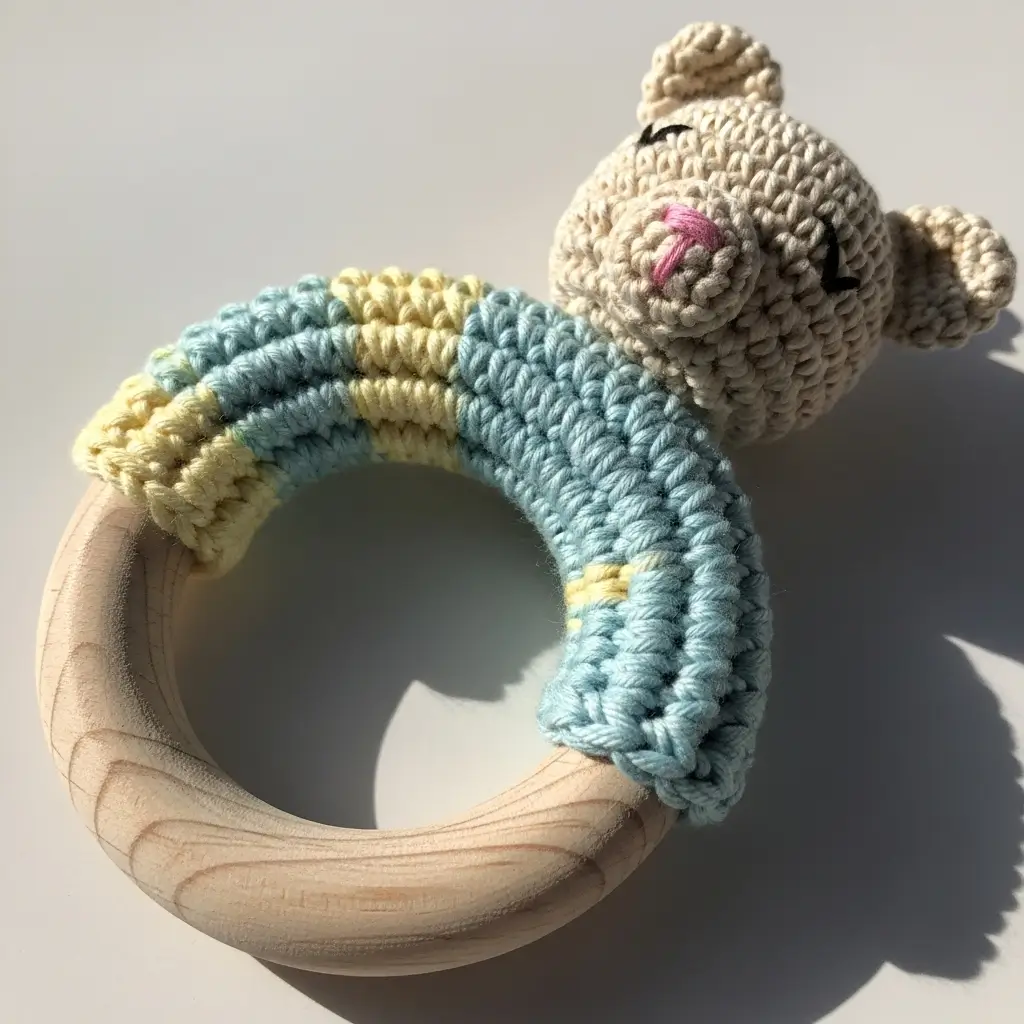
- Best yarn: smooth cotton.
- Modern look tip: simple animal face or pure texture with bobbles.
- Gift test: “Would a parent pack it?” If yes, it will get used.
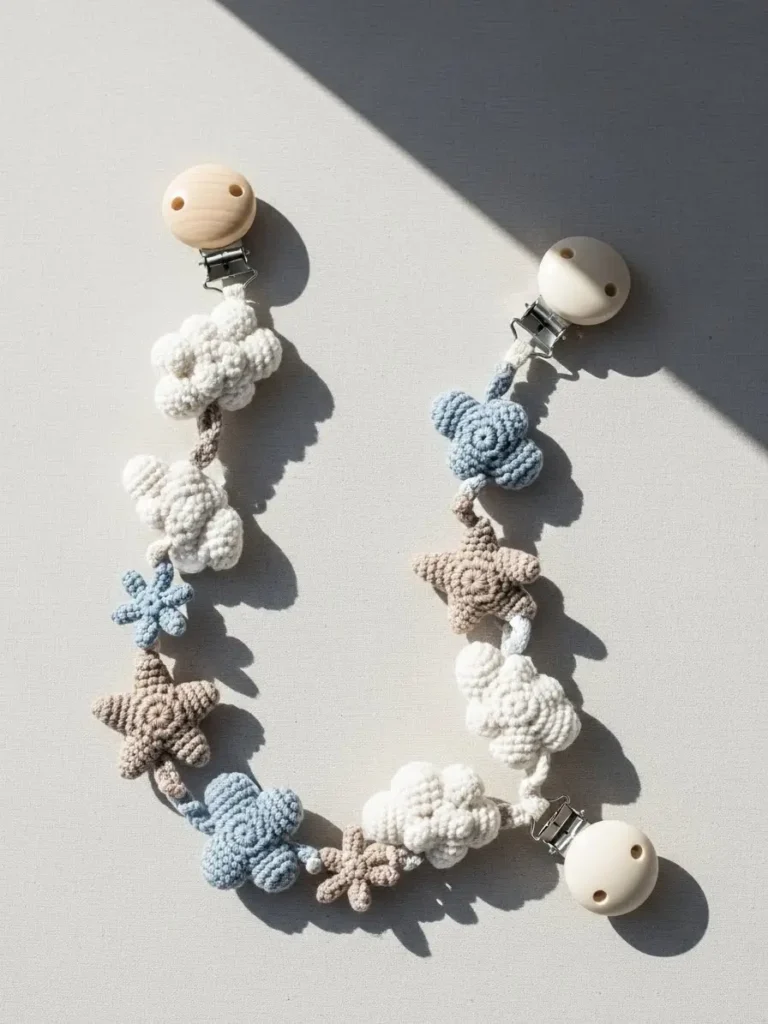
12. Stroller Chain Mobile (Clip-On)
A stroller chain keeps toys from hitting the ground.
It also adds movement and visual interest during walks.
Use strong clips made for stroller use and a sturdy cord.
Keep shapes simple: stars, clouds, circles, or small animals.
- Best yarn: cotton (holds shape well).
- Modern look tip: two colors max, spaced evenly.
- Gift test: “Does it prevent a daily problem?” Yes: dropped toys.
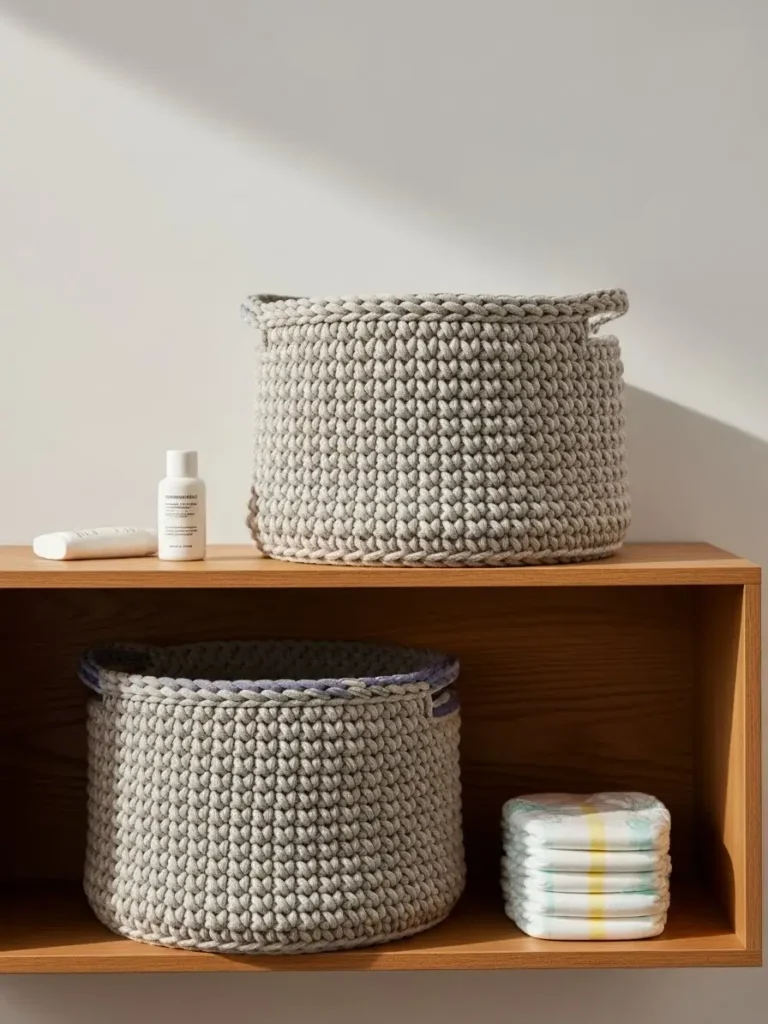
13. Nursery Storage Baskets
Storage helps during the newborn stage. Baskets hold diapers, creams, socks, and wipes.
They also look better than many plastic bins.
Use T-shirt yarn or hold multiple strands together for a firm wall.
Add a simple label tag if you want, but avoid hard parts if the basket sits near a crib.
- Best yarn: T-shirt yarn or thick cotton cord.
- Modern look tip: neutral basket with one colored rim.
- Gift test: “Will they use it after baby stage?” Yes, which adds value.
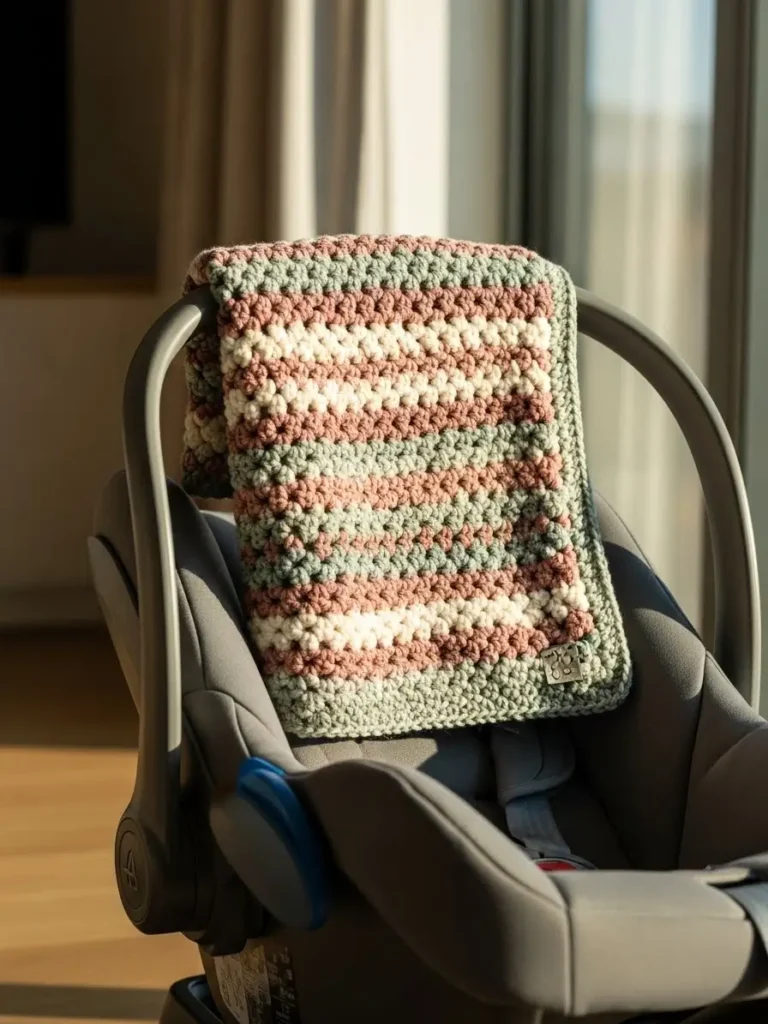
14. The Car Seat Blanket (Warmth Over the Harness)
Parents need warmth that does not interfere with the car-seat harness.
A small blanket that tucks over the buckled baby fits the routine and keeps things simple.
Make it dense and not too large. A blanket that drags becomes a hassle.
Keep it soft and easy to wash since it will travel everywhere.
- Best yarn: washable yarn with soft drape.
- Modern look tip: clean rectangle with a simple border.
- Gift test: “Does it solve a real problem?” Yes: warmth during car trips.
Related Post: Ice Skating Outfits Casual That Feel Warm
Quick question for makers
Which of these crochet baby projects would you want to make first: a lovey, booties, or washcloths?
What makes that one feel “most useful” to you?
Key takeaways
- ✓Build for real life: wash often, handle stress, and stay soft.
- ✓Keep it safe: embroider faces, stitch tight, and secure ends in more than one direction.
- ✓Pick modern style: solid colors plus texture often looks cleaner than busy stripes.
- ✓Gifts work better with care notes: include wash steps and fiber info.
Add a Care Card (Parents Love This)
A care card turns a handmade gift into an easy gift.
It also saves your work from getting ruined by the wrong wash cycle.
Copy/paste care wording
- Machine wash cold or cool on gentle cycle.
- Place in a mesh laundry bag if possible.
- Tumble dry low or lay flat to dry (based on yarn label).
- Avoid fabric softener for cotton washcloths (it can reduce absorbency).
- If you see a loose end, trim nothing. Tie it and stitch it down.
Do you include care notes with your crochet gifts, or do you keep it simple and skip them?
What have you learned from past gifts?
Frequently Asked Questions
Is acrylic yarn safe for crochet baby items?
Many parents use acrylic baby yarn because it can wash well and resist stains.
The key is to choose soft, quality yarn and avoid scratchy budget skeins.
For items that babies chew, smooth cotton often works better because it stays firm and sheds less fuzz.
What is the best size for a crochet baby blanket?
A stroller or receiving blanket size (about 30″ x 35″) fits more routines than a large crib blanket.
Parents can use it in the stroller, as a lap blanket, for tummy time, and for travel.
If you want to size up, make it wider before you make it longer so it does not drag.
How do I wash handmade crochet baby gifts?
Follow the yarn label first, then keep your care plan simple.
Most parents prefer gentle cycle in cool water with mild detergent.
A mesh laundry bag helps protect textured stitches and stops snagging in the wash.
Are safety eyes safe for babies?
Even “safety eyes” can come loose if tension changes, yarn stretches, or the washer does not grip as planned.
For baby gifts, embroidery removes the hard-part risk.
A simple stitched face can look modern, calm, and cute.
How long does it take to crochet baby projects?
Time depends on yarn weight, stitch density, and your comfort level.
Washcloths and booties can take one evening.
A textured stroller blanket can take a weekend, while fine-yarn heirloom pieces can take longer.
Final thoughts
The best crochet baby projects do not chase trends. They fit real routines.
When you choose soft yarn, stitch with care, and keep parts safe, your gift becomes a daily helper and a long-term keepsake.
Share your experience in the comments below: which baby item gets the most use in your home, and what do you wish gift-givers knew before they crochet for babies?