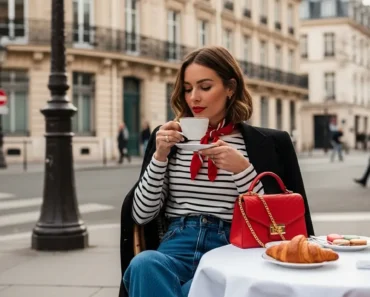
What if the style rules you’ve been following are actually making you look older instead of more vibrant?
Many women over 60 struggle with outdated fashion advice that tells them to fade into the background. The truth is, your sixties are the perfect time to embrace bold, confident style choices that celebrate who you’ve become.
Fashion at 60 represents a powerful opportunity to express decades of wisdom, experience, and refined personal style. How a 60 Year Old Woman Dress goes far beyond following trends or adhering to restrictive age-based rules. This stage of life invites you to curate a wardrobe that genuinely reflects your authentic self—one that makes you feel confident, comfortable, and absolutely radiant.
The modern approach to style at 60 focuses on quality over quantity, fit over fads, and personal expression over prescribed norms. Women today refuse to accept outdated fashion restrictions based solely on age. Instead, they’re embracing clothing that enhances their best features, reflects their lifestyle, and makes them feel empowered every single day.
Building a wardrobe for your sixties means making thoughtful choices about what works for your body, your life, and your personal aesthetic. It’s about investing in pieces that serve multiple purposes, choosing fabrics that feel luxurious against your skin, and selecting colors that illuminate your complexion. Most importantly, it’s about feeling absolutely fantastic in everything you wear.
This comprehensive guide reveals 9 empowering style rules specifically designed for how a 60 Year Old Woman Dress with confidence and grace. These aren’t restrictive commandments but rather liberating principles that help you look polished, feel comfortable, and express your unique personality through fashion. Get ready to transform your wardrobe and your relationship with style.
Why Style Matters More at 60
Your sixties mark a distinctive phase where you’ve accumulated knowledge about what works for you, yet you’re still vibrant, active, and engaged with life. How a 60 Year Old Woman Dress directly impacts confidence, self-perception, and how others respond to you.
The Confidence Connection
Research shows that what we wear affects our psychological state and performance. When you feel good about your appearance, you carry yourself differently. Your posture improves. You make more eye contact. You engage more confidently in social and professional situations. This phenomenon, sometimes called “enclothed cognition,” demonstrates the powerful link between clothing and confidence.
At 60, many women report feeling more comfortable in their own skin than ever before. Your wardrobe should support and enhance this self-assurance, not undermine it with ill-fitting or inappropriate choices. The right outfit can set the tone for your entire day, influencing how you interact with the world.
Breaking Age-Based Fashion Myths
Outdated advice telling women to avoid certain colors, lengths, or styles after 60 does more harm than good. These arbitrary rules often stem from decades-old thinking that equated aging with invisibility. Modern style philosophy rejects these limitations entirely.
Today’s approach to how a 60 Year Old Woman Dress focuses on what flatters your current body and reflects your personality, regardless of age. The fashion industry increasingly recognizes that style doesn’t expire at any particular birthday. Women like Helen Mirren, Diane Keaton, and countless others demonstrate that the sixties can be a style peak, not a decline.
Style as Self-Expression
Your clothing choices communicate before you speak. They signal your personality, values, and how you see yourself. At 60, you have the freedom to dress exactly how you want, unencumbered by the need to impress others or conform to corporate dress codes that may have restricted your choices in earlier decades.
This freedom transforms getting dressed from a daily chore into an act of creative self-expression. Whether you prefer classic elegance, bohemian flair, modern minimalism, or bold statement pieces, your wardrobe should authentically represent who you are now.
Let’s talk about this: What outdated fashion rule have you been following that you’re ready to break? Have you avoided certain colors or styles simply because someone told you they weren’t “age-appropriate”? Share your thoughts in the comments!
9 Empowering Style Rules for a 60 Year Old Woman Dress Wardrobe
Building a stylish and confidence-boosting wardrobe at 60 requires strategic thinking and intentional choices. These 9 comprehensive rules provide a framework for how a 60 Year Old Woman Dress can achieve effortless elegance every day.
1. Prioritize Excellent Fit
Fit forms the foundation of every stylish outfit. Even the most expensive designer piece looks mediocre if it doesn’t fit properly. Conversely, an affordable item that fits perfectly can look luxurious. For a 60 Year Old Woman Dress wardrobe, achieving proper fit is non-negotiable.
Understanding What “Good Fit” Means
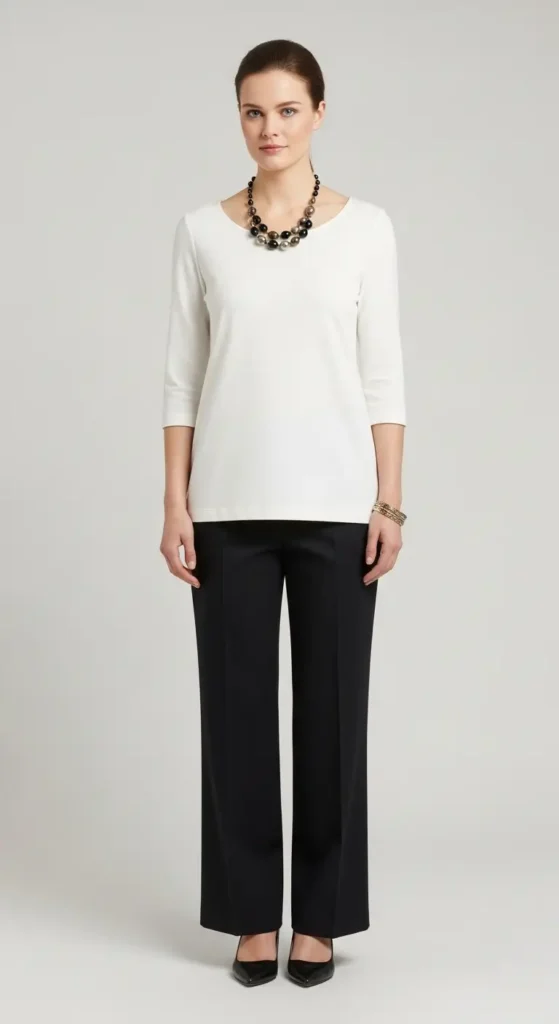
Proper fit means clothes skim your body without clinging or gaping. Garments should follow your natural shape without restricting movement or creating uncomfortable pressure points. Too-tight clothing creates unflattering bulges and visible lines. Too-loose clothing adds unnecessary volume and can make you appear larger than you are.
For tops, check that shoulders seams sit at the edge of your shoulders, not drooping down your arms or pulling across your back. The bust area should lie smooth without gaping buttons or pulling fabric. Sleeve length should hit at the wrist bone when your arms hang naturally.
For trousers and skirts, the waistband should sit comfortably at your natural waist or slightly below, without digging in or requiring constant adjustment. The hip area should have enough room to prevent pulling or puckering. Length matters significantly—trousers should skim the top of your shoes without dragging, while skirts should hit at a flattering point on your leg.
The Tailoring Advantage
Finding off-the-rack perfection is rare because manufacturers design for average body types that may not match yours. This reality makes a good tailor one of your most valuable style resources. Simple alterations transform good pieces into great ones.
Common alterations that deliver dramatic improvements include hemming trousers and sleeves, taking in or letting out waists, shortening jacket sleeves, and tapering pant legs. These modifications often cost less than you’d expect but significantly enhance how your 60 Year Old Woman Dress wardrobe looks and feels.
When shopping, look for pieces that fit your largest area well, knowing that you can alter other areas. It’s easier to take garments in than to let them out. A jacket that fits your shoulders perfectly but needs the waist taken in represents a better purchase than one that’s too tight across the shoulders.
The Fitting Room Protocol
Always try before you buy, even if you’ve worn the same size for years. Sizing varies dramatically between brands and even between different styles from the same manufacturer. Move around in the fitting room. Sit down, raise your arms, bend over. These movements reveal fit issues that standing still won’t show.
Bring or wear appropriate undergarments when trying clothes. The bra you’re wearing affects how tops fit. Bring shoes with the heel height you plan to wear with trousers or skirts, as this affects how hemlines fall.
2. Invest in Quality Fabrics
The material of your clothing dramatically impacts appearance, comfort, and longevity. Quality fabrics elevate every aspect of how a 60 Year Old Woman Dress, creating a polished look that cheap materials simply cannot achieve.
Natural Fibers and Their Benefits
Cotton: Breathable, comfortable, and versatile. High-quality cotton feels soft and substantial, not thin or scratchy. Look for long-staple cotton varieties like pima or Egyptian cotton in shirts and tops. Cotton works beautifully year-round but excels in warm weather.
Linen: The ultimate warm-weather fabric. Linen breathes exceptionally well and becomes softer with each wash. Yes, it wrinkles, but quality linen’s relaxed texture is part of its charm. Choose linen for summer dresses, trousers, and jackets.
Silk: Luxurious, temperature-regulating, and elegant. Silk drapes beautifully and feels wonderful against skin. While delicate and requiring special care, silk blouses, scarves, and dresses add instant sophistication to a 60 Year Old Woman Dress wardrobe. Silk blends offer easier maintenance with similar benefits.
Wool: Not just for winter. Lightweight wool and wool blends work across seasons. Merino wool is particularly soft and comfortable. Wool naturally resists wrinkles and odors, making it ideal for travel. Cashmere, the most luxurious wool variety, provides exceptional softness and warmth without bulk.
Recognizing Quality Fabric
Touch tells you much about fabric quality. Quality fabrics feel substantial without being heavy. They have body and structure rather than feeling limp or flimsy. Check the fabric’s drape by holding a sleeve or skirt edge—quality material flows gracefully rather than hanging stiffly or collapsing limply.
Examine weave density by holding the fabric up to light. Loose weaves that let significant light through won’t hold their shape well. Check stitching and seams—quality construction with small, even stitches indicates the manufacturer invested in good materials throughout.
Read care labels. Natural fiber content generally signals higher quality, though modern technical fabrics sometimes outperform natural ones for specific purposes. Avoid garments that feel scratchy, leave residue on your hands, or pill immediately when rubbed.
When Synthetics Make Sense
Quality synthetic and blended fabrics serve important purposes. Performance fabrics with moisture-wicking properties work well for active wear. Stretch blends containing small amounts of elastane add comfort and ease of movement. Modern polyester blends can offer durability and wrinkle resistance without looking cheap.
The key is choosing high-quality synthetics designed to mimic natural fiber properties rather than cheap alternatives that look and feel plastic. A well-made polyester blend can be a practical addition to your wardrobe for travel or occasions requiring easy care.
3. Embrace Color and Print
Color wields remarkable power in fashion. The right colors brighten your complexion, emphasize your eyes, and project confidence. For a 60 Year Old Woman Dress approach, understanding and embracing color transforms your entire look.
Discovering Your Best Colors
Your ideal colors depend on your skin undertone, hair color, and eye color. Understanding seasonal color analysis helps identify shades that enhance your natural coloring. While professional color analysis provides detailed guidance, you can start with simple observations.
Hold different colored fabrics near your face in natural light. Notice which colors make your skin look clearer, brighter, and more vibrant. These are your colors. Colors that make you look washed out, sallow, or tired should be avoided near your face (though they might work in skirts or trousers).
Cool undertones (pink or blue-based) typically look best in jewel tones like sapphire, emerald, ruby, and amethyst, plus cool grays, navy, and pure white. Warm undertones (yellow or golden-based) glow in warm colors like coral, gold, olive, warm browns, and cream. Neutral undertones can wear both warm and cool colors but should pay attention to intensity and clarity.
Building a Color Palette
Create a wardrobe color palette of 5-7 colors that work harmoniously together. This strategy ensures everything mixes and matches easily, maximizing outfit combinations. Include 2-3 neutral base colors (black, navy, gray, brown, or cream) for bottoms and layering pieces, plus 3-4 accent colors that flatter you and reflect your personality.
Don’t let anyone tell you that certain colors are “too young” or inappropriate for a 60 Year Old Woman Dress. If a vibrant fuchsia, bold red, or rich purple makes you feel amazing, wear it with confidence. The only rule is that colors should flatter your complexion and align with your style preferences.
Pattern and Print Strategies
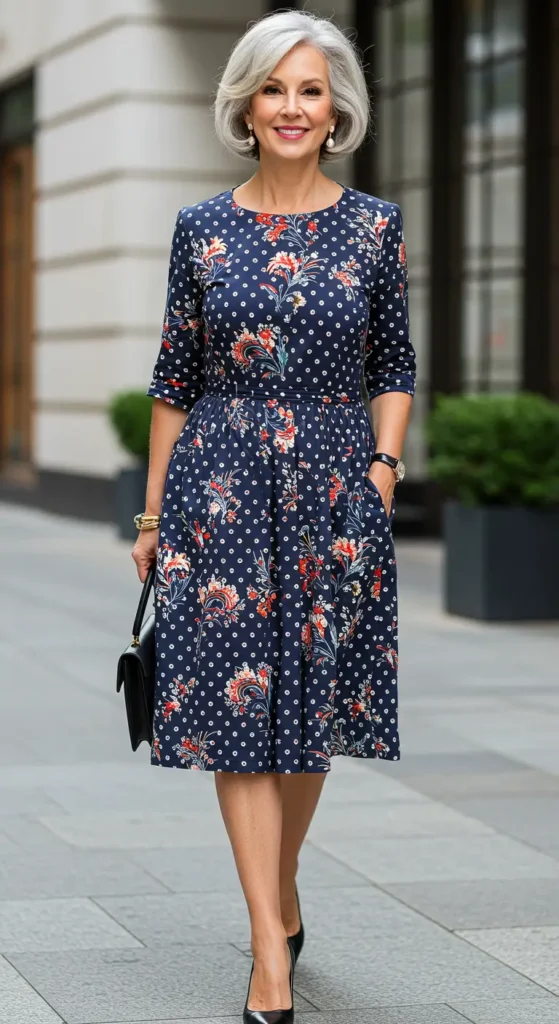
Prints add visual interest and personality to your wardrobe. Choose print scales proportional to your body size—petite frames often look best in smaller prints, while taller or larger frames can carry bigger, bolder patterns.
Classic prints like stripes, florals, geometric patterns, and abstract designs each create different effects. Vertical stripes elongate. Small florals feel romantic. Geometric patterns project modern confidence. Choose prints that resonate with your aesthetic.
Balance printed pieces with solid colors in the rest of your outfit. A printed top pairs well with solid trousers or skirts. A printed dress can be layered with a solid jacket or cardigan. This balance keeps your look sophisticated rather than overwhelming.
We’re curious: What’s your signature color—the one that always makes you feel confident and gets you compliments? Or have you been avoiding color and sticking to neutrals? Let’s discuss in the comments!
4. Find Your Perfect Dress and Skirt Lengths
Hemline placement significantly affects your overall silhouette and comfort level. For a 60 Year Old Woman Dress collection, discovering your most flattering lengths ensures you always feel confident and appropriately dressed.
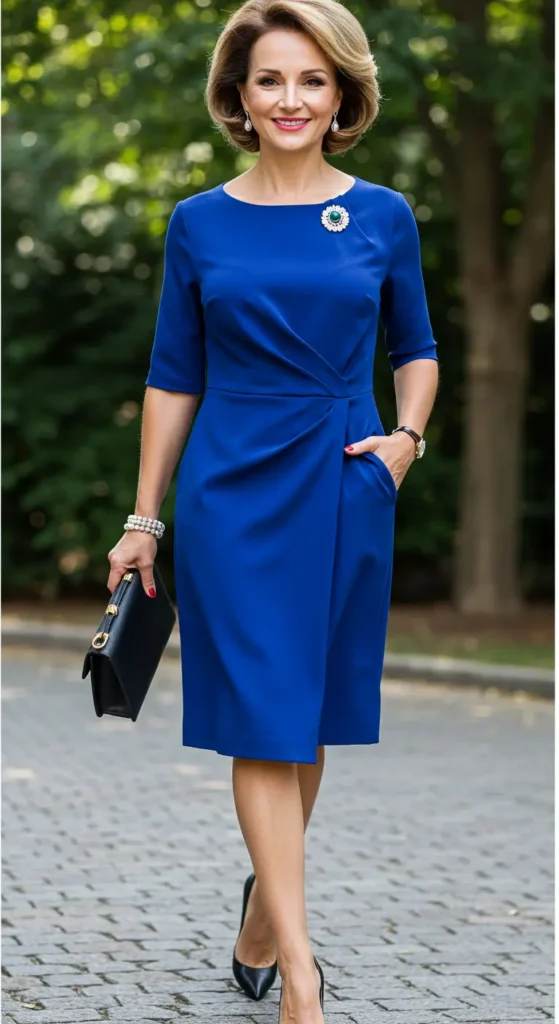
The Most Flattering Length Options
Just above the knee: This classic length works for most women and occasions. It provides coverage while still showing leg, creating a balanced proportion. Ensure “above the knee” means 2-3 inches above, not several inches higher, for age-appropriate elegance.
At the knee: Perhaps the most universally flattering and comfortable length for a 60 Year Old Woman Dress wardrobe. This length offers modest coverage while maintaining a contemporary look. It works for virtually any occasion from casual to formal.
Just below the knee: An elegant option that adds sophistication. This length elongates legs while providing ample coverage. It pairs beautifully with heels or flats and works across seasons.
Midi length (mid-calf): The modern midi length has become incredibly popular and flattering. Hitting at the widest part of your calf or just below creates an elongated silhouette. Midi lengths look particularly chic with ankle boots or pointed-toe heels.
Tea length (between knee and ankle): This graceful length works beautifully for special occasions. It’s feminine and elegant without being overly formal. Tea-length dresses and skirts create a vintage-inspired, romantic aesthetic.
Length Considerations for Your Body
Your height affects how different lengths look. Petite women (under 5’4″) should be cautious with midi and tea lengths, which can overwhelm smaller frames. Knee-length or just-above-knee often works best, though a well-proportioned midi can work with heels.
Taller women (over 5’8″) carry all lengths beautifully but may struggle to find ready-made dresses with adequate length. Midi and maxi lengths often work especially well, though shorter lengths can look chic with the right proportions.
Consider your leg shape when choosing lengths. If you feel most confident about your legs from knee up, knee-length or slightly above flatters best. If you prefer more coverage, midi lengths offer elegance while showing less leg.
Avoid These Length Pitfalls
Certain lengths create unflattering proportions regardless of age. Avoid hemlines that hit at the widest part of your calf, which makes legs appear shorter and thicker. Steer clear of lengths that end at awkward points—the goal is to create clean, elongating lines.
Mini skirts and very short dresses rarely look sophisticated on a 60 Year Old Woman Dress, though this is about elegance rather than strict age rules. If you have fantastic legs and feel confident, a slightly shorter length (4-5 inches above the knee) can work, but anything shorter often appears incongruous with mature style.
5. Master the Art of Layering
Layering transforms basic outfits into stylish ensembles while providing temperature control and adding visual interest. For a 60 Year Old Woman Dress in the UK’s changeable climate, mastering layering proves essential.
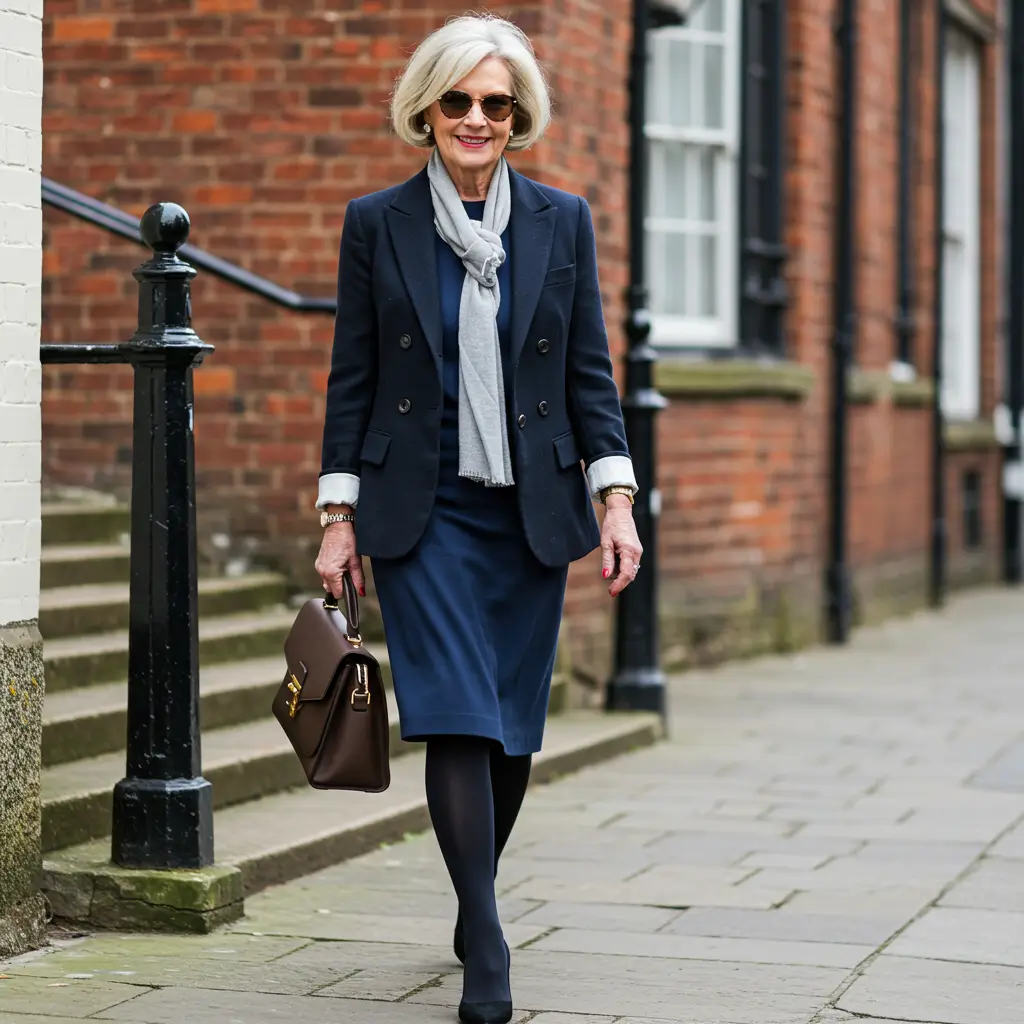
Essential Layering Pieces
Classic blazers: A well-tailored blazer elevates any outfit instantly. Choose at least one neutral blazer (navy, black, or gray) and perhaps one in a color or pattern. Blazers work over dresses, paired with trousers or jeans, and add polish to casual looks.
Cardigans: The ultimate versatile layer. Look for quality knits in various weights—lightweight for summer evenings, medium weight for spring and fall, chunky knits for winter. Both button-front and open styles serve different purposes in your wardrobe.
Lightweight jackets: Denim jackets, leather jackets, and utility jackets add casual cool to dresses and skirts. A trench coat or stylish raincoat works for weather protection without sacrificing style.
Vests and waistcoats: These sleeveless layers add interest without bulk. They work beautifully over long-sleeve tops and under jackets for extra warmth and style dimension.
Scarves and wraps: Both functional and decorative, scarves add color, texture, and warmth. Learn a few simple tying techniques to vary your looks.
Layering Techniques That Work
Start with fitted base layers and add slightly looser outer layers. This progression prevents bulk. A fitted tank or tee under a blazer looks sleek. A loose tunic under a blazer creates unflattering volume.
Vary lengths for visual interest. A longer cardigan over a shorter top and trousers creates appealing proportions. A cropped jacket over a longer top adds dimension. Mix textures—smooth silk under chunky knit, or crisp cotton under soft leather.
Keep color coordination simple when layering multiple pieces. Use your color palette to ensure pieces work together. Too many competing colors or patterns create chaos. Stick to 2-3 colors maximum in a layered outfit.
Layering for Your Body Type
If you carry weight in your middle, choose structured layers that skim rather than cling. Long cardigans that fall past the widest part of your torso create a lengthening effect. Avoid cropped layers that end at your widest point.
Petite frames should choose layers carefully to avoid drowning in fabric. Cropped or waist-length jackets and cardigans work better than very long styles. Keep layers fitted enough to define your shape.
Larger frames can carry more substantial layers beautifully. Just ensure each layer fits properly through the shoulders and doesn’t add unnecessary volume through the middle.
6. Choose Flattering Silhouettes
Understanding which clothing shapes best complement your body type forms a cornerstone of how a 60 Year Old Woman Dress with style and confidence. The right silhouettes enhance your natural shape while providing comfort.
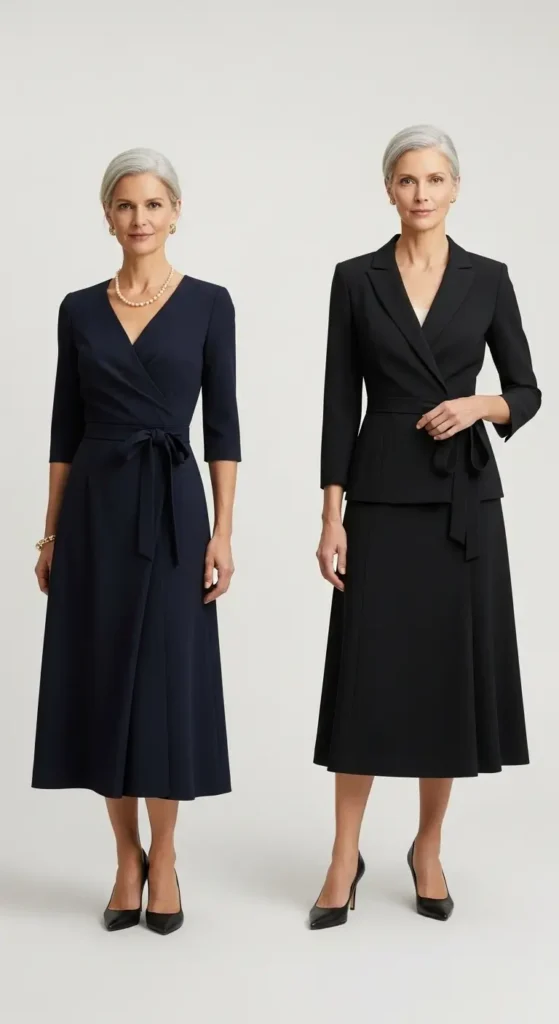
Universal Flattering Styles
A-line dresses and skirts: These classic silhouettes fit at the waist or bust and gently flare toward the hem, creating a balanced, feminine shape that flatters most body types. A-line styles skim over hips and thighs while defining the waist.
Wrap styles: Wrap dresses and tops adjust to fit your body precisely while creating a defined waist and flattering V-neckline. The diagonal lines created by wrap styles draw the eye vertically, creating an elongating effect.
Straight-leg trousers: These timeless trousers create a long, unbroken line from hip to ankle. They balance proportions beautifully and work with virtually any body type. Neither too tight nor too loose, they represent the perfect middle ground.
Shift dresses: Simple shift silhouettes work when you want ease and comfort without fussiness. They should skim your body without clinging, providing a clean, modern line that looks polished without effort.
Dressing for Your Body Shape
Apple shape (weight in the middle): Focus on pieces that define your shoulders and legs while skimming your midsection. Empire waist dresses, tunics over slim trousers, and structured jackets work well. Avoid tight-fitting waistbands and fabrics that cling to your middle.
Pear shape (hips wider than shoulders): Balance proportions by adding volume or detail on top. Boat necks, wide collars, and embellished tops draw attention upward. A-line skirts and dark bottoms minimize hip area. Avoid tight-fitting trousers and skirts that emphasize hips.
Rectangle shape (straight up and down): Create curves and definition through strategic styling. Belted dresses and tops, peplum styles, and pieces with ruching or gathering add shape. Choose styles that define your waist. Avoid shapeless shifts that emphasize straightness.
Hourglass shape (balanced bust and hips with defined waist): Celebrate your curves with styles that show off your waist. Wrap dresses, fitted blazers, and belted styles work beautifully. Avoid shapeless styles that hide your natural waist.
Proportion Principles
Create visual balance by pairing fitted pieces with looser ones. A loose top needs a more fitted bottom, and vice versa. Both pieces being loose looks sloppy; both being tight looks uncomfortable.
Consider top-to-bottom proportions. When wearing a longer tunic or sweater on top, choose a slimmer bottom to maintain balance. Cropped tops pair with higher-waisted bottoms to maintain pleasing proportions without showing skin.
7. Pay Attention to Undergarments
Foundation garments create the smooth canvas on which your clothes drape. For a 60 Year Old Woman Dress wardrobe, proper undergarments are essential but often overlooked.
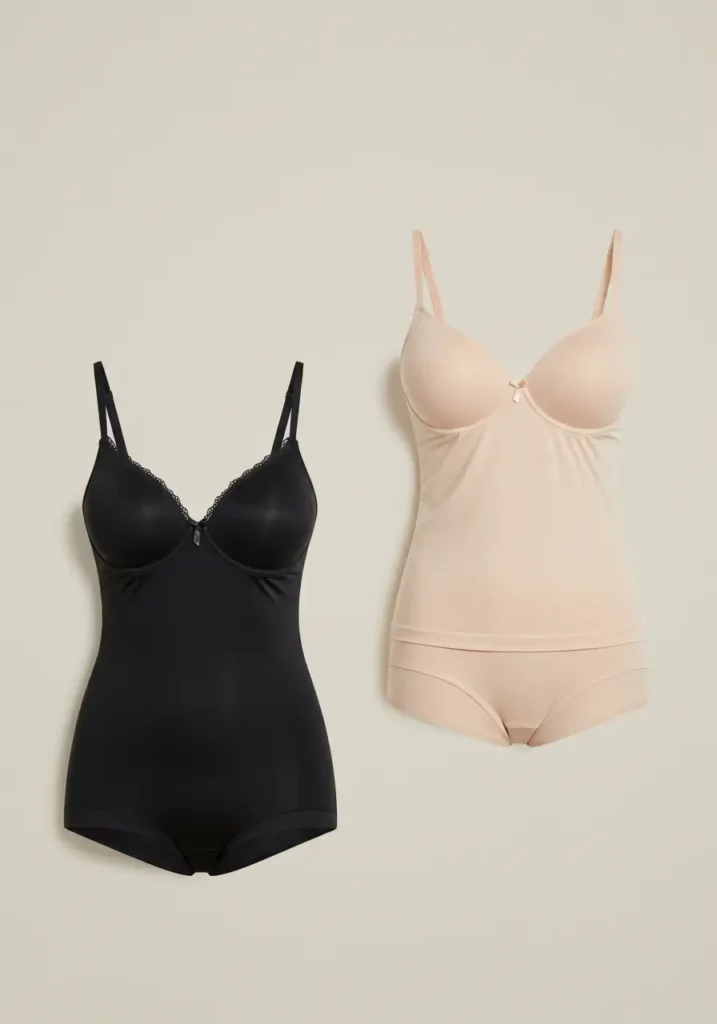
The Importance of Proper Bra Fit
Most women wear the wrong bra size. Breasts change over time, especially after menopause, pregnancy, or weight fluctuations. Get professionally fitted at least once a year. A proper bra provides support, creates a lifted shape, and improves how all your tops and dresses fit.
Signs of poor bra fit include straps that slip, bands that ride up your back, cups that gap or overflow, and underwires that dig in. Your band should fit snugly on the loosest hook (so you can tighten as it stretches over time). Straps should provide support without digging into shoulders. Cups should fully contain breast tissue without spillage or gaps.
Invest in quality bras in neutral colors (nude, black, white) that work under most clothing. T-shirt bras (seamless, molded cups) eliminate show-through under fitted tops. Supportive sports bras are essential for exercise. Consider strapless or convertible bras for different necklines.
Smoothing and Shaping Solutions
Modern shapewear offers comfortable, effective smoothing without the restriction of old-fashioned girdles. Light control shapers smooth lines without feeling constricting. They’re particularly useful under fitted dresses or clingy fabrics.
Choose shapewear carefully. It should smooth, not squeeze. If you can’t breathe comfortably, it’s too tight. Look for pieces that target your specific concerns—high-waisted shapers for the tummy, mid-thigh shapers for a complete torso and hip smoothing, or camisole-style shapers for the bust and midsection.
Invisible Under Clothes
Seamless underwear eliminates visible panty lines that undermine a polished look. Choose nude colors that match your skin tone rather than white, which shows through light-colored clothing. Thongs work under very fitted skirts and trousers, though many women find them uncomfortable for daily wear.
For pants and skirts with side zips, flat-seam underwear in appropriate coverage styles prevents visible lines. Avoid underwear that’s too small (creates bulges) or too large (bunches up).
8. Select Versatile Footwear
Comfortable, stylish footwear completes every outfit while supporting your active lifestyle. For a 60 Year Old Woman Dress approach, your shoe collection should balance fashion and function.
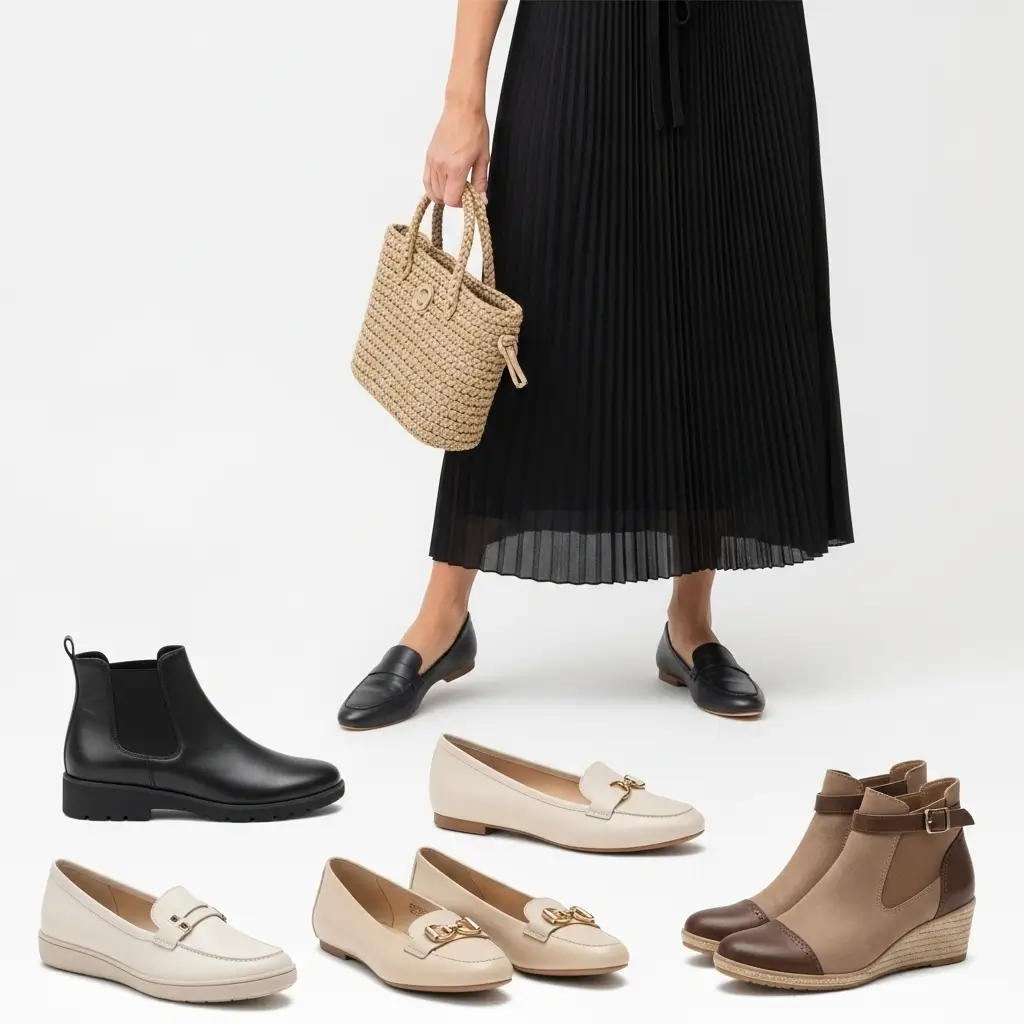
Building Your Shoe Wardrobe
Quality walking shoes or trainers: Essential for daily activities, errands, and casual outings. Modern sneakers come in sophisticated styles that work with jeans, casual trousers, and even some dresses. Choose styles in neutral colors or subtle patterns that coordinate with multiple outfits.
Classic leather loafers or oxfords: These polished flats work for smart casual occasions and provide all-day comfort. They pair beautifully with trousers, jeans, and casual skirts. Choose quality leather that molds to your feet over time.
Elegant ballet flats or pointed-toe flats: Dressier than loafers but still comfortable, these work for occasions requiring polish without heels. Pointed toes create a more elegant, elongating line than round toes.
Ankle boots: Incredibly versatile for cooler weather. They work with trousers tucked in or over them, with jeans, and with skirts or dresses with tights. Choose styles with low, stable heels and quality construction.
Low heels or wedges: For occasions when you want a bit of height and elegance. Choose heels no higher than 2 inches for comfort and stability. Wedges distribute weight more evenly than traditional heels, offering more support and stability.
Quality sandals: For warm weather, invest in supportive sandals with cushioned footbeds and secure straps. Avoid flip-flops, which provide no support and look too casual for most occasions.
Comfort Features That Matter
Look for cushioned insoles that provide arch support and shock absorption. Leather uppers breathe better than synthetic materials, reducing foot fatigue and discomfort. Rubber or crepe soles offer more cushioning and traction than thin leather soles.
Choose sensible heel heights that you can walk in comfortably for extended periods. Wider heels (block heels, wedges) provide more stability than stilettos. If you love heels but struggle with comfort, look for brands that incorporate cushioning technology into dressy styles.
Fit matters enormously. Shoes that are too small cause pain and damage. Shoes that are too large cause blisters and instability. Shop for shoes later in the day when your feet are slightly swollen—this prevents buying shoes that feel perfect in the morning but hurt by evening.
9. Accessorize Thoughtfully
Accessories transform basic outfits into personal style statements. For how a 60 Year Old Woman Dress with flair, thoughtful accessorizing adds polish and personality.
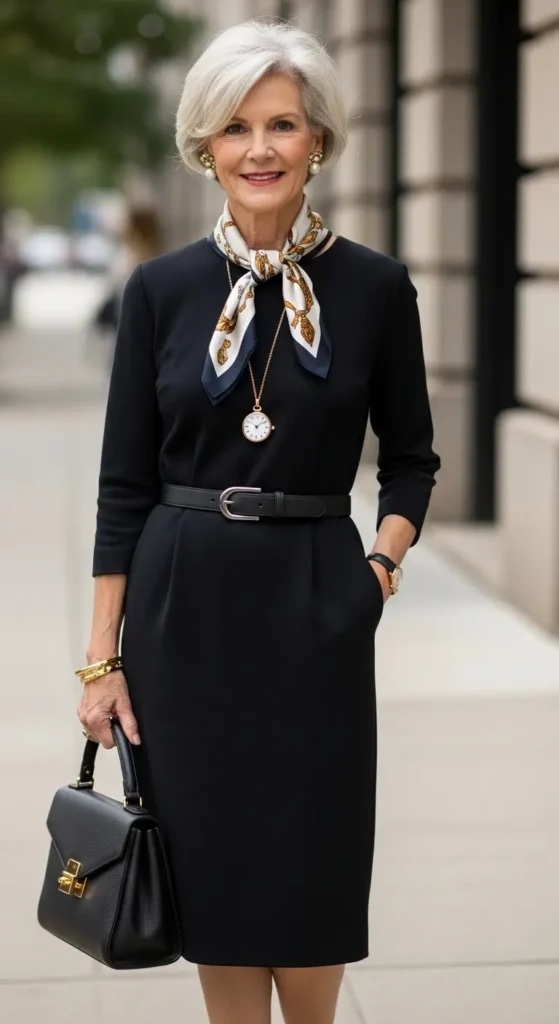
Essential Accessories
Quality handbags: Invest in well-made bags in versatile styles and colors. A structured leather tote for daily use, a smaller crossbody for hands-free convenience, and an elegant clutch or small bag for evening complete most needs. Choose neutral colors like black, brown, navy, or tan that work with your wardrobe.
Versatile scarves: Silk scarves add elegance tied around your neck, worn as a headband, or tucked into a jacket pocket as a pop of color. Larger scarves or wraps provide warmth and visual interest. Learn a few simple tying techniques to vary your looks.
Statement jewelry: Choose pieces that reflect your style and draw attention to your face. Statement necklaces, earrings, or cuffs become your signature pieces. Build a jewelry wardrobe that includes both everyday classics (simple studs, a delicate pendant, a watch) and special occasion pieces.
Belts: Define your waist, add visual interest, and adjust the fit of looser garments. Choose belts in widths and styles that work with your body type. Wider belts make bold statements; thinner belts offer subtle definition.
Quality sunglasses: Both functional and fashionable. Choose frames that flatter your face shape and provide UV protection. Classic styles like aviators or wayfarers offer timeless appeal.
Accessorizing Guidelines
Follow the “less is more” principle. Choose 2-3 accessories per outfit rather than wearing everything at once. If you’re wearing a statement necklace, keep earrings simple. Bold earrings pair better with a clean neckline than with competing necklaces.
Scale accessories to your body size. Petite frames can be overwhelmed by very large bags or chunky jewelry. Larger frames can carry bigger, bolder accessories beautifully. Match scale to proportions for harmony.
Consider your outfit’s style when accessorizing. Casual looks call for simpler accessories. Dressier outfits can handle more elaborate pieces. Match formality levels—don’t pair diamonds with denim or wear a canvas tote with an evening dress.
Your turn: Which of these 9 rules do you already follow religiously, and which one will you start implementing first? Have any of these principles changed how you think about your wardrobe? Let’s discuss!
Related Posts: Stunning Glasses for Old Woman: 7 Essential Style Secrets
Principles of Timeless Style
Beyond specific rules and garment choices, certain fundamental principles guide how a 60 Year Old Woman Dress with enduring elegance. These timeless concepts transcend seasonal trends and age-based fashion advice.
Confidence as Your Best Accessory
No outfit looks complete without confidence. When you feel comfortable and authentic in your clothes, that assurance radiates outward. Others notice and respond to this self-possession, often more than they notice specific garments.
Build confidence by choosing clothes that make you feel like your best self. If an outfit causes constant adjustment or self-consciousness, it’s not serving you well, regardless of how “on trend” or expensive it might be. Trust your instincts about what feels right.
Confidence also comes from knowing your style works. When you understand what flatters you and build a wardrobe around those principles, getting dressed becomes easier and more enjoyable. You stop second-guessing your choices and start feeling assured in your appearance.
Understanding Proportions
Proportion refers to how different elements of your outfit relate to each other and to your body. Balanced proportions create harmony and enhance your natural shape. Understanding proportion helps you evaluate why certain outfits work while others don’t.
The rule of thirds offers useful guidance. Divide your body into thirds (roughly: shoulder to waist, waist to mid-thigh, mid-thigh to ankle). Aim to visually divide your outfit at these points rather than exactly in half. A top that ends at your natural waist with trousers creates a balanced look. A tunic that hits mid-thigh with slim trousers maintains good proportion.
Vertical vs. horizontal visual weight also affects proportion. Vertical lines (like a long cardigan, a scarf hanging straight down, or a monochromatic outfit) elongate. Horizontal lines (like a belt, color-blocking, or a contrasting hem) can shorten or widen. Use these effects strategically.
Quality Over Quantity
The minimalist approach to wardrobe building focuses on fewer, better pieces rather than numerous items you rarely wear. For a 60 Year Old Woman Dress philosophy, quality trumps quantity every time.
Ten well-made items you love and wear regularly provide more value than thirty cheaper pieces that don’t fit well or suit your style. Quality garments last longer, maintain their appearance through repeated washing, and always look polished.
This approach also simplifies decision-making. When everything in your wardrobe fits well, suits your coloring, and works with multiple other pieces, getting dressed becomes effortless. You stop standing in front of a full closet feeling like you have “nothing to wear.”
Authenticity Over Trends
Trends come and go with dizzying speed. What’s fashionable one season looks dated the next. For mature style, authenticity and personal expression matter far more than trendy pieces that don’t reflect who you are.
This doesn’t mean ignoring trends entirely. Instead, adopt trends selectively through accessories or smaller pieces, ensuring they align with your established style. If wide-leg trousers are trending and you’ve always loved them, embrace the trend. If animal print is everywhere but you’ve never felt comfortable in it, skip it without guilt.
Your style should evolve naturally over time, incorporating new ideas that genuinely appeal to you rather than blindly following whatever fashion magazines dictate. This approach creates a wardrobe that feels timeless rather than tied to a specific moment.
Caring for Your Wardrobe
Proper garment care extends the life of your clothing and keeps everything looking fresh. For a 60 Year Old Woman Dress collection built on quality pieces, maintenance becomes an investment in your wardrobe.
Follow Care Instructions
Those care labels sewn into your clothes contain important information. Always read and follow washing instructions, especially for natural fibers and delicate fabrics. Ignoring care instructions leads to shrinkage, fading, fabric damage, and shortened garment life.
Hand wash delicate items like silk, cashmere, and embellished pieces. Use cold water for most items to prevent shrinkage and color fading. Turn items inside out before washing to protect the outer surface. Avoid overloading your washing machine, which prevents proper cleaning and increases wear.
Air dry when possible rather than using the dryer. Heat causes shrinkage, damages elastic, and wears out fabrics faster. Hang dry or lay flat based on the garment type. If you must use the dryer, choose low heat and remove items while slightly damp to prevent over-drying.
Store Clothes Properly
How you store garments between wearings affects their condition and longevity. Hang items that wrinkle easily (blazers, dresses, trousers, blouses) on appropriate hangers. Use padded or velvet hangers for delicate items to prevent shoulder bumps and slipping.
Fold knitwear rather than hanging to prevent stretching. Cedar blocks or lavender sachets protect against moths without harsh chemicals. Ensure your closet stays clean, dry, and organized with adequate space between garments.
For seasonal storage, clean everything before putting it away. Store in breathable garment bags or cotton storage bags rather than plastic, which can trap moisture and cause mildew.
Regular Maintenance
Address issues promptly. Sew on loose buttons before they fall off completely. Repair small tears or loose seams before they become large problems. Take clothing to a professional cleaner when needed, especially for tailored pieces, silk, or heavily soiled items.
Rotate your wardrobe to prevent excessive wear on favorite pieces. Allow clothes to rest between wearings—fabrics need time to recover their shape. Air out clothing after wearing rather than immediately returning it to your closet.
Maintain shoes by using shoe trees to help them keep their shape. Clean and condition leather regularly. Repair heels and soles before they wear down completely.
Finding Your Personal Style at 60
Developing and refining personal style represents an ongoing journey rather than a destination. Your sixties offer a perfect opportunity to clarify what you love and build a wardrobe that truly reflects your authentic self.
Assess Your Lifestyle
Your wardrobe should serve your actual life, not an imagined version. Consider how you spend your time. What activities fill your days? Do you work from home, in an office, or are you retired? How often do you attend formal events versus casual gatherings?
Calculate roughly what percentage of your time you spend in different types of clothing. If you spend 70% of your time in casual clothes, 20% in business casual, and 10% in formal wear, your wardrobe should reflect those proportions. Don’t let “someday” outfits dominate your closet while you struggle to find appropriate daily wear.
Consider climate and weather patterns. If you live where winters are harsh, invest more in quality cold-weather pieces. Warm climates call for breathable fabrics and sun protection. Match your 60 Year Old Woman Dress wardrobe to your environment.
Identify What You Love
Conduct a wardrobe audit. Try on pieces you haven’t worn recently and honestly assess why they’ve been neglected. Items that don’t fit, don’t suit your coloring, or no longer reflect your style should be removed (donated, sold, or repurposed).
Identify the pieces you reach for repeatedly. What do these beloved items have in common? Similar colors, fabrics, silhouettes, or style? These patterns reveal your true preferences. Use these insights to guide future purchases.
Create a style board or Pinterest collection with images that inspire you. Notice common themes—colors, patterns, silhouettes that appear repeatedly. This visual collection helps clarify your aesthetic when you can’t quite articulate it in words.
Experiment (Gently)
While building a foundation of timeless pieces makes sense, don’t let your style stagnate. Gentle experimentation keeps your look fresh and prevents wardrobe boredom.
Try new trends through low-commitment items like scarves, costume jewelry, or a single trendy top paired with your classic bottoms. If the experiment works, you can adopt the trend more fully. If not, you haven’t invested heavily in something that doesn’t suit you.
Shop with an open mind. Try on styles you wouldn’t normally consider. You might be surprised by what flatters you. Fashion stylists often say clients resist trying their most flattering options simply because they differ from usual choices.
Follow fashion influencers and style bloggers in your age range. Seeing how other women style current pieces provides inspiration and demonstrates that age doesn’t limit fashion options.
Building a Capsule Wardrobe
The capsule wardrobe concept offers a practical framework for how a 60 Year Old Woman Dress with minimal stress and maximum style. This approach simplifies your closet while ensuring you always have appropriate, flattering options.
What Is a Capsule Wardrobe?
A capsule wardrobe consists of a limited number of versatile, high-quality pieces that work together seamlessly. The exact number varies, but most capsules include 30-40 items (excluding accessories and undergarments) that mix and match effortlessly.
The benefits include easier outfit creation, reduced decision fatigue, less closet clutter, and more conscious purchasing. When you know exactly what you own and how pieces work together, you stop making impulse buys that don’t integrate with your existing wardrobe.
Building Your Capsule
Start with a cohesive color palette of 5-7 colors that flatter you and work together. Include neutrals for foundational pieces and accent colors for interest. Every piece should work with at least three other pieces in your capsule.
Essential categories to include: tops (blouses, shirts, sweaters), bottoms (trousers, jeans, skirts), dresses, outerwear (blazers, cardigans, jackets), and shoes. Include a range of formality levels appropriate to your lifestyle.
Focus on quality and fit. Each piece should fit perfectly, flatter your body, and make you feel confident. Eliminate items that don’t meet these standards, regardless of how much you paid or when you bought them.
Seasonal Capsules
Many people create seasonal capsules, rotating items as weather changes. Store off-season pieces to reduce closet clutter. This approach ensures you’re only choosing from currently appropriate options, further simplifying daily decisions.
Spring/summer capsules might include lightweight fabrics, short sleeves, and brighter colors. Fall/winter capsules feature warmer fabrics, layers, and deeper colors. Core pieces can transition between seasons with different styling.
Embrace Your Most Stylish Decade
How a 60 Year Old Woman Dress comes down to confidence, authenticity, and thoughtful choices that honor who you are now. The 9 empowering style rules covered in this guide—prioritizing fit and quality, embracing color, mastering layering, choosing flattering silhouettes, investing in proper undergarments and footwear, and accessorizing thoughtfully—provide a framework for building a wardrobe that makes you look and feel absolutely fantastic.
Your sixties represent a time of freedom and self-knowledge that your younger self could only dream about. You know what you like, what works for your body, and what makes you feel confident. Use this wisdom to create a personal style that celebrates your journey and reflects your authentic self.
Style at 60 isn’t about following rigid rules or chasing youth. It’s about curating a wardrobe of quality pieces that fit beautifully, flatter your coloring, and work seamlessly together. It’s about comfort without sacrificing elegance, and personal expression without concern for arbitrary age restrictions.
Take these principles and make them your own. Adapt them to your body, your lifestyle, your climate, and your personal aesthetic. The goal isn’t perfection but rather creating a wardrobe that serves you well and makes getting dressed each day a pleasure rather than a source of stress.
Now we want to hear from you: What’s the biggest style challenge you face at 60? Is it finding the perfect fit, choosing colors that flatter, or perhaps breaking free from outdated fashion rules you’ve been following for years? Share your experiences and questions in the comments—let’s learn from each other!
Related Posts: How to Discover Personal Style: A Guide for UK Fashion Enthusiasts
Frequently Asked Questions About Dressing at 60
What are the essential wardrobe pieces every 60-year-old woman should own?
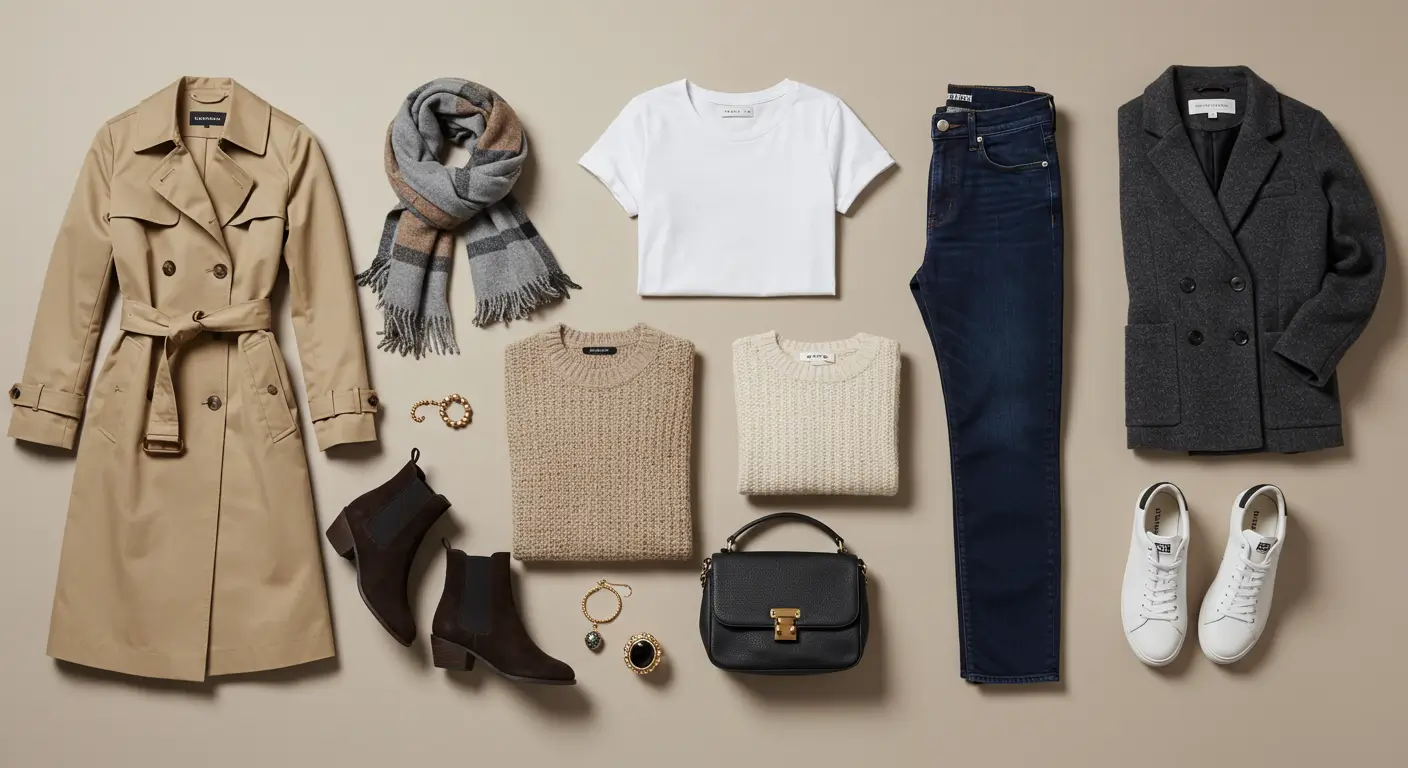
Key pieces for a 60 Year Old Woman Dress wardrobe include well-fitting dark denim jeans, tailored trousers in neutral colors, a perfectly fitted blazer, quality knitwear in various weights, a classic trench coat, versatile knee-length or midi dresses, elegant blouses in silk or quality cotton, and comfortable yet stylish footwear including quality walking shoes, elegant flats, and ankle boots. Build your wardrobe around these foundation pieces, adding accent items that reflect your personality. Focus on quality over quantity—ten versatile, well-made pieces you love provide more value than a closet full of items you rarely wear.
Should I avoid certain styles or colors after 60?
The idea that certain colors or styles become off-limits at 60 is outdated and limiting. Instead of avoiding specific items based on age, focus on what flatters your current body, complexion, and lifestyle. Choose clothes that fit properly, complement your coloring, and make you feel confident. That said, extremely revealing styles, very short hemlines, and clothing clearly designed for teenagers often don’t align with mature elegance. The question isn’t whether something is “age-appropriate” but whether it enhances your natural beauty and reflects your authentic style. If bright red makes you feel fabulous, wear it with confidence. If mini skirts don’t align with your personal style, skip them—regardless of anyone’s approval.
How can I incorporate current trends without looking like I’m trying too hard?
Adopt trends selectively through accessories or accent pieces rather than complete wardrobe overhauls. A trendy scarf, statement earrings, or contemporary handbag updates your look without overwhelming it. Try one trendy piece paired with your classic basics—a top in a current color with your favorite trousers, or an on-trend jacket over your reliable dress. This approach keeps your style fresh and current while maintaining the timeless foundation that works for a 60 Year Old Woman Dress philosophy. Choose trends that genuinely appeal to you rather than feeling obligated to follow everything. Not every trend will suit your body type, coloring, or personal aesthetic, and that’s perfectly fine.
How important is comfort when choosing clothing at 60?
Comfort is absolutely essential for how a 60 Year Old Woman Dress should feel in her clothes. You should move freely, breathe easily, and forget you’re wearing your outfit—not constantly tug, adjust, or feel restricted. However, comfort doesn’t mean sacrificing style. Modern fashion offers countless options that combine elegance with ease. Look for quality fabrics with a bit of stretch, proper fit that doesn’t bind or restrict, and appropriate garment weights for the season. Well-constructed shoes with proper support, breathable natural fibers, and clothes tailored to your body all contribute to comfortable style. When you’re comfortable, your confidence shows, and that confidence becomes your best accessory.
How do I find clothes that fit perfectly when standard sizing doesn’t work?
Standard sizing serves as a starting point, but few people fit sizing charts exactly. Try multiple sizes and different brands to find what works best for your unique proportions. Different manufacturers size their clothing differently, so you might be a size 12 in one brand and a size 14 or 10 in another. Don’t let the number on the tag affect your choices—buy what fits best. For items that almost fit perfectly, invest in alterations from a skilled tailor. Simple adjustments like hemming, taking in waists, or adjusting sleeve lengths transform good pieces into perfect ones. Many department stores offer alteration services, or find a local tailor through recommendations. The small investment in alterations makes your 60 Year Old Woman Dress wardrobe look custom-made and feel infinitely better.