Colorful Small Garden: Turn Tiny Spaces Into Vibrant Retreats
Master color, maximize space, and create a garden that looks bigger than it is—without overwhelming your budget or schedule
News Peg Ideas You Can Use Right Now
Here are 18 timely angles that connect colorful small gardens to what people notice and search for in early 2026:
1. Jewel-Tone Surge
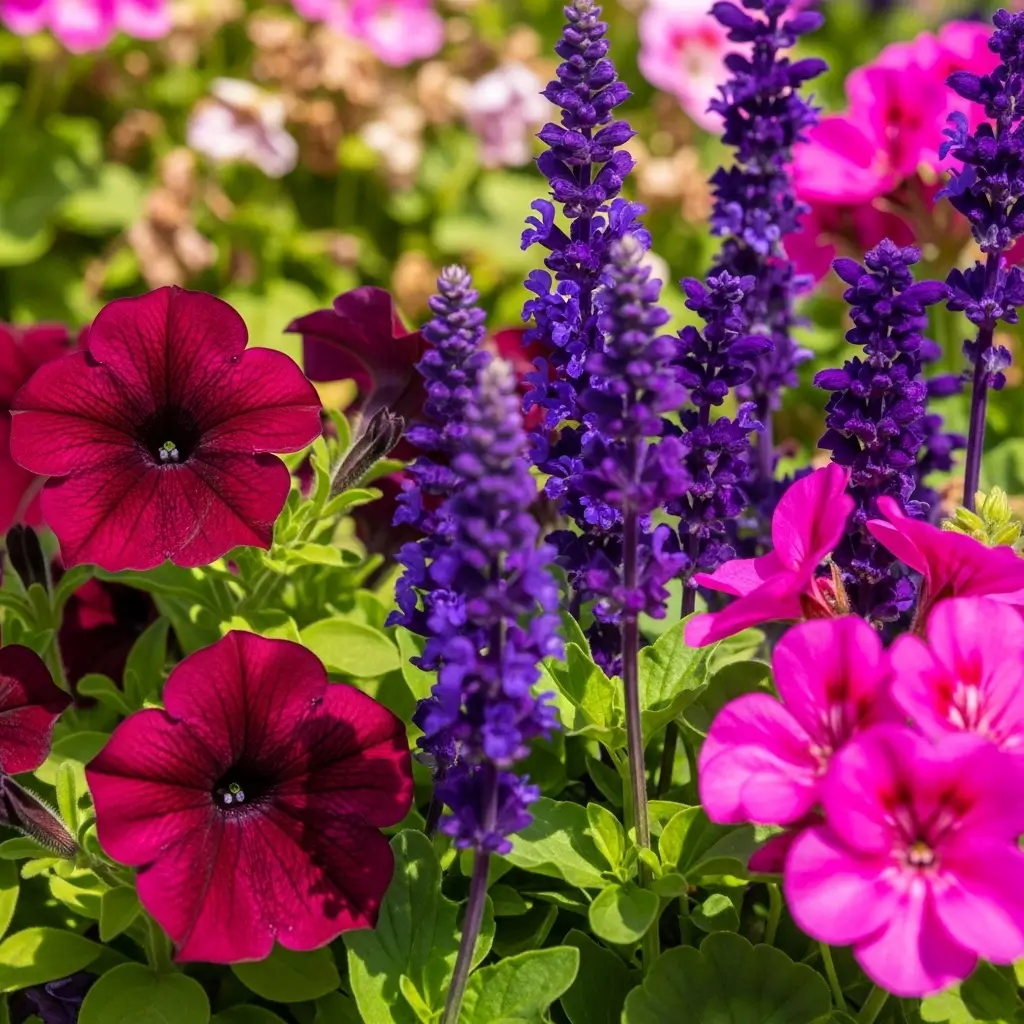
Angle: Deep burgundies, rich plums, and emerald greens are replacing pastels in 2026 garden designs
Why it matters: These saturated colors hold up better in bright summer sun and create dramatic impact in small spaces
Best format: Quick tip — “3 Jewel-Tone Plants That Won’t Wash Out in July”
2. Maximalist Planting Philosophy
Angle: Gardeners are embracing “more is more” approaches, mixing natives, edibles, and ornamentals freely
Why it matters: Gives permission to experiment and pack personality into tight quarters
Best format: Decision tree — “Is Maximalist Style Right for Your 6×8 Space?”
3. Keystone Plant Awareness
Angle: Just 14% of native plants support 90% of pollinators; colorful options exist
Why it matters: You can choose beauty AND ecological impact without sacrificing either
Best format: Checklist — “5 Colorful Keystone Plants Under $15”
4. Vertical Gardening Refinement
Angle: Compact climbing roses and clematis varieties designed specifically for narrow spaces now widely available
Why it matters: Adds color upward when ground space is maxed out
Best format: Comparison chart — “7 Vertical Bloomers: Growth Speed vs. Maintenance”
5. Cool-Tone Back, Warm-Tone Front Placement
Angle: Strategic color placement makes small gardens feel larger
Why it matters: Simple trick creates optical illusion of depth
Best format: Mini case study — “How One Balcony Gained Visual ‘Depth’ in 3 Hours”
6. Light-Colored Hardscape Trend
Angle: Pale gravel and cream pavers reflect more light, brightening shady small gardens
Why it matters: Makes colorful plants pop even in low-light conditions
Best format: Before/after visual description with cost breakdown
7. “Buy Small, Think Big” Movement
Angle: Budget gardeners are choosing 4-inch starter plants over gallon-size, saving hundreds
Why it matters: Young plants establish faster and cost 60-70% less
Best format: Budget calculator — “Your 20-Plant Color Garden: $85 vs. $280”
8. Container Color Repetition Strategy
Angle: Repeating the same hue across multiple pots creates cohesion in chaotic small spaces
Why it matters: Prevents the “garden center explosion” look beginners often create
Best format: Visual walkthrough — “The 3-Color Rule for 10+ Containers”
9. Drought-Tolerant Color Options Expanding
Angle: New cultivars of marigolds, salvia, and zinnias need 40% less water
Why it matters: Reduces maintenance and water bills while keeping color vibrant
Best format: Plant substitution guide — “Swap These 6 Thirsty Plants for Color That Lasts”
10. Green-Drenched Garden Trend with Color Accents
Angle: Lush foliage in multiple green shades provides calming base for selective bright pops
Why it matters: Creates sophisticated look without overwhelming tiny areas
Best format: Ratio guide — “The 70-30 Green-to-Color Sweet Spot”
11. Black-Eyed Susan Vine Rediscovery
Angle: This fast-growing, cheerful climber is trending for balcony railings
Why it matters: Delivers instant gratification for impatient new gardeners
Best format: Quick tip — “Seed to Bloom in 8 Weeks: Black-Eyed Susan Timeline”
12. Petunia-Marigold Power Duo
Angle: These budget bloomers remain unbeatable for months of container color
Why it matters: Proven performers at $3-5 per plant
Best format: Myth-bust — “Why ‘Boring’ Classics Actually Work Better Than Trendy Picks”
13. Overcrowding Epidemic
Angle: Most failed small gardens result from planting too close, not poor plant choice
Why it matters: Addressing the #1 beginner mistake saves money and frustration
Best format: Diagnostic quiz — “Is Your Garden Overcrowded? 5 Warning Signs”
14. Pre-Season Light Assessment
Angle: Experts now recommend waiting 4-6 weeks to observe sun patterns before buying plants
Why it matters: Prevents expensive mismatches between plant needs and reality
Best format: DIY tracking sheet — “Map Your Garden’s Sun in 7 Days”
15. Compact Climbing Rose Renaissance
Angle: New varieties stay under 8 feet with manageable cane growth
Why it matters: Brings romantic cottage charm without the sprawling mess
Best format: Variety comparison — “5 Tidy Climbers: Bloom Time vs. Fragrance”
16. Geranium Reliability
Angle: Geraniums thrive in shallow pots and handle climate swings
Why it matters: Perfect for beginners who forget to water occasionally
Best format: Troubleshooting guide — “Why Your Geraniums Stop Blooming (and How to Fix It)”
17. Cilantro-Basil-Thyme Color Bonus
Angle: Edible herbs produce colorful blooms while serving double duty
Why it matters: Functional plants reduce guilt about “wasted” ornamental space
Best format: Kitchen garden plan — “8 Herbs That Bloom: Harvest Schedule + Color Timing”
18. Watering Mistake Dominance
Angle: Overwatering ranks as the top killer of colorful container plants
Why it matters: One simple habit change saves 50% of struggling plants
Best format: Finger test tutorial — “The 3cm Soil Check That Prevents Root Rot”
How do you create a colorful small garden that feels spacious and intentional instead of cramped and chaotic?
You stand in your narrow side yard or tiny balcony, imagining bursts of color transforming the space. But doubt creeps in. Will bright flowers make it feel even smaller? Can you afford enough plants to make an impact? Where do you even start when every gardening article assumes you have sprawling beds?
The truth is, small gardens offer unique advantages. Colors appear more concentrated. Changes happen quickly. Maintenance stays manageable. You can experiment without committing to massive overhauls.
This guide shows you how to choose colors strategically, select plants that deliver maximum impact in minimum space, and avoid the expensive mistakes that make small gardens feel cluttered. You’ll learn which trendy advice to ignore and which timeless principles actually work when you’re working with 50 square feet instead of 500.
Problem & Solutions Map
Common Problems (18 scenarios)
Problem 1: Garden Looks Chaotic and Cluttered
Who it affects: Beginners buying one of every plant they like
Symptoms: No visual flow, eye doesn’t know where to land, feels messy rather than abundant
Root cause: Using 10+ different colors without repetition or pattern
Practical fix: Choose 2-3 main colors and repeat them across 60% of your plantings. Takes 1-2 hours to reorganize containers. Cost: $0 if rearranging existing plants
Prevention: Shop with a written color list; leave impulse buys at the store
Example: Maria bought 15 different petunias in 15 colors for her balcony. She moved 9 to her front step and replaced them with 3 repeating colors. The balcony instantly felt twice as large.
Problem 2: Colors Clash Instead of Complement
Who it affects: Gardeners unaware of warm vs. cool color theory
Symptoms: Orange and pink planted side-by-side create visual tension; space feels uncomfortable
Root cause: Mixing warm and cool tones without neutral buffers
Practical fix: Insert white flowers or silver foliage between clashing colors. Silver dusty miller or white alyssum work well. Cost: $12-18 for 4-6 plants, 30 minutes to plant
Prevention: Use the color wheel as a shopping tool; stick to one temperature (warm OR cool) per season
Example: James planted bright orange marigolds next to lavender purple petunias. The combination felt jarring. Adding white geraniums between them created breathing room and harmony.
Problem 3: Garden Feels Smaller Than It Is
Who it affects: Anyone using hot colors (reds, oranges) throughout the space
Symptoms: Boundaries feel closer; space appears squeezed
Root cause: Warm colors advance visually while cool colors recede
Practical fix: Move red/orange plants to the front edges. Plant blues and purples in back areas. Swap takes 2-3 hours. Cost: $0
Prevention: Plan color placement on paper before planting, marking “cool back, warm front”
Example: Sarah’s 6×10-foot side yard felt cramped with red salvia along the back fence. She swapped them for blue lobelia and moved the salvia forward. The yard gained perceived depth.
Problem 4: Plants Outgrow Space Within Weeks
Who it affects: Shoppers who ignore mature size tags
Symptoms: Containers overflow, plants smother each other, color gets hidden
Root cause: Planting 5 flowers in a pot that holds 3, or choosing varieties that spread 24 inches in a 12-inch space
Practical fix: Thin overcrowded pots immediately, transplanting extras to new containers. Time: 1 hour. Cost: $15-25 for additional pots and soil
Prevention: Research mature size before buying; follow “thriller, filler, spiller” formula with actual measurements
Example: Tom planted 7 petunias in a 12-inch hanging basket because it looked sparse at planting. Within 4 weeks, the center plants died from lack of airflow. He should have used 3-4 plants maximum.
Problem 5: Expensive Plant Failures
Who it affects: Impulse buyers who don’t assess their site conditions first
Symptoms: Plants die within 2-4 weeks despite proper watering
Root cause: Buying sun-loving plants for shady spots or vice versa without testing light levels
Practical fix: Donate struggling plants to appropriate locations; replace with correct varieties. Cost: $20-40 for replacements
Prevention: Track sun exposure for 1 week before shopping, noting hours of direct light per area
Example: Linda spent $85 on full-sun zinnias for her north-facing balcony. All died within 3 weeks. A 7-day sun observation would have shown she needed shade-tolerant impatiens instead.
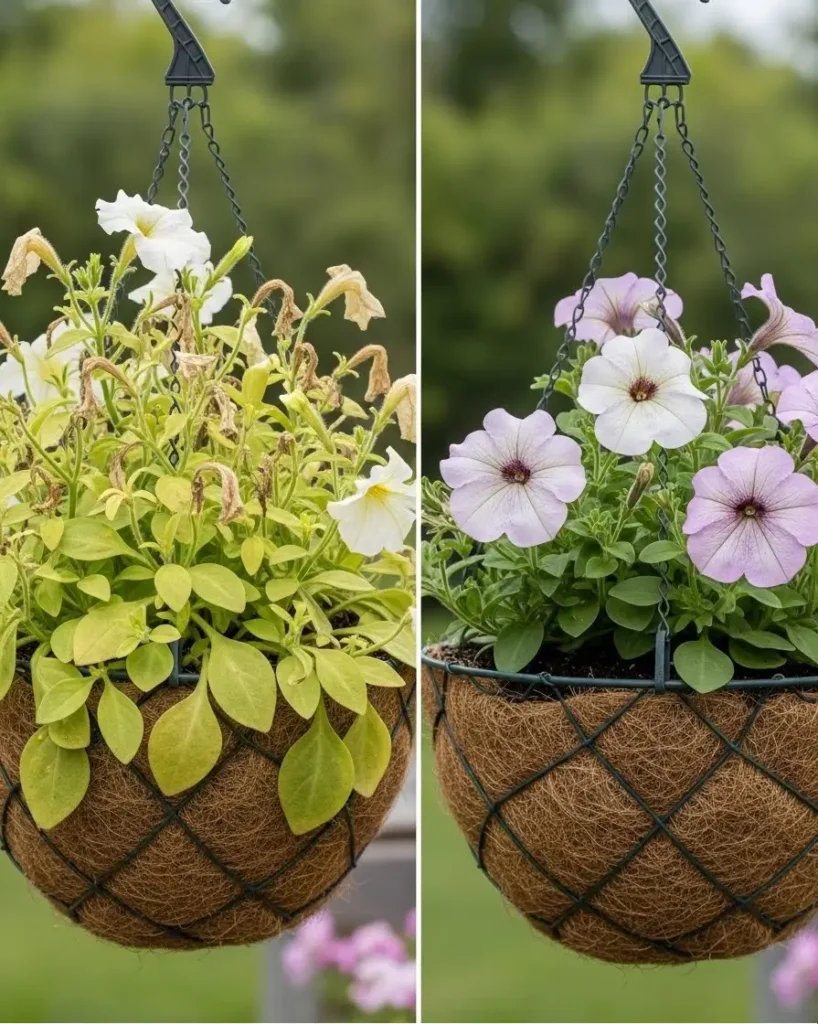
Problem 6: Overwatering Root Rot
Who it affects: Attentive gardeners who water on a schedule rather than checking soil
Symptoms: Yellow leaves, wilting despite wet soil, musty smell, plant collapse
Root cause: Watering daily without checking if the top 3cm of soil is dry
Practical fix: Stop watering immediately. Check drainage holes for blockages. If caught early, plants often recover in 1-2 weeks. Cost: $0
Prevention: Use the finger test—stick your finger 3cm into soil; water only if dry
Example: Rachel watered her colorful container garden every morning like clockwork. Her petunias yellowed and died while her neighbor’s thrived. She was drowning them. Switching to soil-check watering saved her remaining plants.
Problem 7: Colors Wash Out in Summer Sun
Who it affects: Gardeners choosing pastel varieties for full-sun locations
Symptoms: Pale pink becomes almost white; soft yellow disappears; garden loses impact by July
Root cause: Pastels reflect too much intense sunlight, appearing washed out
Practical fix: Replace pastels with jewel tones (deep burgundy, rich purple, saturated red) that hold color intensity. Time: 2-3 hours. Cost: $30-50 for 8-10 replacement plants
Prevention: Choose jewel-tone varieties for areas receiving 6+ hours of direct sun
Example: Chen planted pale pink petunias that looked gorgeous in May. By mid-July, they appeared bleached and anemic in the harsh afternoon sun. Switching to deep magenta varieties solved the problem.
Problem 8: No Blooms Despite Healthy Foliage
Who it affects: Gardeners over-fertilizing with high-nitrogen formulas
Symptoms: Lush green leaves but few or no flowers
Root cause: Nitrogen promotes foliage at the expense of blooms
Practical fix: Switch to a phosphorus-rich fertilizer (middle number on the label). Blooms typically appear within 2-3 weeks. Cost: $8-12 for flower-specific fertilizer
Prevention: Use balanced (10-10-10) or bloom-boosting (5-10-5) fertilizers on flowering plants
Example: Michael’s geraniums produced massive leaves but sparse flowers. He was using lawn fertilizer (30-0-4). Switching to a 5-10-5 formula triggered heavy blooming within 3 weeks.
Problem 9: Leggy, Stretched Plants
Who it affects: Gardeners in partial shade who chose full-sun varieties
Symptoms: Long stems with sparse leaves, plants falling over, weak growth
Root cause: Plants stretching toward insufficient light
Practical fix: Pinch back leggy growth by 1/3 to encourage bushier habit. Move containers to brighter spots if possible. Time: 15 minutes. Cost: $0
Prevention: Match plant light requirements to actual available light; choose compact varieties
Example: Emma’s sun-loving zinnias in her partially shaded patio grew tall and floppy with few blooms. Moving them to a sunnier corner and pinching them back restored compact growth.
Problem 10: Rapid Soil Drying
Who it affects: Container gardeners in full sun or windy locations
Symptoms: Soil bone dry within 24 hours; plants wilting daily
Root cause: Small container volumes, terracotta pots that breathe, or lack of water-retention amendments
Practical fix: Mix water-retention crystals into soil (follow package directions) or top-dress with 2-3cm of mulch. Cost: $8-15. Time: 30 minutes per 5 containers
Prevention: Use larger pots (minimum 12 inches diameter), add coco coir to potting mix, or switch to plastic/glazed containers
Example: David’s 8-inch terracotta pots dried out completely every afternoon, stressing his colorful petunias. Upgrading to 12-inch plastic pots and adding water crystals reduced watering from twice daily to once every other day.
Problem 11: Pest Infestations
Who it affects: Gardeners with stressed, overcrowded, or improperly watered plants
Symptoms: Aphids on new growth, spider mites causing stippled leaves, whiteflies on undersides
Root cause: Stressed plants emit chemical signals attracting pests; overcrowding creates humid pest havens
Practical fix: Spray with insecticidal soap every 3 days for 2 weeks. Thin overcrowded plantings. Cost: $6-10 for spray. Time: 15 minutes per treatment
Prevention: Maintain plant health through proper watering and spacing; inspect weekly for early detection
Example: Priya’s tightly packed container garden developed aphids that decimated her colorful diascia. Treating with soap spray and removing 3 plants to improve airflow eliminated the problem within 10 days.
Problem 12: Budget Overruns
Who it affects: Gardeners buying large, mature plants to fill space quickly
Symptoms: Spending $200-400 on plants for a small space
Root cause: Buying gallon-size plants at $12-18 each instead of 4-inch starters at $3-5
Practical fix: Return large plants if within store policy window. Replace with small sizes that establish faster anyway. Savings: $100-250. Time investment: minimal
Prevention: Always shop for the smallest healthy size; they catch up within 6-8 weeks
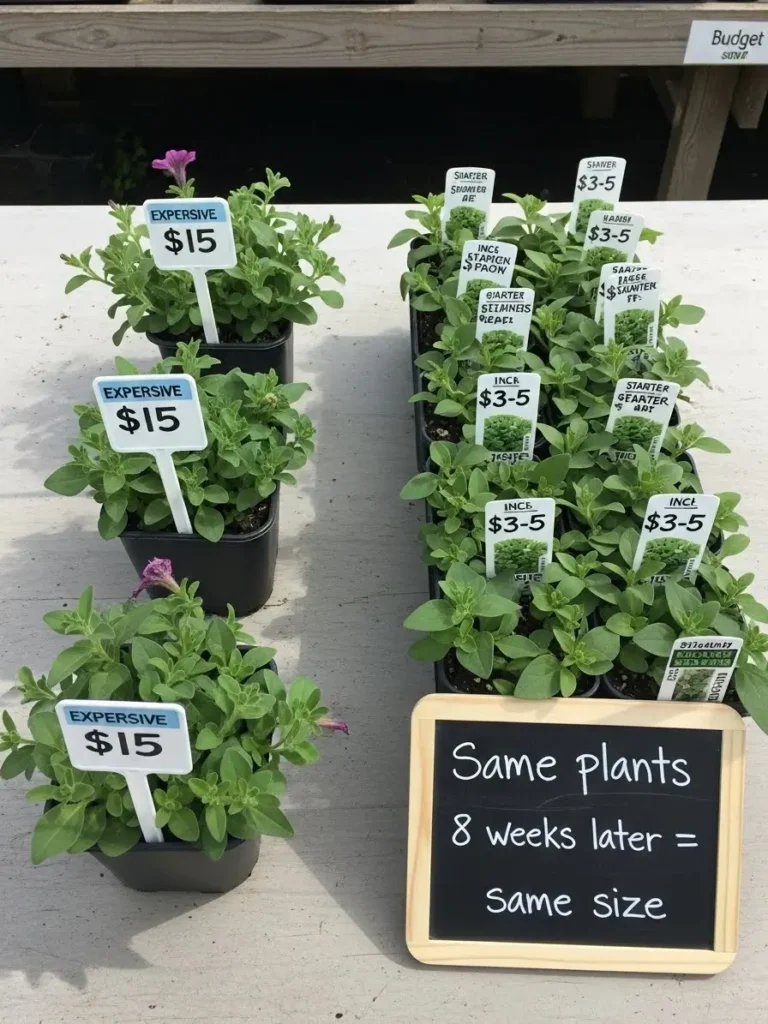
Example: Kyle spent $280 on 15 gallon-size petunias and geraniums. His neighbor Ana spent $85 on 30 four-inch plants of the same varieties. After 8 weeks, their gardens looked identical, but Kyle spent 3× more.
Problem 13: Color Gaps Mid-Season
Who it affects: Gardeners who planted everything at once in spring
Symptoms: Vibrant color in May-June, sparse blooms by August
Root cause: No succession planting or mid-season refreshing
Practical fix: Replant 30% of containers with fresh annuals in mid-July for fall color. Cost: $25-40. Time: 2 hours
Prevention: Plan for 2-3 planting windows: spring, mid-summer refresh, fall transition
Example: Beth’s colorful containers peaked in June but looked tired by late August. Adding fresh marigolds and ornamental peppers in July extended color through October.
Problem 14: Climbing Plants Overwhelming Small Spaces
Who it affects: Gardeners choosing vigorous vines without researching growth habits
Symptoms: Morning glory or clematis smothering everything, requiring weekly pruning
Root cause: Selecting full-size varieties instead of compact cultivars
Practical fix: Prune aggressively now; replace with compact varieties next season. Time: 1 hour pruning. Cost: $0 now, $15-20 for replacement plant later
Prevention: Research mature size; specifically seek “compact” or “dwarf” climbing varieties
Example: Carlos planted standard clematis on his 4-foot trellis. It grew 15 feet and took over his small patio. Switching to ‘Arabella’ (a compact variety staying under 6 feet) next year provided color without chaos.
Problem 15: Soil Compaction in Containers
Who it affects: Gardeners reusing last year’s potting soil without refreshing
Symptoms: Water pools on surface instead of absorbing; plants grow poorly despite care
Root cause: Soil breaks down over time, losing structure and drainage
Practical fix: Replace top 50% of soil with fresh potting mix, or repot completely. Cost: $15-25 for soil. Time: 1-2 hours for 10 containers
Prevention: Replace container soil annually, or at minimum refresh top 30% each spring
Example: Nina reused her container soil for 3 years. Her colorful annuals struggled despite proper watering. Fresh soil transformed plant vigor within 2 weeks.
Problem 16: Wind Damage
Who it affects: Balcony and rooftop gardeners in exposed locations
Symptoms: Plants constantly blown over, broken stems, rapid soil drying
Root cause: Tall plants in lightweight containers without wind protection
Practical fix: Add rocks to container bottoms for weight (2-3 inches layer). Choose stocky varieties. Cost: $10-20 for decorative rocks. Time: 30 minutes
Prevention: Select low-growing plants (under 12 inches) for windy areas; use heavy containers
Example: Alex’s 8th-floor balcony garden blew over constantly until he added river rocks to pot bottoms and switched from tall delphiniums to compact petunias. Problem solved.
Problem 17: Forgetting Deadheading
Who it affects: Busy gardeners who don’t realize this simple task doubles bloom production
Symptoms: Fewer blooms than expected, plants looking tired mid-season
Root cause: Plants putting energy into seed production instead of new flowers
Practical fix: Spend 15 minutes weekly removing spent blooms. Results visible within 1-2 weeks. Cost: $0
Prevention: Schedule weekly deadheading as routine maintenance, like watering
Example: Jessica’s geraniums produced half the blooms of her neighbor’s identical plants. She learned her neighbor deadheaded weekly. Starting the practice tripled her flower count within 3 weeks.
Problem 18: Shade Garden Color Despair
Who it affects: Gardeners assuming colorful gardens require full sun
Symptoms: Giving up on color in shaded small spaces
Root cause: Unaware that shade-tolerant colorful options exist
Practical fix: Research shade-loving color: impatiens, begonias, fuchsia, coleus (for foliage color), hostas with colorful leaves. Cost: $30-50 for variety. Time: 2 hours to source and plant
Prevention: Don’t assume shade = no color; seek shade-specific plant lists
Example: Robert’s north-facing patio stayed green and boring until he discovered begonias, impatiens, and purple-leaved heuchera thrive in shade, delivering the color he thought impossible.
Overlooked Issues Most Posts Skip (10 scenarios)
Issue 1: Drainage Hole Blockage
Why it’s easy to miss: You can’t see inside containers to notice blocked holes
Consequence: Waterlogged soil kills roots even when you’re watering correctly
Simplest solution: Lift and tip each container to ensure water flows freely from holes (30 seconds per pot)
Best solution: Add 2cm of gravel at container bottom before soil; check holes seasonally
Red flags: Water pools on soil surface | Soil stays soggy 2+ days after watering | Plants wilt despite wet soil | Musty smell from containers | Roots dark brown or black instead of white
Issue 2: Reflected Heat Damage
Why it’s easy to miss: You don’t realize white walls or metal railings amplify sun intensity by 30-50%
Consequence: Plants in “partial sun” spots get fried because reflected light adds hours of exposure
Simplest solution: Move containers 50cm away from reflective surfaces
Best solution: Use shade cloth or place taller plants to block reflected afternoon heat
Red flags: Plants nearest to white walls or metal show brown leaf edges | Same variety thrives 1 meter away | Containers against reflective surfaces dry out twice as fast | Leaf scorch on one side of plant only | Blooms smaller and fewer near reflective surfaces
Issue 3: Color Temperature Mismatch with House/Hardscape
Why it’s easy to miss: You focus on plant combinations, ignoring backdrop colors
Consequence: Orange flowers against orange brick disappear; blue flowers against gray siding look washed out
Simplest solution: Choose plant colors that contrast with (not match) your backdrop
Best solution: Use color wheel opposites: purple plants for yellow houses, orange flowers for blue fences
Red flags: Flowers seem to “disappear” against backgrounds | No photos look good despite healthy plants | Visitors don’t notice the garden | Plants only visible from certain angles | More impact in photos than in person
Issue 4: Evening Garden Invisibility
Why it’s easy to miss: You plant and view your garden during daylight hours only
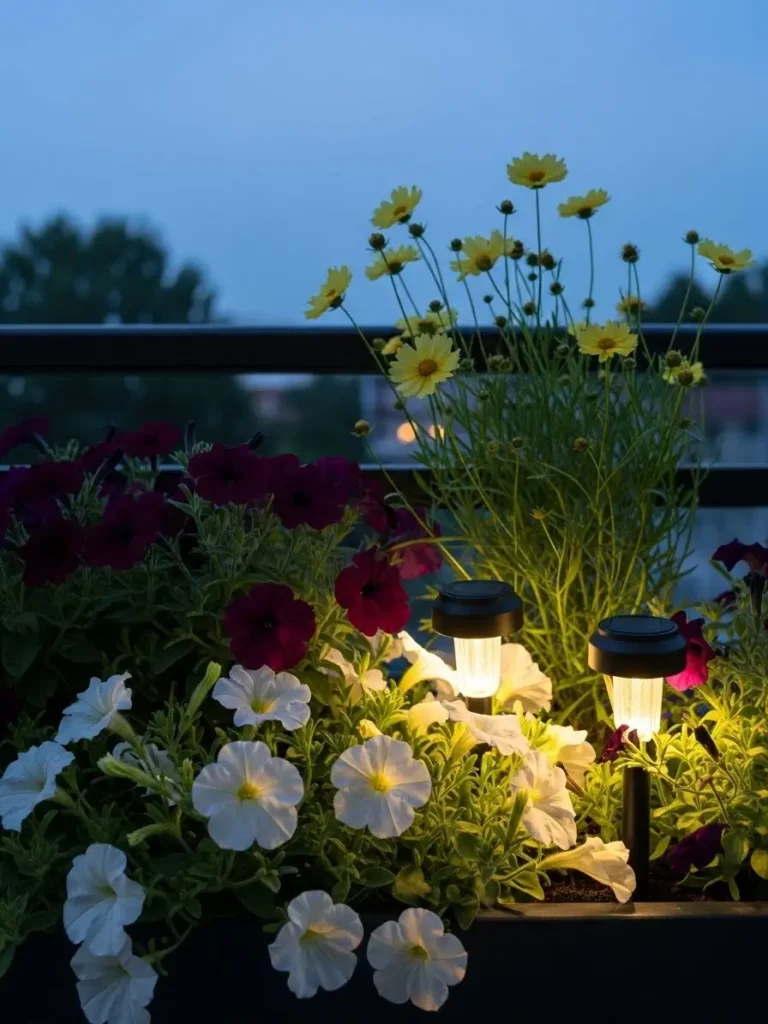
Consequence: If you use your space evenings, dark purples and deep reds vanish after 6 PM
Simplest solution: Add white or pale yellow flowers that glow in low light
Best solution: Plant 30% white/cream flowers strategically, or add solar spotlights ($25-40)
Red flags: Garden looks amazing at noon but disappears at dinner time | You avoid using your space evenings | Dark-colored flowers planted for impact provide none after work | Guests comment the space feels darker than neighboring areas | Photos taken after 5 PM show little color
Issue 5: Fertilizer Salt Buildup
Why it’s easy to miss: White crust on soil surface or pot edges seems harmless
Consequence: Salt accumulation burns roots, causing yellowing and poor growth despite feeding
Simplest solution: Flush containers monthly by running water through until it drains freely for 2-3 minutes
Best solution: Use half-strength liquid fertilizer twice as often instead of full-strength monthly
Red flags: White crusty deposits on soil or pot rims | Leaf edges browning despite proper watering | Plants declining though you fertilize regularly | New growth appears burned | Same plant type thrives in ground but struggles in your containers
Issue 6: Pot Color Impact on Root Temperature
Why it’s easy to miss: Black plastic pots look fine and cost less
Consequence: Dark containers in sun reach 40-50°C, cooking roots and stressing plants
Simplest solution: Slip black pots inside light-colored decorative containers
Best solution: Choose white, cream, or terracotta pots for full-sun locations from the start
Red flags: Plants in black pots wilt daily while those in light pots don’t | Soil dries much faster in dark containers | Same plant thrives in ground or light pots but struggles in black ones | Roots touching pot sides are brown | Plants show heat stress symptoms despite adequate water
Issue 7: Hardiness Zone Drift
Why it’s easy to miss: Climate zones shift gradually; last year’s winners fail this year
Consequence: Your reliable color choices suddenly underperform as local conditions change
Simplest solution: Check USDA zone updates annually; zones have shifted for many areas recently
Best solution: Choose plants rated for one zone warmer/colder than yours for resilience
Red flags: Previously reliable plants now struggle | Neighbors report similar issues | Earlier bloom times than past years | Unexpected cold or heat damage | Plants requiring more water than in previous seasons
Issue 8: Root-Bound Plant Purchase
Why it’s easy to miss: Plants look healthy at purchase; problems appear later
Consequence: Circling roots never establish properly, limiting growth despite good care
Simplest solution: Always gently loosen and spread roots before planting
Best solution: For severely root-bound plants, make 3-4 vertical cuts (1cm deep) through root ball before planting
Red flags: Plant sits in new container without growing for 3+ weeks | Roots visible circling at soil surface | Plant tips over easily despite appearing established | Watering doesn’t reach the center of root mass | Growth stays stunted regardless of care
Issue 9: Color Saturation Planning
Why it’s easy to miss: You don’t think about intensity levels within your color choices
Consequence: All vibrant colors at same intensity create visual noise rather than harmony
Simplest solution: Follow 60-30-10 rule: 60% main color, 30% secondary, 10% accent pop
Best solution: Layer color intensity: deep shades in back, medium in middle, bright pops in front
Red flags: Garden feels energizing but exhausting | No place for the eye to rest | Photos look busy and chaotic | Visitors comment “lots going on” rather than “beautiful” | Can’t identify a focal point or color story
Issue 10: Container Weight When Watered
Why it’s easy to miss: Containers feel manageable when planting with dry soil
Consequence: Can’t move or rearrange garden once watered; stuck with poor placement
Simplest solution: Test lift after first deep watering; adjust placement within 48 hours if needed
Best solution: Use wheeled plant caddies ($15-30 each) for containers over 30cm diameter
Red flags: Unable to shift containers for better sun exposure | Can’t move pots for cleaning or maintenance | Containers remain in suboptimal spots because moving is impossible | Deck or balcony sags under weight | Need help from others for simple garden adjustments
Related Post: 11 Must-Visit Botanical Gardens Across America
Understanding Color Theory for Compact Spaces
Color behaves differently in small gardens than in sprawling yards. The rules shift when flowers sit 2 meters apart instead of 10.
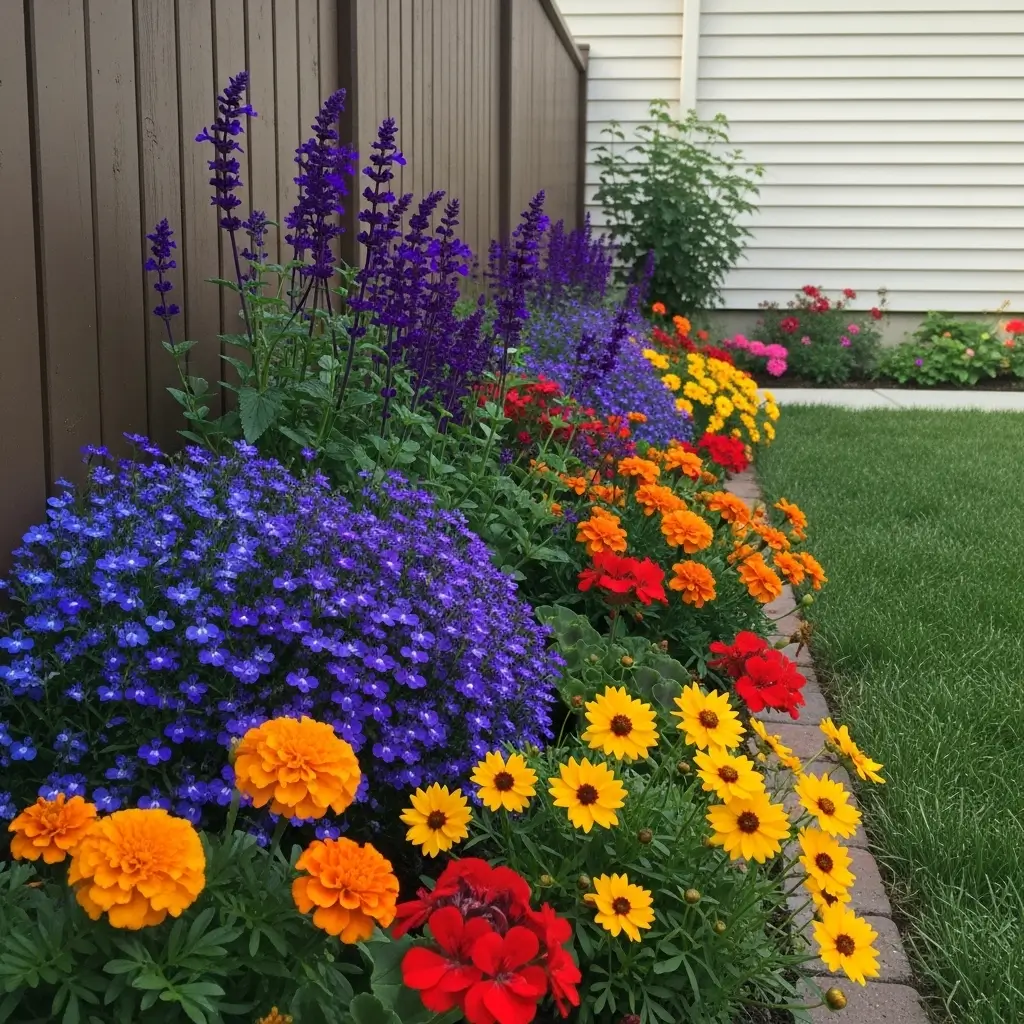
Cool colors—blues, purples, and blue-greens—appear to recede into the distance. Planting them in back corners or against rear boundaries tricks the eye into perceiving more depth. Your 3-meter space gains visual breathing room. Warm colors like reds, oranges, and yellows advance toward viewers, creating focal points and drawing attention forward. This principle matters enormously when every square foot counts.
The 2026 trend toward jewel tones offers particular advantages for small spaces. Deep burgundies, rich plums, and saturated emeralds hold their intensity in bright summer sun where pastels wash out and disappear. A rich burgundy petunia maintains its drama through August afternoons, while pale pink fades to near-invisible by mid-July. Interior paint companies embracing saturated shades like Behr’s teal-green Hidden Gem mirror what plant breeders are releasing—varieties bred specifically to pop rather than whisper.
Practical Color Selection Framework
Monochrome Simplicity: Using one color family in various tones creates instant cohesion. A purple corner with deep eggplant salvia, medium purple petunias, and pale lavender trailing lobelia reads as sophisticated rather than scattered. This approach works beautifully for beginners uncertain about combining colors.
Two-Color Confidence: Pairing just two colors that sit opposite on the color wheel (purple and yellow, blue and orange) delivers high impact with built-in harmony. The contrast creates drama while the limited palette prevents chaos.
Three-Color Maximum: Design professionals consistently recommend limiting small gardens to three main colors. More variety than that overwhelms tight quarters. Choose one dominant color (60% of plantings), a secondary color (30%), and an accent (10%) for pops of surprise.
White as Referee: When colors clash or the space feels too intense, white flowers and silver foliage act as visual buffers. Inserting white geraniums or silver dusty miller between strong colors prevents competition and creates breathing room. White also glows in evening light, extending garden enjoyment past dinner time when deep purples and reds vanish into darkness.
Maximalist Layering (Advanced): The 2026 maximalist trend encourages abundant planting that mixes categories freely—natives with ornamentals, edibles alongside flowers. This works in small spaces only when you maintain color discipline. Layer textures and heights enthusiastically, but keep the color palette tight.
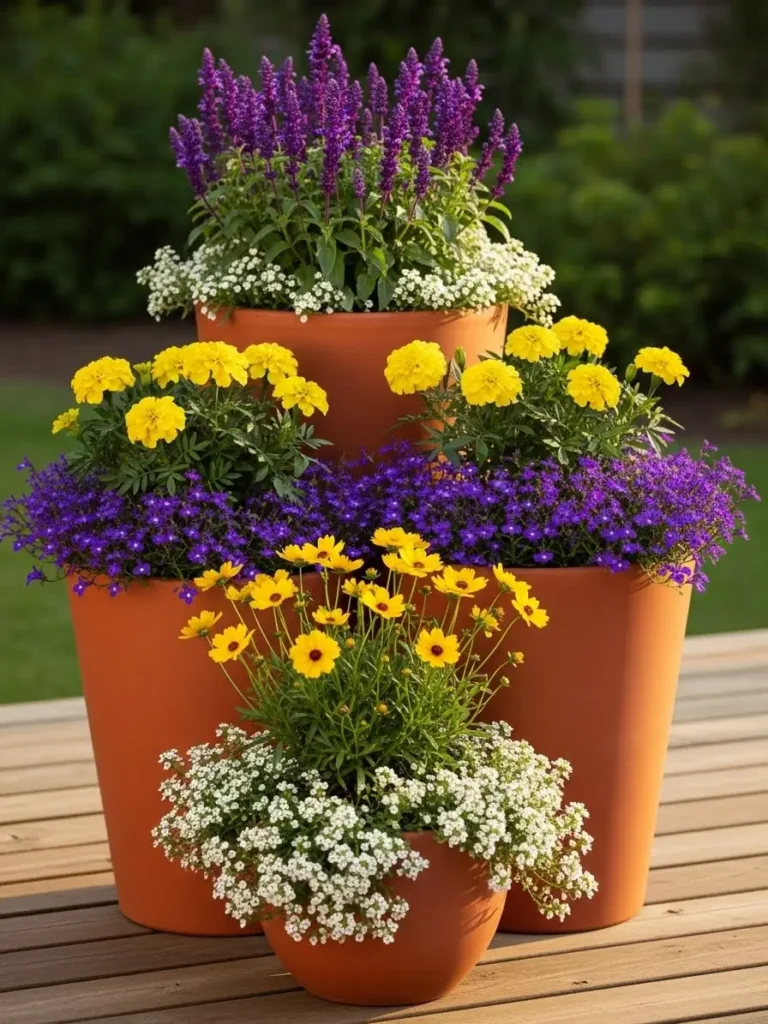
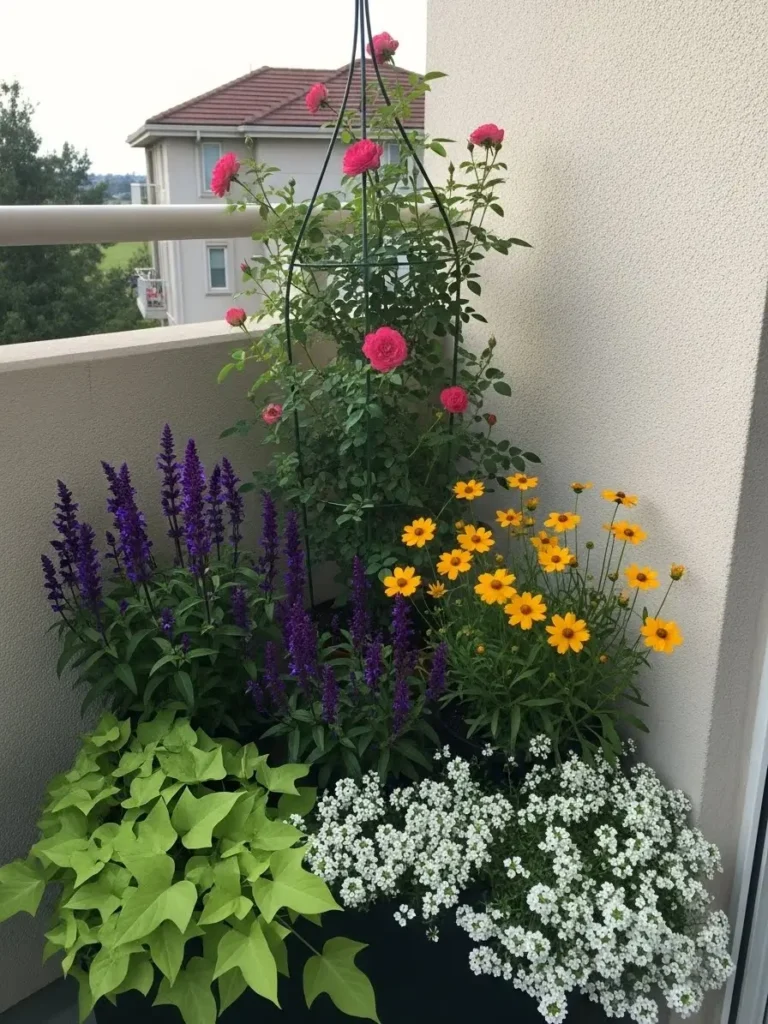
Example scenario: Theresa had a 4×8-foot side yard receiving 6 hours of sun. She chose purple as dominant (60%): deep purple salvia, medium purple petunias, lavender catmint. Yellow served as secondary (30%): coreopsis and marigolds. White provided accent pops (10%): trailing white alyssum and a single white climbing rose. The limited palette made the tiny space feel curated rather than cluttered. Cost: $65 for plants. Time investment: 4 hours planting, 30 minutes weekly maintenance.
Quick reflection: What color shows up most often in your current garden, and does it match your intention or reveal impulse shopping?
Best Plant Choices for Maximum Color Impact
Not all colorful plants suit small spaces. Some spread aggressively, demand excessive maintenance, or deliver brief bloom windows. Smart selection makes the difference between a garden that rewards and one that disappoints.
Proven Workhorses
Petunias and marigolds earn their reputation as go-to choices for good reasons. They bloom prolifically for months, tolerate heat and occasional watering lapses, and cost $3-5 per plant. Petunias cascade beautifully from hanging baskets, providing vertical color in spaces with limited ground area. Marigolds handle full sun without complaint and offer warm golds and oranges that complement most color schemes.
Geraniums (Pelargonium) thrive in shallow containers—a key advantage when working with limited soil volume. Their resilience to climate swings and forgiving nature toward occasional watering neglect makes them ideal for beginners or busy gardeners. Available in vibrant pinks, reds, and corals, they deliver consistent color from late spring through fall.
For shade situations, impatiens, begonias, and fuchsias provide the color many gardeners assume only sun can deliver. Impatiens bloom continuously in shade with minimal deadheading. Begonias offer both flower and foliage color options. Fuchsia’s elegant dangling blooms in pink, purple, and white combinations bring sophistication to shaded balconies and north-facing yards.
Vertical Color Solutions
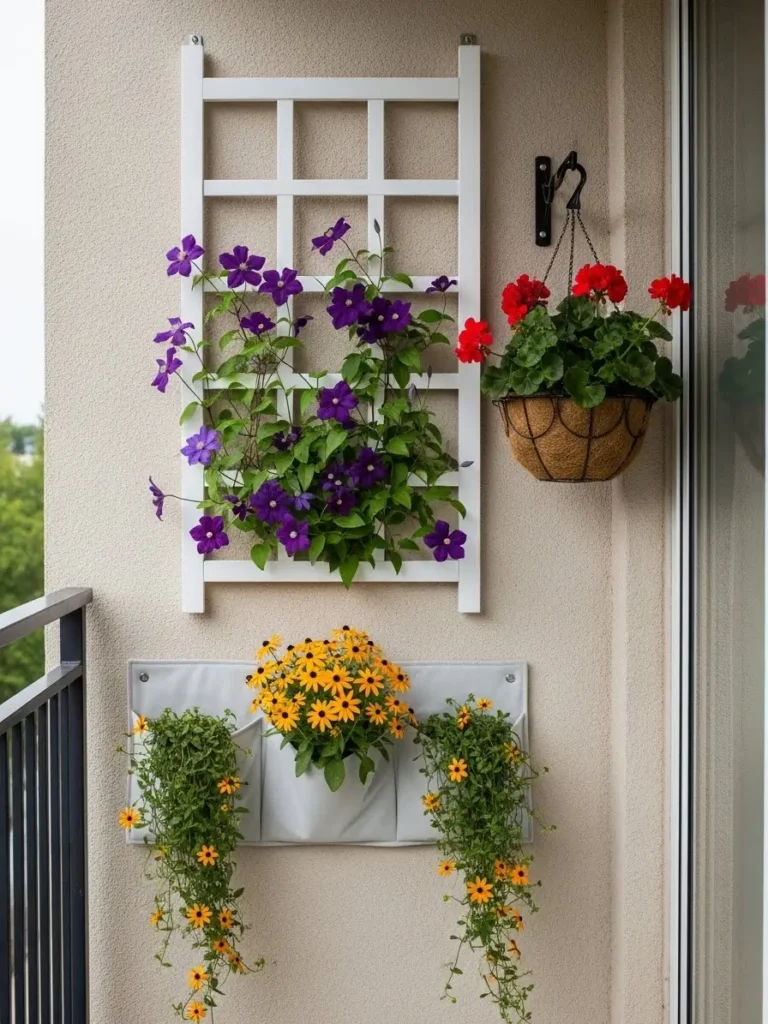
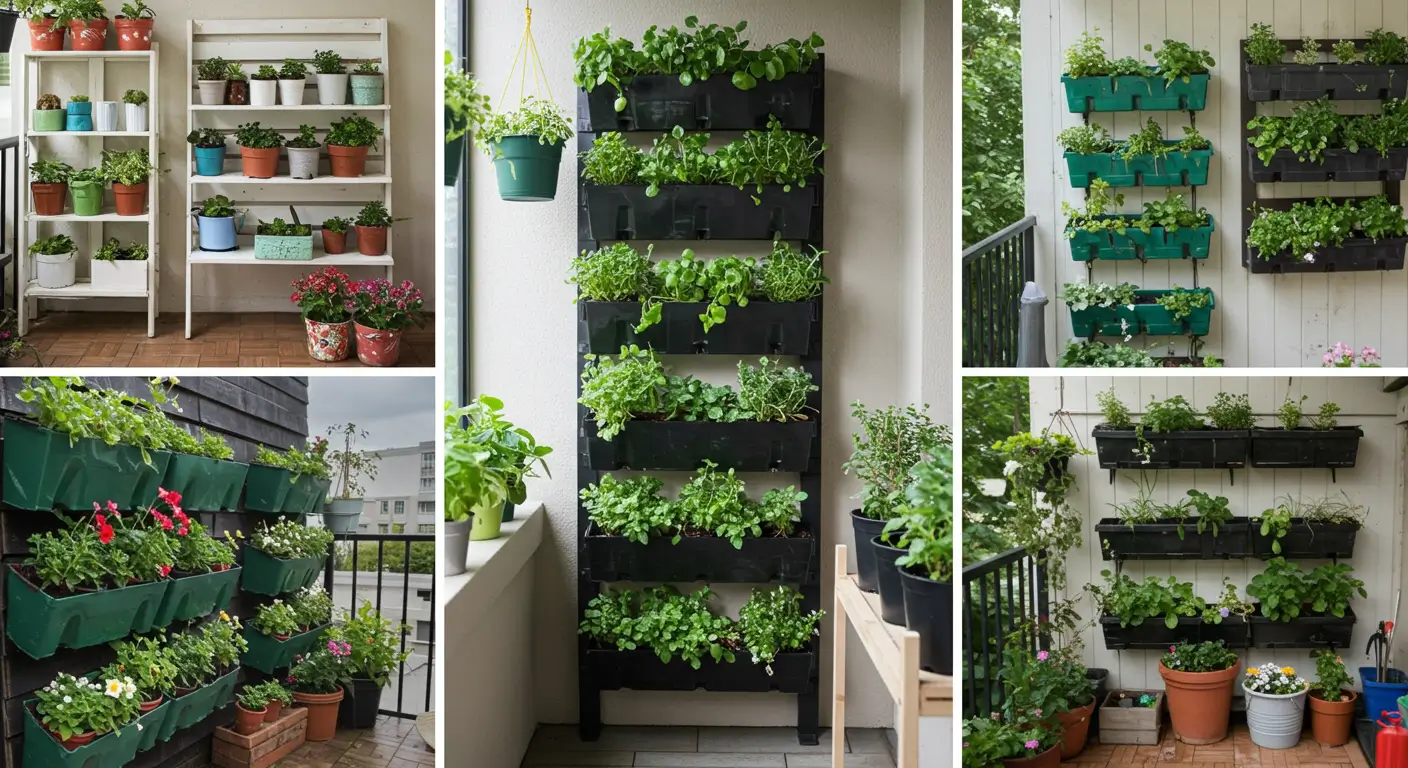
When ground space maxes out, growing upward multiplies your colorful planting area without expanding your footprint.
Clematis offers an incredible range of colors while maintaining a lightweight, compact climbing habit that doesn’t overwhelm structures. Unlike heavier vines, clematis shines in small spaces thanks to its refined growth. Choose varieties carefully—some reach 20 feet while compact selections stay under 8 feet.
Compact climbing roses bring classic cottage charm to narrow spaces without the wild cane growth of traditional climbers. New cultivars stay under 8 feet with manageable growth habits. They climb neatly when trained, creating tidy vertical lines of color rather than sprawling masses.
Black-eyed Susan vine delivers instant color and life with cheerful flowers and slim twining stems. This fast-growing annual adds playful, uplifting energy to narrow garden areas. From seed to bloom in 8 weeks, it satisfies impatient gardeners wanting quick results.
Carolina jessamine provides year-round interest with bright yellow blooms and glossy evergreen foliage. It climbs in a graceful, controlled way, offering height and color while keeping within bounds suitable for small vertical spaces.
Edibles That Earn Their Space
Herbs like basil, thyme, and cilantro produce colorful blooms while serving kitchen duty. Basil flowers attract pollinators with white or purple spikes. Thyme creates carpets of tiny pink blooms. This dual purpose reduces guilt about “wasting” ornamental space in tiny gardens.
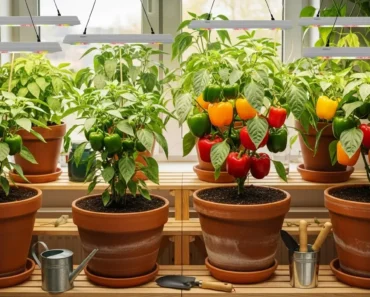
Cherry tomatoes, peppers, and lettuce add color through fruit and foliage. Cherry tomatoes dangle like colorful Christmas ornaments—red, yellow, or orange varieties. Ornamental peppers transition through purple, cream, orange, and red stages. Lettuce varieties in burgundy, lime, and speckled combinations create edible color beds.
Foliage Color Strategy
Not all color comes from flowers. Coleus, heuchera, and ornamental sweet potato vines deliver season-long color through foliage. Unlike blooms that fade and require deadheading, colorful leaves provide consistent impact from planting through frost.
Coleus varieties span nearly every color combination imaginable: lime and burgundy, orange and purple, pink and green. They thrive in both sun and shade depending on variety. Heuchera (coral bells) offers purple, burgundy, lime, and silver foliage options for shade areas. Sweet potato vines cascade with chartreuse, deep purple, or tri-color leaves, perfect for container edges.
Mistake diagnosis scenario: Omar bought 15 different plant varieties in 15 colors for his 6×6-foot balcony. Each plant was healthy and beautiful individually. Together they created visual chaos. Diagnosis: Too much variety without repetition. Fix: He removed 9 varieties and replaced them with repeats of his 3 favorites (purple petunias, yellow marigolds, white alyssum). Result: The balcony instantly felt twice as spacious and intentionally designed. Time: 2 hours. Cost: $0 (replanted removed varieties elsewhere).
Quick reflection: Are you choosing plants for how they’ll perform in your actual conditions, or for how they look at the garden center?
Design Techniques That Create Spaciousness
Strategic design choices make small gardens feel larger and more sophisticated. These techniques cost nothing but deliver dramatic impact.
Repetition Creates Cohesion
Repeating the same color and plant variety across multiple containers unifies the space. Design experts emphasize that repeating colours and plant varieties creates cohesion, which is especially important in compact spaces. This repetition helps draw the eye gently across the space rather than jumping frantically between unrelated elements.
Place three purple petunias in three different corners instead of three different flowers in three corners. The repeated color creates visual connection and calm. Your eye travels smoothly rather than stopping abruptly at each new element.
Layered Heights Add Dimension
The “thriller, filler, spiller” container formula applies beyond individual pots to entire small gardens. Position tall plants (thrillers) in back areas or centers. Medium height plants (fillers) occupy middle zones. Trailing plants (spillers) cascade from edges and hang from walls.
This vertical layering creates the illusion of depth. A flat planting plane reads as one-dimensional regardless of color. Varied heights transform a 6-foot-deep space into something that feels much more complex and interesting.
Light-Colored Hardscaping
Light-colored materials help to bounce the light around and will make the garden seem more spacious than dark paving or paint colours. This proves especially valuable for shady small gardens where colorful plants struggle. Pale gravel, cream pavers, or white-painted fences reflect available light, brightening the space and making colors pop more vibrantly.
The contrast between light backgrounds and colorful plants increases visual impact. Dark mulch absorbs light; light-colored stone reflects it back onto flowers and foliage.
Boundary Disguising
Disguising garden boundaries makes spaces feel less confined. Climbers covering fences prevent the eye from reading exact dimensions. When you can’t see where the garden ends, it feels larger. Plant clematis, jasmine, or climbing hydrangea to soften and obscure hard edges.
For shady boundaries, ivy and chocolate vine (Akebia quinata) cover vertical surfaces effectively. In sunny spots, climbing roses, clematis, and jasmine work beautifully.
Focal Point Strategy
Creating one clear focal point prevents visual competition in small spaces. Choose a single attention-grabber: a colorful container trio, a blooming climbing rose, or a vibrant hanging basket. Design everything else to support rather than compete with this focal point.
Without a focal point, every plant screams for attention. The result feels chaotic. With a clear star, supporting players enhance rather than distract.
Action Steps
1. Audit your current space (15 minutes): Count how many different plant varieties you have. More than 10 in a space under 100 square feet signals likely chaos. Identify which plants repeat and which appear only once.
2. Choose 3-5 varieties to repeat (30 minutes planning): Select plants that thrive in your conditions and match your color scheme. Plan to feature these repeatedly rather than collecting one of everything.
3. Map height layers (20 minutes): Sketch your space from the side view. Mark where tall (back/center), medium (middle), and trailing (edges) plants belong. This prevents flat, boring arrangements.
4. Identify your focal point (10 minutes): Walk through your space and notice where your eye naturally lands. Place your most dramatic color element there. Remove competing elements from other areas.
5. Test evening visibility (5 minutes after sunset): Observe your garden at the time you’ll actually use it. Add white or pale yellow plants if dark colors disappear.
Mini case study: Patricia’s 5×7-foot balcony felt cramped despite having only 12 plants. Diagnosis: All plants sat at the same 18-inch height, creating a flat wall of color with no focal point. Fix: She added a 4-foot trellis with climbing nasturtiums (vertical interest), moved three trailing petunias to hanging positions (spillers), and designated the climbing nasturtiums as the focal point by placing them center-back. Result: The space felt twice as deep and intentionally designed. Time: 3 hours on a Saturday. Cost: $35 for trellis and 3 hanging baskets.
Quick reflection: When you look at your garden, does your eye travel smoothly through the space, or does it jump around searching for a resting place?
Budget-Smart Color Strategies
Creating a vibrant colorful small garden doesn’t require hundreds of dollars. Strategic choices multiply impact while minimizing cost.
The Starter Plant Advantage
Four-inch starter plants cost $3-5 while gallon-size versions run $12-18. That’s 60-70% savings for plants that often establish faster than larger sizes. Young plants adapt more readily to new conditions and suffer less transplant shock. Within 6-8 weeks, starter plants typically catch up to their more expensive counterparts in size and vigor.
The math shifts dramatically. A 20-plant colorful garden costs $60-100 with starters versus $240-360 with gallon sizes. You save $150-250 for identical results after two months of growth.
Grow from Seed
Marigolds, zinnias, sunflowers, and cosmos grow readily from seed. A $2.50 packet contains 50-200 seeds compared to $3-5 per transplant. The time investment increases—8-10 weeks from seed to bloom versus immediate color with transplants—but the cost savings reach 90%.
Black-eyed Susan vine, nasturtiums, and morning glories deliver fast results from seed. These quick-growing climbers go from seed to flowering in 8-12 weeks, perfect for impatient gardeners wanting vertical color on a budget.
Propagate What Works
Many colorful plants propagate easily, turning one purchase into many. Geraniums root from stem cuttings in 2-3 weeks. Coleus cuttings root in water within 10 days. Sweet potato vines root rapidly, allowing you to create multiple plants from one parent.
Take 4-inch cuttings from healthy growth. Remove lower leaves. Place in water or moist potting soil. Within 2-4 weeks, most root sufficiently for transplanting. One $5 coleus becomes six plants by mid-season, saving $25-30.
Succession Planting Over Full Replacement
Rather than filling every container in spring, plant 60% initially and add fresh waves in mid-summer. This spreads costs across the season and ensures continuous color rather than spring glory followed by tired August decline.
Plant heat-loving zinnias and marigolds in July when spring pansies fade. Add ornamental kale and chrysanthemums in September for fall color. This approach costs less overall and delivers better results than trying to maintain spring plantings through fall.
Container Creativity
Expensive decorative pots drain budgets quickly. Budget alternatives deliver identical growing conditions:
Food-grade buckets ($3-5): Drill drainage holes. Paint with exterior paint or slip inside decorative basket sleeves.
Resin pots ($8-15): Lightweight, durable, and one-third the cost of ceramic. Look identical from 6 feet away.
Repurposed items: Colanders, vintage crates, and washtubs work beautifully. Ensure drainage and use plastic liners if needed.
Strategic spending: Buy one gorgeous pot as your focal point ($40-60). Surround it with budget containers that blend into the background. The eye focuses on the statement piece while the supporting cast stays affordable.
Soil Refresh Over Full Replacement
Container soil degrades annually but doesn’t always need complete replacement. For established perennials, replace the top 30% with fresh potting mix and add compost. This costs $10-15 versus $40-60 for complete soil replacement across multiple containers.
For annuals, full replacement makes sense since you’re replanting anyway. Mix your own using equal parts peat moss (or coco coir), compost, and perlite. This DIY blend costs roughly half of pre-mixed potting soil and works equally well.
Quick update: Garden centers often discount annual plants by 50-75% in late June and early July when making room for fall inventory. These “tired” plants often perk up dramatically with deadheading, fresh soil, and proper care. A $50 garden becomes a $15 garden if you time purchases strategically. Patience saves money. Discussion question: Have you noticed when your local nurseries mark down plants, and do those timing patterns repeat annually?
Quick reflection: What’s your realistic season-long budget for plants, and are you spreading purchases across the growing season or front-loading everything in spring?
Maintenance That Keeps Color Coming
Planting colorful gardens is the exciting part. Maintaining that color through the season requires different skills but less time than most gardeners fear.
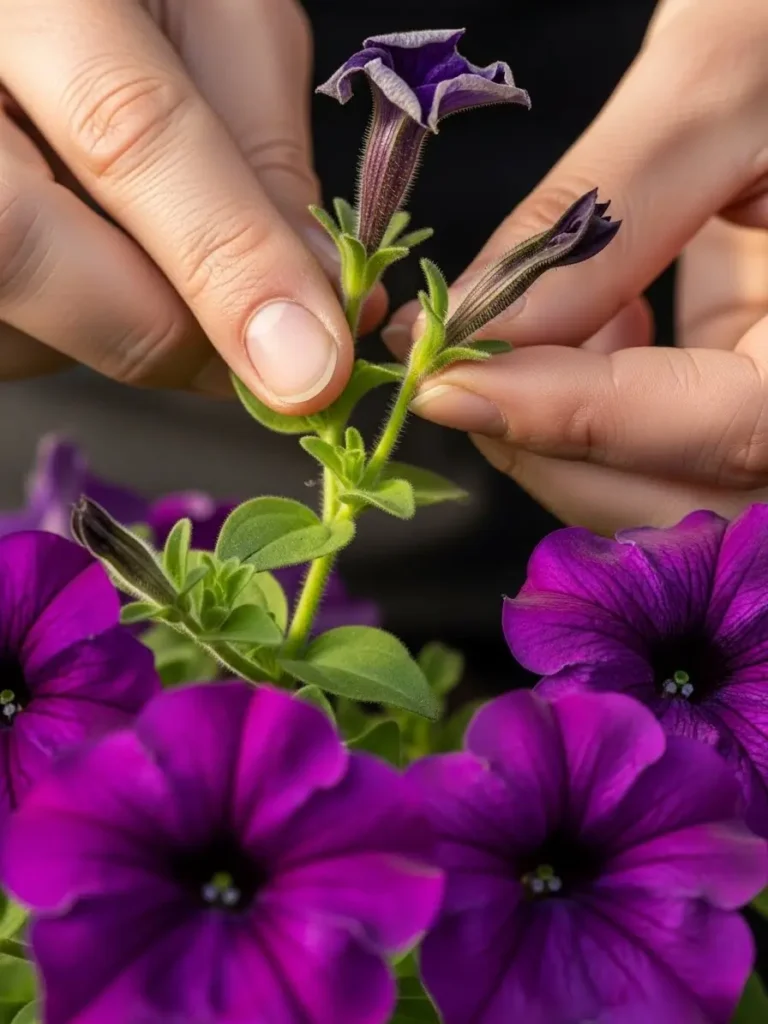
The Deadheading Difference
Removing spent blooms redirects plant energy from seed production back into flower production. This single practice often doubles bloom output. Most flowering annuals benefit dramatically: petunias, geraniums, marigolds, zinnias, and cosmos all respond with increased flowering.
Schedule 15 minutes weekly. Pinch or snip off faded flowers at the stem, not just the petals. New blooms typically appear within 7-10 days. Some plants are self-cleaning (impatiens, begonias) and don’t require deadheading, saving maintenance time.
Smart Watering Prevents Most Problems
Overwatering kills more container plants than underwatering. The finger test solves this: stick your finger 3cm into the soil. Water only if it feels dry at that depth. Surface dryness doesn’t indicate need; roots sit deeper.
Container gardens in full sun often need daily watering during summer heat. Shaded containers might need water only every 2-3 days. Check rather than schedule. Your plants’ needs shift with temperature, humidity, and growth stage.
Morning watering works best. It allows foliage to dry before nightfall, reducing disease risk. Evening watering leaves plants wet overnight, inviting fungal problems.
Fertilizer Frequency for Containers
Container plants exhaust soil nutrients faster than in-ground plantings. Frequent watering leaches nutrients through drainage holes. This means containers need regular feeding.
Two approaches work well:
Slow-release granules: Mix into soil at planting. They feed for 2-4 months depending on formulation. This set-it-and-forget-it method suits busy gardeners. Cost: $12-18 for enough to feed 15-20 containers for one season.
Liquid fertilizer: Apply every 2 weeks at half strength rather than monthly at full strength. This prevents salt buildup and maintains consistent nutrition. Most flowering plants prefer balanced formulas (10-10-10) or bloom-boosters (5-10-5 or 10-30-20). Cost: $8-15 for a bottle lasting one season.
Signs of under-fertilizing include pale leaves, stunted growth, and reduced blooming. Signs of over-fertilizing include brown leaf edges, white crusty deposits on soil, and plants declining despite care.
Pest Management in Small Spaces
Small gardens make pest monitoring easy—you can inspect every plant in 5 minutes. Weekly checks catch problems early when they’re easily managed.
Aphids: Small soft-bodied insects clustering on new growth. Blast off with strong water spray or treat with insecticidal soap. Three treatments, 3 days apart, typically eliminate infestations.
Spider mites: Cause stippled, yellowed leaves and fine webbing. Thrive in hot, dry conditions. Increase humidity and spray with water daily. Insecticidal soap helps severe cases.
Whiteflies: Tiny white insects on leaf undersides that fly when disturbed. Use yellow sticky traps and insecticidal soap. Consistent treatment for 2-3 weeks breaks the life cycle.
Prevention beats treatment. Healthy, properly watered, adequately spaced plants resist pests naturally. Stressed plants emit chemical signals that attract insects like dinner bells.
Mid-Season Refresh
Even well-maintained annuals tire by mid-July. A refresh extends color through fall:
Trim back leggy growth by 1/3: This encourages bushier regrowth and new blooms. Most annuals tolerate hard cuts and bounce back stronger within 2-3 weeks.
Side-dress with compost: Remove top 2-3cm of soil and replace with fresh compost. This adds nutrients and improves soil structure without complete repotting.
Replace 20-30% of tired plants: Remove the most exhausted specimens and replace with fresh transplants. This delivers instant color while mature plants recover from their trim.
Fertilize generously: Feed with bloom-booster formula. Plants recovering from hard pruning need extra nutrients to support new growth.
Mistake diagnosis scenario: Greg’s petunias bloomed heavily in May and June, then declined to scattered flowers by August despite regular watering. Diagnosis: He never deadheaded, allowing plants to set seed and stop blooming. He also hadn’t fertilized since planting. Fix: He removed all spent flowers and seed pods, trimmed plants back by 1/4, and began fertilizing weekly with half-strength bloom-booster. Result: Heavy blooming resumed within 3 weeks and continued through September. Time investment: 45 minutes for initial intervention, then 15 minutes weekly. Cost: $9 for fertilizer.
Trend watch: Self-watering containers and reservoir systems are becoming more affordable and accessible in 2026. Basic models start around $20-30 and reduce watering frequency by 50-70%. These work especially well for busy gardeners, vacation periods, and heat waves. The reservoir holds 2-4 days of water that wicks upward as plants need it. Discussion question: How often do you currently water your containers, and would reducing that to every 3-4 days change your gardening experience?
Quick reflection: Which maintenance task do you consistently skip, and what impact does that have on your garden’s performance?
What’s New in Colorful Small Gardens (and what outdated advice gets wrong)
The colorful small garden landscape shifts constantly. New varieties arrive. Design philosophies evolve. Some classic advice proves wrong under scrutiny.
Real-World Shifts People Notice in 2026
1. Jewel tones replacing pastels: Saturated colors dominate garden centers and design publications. Deep burgundies, rich purples, and vibrant magentas hold up better in intense summer sun than soft pastels that wash out.
2. Maximalist abundance gaining acceptance: The minimalist restraint of recent years gives way to “more is more” planting. Mixing natives, edibles, and ornamentals freely creates personality-packed small spaces.
3. Ecological function becoming essential: Just 14% of native plants support 90% of pollinators. Gardeners increasingly choose colorful options that feed beneficial insects rather than purely ornamental varieties.
4. Vertical gardening refinement: Compact climbing varieties bred specifically for small spaces replace older cultivars that overgrow boundaries. Clematis, climbing roses, and jasmine now come in tidy 6-8 foot versions.
5. Green-based color schemes: Lush foliage in multiple green shades creates calming foundations for selective color pops. The 70-30 ratio (70% green, 30% flowers) delivers sophistication without chaos.
6. Drought-tolerant varieties expanding: New cultivars of marigolds, salvia, and zinnias need 40% less water while maintaining bloom production. Climate adaptation becomes standard, not optional.
7. Container color coordination: Repeating the same plant color across multiple pots creates cohesion. This simple trick prevents the “garden center explosion” look that overwhelms small spaces.
8. Starter plant acceptance: Budget-conscious gardeners embrace 4-inch transplants over gallon sizes. The 60-70% cost savings and faster establishment change purchasing patterns.
9. Edible-ornamental integration: Herbs that bloom (basil, thyme, cilantro) and colorful edibles (peppers, lettuce, cherry tomatoes) reduce guilt about “wasting” space on purely decorative plants.
Outdated Mistakes Readers Make
1. Believing small gardens need pale colors: Old advice suggested light colors make spaces feel larger. Reality shows jewel tones create more impact and hold color intensity better.
2. Buying gallon-size plants for instant impact: Large plants cost 3× more, establish slower, and suffer more transplant shock than smaller sizes.
3. Filling every inch immediately: Overcrowding remains the #1 beginner mistake. Plants need room to grow. Sparse-looking at planting becomes perfect within 4-6 weeks.
4. Using only annuals for color: Relying solely on replanted annuals costs $100-200 yearly. Mixing in colorful perennials (salvia, coreopsis, sedum) and foliage plants (heuchera, coleus) provides season-long color that returns or self-sows.
5. Watering on schedule rather than checking soil: Daily automatic watering drowns more plants than it saves. The finger test (checking soil 3cm deep) prevents both over and underwatering.
Updated Best Practices with Examples
1. Pre-season light assessment (4-6 weeks): Track sun exposure before buying plants. Many “sunny” spots receive only 4-5 hours due to building shadows. Example: Mark hourly sun patterns for one week. Areas with 6+ hours suit sun lovers; 3-5 hours need partial shade varieties; under 3 hours require shade plants.
2. Strategic color placement (cool back, warm front): Plant blues and purples in back areas to create depth illusion. Position reds and oranges forward for focal points. Example: Replace red salvia at back fence with blue lobelia. Move salvia to container near entrance. Perceived depth increases immediately.
3. The 60-30-10 color rule: Choose one dominant color (60% of plantings), one secondary (30%), and one accent (10%). Example: Purple petunias and salvia (60%), yellow marigolds and coreopsis (30%), white alyssum accents (10%).
4. Succession planting for continuous color: Plant in waves rather than all at once. Example: Spring pansies (March-May), summer zinnias and marigolds (June-August), fall mums and ornamental kale (September-November). This spreads costs and maintains fresh color.
5. Weekly maintenance schedule: Dedicate 30 minutes weekly to deadheading, checking soil moisture, and pest inspection. This prevents small problems from becoming garden failures. Example: Every Sunday morning, remove spent blooms, check soil in all containers, inspect leaf undersides for pests, and fertilize if needed.
Common headline myth: “Small gardens need simple color schemes to avoid looking cluttered.” Reality: The number of colors matters less than repetition and placement. A small garden with 5 colors repeated strategically looks more cohesive than one with 3 colors used randomly. Pattern and rhythm trump palette restriction. Discussion question: Does your current garden feel cluttered because of too many colors, or because colors don’t repeat enough to create visual rhythm?
Troubleshooting Common Color Garden Failures
Even experienced gardeners face setbacks. Recognition and quick response save most struggling gardens.
When Plants Look Healthy But Don’t Bloom
Symptoms: Lush green foliage, vigorous growth, but few or no flowers.
Common causes:
– Excessive nitrogen fertilizer promoting leaves over blooms
– Insufficient sunlight (many flowers need 6+ hours)
– Plants too young (some perennials don’t bloom first year)
– Deadheading neglect causing seed production focus
Solutions:
– Switch to bloom-boosting fertilizer (middle number highest: 5-10-5 or 10-30-20)
– Move containers to sunnier locations
– Remove developing seed pods to redirect energy
– Be patient with first-year perennials
When Colors Clash Unexpectedly
Symptoms: Garden feels uncomfortable or jarring despite healthy plants.
Common causes:
– Warm and cool colors mixed without buffers
– Too many competing focal points
– Color intensity all the same (no variation in saturation)
– Plant colors clashing with hardscape or house colors
Solutions:
– Insert white flowers or silver foliage between clashing colors
– Remove or relocate secondary focal points
– Vary intensity: deep shades, medium tones, and light accents
– Choose flower colors opposite to backdrop on color wheel
When Plants Decline Despite Proper Care
Symptoms: Yellowing, wilting, or stunted growth though you water and fertilize correctly.
Common causes:
– Blocked drainage holes causing root rot
– Compacted soil preventing water absorption
– Salt buildup from fertilizer (white crust visible)
– Root-bound plants from delayed transplanting
– Pest infestations on leaf undersides
Solutions:
– Check drainage by tipping container after watering
– Refresh or replace top 50% of soil
– Flush containers with clear water for 2-3 minutes
– Loosen circling roots when transplanting
– Inspect weekly for early pest detection
When Growth Stays Leggy and Weak
Symptoms: Tall, stretched stems with sparse leaves and flowers.
Common causes:
– Insufficient light (plants stretching toward sun)
– Too much nitrogen causing rapid, weak growth
– Overcrowding forcing upward competition
– Lack of pinching early in season
Solutions:
– Move to brighter location
– Switch to balanced or bloom-focused fertilizer
– Thin plantings to allow airflow and light penetration
– Pinch back growing tips by 1/3 to encourage branching
Mini case study: Vanessa’s balcony containers produced beautiful foliage but sparse blooms despite 8 hours of daily sun. Diagnosis: She used general-purpose 20-20-20 fertilizer at full strength monthly, and hadn’t deadheaded since planting. Fix: She switched to 5-10-5 bloom-booster at half strength every 2 weeks, removed all spent flowers and developing seed pods, and began weekly deadheading. Result: Bloom production tripled within 3 weeks. The combination of proper fertilizer ratio and preventing seed production redirected energy to flowers. Time: 20 minutes per week. Cost: $9 for new fertilizer.
New vs old approach: Old thinking: “My plant is struggling, so it needs more fertilizer and water.” New thinking: “My plant is struggling, so I need to diagnose the root cause before treating.” Overwatering and over-fertilizing kill more plants than their opposites. The finger test for water and visual inspection for pests, drainage, and soil quality prevent knee-jerk reactions that often worsen problems. Discussion question: When your plants struggle, do you typically add more care (water, fertilizer) or step back to diagnose first?
Quick reflection: What’s your most common plant failure pattern, and have you identified the consistent cause or do new problems seem random?
Seasonal Transitions and Year-Round Interest
Colorful small gardens can deliver interest across multiple seasons with planning. Thoughtful succession extends enjoyment beyond summer’s peak.
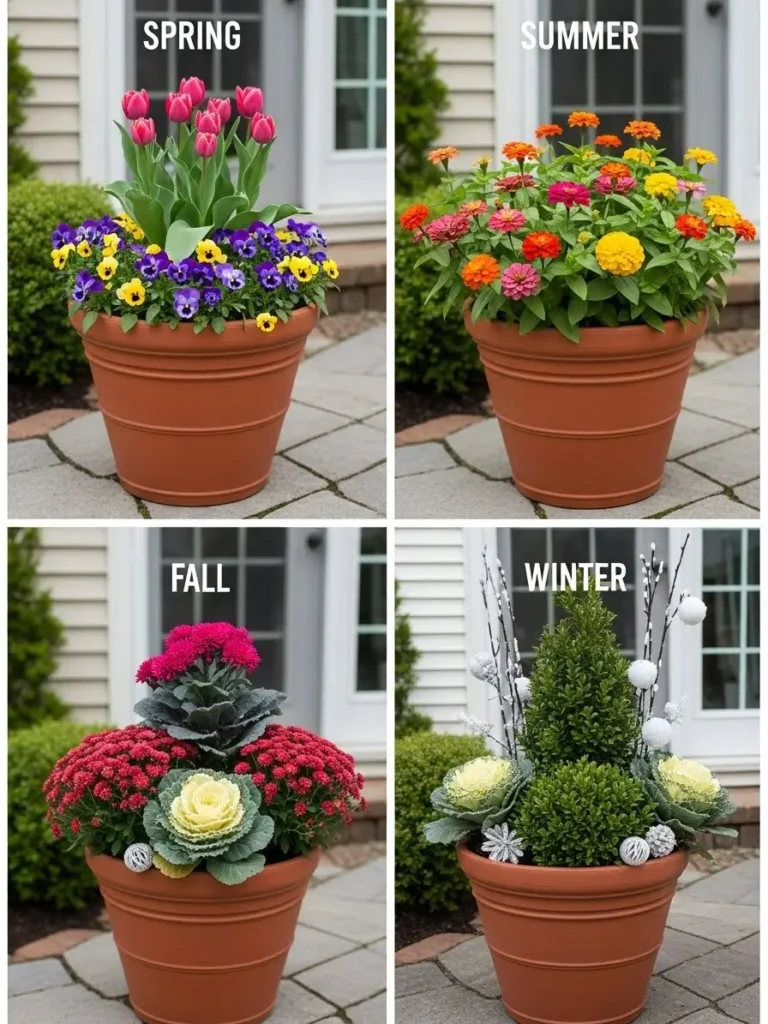
Spring Launch (March-May)
Cool-season color: Pansies, violas, primrose, and snapdragons thrive in 50-70°F temperatures. They deliver vibrant color before summer heat arrives. Plant in early spring; they often bloom through early summer in moderate climates.
Early perennials: Creeping phlox, candytuft, and dianthus wake early and bloom profusely. These return yearly, reducing replanting costs.
Bulbs for drama: Tulips, daffodils, and hyacinth in containers provide early season pops. Plant bulbs in fall for spring rewards. Dwarf varieties suit small spaces better than full-size types.
Summer Transition (June-August)
Heat lovers take over: As cool-season plants fade, replace with zinnias, marigolds, petunias, and salvia. These thrive in 75-90°F temperatures and bloom through summer.
Mid-summer refresh: Even heat-loving plants tire by mid-July. Trim back leggy growth, fertilize generously, and replace 20-30% of tired specimens with fresh transplants.
Drought-tolerant choices: In hot climates, switch to lower-water options like portulaca, moss rose, and lantana. These deliver color without daily watering demands.
Fall Extension (September-November)
Cool season comeback: Pansies, violas, and ornamental kale thrive again as temperatures drop. They often survive light frosts and extend color into early winter in mild climates.
Chrysanthemums: These fall classics deliver weeks of color in yellows, oranges, reds, and purples. Choose garden mums (hardier) over florist mums (bred for temporary display).
Foliage transitions: Ornamental grasses and colorful-leaved heuchera provide fall interest as flower production slows. Many grasses develop wheat, burgundy, or copper tones.
Winter Presence (December-February)
Evergreen structure: Small conifers, boxwood, and holly provide year-round form. Choose dwarf varieties appropriate for container growing.
Winter bloomers (mild climates): Pansies, violas, cyclamen, and ornamental kale bloom through winter in zones 7-10. They add surprising color during dormant months.
Decorative elements: When plants rest, containers remain. Add seasonal decorations: branches, berries, pinecones, and evergreen cuttings create winter interest without living plants.
Planning Timeline
Fall (September-November): Plant spring bulbs, cool-season color, and consider adding one structural evergreen for winter interest.
Early Spring (March-April): Plant cool-season annuals while summer plants remain too expensive or risky in fluctuating temperatures.
Late Spring (May): Transition to summer heat lovers as cool-season plants decline.
Mid-Summer (July): Refresh tired plantings with trim-backs and selective replacements.
Late Summer (August-September): Plan and plant fall color transitions.
This cycling spreads costs across the year rather than front-loading expenses in spring. It maintains continuous color rather than peak-and-decline patterns.
Example scenario: Marcus wanted year-round color on his small patio in Zone 7. Spring: He planted pansies and violas ($25) that bloomed March-May. Summer: He transitioned to zinnias, petunias, and coleus ($35) blooming June-September. Fall: He added mums and ornamental kale ($30) for October-November color. Winter: One small evergreen in a decorative pot ($40, one-time) plus evergreen cuttings in other containers provided structure. Total annual cost: $90 plus $40 first-year investment in evergreen. Result: Color and interest every month with moderate seasonal maintenance.
Quick reflection: Do you currently think of your garden as a summer-only space, or have you explored what fall and winter interest might look like?
Key Takeaways:
- ✓Cool colors (blues, purples) recede visually while warm colors (reds, oranges) advance—use this to create depth illusions in small spaces
- ✓Limit your palette to 2-3 main colors repeated across 60% of plantings; pattern matters more than variety
- ✓Jewel tones (deep burgundy, rich purple, saturated magenta) hold color intensity in summer sun better than pastels
- ✓Buy 4-inch starter plants instead of gallon sizes—they cost 60-70% less and establish faster
- ✓Overcrowding is the #1 beginner mistake; give plants room to reach mature size even if containers look sparse initially
- ✓Water based on soil moisture checks (finger test 3cm deep) rather than fixed schedules—overwatering kills more than underwatering
- ✓Weekly deadheading (15 minutes) often doubles bloom production by redirecting energy from seed to flowers
- ✓Grow upward with compact climbing varieties (clematis, climbing roses) to multiply planting area without expanding footprint
- ✓Plan seasonal transitions (spring cool-season, summer heat-lovers, fall refresh) rather than expecting one planting to last 6+ months
- ✓Track sun exposure for one week before buying plants—most “sunny” spots receive less light than assumed due to building shadows
Frequently Asked Questions
How many colors should I use in a small garden to avoid looking cluttered?
Limit your colorful small garden to 2-3 main colors, but focus more on repetition than restriction. A garden with 5 colors repeated strategically often looks more cohesive than one with 3 colors used randomly without pattern. Use the 60-30-10 rule: choose one dominant color for 60% of plantings, a secondary color for 30%, and an accent color for 10%. For example, purple as dominant (petunias, salvia), yellow as secondary (marigolds, coreopsis), and white as accent (alyssum, geraniums). When colors threaten to clash, insert white flowers or silver foliage between them as visual buffers. The key isn’t restricting variety—it’s creating rhythm through repetition.
What are the best low-maintenance colorful plants for small spaces?
Petunias, marigolds, and geraniums top the list for low-maintenance color in small gardens. They bloom for months with minimal care, tolerate heat and occasional watering lapses, and cost $3-5 per plant. Geraniums excel in shallow containers and forgive irregular watering. For shade, impatiens and begonias deliver continuous color without demanding deadheading. Coleus provides colorful foliage all season without any bloom maintenance. For truly low-effort options, consider self-cleaning varieties that don’t require deadheading: wave petunias, SunPatiens, and non-stop begonias. These bloom continuously without your intervention. Combine flowering plants with colorful foliage (heuchera, sweet potato vine) to maintain interest even when you can’t keep up with bloom-focused maintenance.
How can I make my small garden look bigger using color placement?
Plant cool colors (blues, purples, lavenders) in back areas and against boundaries—they recede visually, creating the illusion of depth. Position warm colors (reds, oranges, yellows) in front areas and edges where they naturally draw the eye forward. This simple placement trick can make a 6-foot-deep space feel 8-10 feet deep. Additionally, disguise boundaries with climbing plants so the eye can’t read exact dimensions. Light-colored hardscaping (pale gravel, cream pavers) reflects light and makes spaces feel more open than dark materials. Avoid visual clutter by repeating colors rather than featuring too many varieties—your eye should travel smoothly across the space rather than stopping at each new element. Create one clear focal point instead of multiple competing attention-grabbers. These techniques cost nothing but transform perceived space dramatically.
Should I buy small starter plants or larger plants for quicker color?
Buy 4-inch starter plants instead of gallon-size specimens. They cost 60-70% less ($3-5 versus $12-18), establish faster with less transplant shock, and catch up in size within 6-8 weeks. A 20-plant garden costs $60-100 with starters versus $240-360 with large plants for identical results after two months. Young plants adapt more readily to new conditions and often outperform larger plants that struggled with root disturbance. The only exception: if you’re planting in late June or July and want immediate impact for a specific event, larger plants make sense. Otherwise, patience saves $100-250 without sacrificing results. Use savings to buy more variety, better containers, or quality soil amendments that improve long-term success.
How often should I water container gardens, and how do I know if I’m overwatering?
Water based on soil moisture rather than schedules. Use the finger test: stick your finger 3cm into the soil—water only if it feels dry at that depth. Surface dryness doesn’t indicate true need. In summer heat, full-sun containers often need daily watering while shaded pots might need water every 2-3 days. Signs of overwatering include: yellowing leaves despite wet soil, wilting when soil is soggy, musty smell from containers, water pooling on the surface instead of absorbing, and roots turning dark brown or black instead of white. If you’re watering daily by schedule without checking soil, you’re likely overwatering. Containers with blocked drainage holes cause waterlogging even with proper watering frequency—tip containers after watering to ensure water flows freely from bottom holes. Overwatering kills more container plants than underwatering.
Final Thoughts
Creating a colorful small garden isn’t about fighting your space limitations—it’s about using them strategically. Colors concentrate in small areas, creating impact impossible in sprawling yards. Changes happen quickly, letting you experiment without long-term commitment. Maintenance stays manageable, fitting into busy schedules.
Start with 2-3 colors you love and repeat them intentionally. Choose plants appropriate for your actual light conditions, not your aspirational ones. Give them room to grow even when containers look sparse initially. Check soil moisture before watering rather than following rigid schedules. Spend 15 minutes weekly deadheading and inspecting. These simple practices prevent most failures.
Your first season will teach you more than any article can. You’ll learn which colors you gravitate toward, which plants thrive in your specific microclimate, and which maintenance tasks you consistently manage versus skip. That knowledge transforms future seasons from guesswork into confident choices.
The goal isn’t perfection. It’s creating a space that brings you joy when you see it, peace when you tend it, and pride when others notice it. Start small, observe carefully, and adjust as you learn. Your colorful small garden will reflect your attention and evolve with your understanding.
What’s the one change you’ll make this week to move your small garden toward the colorful retreat you imagine?
Share your thoughts and experiences in the comments below—I’d love to hear your perspective!