Golf Grip Basics: How to Hold a Club (3 Grips + a Simple Setup)
Fix your grip first, and many swing issues get easier to solve.
If your swing feels “okay” but the ball keeps slicing or hooking, the grip is often the first place to check.
A good grip doesn’t guarantee a perfect swing, but a faulty grip makes solid, repeatable contact much harder to achieve.
This post shows a clear “neutral” starting grip, then explains the three most common grip styles so you can pick the best match for your hands.
Why the grip matters
The grip controls how the clubface returns to the ball, which strongly influences whether shots start online and curve less.
Many golfers chase swing fixes for months, when a small grip adjustment can remove a major source of inconsistency.
Tip: Build one “default” grip you use on every full shot for two weeks before making changes—otherwise it’s hard to know what actually improved.
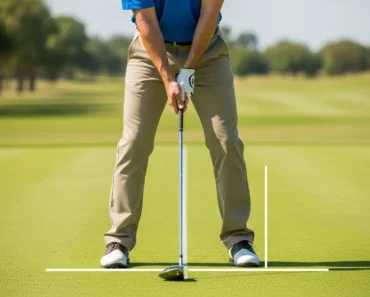
Step-by-step: a simple neutral grip
Use this as a clean starting point, then choose your grip “style” (overlap/interlock/baseball) afterward.
1) Set the lead hand (left hand for right-handers)
- Hold the club in front of you with the head angled away slightly (roughly 45°).
- Place the grip mainly across the “pads” near the base of the fingers, while it also runs along the first section of the index finger.
- Let the lead thumb sit straight along the top of the shaft (a “12 o’clock” feel).
2) Add the trail hand (right hand for right-handers)
- Place the trail hand just above the lead hand using the fingers more than the palm.
- Let the trail thumb sit slightly left of center on the grip (an “11 o’clock” feel).
- From your viewpoint, you should typically see about two knuckles on your lead hand (if you see more, your grip may be too strong).
- The lead thumb should feel “covered” by the trail hand, and the trail index finger forms a comfortable trigger-like shape on the grip.
Quick reflection: Does your grip look the same when you’re calm on the range and when you feel pressure on the course?
The 3 common grips (overlap, interlock, baseball)
All three grips can work—the best choice is the one that feels stable without forcing extra tension into your wrists and forearms.
| Grip type | How it connects | Often suits |
|---|---|---|
| Overlap | The trail-hand pinky rests on top of (overlaps) the lead-hand index finger. | Very common overall; often preferred by golfers with stronger hands/forearms. |
| Baseball | The hands touch, but the fingers do not overlap or lock together. | Common for juniors, some women and seniors, and golfers with weaker wrists/arms. |
| Interlock | The trail-hand pinky and lead-hand index finger interlock. | Often helpful for smaller hands/shorter fingers or golfers who struggle to feel secure with overlap. |
Tip: Pick one grip style and commit to it for a full practice week—switching every 10 balls makes it harder to build consistency.
Related Post: Golf for Beginners: A Simple Roadmap
Grip pressure (how tight is “right”?)
The goal is a firm-enough hold that the club stays controlled, but not so tight that tension spreads into the forearms.
A useful feel is: the club could almost be pulled from your hands, but not quite, and both hands apply roughly equal pressure.
Quick checkpoints
- Feel most of the “security” in the last three fingers of the lead hand.
- If your forearms feel tight before you swing, your grip pressure is probably too high.
- If the club twists easily at impact, pressure is probably too low (or the connection between hands isn’t stable yet).
Frequently Asked Questions
Which grip should a beginner use?
Start with whichever feels most secure without tension—many beginners do well with baseball or interlock if overlap feels unstable.
How do I know if my grip is too strong?
A simple check is the knuckles: if you see more than about two knuckles on the lead hand, your grip may be “strong,” which can encourage more face closure.
Can grip alone cause a slice or hook?
The grip can strongly influence face angle at impact, so it can contribute to both slices (often with a weaker grip) and hooks (often with a stronger grip).
Final Thoughts
The best grip is the one you can repeat under pressure—so keep it simple, check it often, and let your swing build on that foundation.
Which grip feels most comfortable for you right now: overlap, interlock, or baseball?
Comment with your choice (and whether you tend to slice or hook) and it’ll be easier to suggest a small adjustment.