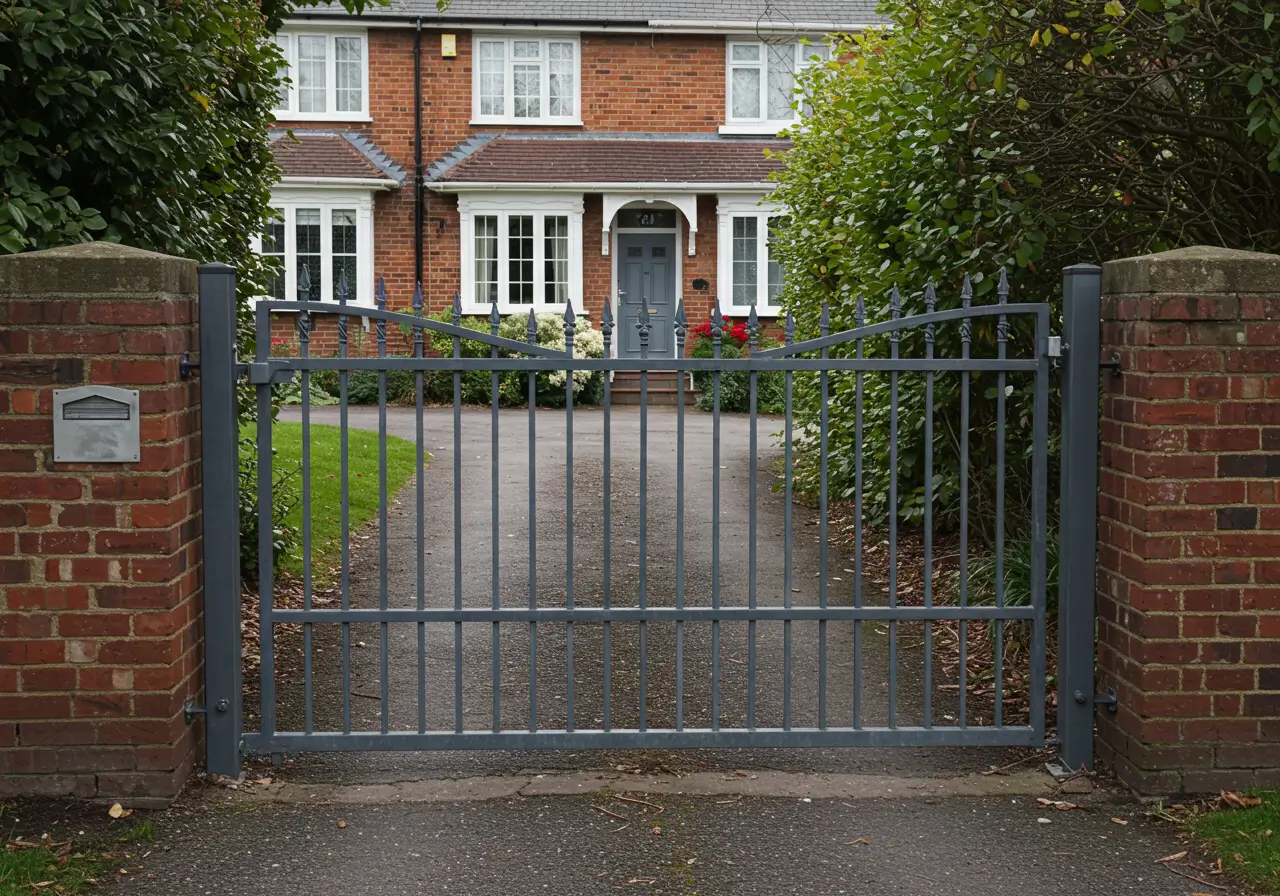
Humble Heuchera: The Front Yard Plant That Delivers Year-Round Color
Transform your landscape with coral bells that deliver year-round beauty and effortless elegance
How can one humble Heuchera plant make a front yard look designed, stay attractive through the seasons, and still feel easy to maintain?
Picture walking up to a front yard that captivates visitors year-round, needs less upkeep, and looks “finished” even when flowers fade.
Coral bells (Heuchera) can help you get that result with foliage color that holds attention long after spring blooms pass.
This guide shows how to use humble Heuchera in foundation beds, borders, and mixed plantings.
You’ll learn design strategies, planting steps, companion pairings, and simple care routines that protect your investment.
Understanding the Humble Heuchera: Nature’s Perfect Front Yard Plant
The humble Heuchera represents one of the easiest ways to add long-lasting color to a front yard without relying on constant blooms.
Coral bells earn their reputation by pairing attractive foliage with a tidy mounding shape that fits most home landscapes.
Many gardeners treat coral bells like a “filler plant,” but that mindset leaves results on the table.
When you use Heuchera as a design anchor, you get steady structure, consistent color, and a plant that blends with many styles.
Fast definition: Coral bells (Heuchera) are reliable perennials and many types grow in a wide range of light conditions, from full sun to shade.
Why coral bells work in front yards
Front yards often create tough growing conditions.
You may deal with reflected heat from pavement, uneven shade from trees, or dry soil near foundations.
- They offer foliage in many colors, from silver to near-black, which makes design easier across seasons.
- They tolerate a wide range of light conditions, which helps in mixed sun-and-shade yards.
- Once established, they show some drought tolerance, which reduces stress during summer.
The science behind their success
Coral bells keep a compact footprint while still reading as “intentional” in a bed.
That makes them useful in narrow strips along walkways and tight foundation areas where larger shrubs feel heavy.
Many sources describe Heuchera as semi-evergreen in the right conditions, which helps a front yard avoid a bare winter look.
Their tolerance list often includes deer, drought, and full shade, which solves common curb-appeal problems in many regions.
What part of your front yard is hardest to plant: deep shade, hot afternoon sun, dry soil, or narrow foundation beds?
Transforming Curb Appeal: The Property Value Connection
Great landscaping does more than look nice.
It signals care, reduces the “work” a buyer imagines, and helps a home feel maintained before anyone steps inside.
Research often connects landscape quality with higher perceived home value.
A Virginia Tech Extension publication reported home price premiums that added up to about 10% to 12% when a landscape moved from average to excellent.
Why humble Heuchera supports curb appeal
Coral bells help because they look clean for long stretches of the year.
Instead of a short flower window, they give you foliage color and texture that lasts.
- ✓ They create a tidy mid-height layer that “finishes” a bed.
- ✓ They pair with many styles, from modern to cottage.
- ✓ They look good in groups, which makes beds read as planned.
In that same Virginia Tech Extension summary, design sophistication and plant size ranked as key factors that affected perceived value.
Heuchera supports “design sophistication” through repeatable color blocks and consistent form.
If you were selling your home, what would you want a buyer to feel in the first 10 seconds at the curb?
Key Benefits of Humble Heuchera:
- ✓Year-round foliage color and texture that maintains visual interest through all seasons.
- ✓Some drought tolerance once established, which can reduce watering pressure in summer.
- ✓Many references list deer and drought tolerance among their strengths.
- ✓Adaptability to sun and shade conditions, which helps in mixed-light front yards.
- ✓Compact size that fits small spaces and foundation plantings.
Quick-Start Plan: Plant Humble Heuchera the Right Way
Strong results start with three basics: light, drainage, and spacing.
If you get those right, coral bells tend to reward you for years.
Step 1: Check light and heat
Coral bells can grow in full sun to shade, but the “best spot” depends on your climate and the variety.
If you have harsh afternoon sun, give them protection during the hottest hours, or place them where they get morning sun and afternoon shade.
Step 2: Fix drainage before you plant
Good drainage matters more than rich soil.
Many guides warn that soggy soil can kill coral bells, so avoid low spots that hold water.
- In clay soil, mix compost into the top layer and consider a slightly raised planting line.
- Near downspouts, redirect water or move the planting zone.
- Keep mulch off the crown to lower rot risk.
Step 3: Place plants for a “mass” look
Heuchera looks best in groups.
Instead of dotting single plants, plant in clusters and repeat the same color down the bed for a designed feel.
- Small bed: 3 plants in a triangle.
- Medium bed: 5 plants in a loose arc.
- Long foundation: repeat groups every few feet for rhythm.
Step 4: Water for roots, not for leaves
In the first season, water when the top soil dries, and aim water at the soil line.
After the plant establishes, many sources describe Heuchera as somewhat drought-tolerant, but it still performs best with consistent moisture.
What is your biggest planting headache: clay soil, deer pressure, harsh sun, or dry shade near the house?
Design Strategies: Maximizing Heuchera’s Front Yard Impact
Successful Heuchera design comes from repetition and contrast.
Use coral bells as the steady “middle layer” between shrubs and ground covers.
Foundation Planting Excellence
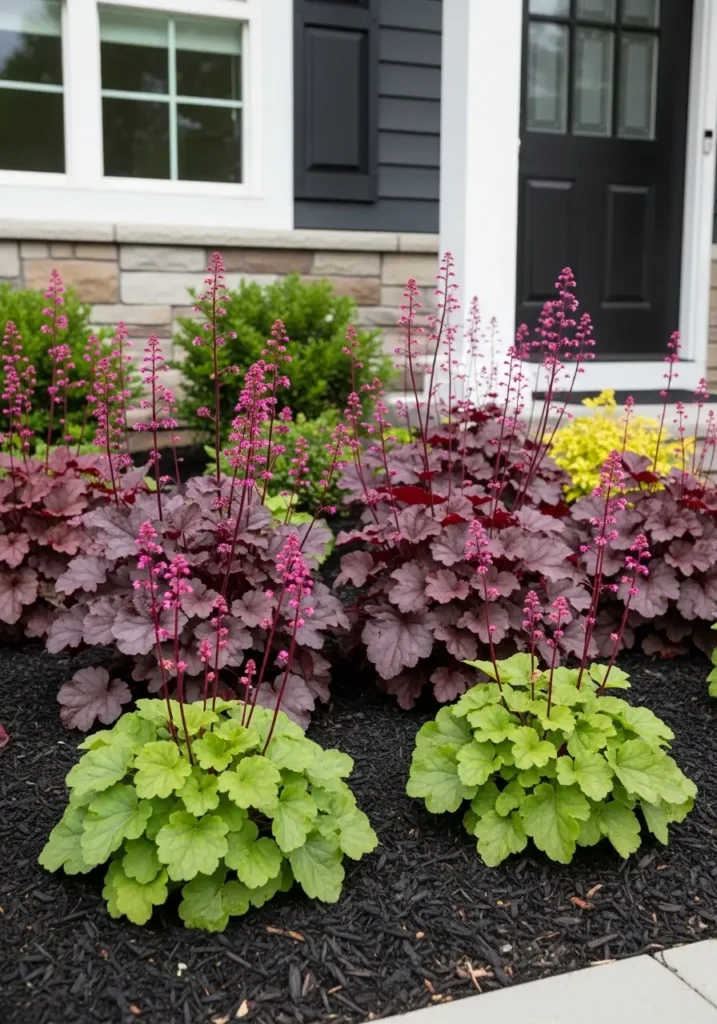
Foundation beds matter because they frame the home.
The goal is to soften hard lines while keeping plants low enough to avoid covering windows.
- Plant coral bells in groups of 3–5 for a stronger block of color.
- Keep spacing open so foliage dries after rain and airflow stays steady.
- Match foliage tones to exterior colors so the bed feels intentional.
Burgundy and purple foliage can create sharp contrast against light siding.
Lime and amber foliage can brighten darker exteriors and shaded corners.
Border and Edge Definition
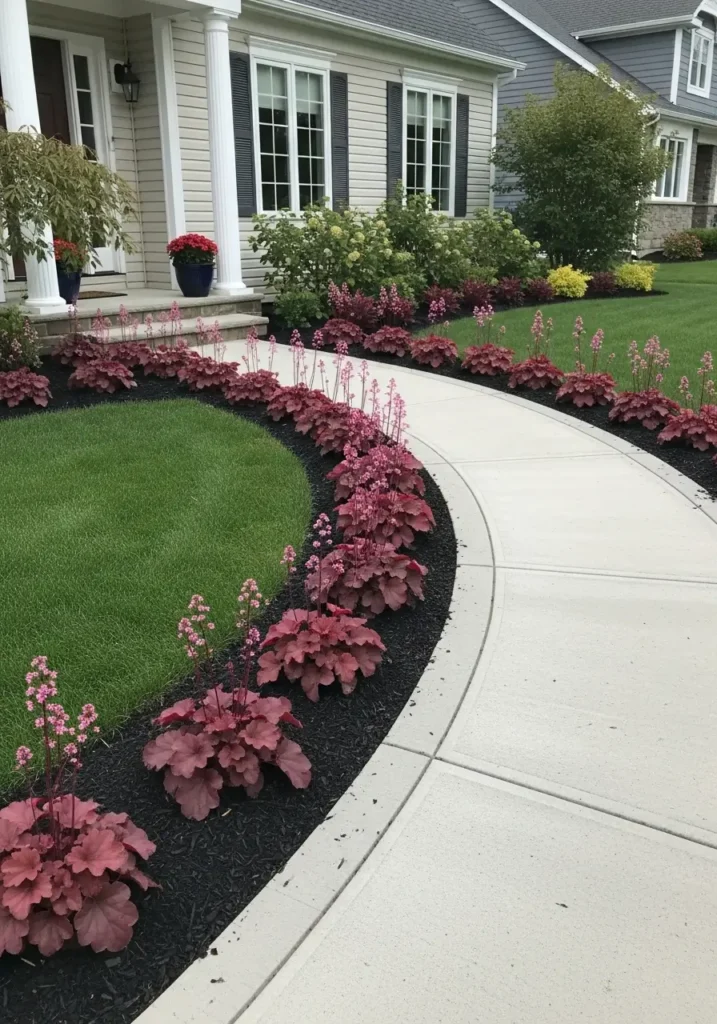
Heuchera makes a strong edging plant when you want a neat line without a hedge.
Use curves for a natural look, or use clean straight runs for modern design.
- Repeat the same variety along the line to avoid visual clutter.
- Use a contrasting mulch color to make foliage “pop.”
- Leave a small gap from hard edges so you can refresh mulch and trim.
Simple color formulas that work
If you feel stuck on color, use one of these front-yard-safe palettes.
Each one looks good from the street and stays calm up close.
- Modern neutral: near-black Heuchera + white flowers + fine grass texture.
- Warm welcome: caramel or peach Heuchera + soft green foliage + stone mulch.
- Shade brightener: chartreuse Heuchera + dark green leaves + silver accents.
Which look fits your home best: modern, cottage, or clean and minimal?
Companion Planting: Creating Cohesive Front Yard Ecosystems
Heuchera shines when you build layers around it.
Pair it with plants that add height, texture, or seasonal bloom, while keeping care needs compatible.
Shade Garden Companions
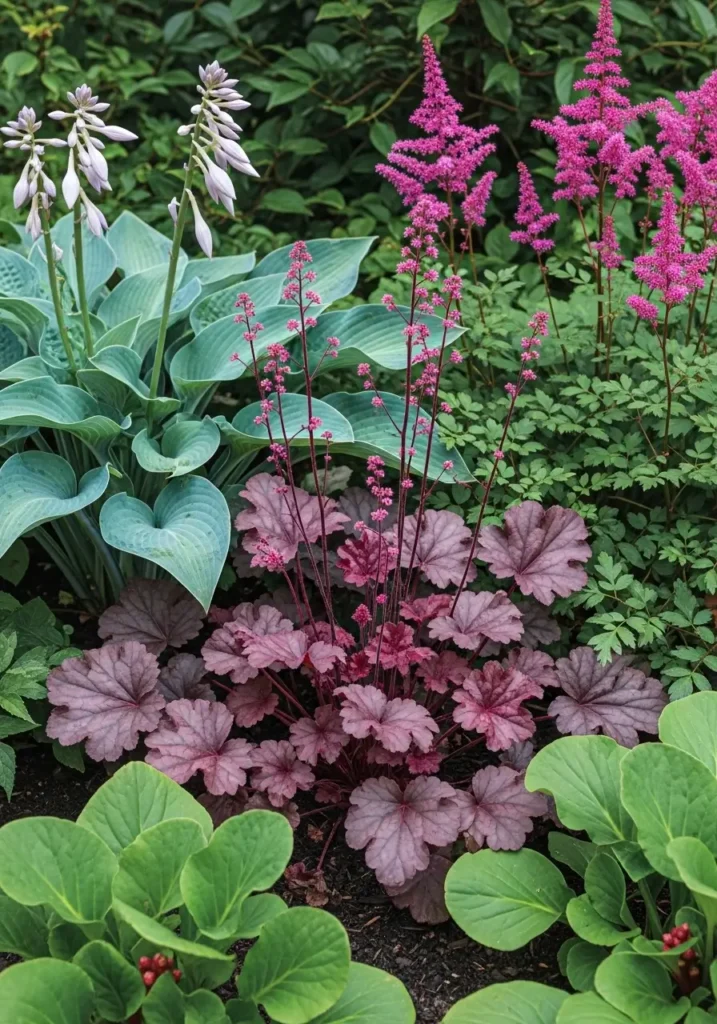
In shade, focus on leaf shape and texture.
Use broad leaves behind coral bells, then add a ground layer that keeps beds full.
- Hostas: broad leaves that give strong contrast and a calm backdrop.
- Astilbe: vertical flower spikes that add lift without heavy mass.
- Bergenia or wild ginger: strong ground layer that fills gaps.
Sunny Location Partnerships
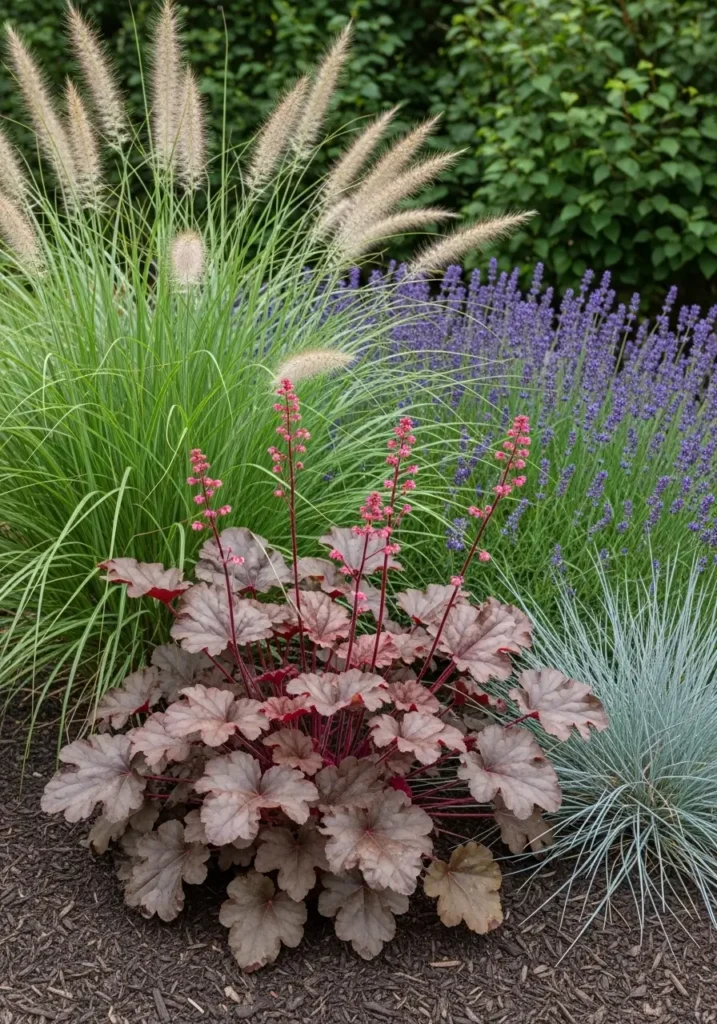
In sun, pick companions that can share the same moisture pattern.
Add movement and vertical lines so the bed looks layered, not flat.
- Ornamental grasses: fine texture that contrasts with Heuchera leaves.
- Lavender: scent and pollinator value with a clean shape.
- Salvia: upright blooms that extend color through warm months.
Design tip: Use one “repeat plant” (Heuchera) and two “support plants” (one tall, one low).
Repeat the trio down the bed for a look that feels planned.
Seasonal Care and Maintenance: Keeping Your Investment Thriving
Coral bells do not ask for much, but timing matters.
A few small seasonal habits can keep crowns healthy and foliage looking clean.
Spring preparation and renewal
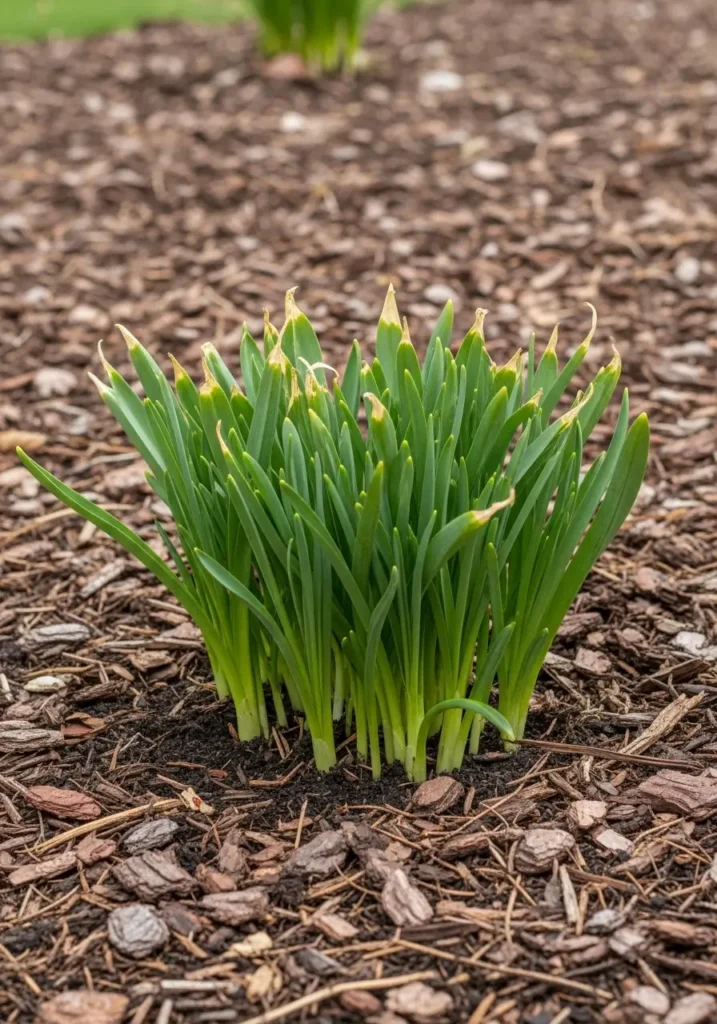
- Remove damaged leaves so new growth gets light and air.
- Refresh mulch, but keep it off the crown to reduce rot risk.
- Top-dress with compost if soil feels thin or dry.
Summer care strategies
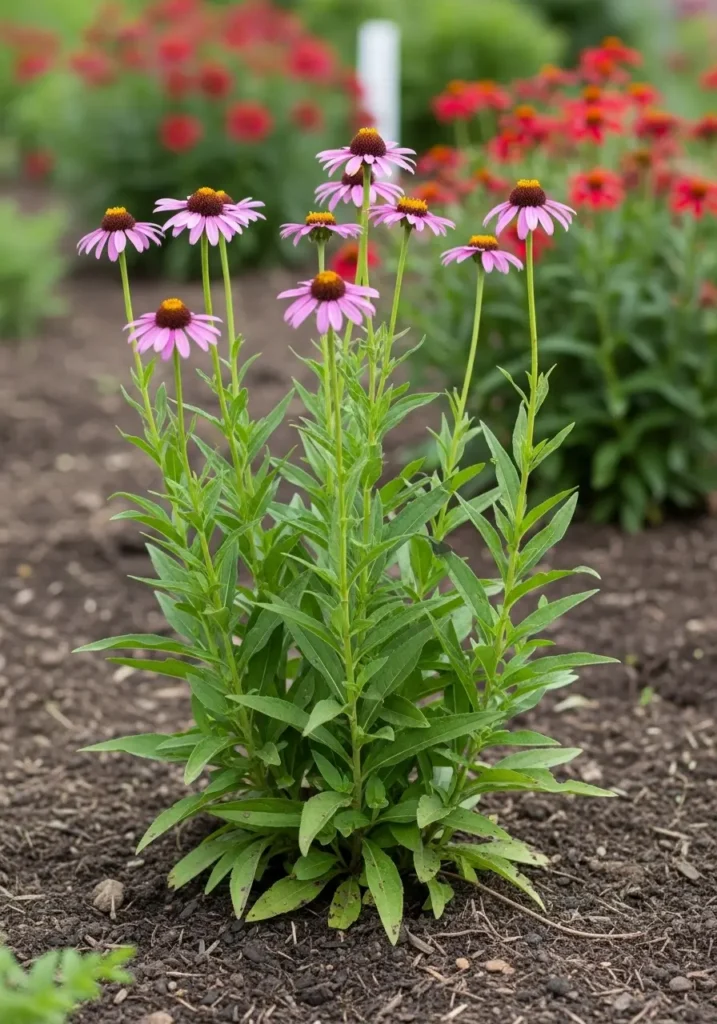
In summer, focus on deep watering when needed.
Consistent moisture helps plants handle heat and higher light exposure.
- Water at soil level to keep foliage dry.
- Remove spent flower stems if you want foliage to stay the star.
- Watch for leaf scorch in reflected heat zones.
Winter protection and preparation
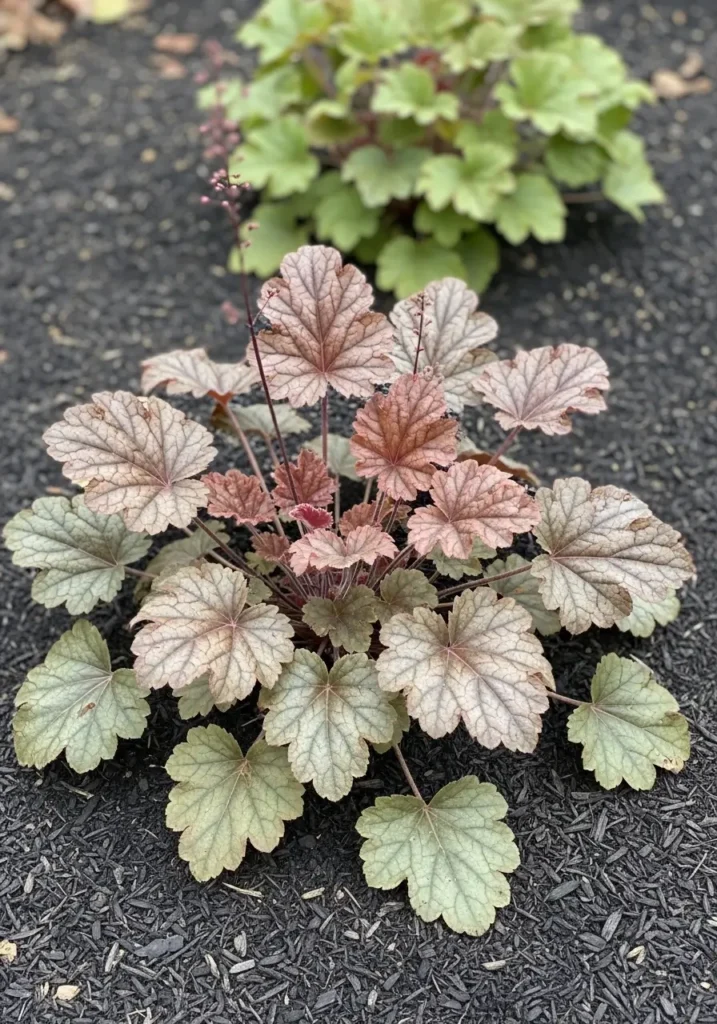
Many coral bells keep some foliage through winter in the right conditions, which adds off-season structure.
If your area has freeze-thaw cycles, add mulch around the plant base after the ground freezes, but do not bury the crown.
- Avoid heavy wet mulch piled on top of crowns.
- Do not cut back healthy foliage in fall if it protects the crown.
- Check plants in early spring for heaving and re-seat if needed.
What season causes more trouble in your yard: summer heat, winter freeze-thaw, or spring rain and mud?
Variety Selection: Choosing the Perfect Heuchera for Your Front Yard
Variety choice matters because color, vigor, and sun tolerance can differ.
Start with your site conditions, then choose foliage tones that match your home.
Many guides list coral bells as hardy in USDA zones 4–9, which covers a wide range of climates.
Climate considerations
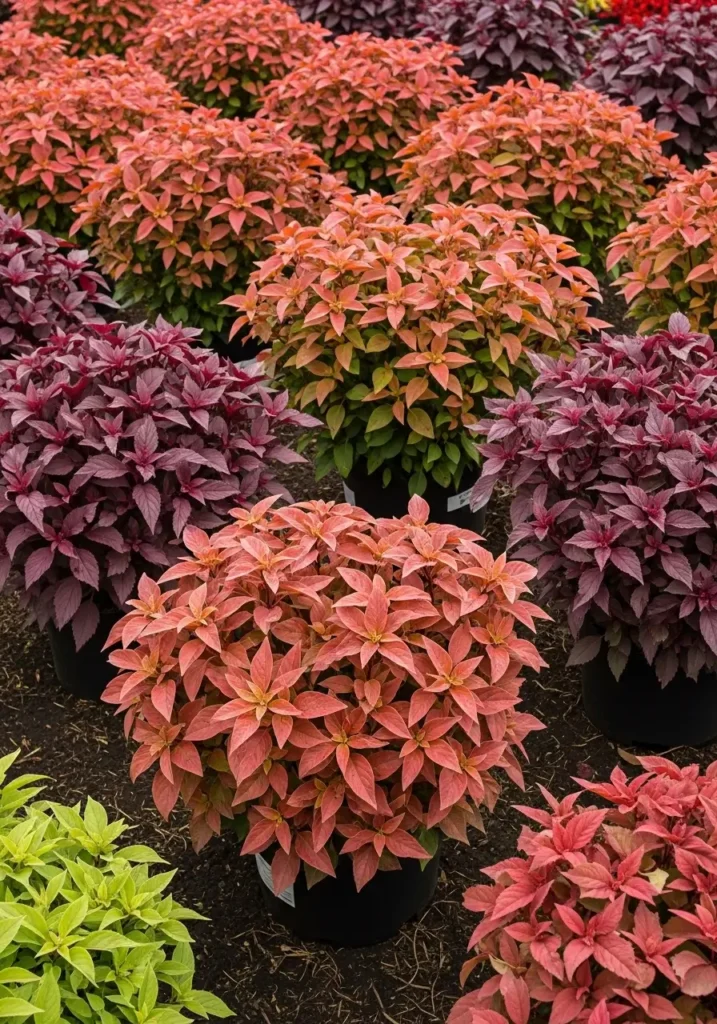
In hot climates, afternoon shade and steady moisture help many varieties hold leaf quality.
In cold climates, protect crowns from heaving and avoid soggy winter soil.
Color palette planning
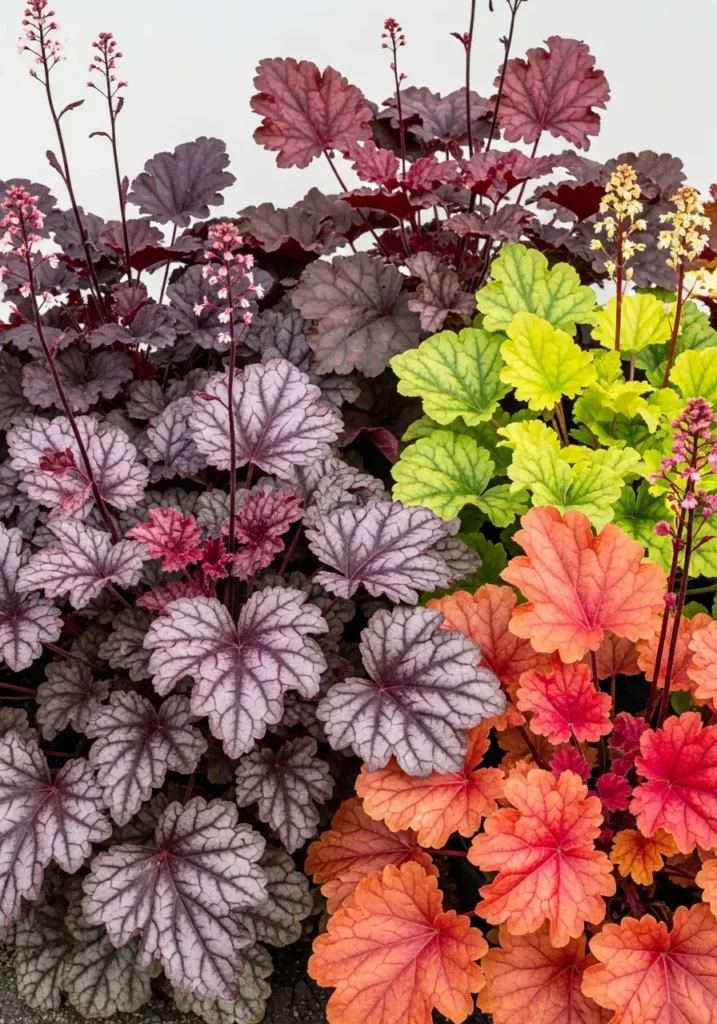
Foliage color works like paint in a landscape.
Use it to echo your exterior, highlight your entry, or brighten deep shade.
- Deep purple / near-black: strong contrast and a modern feel.
- Caramel / peach: warm welcome tone near entry paths.
- Chartreuse: brightens shade and makes darker plants look richer.
- Silver: cools hot colors and adds a clean highlight.
Many coral bells cultivars show seasonal shifts in foliage tones, which can add motion to a bed across the year.
Plan for that change so your palette still looks balanced in late summer and fall.
Related Post: Why Everyone Needs a Swiss Cheese Plant
Problem-Solving: Common Challenges and Solutions
Most issues come from site conditions, not pests.
When you fix drainage, light stress, and crown coverage, you solve the most common failures.
Crown Rot Prevention
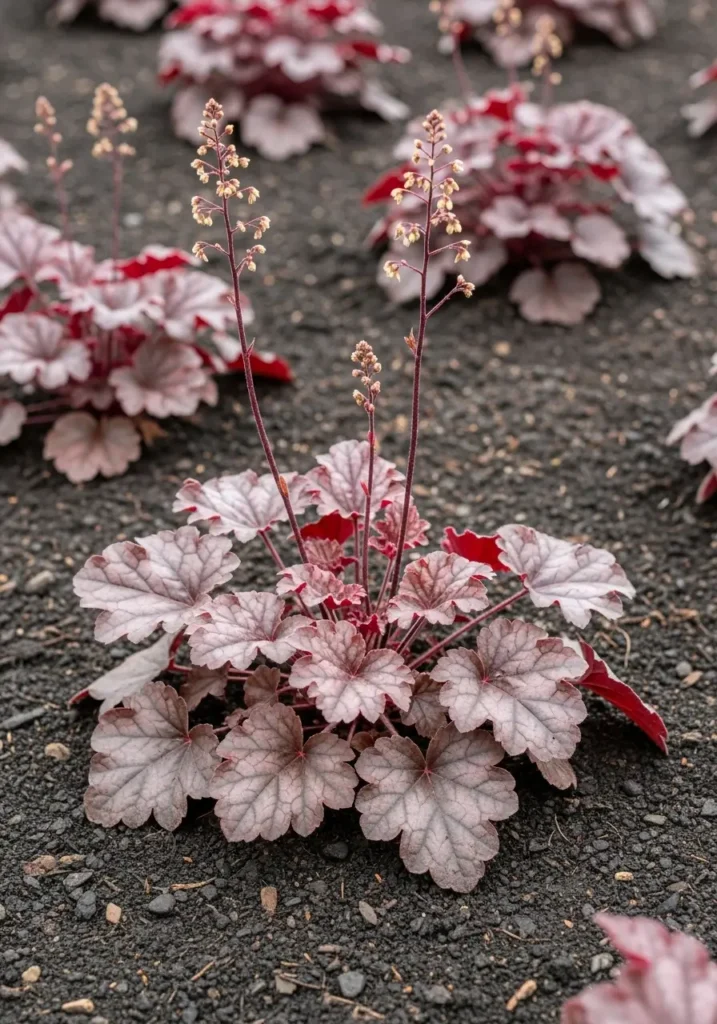
Crown rot tends to show up when the crown stays wet and air stays trapped.
Many care guides stress well-draining soil and warn against soggy conditions because wet soil can kill coral bells.
- Plant in soil that drains well and avoid low spots that hold water.
- Keep mulch pulled back from the crown.
- Water at the soil line instead of overhead.
Managing Leaf Scorch
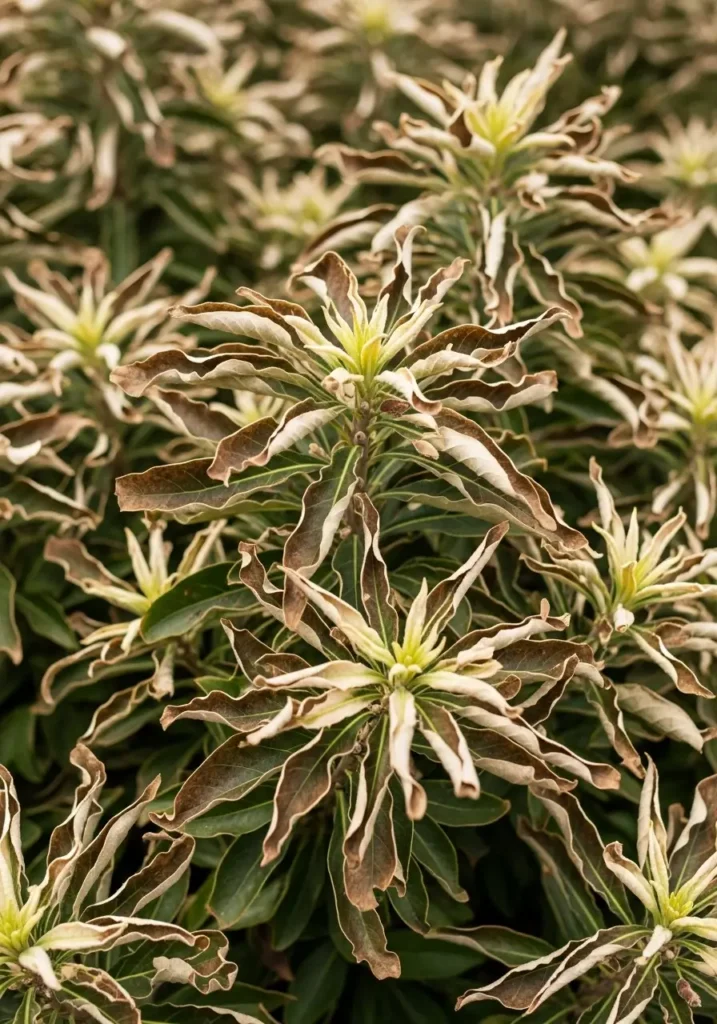
Leaf scorch often comes from harsh sun, reflected heat, or dry soil.
Even though many sources note coral bells can grow in full sun, heat and moisture still influence leaf quality.
- Add afternoon shade where possible, even if it comes from a taller plant.
- Water deeper during hot stretches and refresh mulch.
- Move the plant in fall if the spot stays too harsh each summer.
Have you tried coral bells before? If yes, what went wrong, and what do you want to change this time?
Advanced Design Techniques: Professional-Level Front Yard Transformations
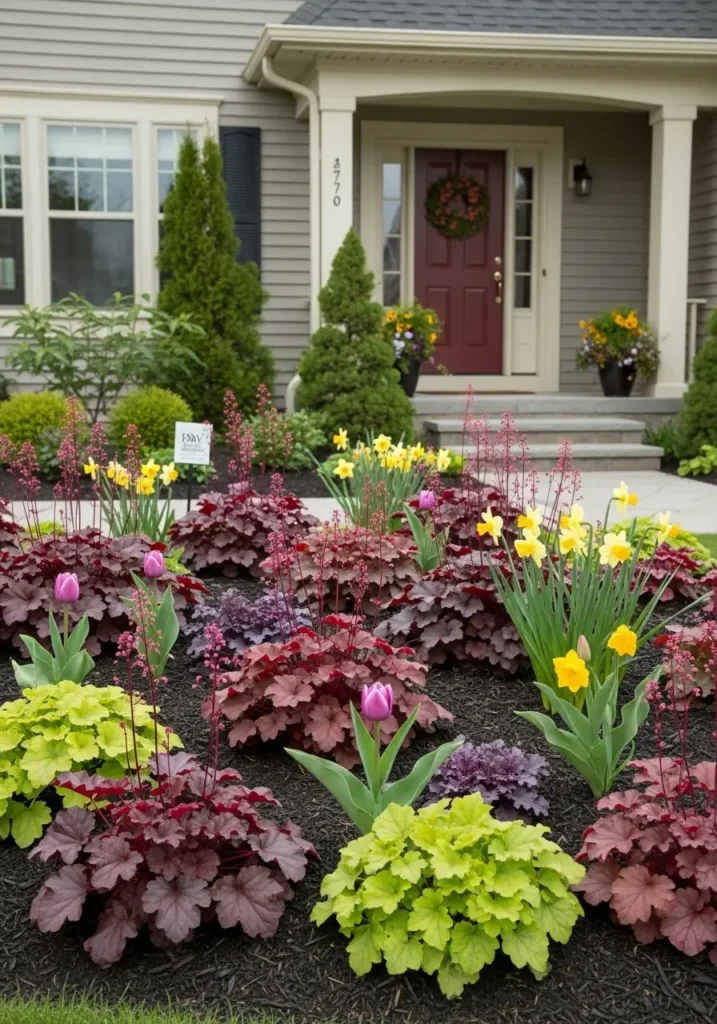
Once you master placement and care, use professional tricks that make beds look “designed.”
These techniques focus on repetition, rhythm, and seasonal planning.
Color echo and repetition
Pick one main Heuchera variety and repeat it in several spots.
This repetition creates unity and keeps the front yard from feeling busy.
- Use the main color in 3–5 locations across the front yard.
- Add one accent Heuchera color only near focal points, such as the entry.
- Repeat companion plants in the same way to tighten the design.
Seasonal interest layering
Build a bed that peaks in more than one season.
Use Heuchera as the base, then layer spring bulbs, summer bloomers, and fall texture plants.
- Spring: bulbs and fresh foliage contrast.
- Summer: add upright blooms behind the coral bells.
- Fall: echo Heuchera tones with asters or ornamental kale.
- Winter: rely on evergreen accents and Heuchera structure where it stays semi-evergreen.
The Proven Winners guide to Heuchera includes a wide overview of light range, soil drainage needs, and foliage color diversity that can help you plan combinations.
Economic Benefits: Understanding the Return on Investment
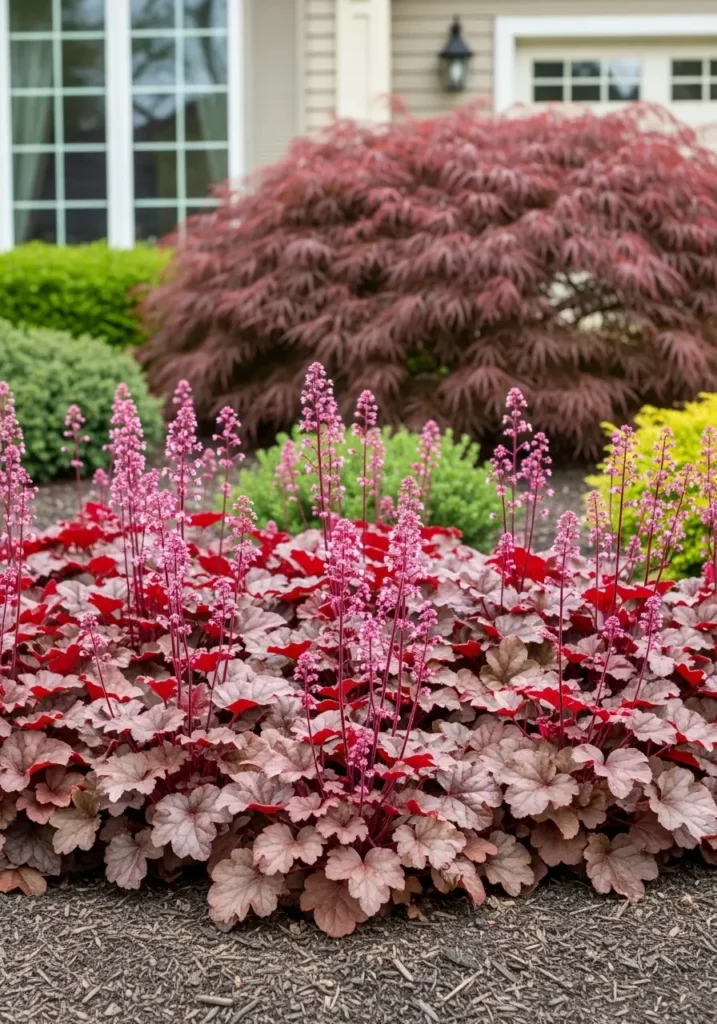
A front yard upgrade can pay back in two ways.
You get daily enjoyment now, and you may improve perceived value later if you sell.
Cost comparison thinking
Annual flower beds can look great, but they often require repeat purchases each year.
Perennials like Heuchera can reduce replacement cycles because they return and expand when conditions fit.
- Buy fewer plants, but buy stronger plants that match your site.
- Use division as a “multiplier” once plants mature.
- Invest in soil drainage fixes first, since failure costs more than compost.
Property value enhancement
If you care about resale, aim for a landscape that looks consistent across seasons.
A Virginia Tech Extension publication summarized research showing a landscape upgrade from average to excellent increased perceived home value by about 10% to 12%.
If you had to choose, would you rather build a front yard that looks best in spring, or one that stays strong in every season?
Frequently Asked Questions
How long do Heuchera plants live in front yard settings?
Many coral bells can live for years when you keep crowns dry and soil well-drained.
Divide older clumps when the center loses vigor, and replant divisions at the same depth.
Good drainage and smart siting often matter more than fertilizer.
Can humble Heuchera handle reflected heat in front yards?
Many varieties tolerate tough sites, but reflected heat can still stress foliage.
Use morning sun and afternoon shade when you can, and keep moisture steady during heat waves.
Add mulch to reduce soil swings, and avoid spots that dry out fast near pavement edges.
What is the best time to plant coral bells?
Plant in spring or fall when temperatures stay mild.
These seasons help roots establish without heavy heat stress.
If you must plant in summer, give shade for a short period and water with care.
How many Heuchera plants do I need for coverage?
Use groups for impact.
A small bed often looks best with 3 plants, while larger foundation runs often look best with repeated groups.
Plan spacing so plants can fill in without crowding the crown.
Do coral bells need special soil?
They do best in soil that drains well, and many guides warn that soggy soil can kill them.
Improve clay with compost and consider raised planting lines in wet areas.
Keep mulch away from the crown to reduce rot risk.
Final Thoughts
The humble Heuchera proves that the most useful front yard plants do more than bloom.
They add structure, color, and a clean shape that holds up through the seasons.
Start with one bed near the entry or foundation, repeat one strong variety, and build layers around it.
Then refine your palette as you learn what thrives in your yard.
Share your experience in the comments below: which humble Heuchera color would you plant first, and what spot in your front yard needs the biggest upgrade?