Ice Skating Outfit Guide: Ice Skating Outfits Casual That Feel Warm
Outfit formulas, fabric picks, and small details that stop cold feet, stiff moves, and awkward bulk.
How do you build an ice skating outfit that keeps you warm, keeps you stable, and still looks like your style?
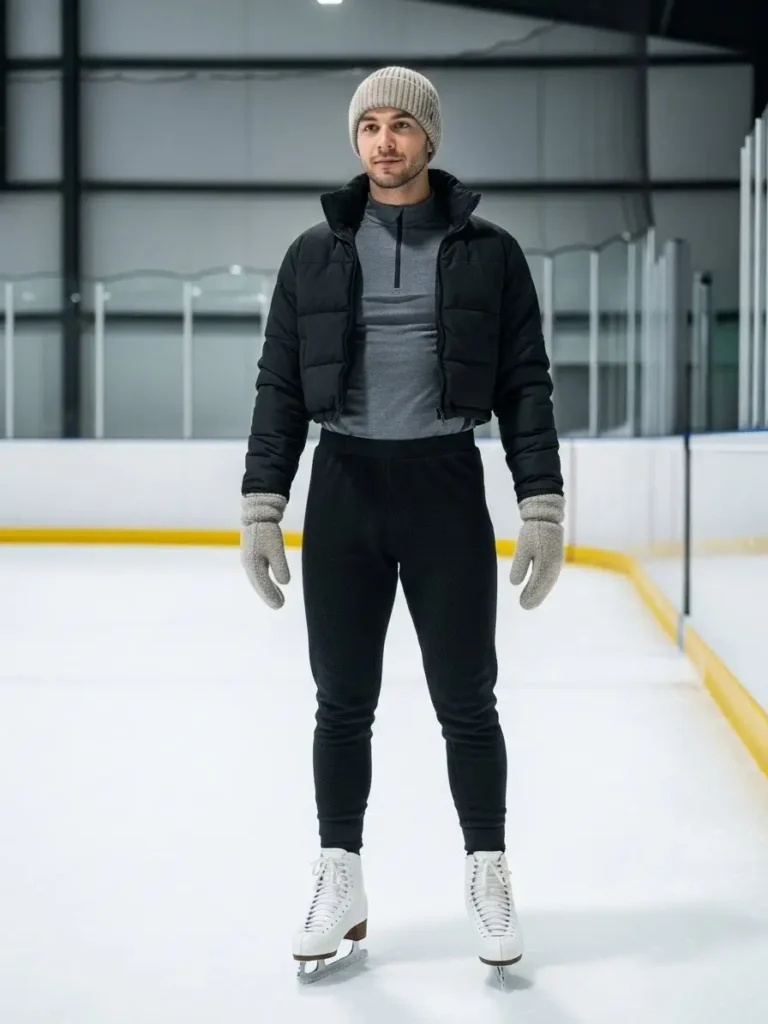
A good ice skating outfit does more than look cute in photos. It helps you move, keeps you warm in a cold rink, and protects the parts of your body that hit the ice first.
This guide covers ice skating outfits casual enough for a public session, plus a few options that lean sporty or “figure-skater core.” You will get outfit formulas, a layering plan, and a packing list you can reuse all season.
This also works across regions. Indoor rinks feel cold in New York and Toronto, but they also feel cold in London, Sydney, or Cape Town. Your local season changes, but the ice stays the ice.
Use this post as a checklist. Pick one outfit formula, then tweak one layer at a time until your body feels steady and warm.
What makes an ice skating outfit “work”
Most people plan an outfit for the cold. Skaters plan an outfit for cold plus motion plus falls. If one layer fights your movement, you will feel stiff, and your balance will drop.
Aim for these four goals. If you hit all four, your outfit will feel easy even if you rent skates and skate once a year.
The 4-goal checklist
- Warm core, free joints: Keep your torso warm, but let knees, hips, and shoulders move with no pull.
- No bulk at the ankle: Avoid cuffs that bunch inside the skate and make your foot feel off.
- Grip and control: Choose layers that stay put when you bend, glide, and turn.
- Fall-ready details: Cover hands, protect head for beginners, and avoid hard items in pockets.
Think like a skater and a stylist at the same time. Start with function, then add style with color, texture, and shape.
Quick reflection: What fails first for you on the ice: cold hands, cold feet, bulky layers, or fear of falling?
Layering that stays warm without bulk
Use a three-part system: base layer, warm layer, and a light shell when you need it. This setup lets you adjust fast when you warm up from skating.
Many rinks keep air temps around arena standards near 60°F, but the cold air settles close to the ice, and you feel it in your legs and hands.
The simple 3-layer map
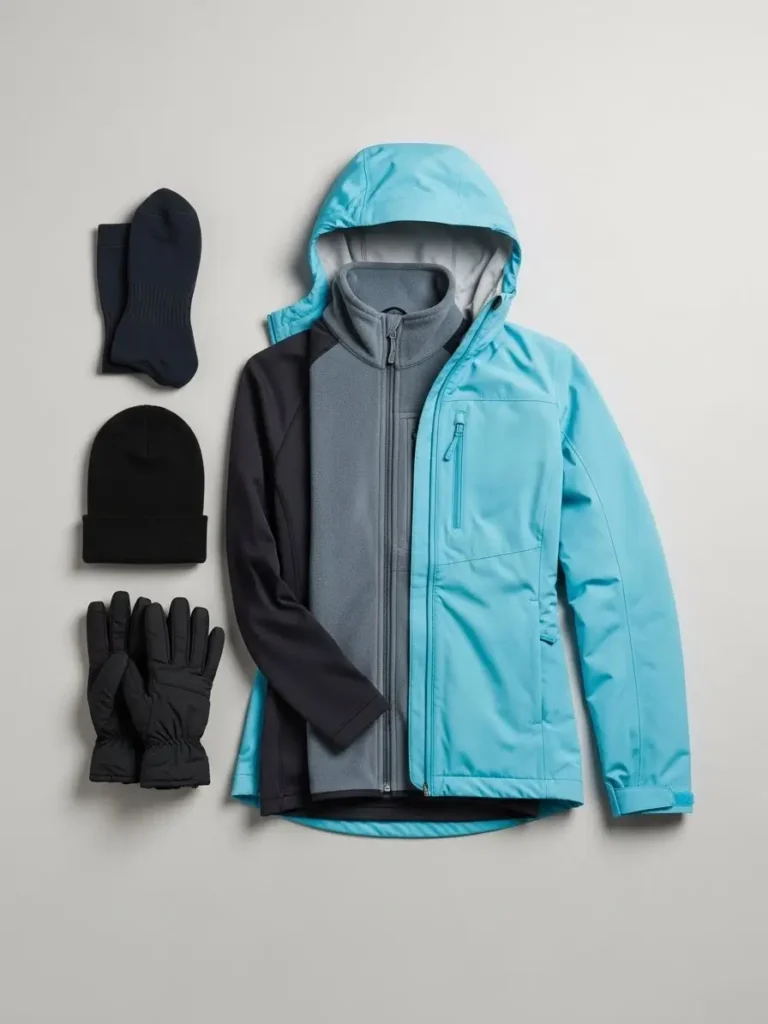
- Base layer: Thin, close fit, sweat control.
- Warm layer: Fleece, sweater, or light puffer vest.
- Shell layer: Wind block for outdoor rinks, or a light jacket for indoor drafts.
Pick one “warm layer” only. Too many mid layers trap heat, then sweat cools you down when you stop.
If you want one fabric rule that saves most outfits, use this: skip cotton next to skin when you plan to skate hard. Cotton can hold sweat, then the cold air hits it.
Base layer fabric picks
- Merino wool: Merino can move sweat away from skin and help you stay dry during activity.
- Synthetics (poly blends): Great for active sessions and easy wash days.
- Thermal knits: Fine for slow laps and photos, but test for stretch at the shoulder and knee.
Quick reflection: When you skate, do you get cold from the start, or do you start warm and then feel cold after you sweat?
Bottoms: the part that decides your comfort
Your legs sit near the ice, so they feel cold first. Your pants also control how free your knees feel. If your knees feel blocked, your skating feels tense.
For most casual skaters, the best pick stays simple: warm leggings or slim joggers with stretch. Add a thin base layer under them if you freeze fast.
Best casual options
- Fleece-lined leggings: Warm, smooth fit, no ankle bulk.
- Thermal leggings + regular leggings: Good for outdoor rinks or long sessions.
- Slim joggers with cuff: Works well for many men and for streetwear looks.
- Skating leggings that cover the boot: Great for photos, but check traction and avoid slipping fabric at the blade area.
Avoid these common fails
- Wide-leg pants that sweep the ice or cover the blade area.
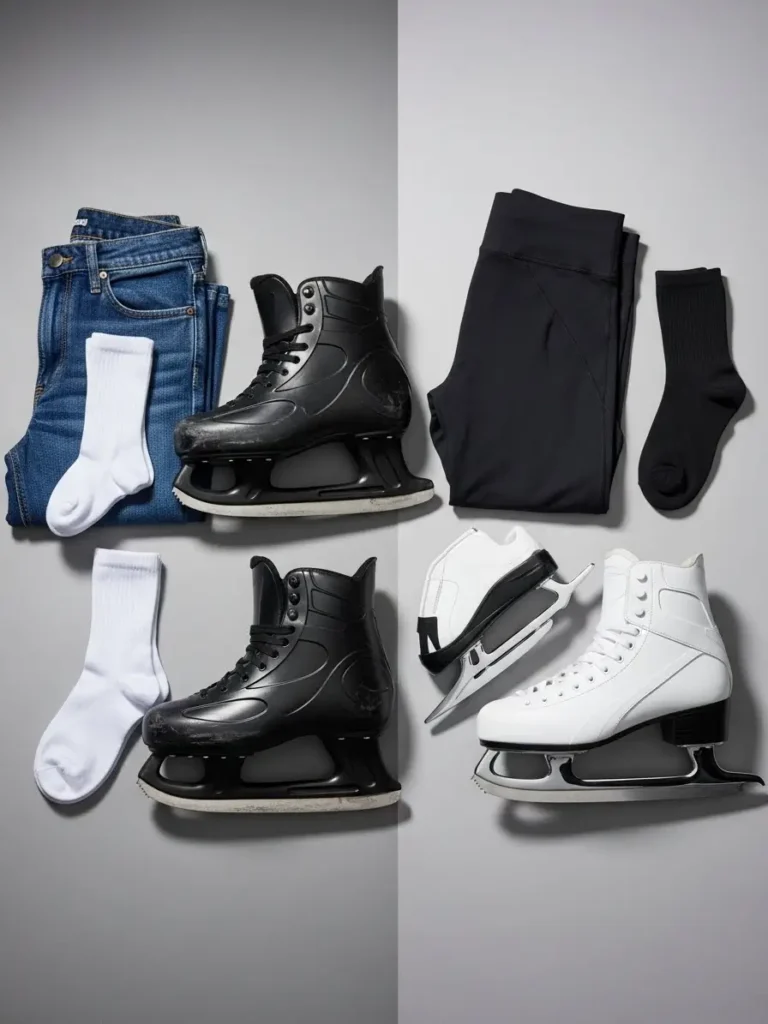
- Jeans: seams fight knee bend and feel cold on the rink.
- Thick sweatpants inside rental skates: they bunch at the ankle and can shift your foot.
If you want a clean “casual outfit” look, use one style trick: match your leggings or pants to your jacket tone. This makes the outfit look planned, not random.
Quick reflection: What pants do you own that let you do a deep knee bend at home with no pull at the hips?
Tops and jackets: warm core, free arms
Your top half needs warmth, but your arms need range. If you plan to balance with your arms, you must keep your shoulder line free.
Use a fitted base layer, then pick one warm item. A zip layer works well because you can vent when you heat up.
Easy jacket picks
- Fleece zip jacket: Warm, light, and easy to move in.
- Puffer vest + hoodie: Keeps your core warm and arms free.
- Light puffer jacket: Great for outdoor rinks and drafty arenas.
- Soft shell jacket: Works for wind and light snow when you skate outside.
Keep your jacket length in mind. A long coat can look great for photos, but it can hit your thighs when you push, and it can throw off your rhythm.
If you want a “date night” look, focus on color and texture, not extra layers. A clean knit under a simple jacket looks polished and still skates well.
Quick reflection: When you raise both arms overhead, does your jacket ride up or stay in place?
Accessories that fix the real problems (hands, head, feet)
Most skating discomfort starts at the edges: hands, ears, and toes. Accessories also shape the look, so you can keep layers simple and still look put together.
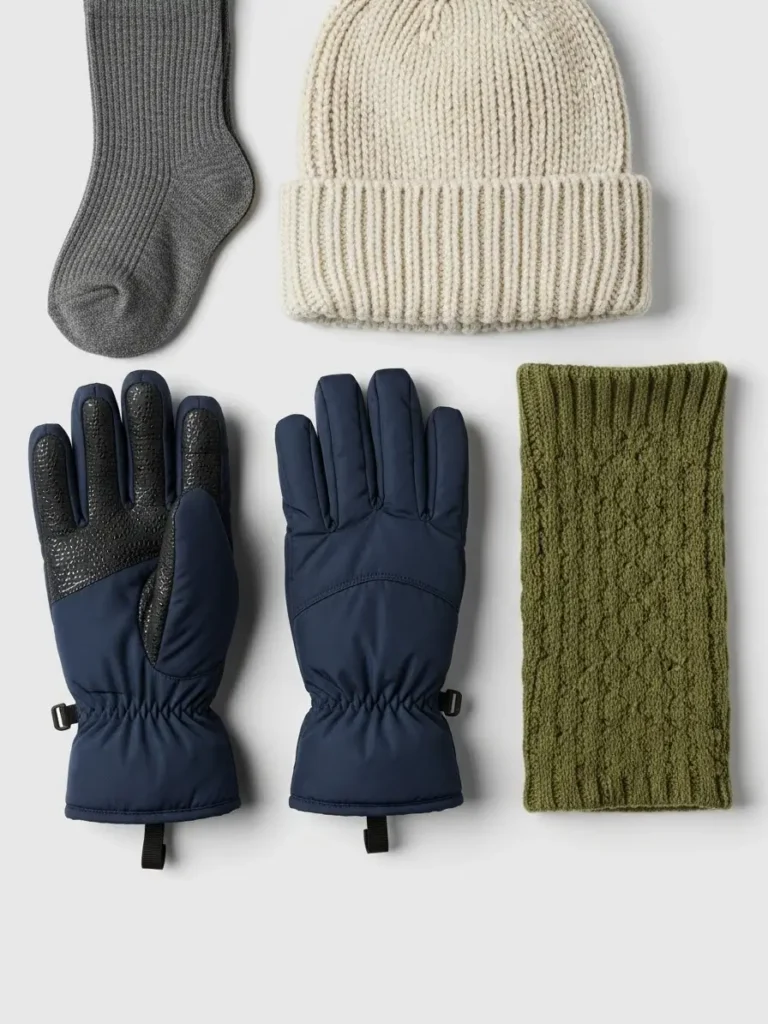
Gloves: non-negotiable
- Wear gloves for warmth and for falls.
- Pick a pair with grip so you can hold the rail with less effort.
- Avoid bulky ski gloves if they stop you from tying skates.
Socks: the “less is more” rule
- Use one pair of thin to mid socks.
- Skip thick socks that crush toes inside rental skates.
- If you get blisters, pack a second pair and swap mid-session.
Helmet: a smart move for beginners
Some facilities require certified hockey helmets for public skating, including adults, so check your rink rules before you go.
If you feel nervous on the ice, a helmet can lower fear, which can improve posture and control.
Hair and extras that help
- Tie hair back so you keep sight lines clear.
- Bring a soft neck warmer if your rink feels drafty.
- Keep pockets empty. A phone can bruise you in a fall.
A fast safety note (worth one minute)
Large studies of U.S. emergency department visits found hundreds of thousands of ice-skating injuries over time, with a large share in the head/face/neck region.
If you fall backward, tuck your chin and land on your bottom instead of throwing your arms back.
Quick reflection: What do you wish you had last time you skated: warmer gloves, better socks, or a helmet for peace of mind?
Ice skating outfits casual: 14 outfit formulas that look good and skate well
Use these like templates. Pick one that matches your vibe, then swap colors to match your closet.
1) The “first-time skater” outfit
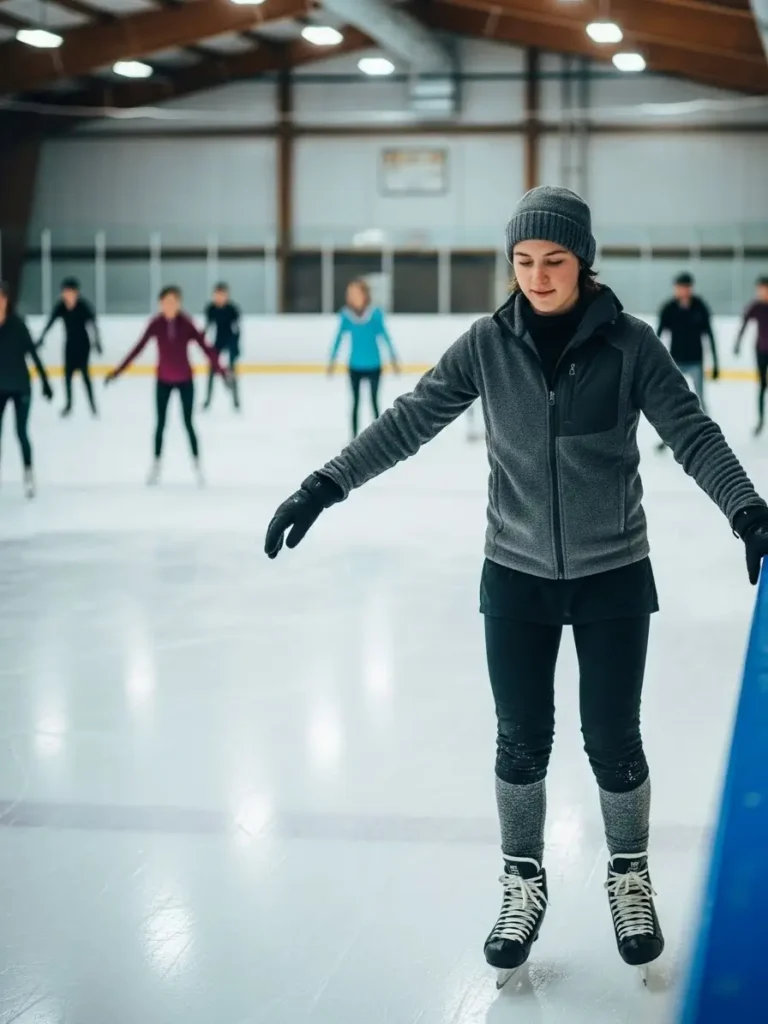
- Base: long-sleeve athletic top
- Bottom: fleece-lined leggings or slim joggers
- Warm layer: fleece zip
- Extras: helmet (if you want), gloves, beanie
Why it works: nothing dangles, nothing blocks knees, and you can focus on balance.
2) The classic “rink date” outfit
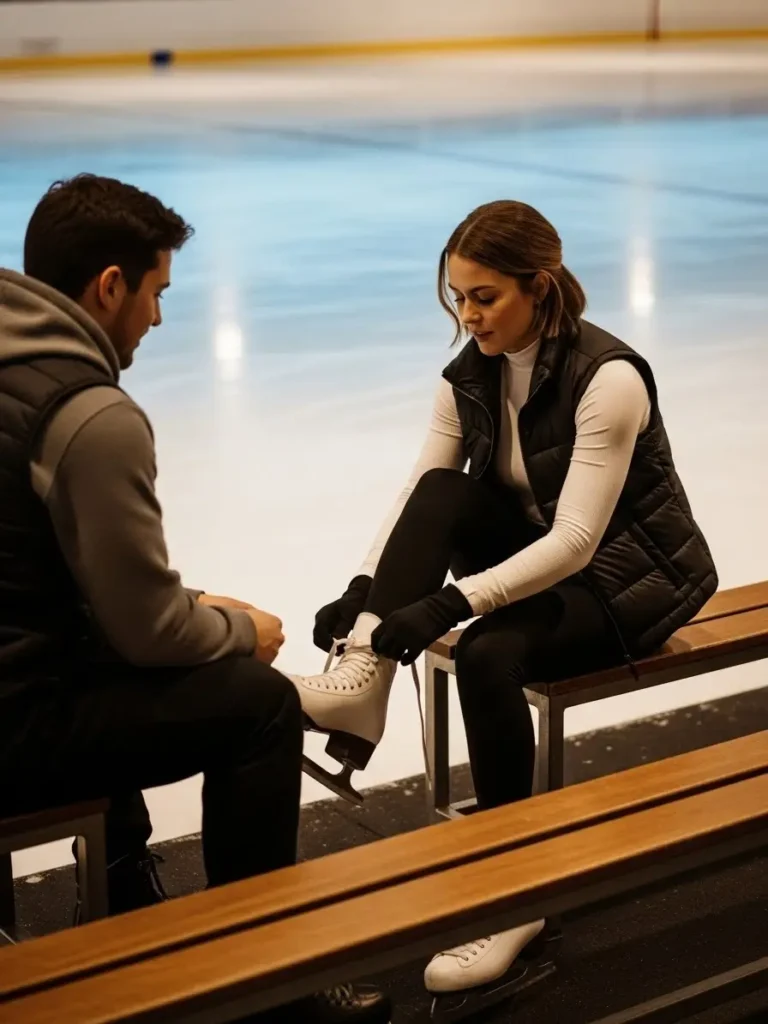
- Base: fitted long sleeve or thin knit
- Bottom: black leggings
- Warm layer: puffer vest
- Style cue: one accent color (scarf or beanie)
Pro move: bring a clean layer for after skating so you feel fresh for hot chocolate.
3) The “cute photos” outfit that stays safe
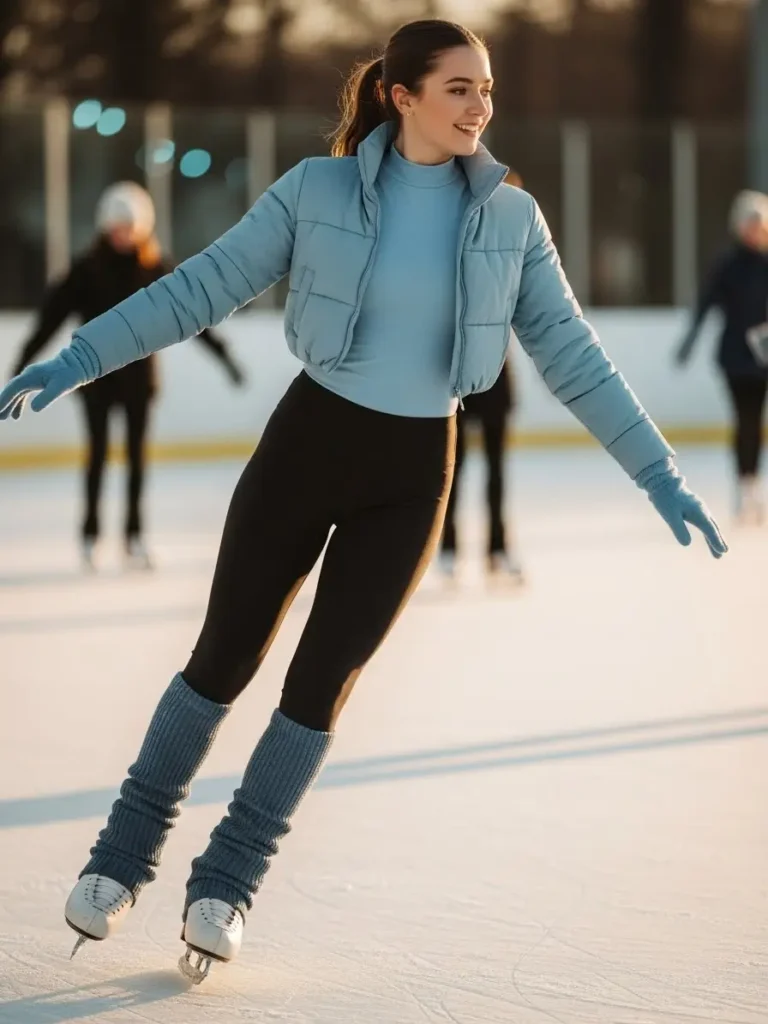
- Base: mock neck top
- Bottom: skating leggings or leggings + leg warmers
- Warm layer: cropped puffer or fitted jacket
- Extras: gloves that match your leggings
Photo tip: keep your hands out of pockets. Use arms for balance.
4) The sporty “practice session” outfit
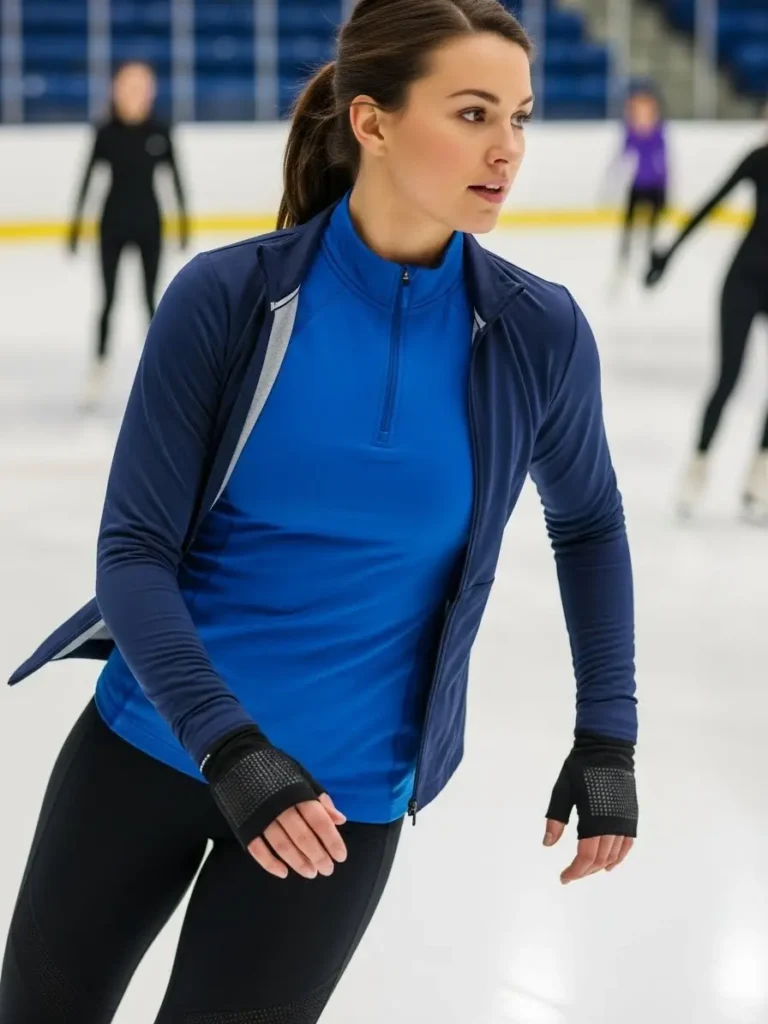
- Base: athletic long sleeve
- Bottom: thermal leggings
- Warm layer: thin jacket you can unzip
- Extras: thin gloves with grip
If you plan to drill skills, avoid heavy coats that trap heat.
5) The “streetwear” rink fit
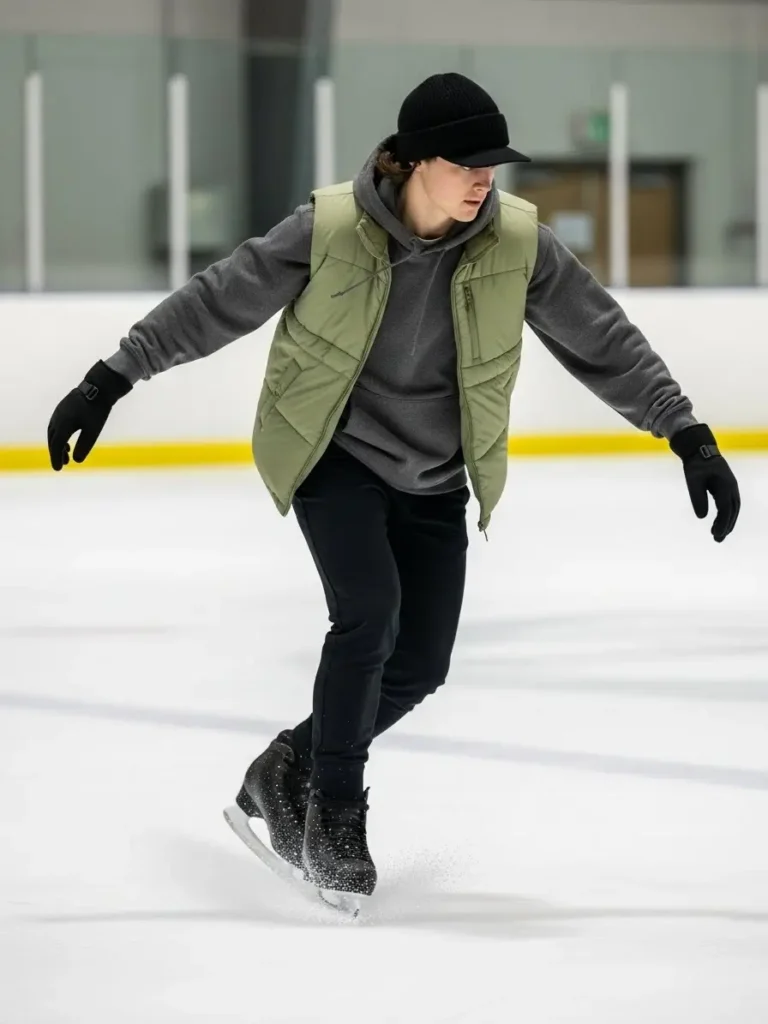
- Top: hoodie
- Bottom: slim joggers with cuff
- Outer: puffer vest or light puffer
- Extras: beanie + gloves
Keep the joggers slim at the ankle so your skate fit stays stable.
6) The “balletcore” casual skate look
Many 2025 style stories highlight balletcore, with dance-inspired layers like wrap silhouettes and leg warmers.
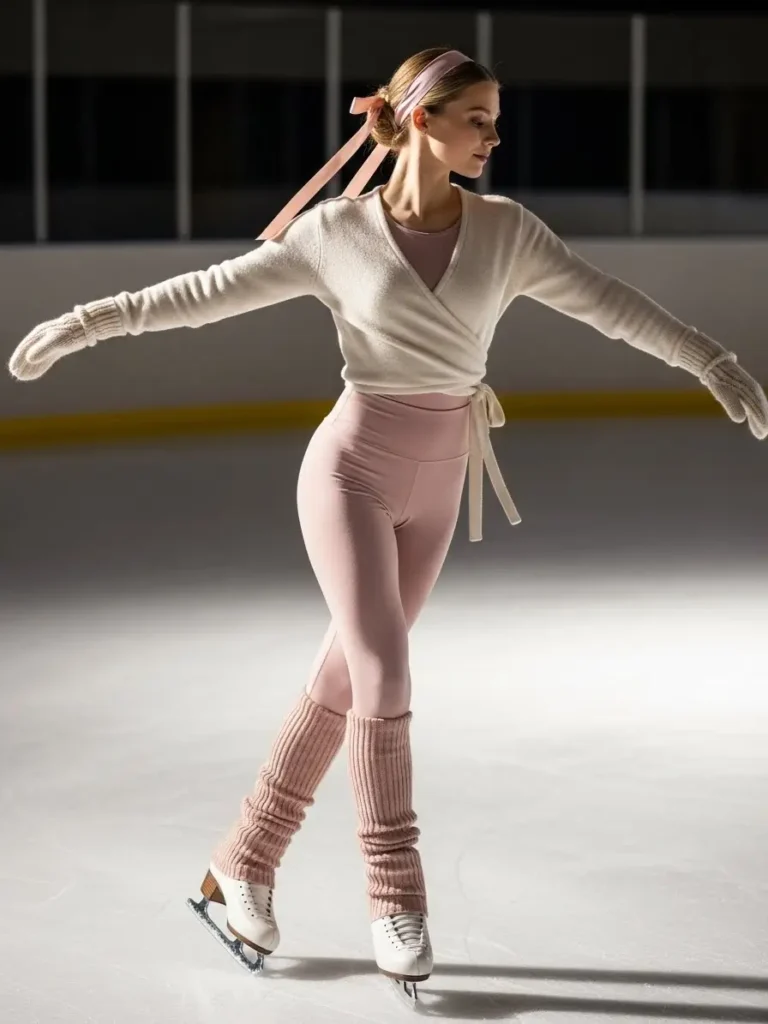
- Top: wrap sweater over a fitted base
- Bottom: leggings in a soft tone (cream, blush, gray)
- Add-on: leg warmers (keep them above the boot hook area)
- Extras: simple gloves, hair ribbon
Keep it soft, but keep it secure. The ice does not care about aesthetics.
7) The “gorpcore” outdoor rink outfit
Gorpcore leans into functional outdoor pieces like puffers and windbreakers, which fits outdoor skating needs.
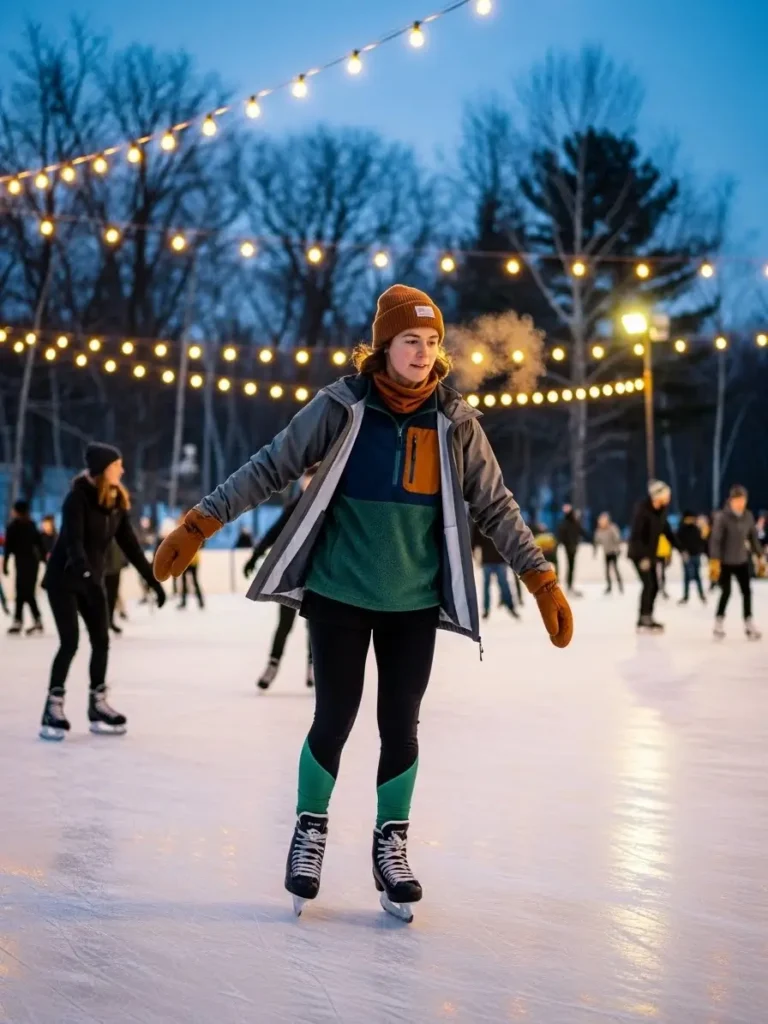
- Base: thermal top
- Mid: fleece
- Outer: windproof shell
- Bottom: thermal leggings or lined pants
- Extras: warmer gloves + neck warmer
Use bright color on one item so friends can spot you fast in a crowd.
8) The “family session” outfit (kids and adults)
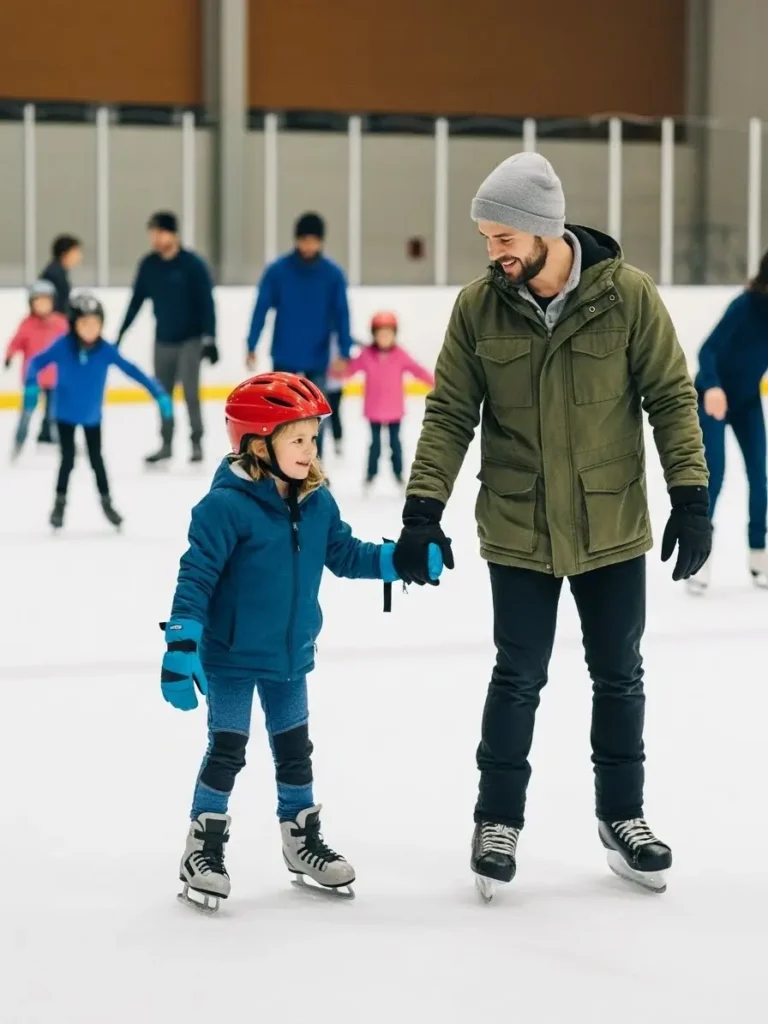
- Base: long sleeve tee
- Warm layer: hoodie
- Outer: light puffer
- Bottom: leggings or joggers
- Extras: helmet for kids, gloves for all
Make it simple. Family sessions bring traffic, and you want full comfort.
9) The “minimalist neutral” outfit
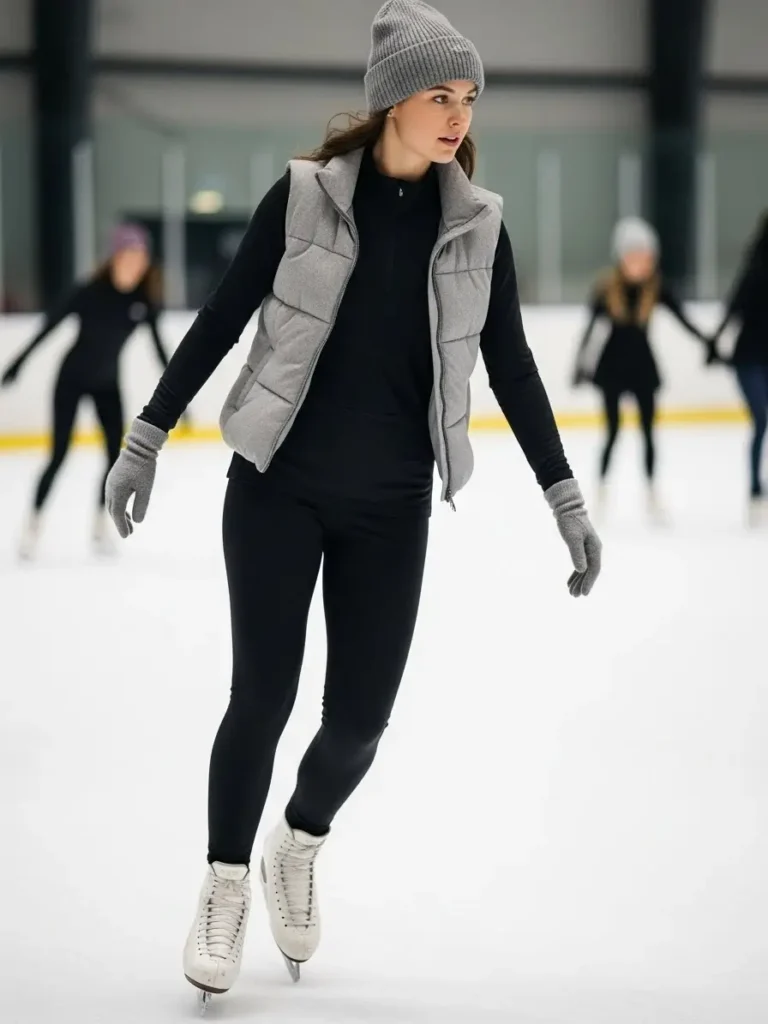
- Top: black base layer
- Bottom: black leggings
- Outer: gray or camel puffer vest
- Extras: matching beanie + gloves
This looks sharp in photos and hides rental skate scuffs on your socks.
10) The “bold color pop” outfit
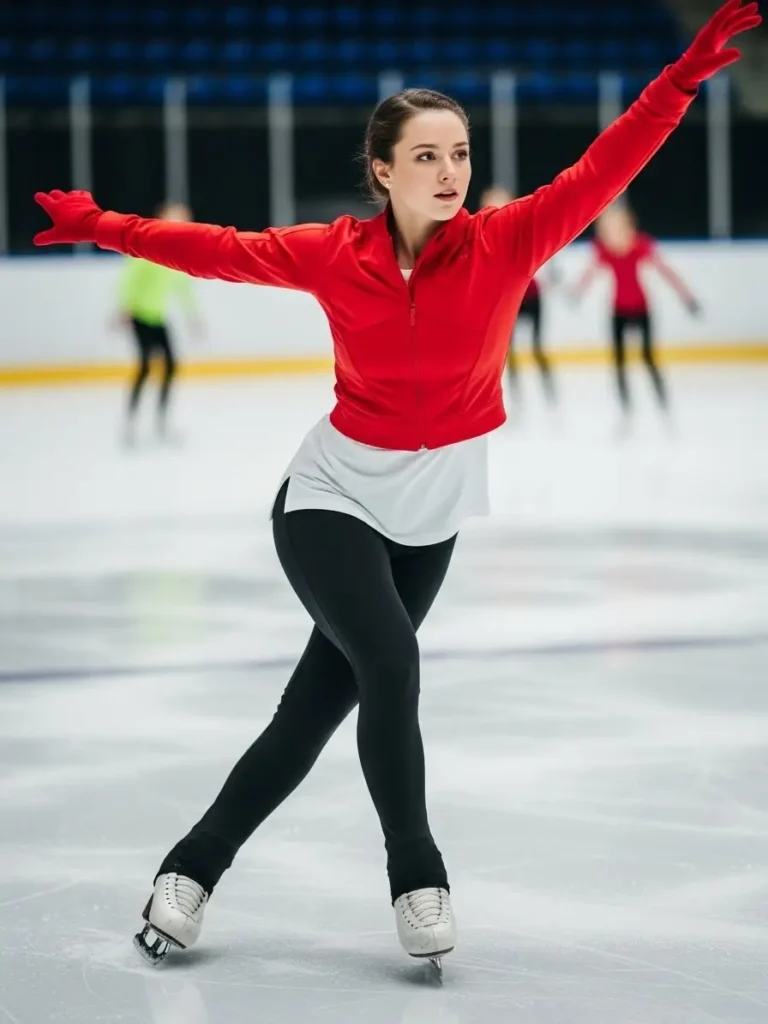
- Base: white or black long sleeve
- Bottom: black leggings
- Outer: bright jacket (red, blue, green)
- Extras: gloves that match jacket
Keep the rest clean so the jacket reads as the statement.
11) The “workout then skate” outfit
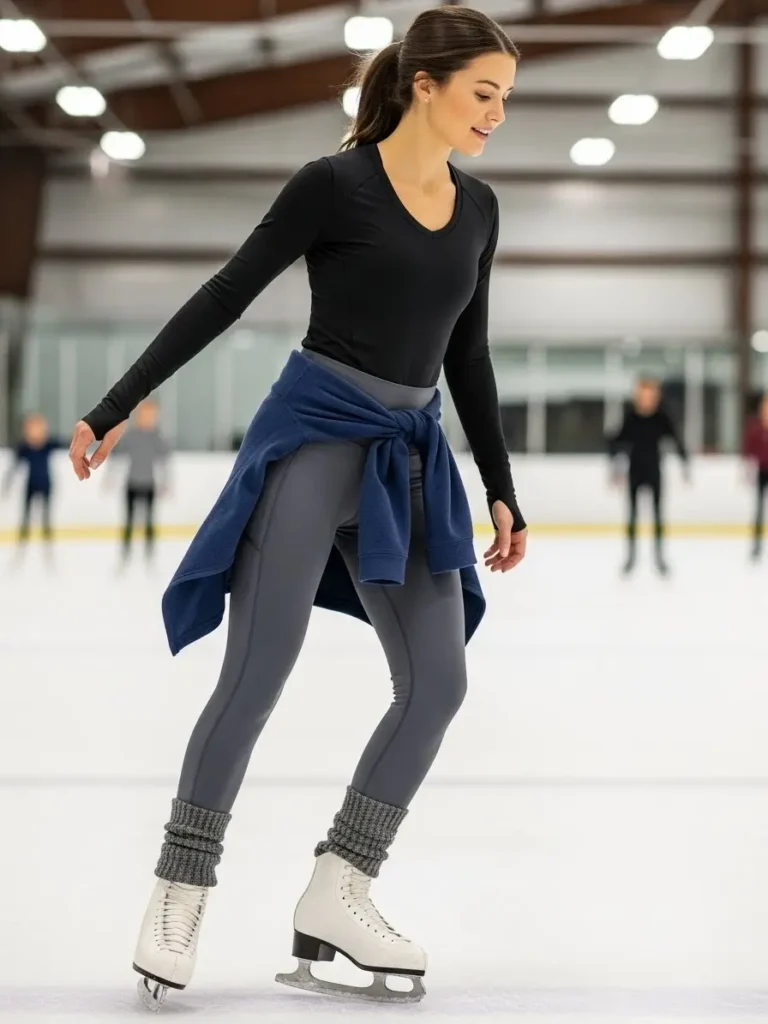
- Base: gym top you already trust
- Bottom: workout leggings
- Warm layer: pack a fleece in your bag
- Extras: swap socks before you lace skates
Dry socks matter more than most people think.
12) The “travel” outfit (pack light)
- One base layer top
- One leggings or joggers
- One warm layer (fleece)
- One shell (windproof)
- Two sock options + one glove option
This works for U.S. winter trips, UK city breaks, and Australia or South Africa winter weekends.
13) The “extra-cold indoor rink” fix
- Add thin base layer bottoms under your leggings
- Switch to warmer gloves
- Add a neck warmer
Keep your jacket the same. Change the thin parts first.
14) The “I want to learn” outfit
- Base: athletic top
- Warm layer: zip layer you can open
- Bottom: thermal leggings
- Extras: helmet + gloves with grip
This outfit supports practice habits. You will feel ready to move, not just pose.
Quick reflection: Which outfit formula fits your real plan: slow laps for fun, photos, a date, or skill practice?
Related Post: 21 Stunning Bixie Haircut Ideas That Will Transform Your Look
A mini “rink capsule wardrobe” (repeat all season)
If you skate more than once, you do not need a big skating closet. You need a small set of pieces that mix and match and feel good on ice.
The 10-piece capsule
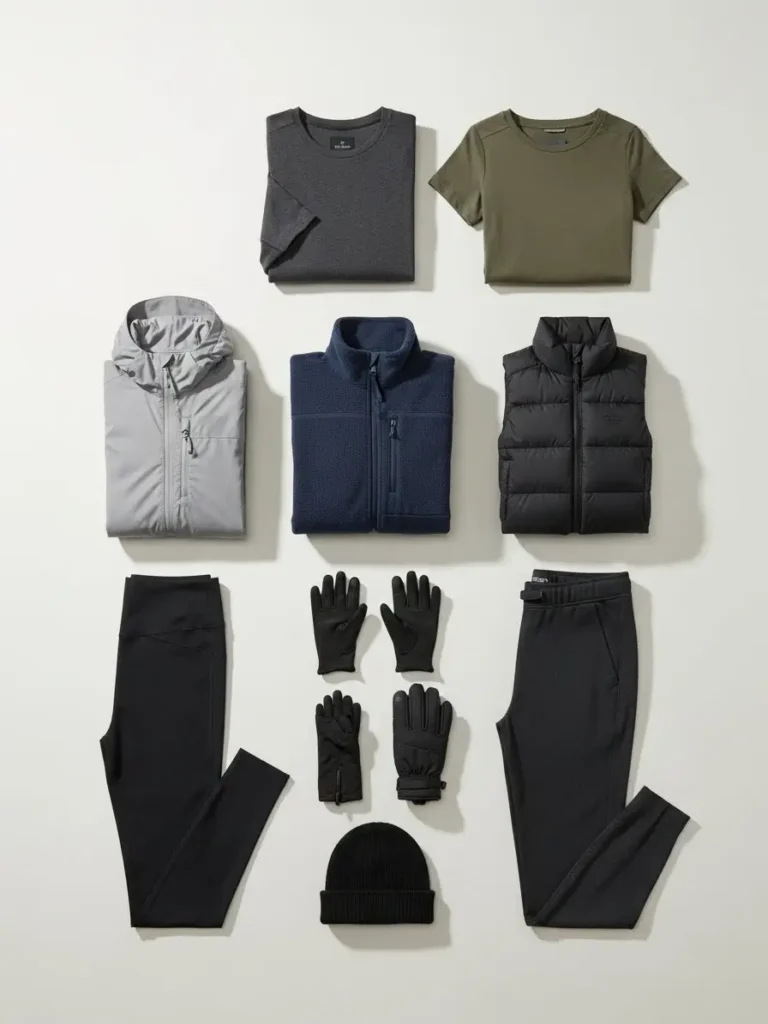
- 2 base layer tops (one light, one warm)
- 1 warm mid layer (fleece or sweater)
- 1 light puffer vest
- 1 light jacket or shell
- 2 bottoms (one warm leggings, one joggers or second leggings)
- 2 glove options (thin grip + warm pair)
- 1 beanie or headband
This capsule keeps choices simple. It also helps you avoid the “too many layers” trap that makes you sweat, then freeze.
If you post on social, change the vibe with one visible item: beanie, scarf, or jacket color. The base can stay the same.
Quick reflection: If you had to skate tomorrow, what item do you already own that would anchor your outfit?
Mistakes that ruin comfort (and how to fix them fast)
Most outfit mistakes show up in the first five minutes. The good news: you can fix most of them with one swap.
Fast fixes
- Your feet hurt: Remove thick socks. Retie skates with snug ankle support, not crushed toes.
- Your hands hurt: Switch to warmer gloves or add thin liners under gloves.
- You feel stiff: Remove one bulky layer. Keep the base layer and a light warm layer.
- You feel cold after 20 minutes: Pack a dry top for after skating, and keep a light jacket for the cool-down.
- You feel off-balance: Check ankle bulk, loose cuffs, and items in pockets.
Also watch your drink choice. If you skate hard, bring water. Warm drinks feel great after, but your body still needs water.
If you run cold, focus on hands, neck, and core. Many people add bulk to legs, but gloves and a neck warmer do more per ounce.
Quick reflection: What is your “deal breaker” on the ice: foot pain, cold hands, or feeling unstable?
Key Takeaways:
- ✓Build your ice skating outfit around movement first: knees, hips, and shoulders must stay free.
- ✓Use the 3-layer map: base layer + one warm layer + shell only when needed.
- ✓Choose bottoms that bend with you and stay slim at the ankle.
- ✓Treat gloves and socks as performance gear, not afterthoughts.
- ✓Pick one of the casual outfit formulas, then adjust one layer at a time.
Frequently Asked Questions
What should I wear ice skating for the first time?
Start with a fitted long-sleeve base layer, warm leggings or slim joggers, and a fleece zip or light jacket. Add gloves, a beanie, and thin socks. If you feel nervous, add a helmet and focus on comfort over style.
Can I wear jeans as an ice skating outfit?
Jeans can work for short, slow laps, but they often block knee bend and feel cold on the rink. If you want a casual look, swap jeans for dark leggings or slim stretch pants. Your body will move better, and you will feel warmer.
What socks should I wear with rental skates?
Wear one pair of thin to mid socks. Thick socks can crush toes and make skates feel tighter, which can cause pain. If you worry about rubbing, pack a second pair and swap if the first pair gets damp.
How do I stay warm without feeling bulky?
Use a thin base layer, add one warm mid layer, and stop there. Then use accessories to fine-tune warmth: better gloves, a neck warmer, and a beanie. This feels lighter than piling on coats, and it keeps your joints free.
What is the best “ice skating outfits casual” look for photos?
Choose black leggings, a fitted top, and a cropped puffer or fitted jacket. Add one accent color with a beanie or scarf, plus gloves that match your look. Keep hair tied back, and avoid anything that drags or swings when you glide.
Final Thoughts
The best ice skating outfit feels warm, clean, and easy to move in. Pick one outfit formula, then adjust with one small change at a time: socks, gloves, or one layer. When you feel stable and warm, you skate more, smile more, and enjoy the session.
What has been your biggest challenge with ice skating outfits casual: staying warm, feeling balanced, or finding a look that feels like you?
Share your experience in the comments below! What’s your take on this? Let’s discuss.