What if a single wall in your office could reduce distractions by 40%, boost your focus, and transform your entire workspace from cluttered chaos into a productivity powerhouse—all while staying true to minimalist principles?
Complete Guide to Minimalist Office Accent Walls: 2025 Design Strategies
Transform your workspace with expert-approved minimalist design principles that enhance productivity and professional aesthetics
Creating the perfect office accent wall transforms any workspace from ordinary to extraordinary. Modern minimalist design principles emphasize clean lines, purposeful materials, and strategic color choices that enhance both aesthetics and productivity. This comprehensive guide walks you through every step of designing and installing a minimalist office accent wall that reflects contemporary 2025 trends.
With over 90% of organizations now adopting hybrid work models and remote work becoming permanent for millions, your office environment matters more than ever. Research shows that thoughtfully designed workspaces can boost productivity by up to 25% while reducing stress and improving overall well-being. The accent wall serves as the focal point that defines this transformation—a strategic design element that balances professional aesthetics with personal expression.
Whether you work from home or manage a corporate office space, the right accent wall serves as a focal point that defines your workspace character while maintaining the serene, uncluttered aesthetic that minimalism demands. From biophilic design integrating natural elements to smart tech features and sustainable materials, 2025 trends prioritize functionality alongside timeless beauty.
Understanding Minimalist Design Principles for Office Spaces
Core Minimalist Principles
- ✓ Less is more philosophy
- ✓ Functional over decorative
- ✓ Clean geometric lines
- ✓ Neutral color foundation
Office-Specific Benefits
- ✓ Reduces visual distractions
- ✓ Enhances focus and concentration
- ✓ Creates professional atmosphere
- ✓ Increases perceived space
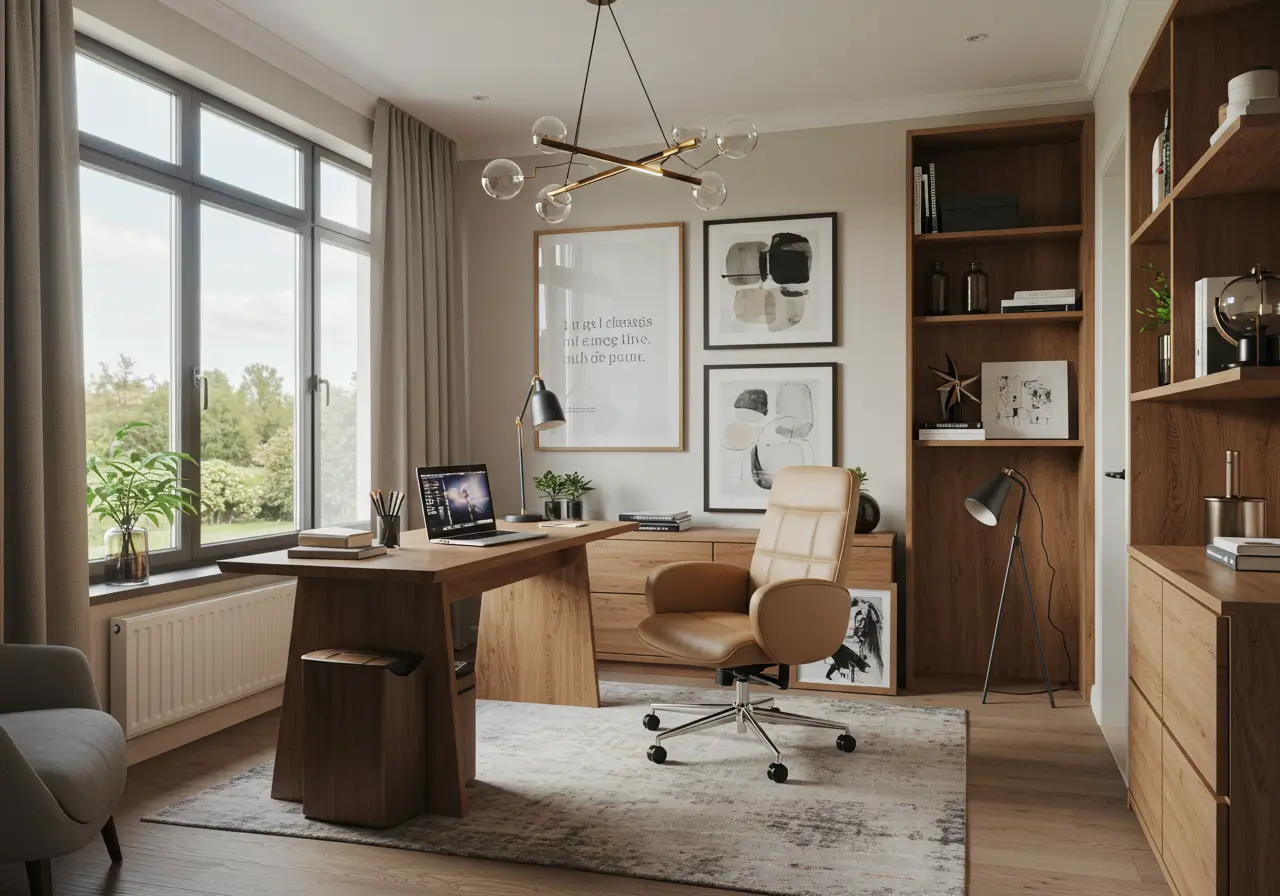
Minimalist office design revolves around intentional choices. Every element serves a purpose, from the wall texture that absorbs sound to the color that promotes calm focus. Your office accent wall becomes the cornerstone of this purposeful design approach. In 2025, the trend toward “warm minimalism” combines clean aesthetics with cozy, inviting elements—using warm tones like beige, taupe, and soft terracotta paired with natural woods and plush furnishings.
The evolution of minimalist design now embraces biophilic elements, integrating natural materials, greenery, and abundant natural light. Studies confirm that exposure to nature-inspired design boosts employee well-being, reduces stress by up to 15%, and improves productivity significantly. Your minimalist accent wall can incorporate these principles through material choices, color selections, and strategic placement that maximizes natural light exposure.
How does your current office environment affect your daily productivity? Do you find yourself distracted by visual clutter, or does your workspace already promote the focus you need? Share your biggest workspace challenge in the comments—your experience might reveal solutions for others facing similar issues!
Selecting the Ideal Wall for Your Accent Design
Strategic Wall Selection Criteria
Behind Your Desk
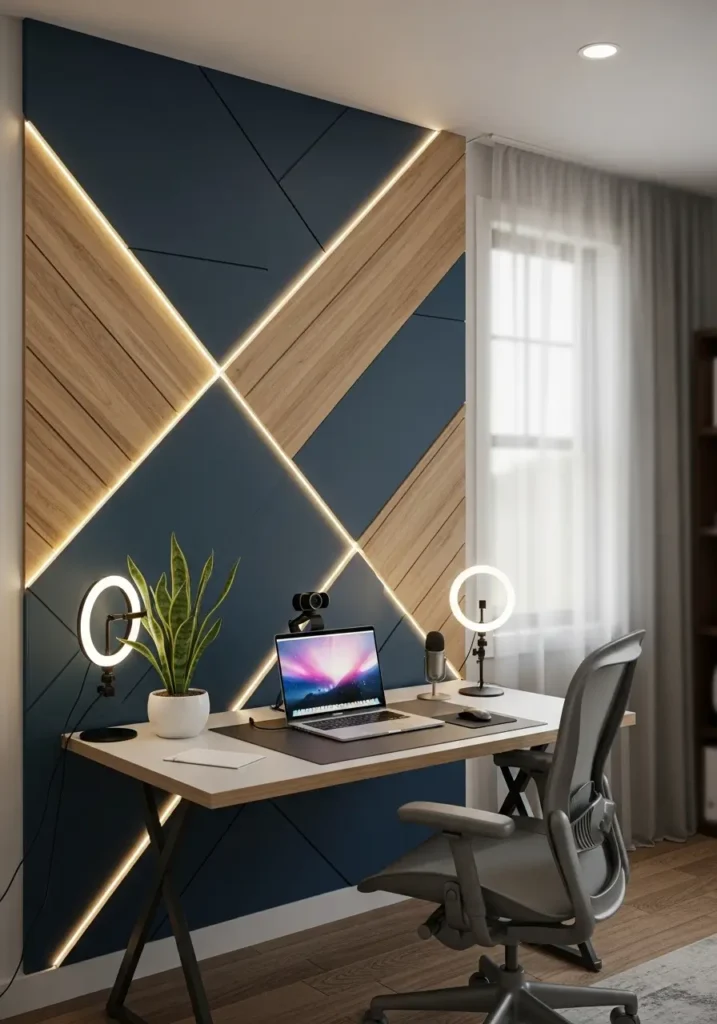
Creates a professional video call backdrop and establishes your workspace as the room’s focal point. With virtual meetings now accounting for 60% of professional communication, this placement ensures you project professionalism and brand identity consistently.
Opposite the Entrance
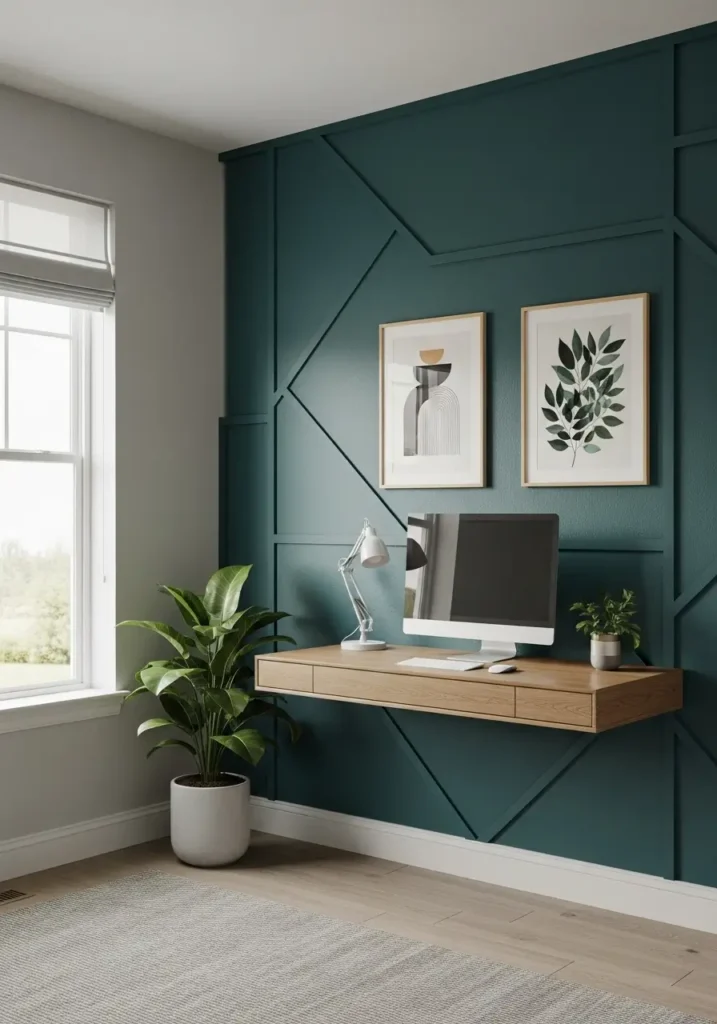
Draws visitors’ attention immediately upon entering, creating a strong first impression that sets the tone for your entire workspace. This placement works particularly well for consultation rooms and client-facing offices.
Natural Light Wall
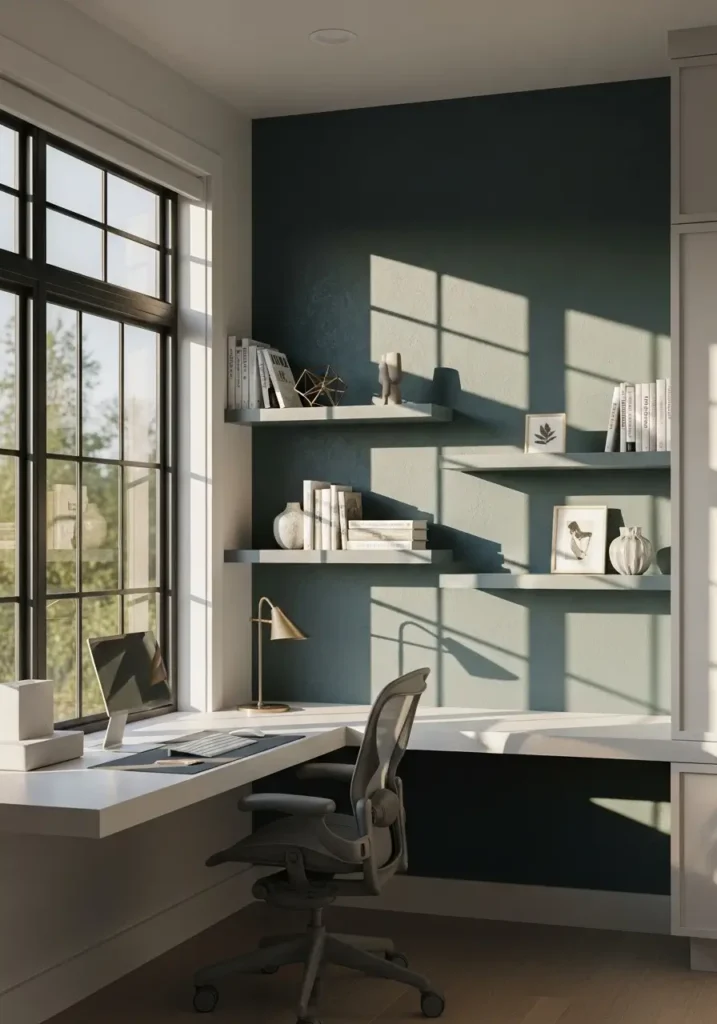
Perpendicular to windows to catch natural light variations throughout the day, creating dynamic visual interest as sunlight changes. Natural light placement aligns with biophilic design principles trending in 2025, promoting circadian rhythm regulation and improved mood.
Pro Tip: Wall Assessment Checklist
Measure wall dimensions, check for electrical outlets or switches, assess lighting conditions, and consider furniture placement before finalizing your choice. The ideal accent wall should be unobstructed and clearly visible from your primary work position. Document these measurements and take photos at different times of day to understand how natural light affects the space—this planning prevents costly mistakes and ensures professional results.
2025 Minimalist Color Schemes That Enhance Productivity
Color psychology plays a crucial role in workspace productivity. The right minimalist palette creates calm energy while maintaining professional sophistication. Research from environmental psychology confirms that specific colors influence cognitive performance, with blues improving concentration by up to 12%, while warm neutrals reduce anxiety and encourage creativity.
Neutral Foundation
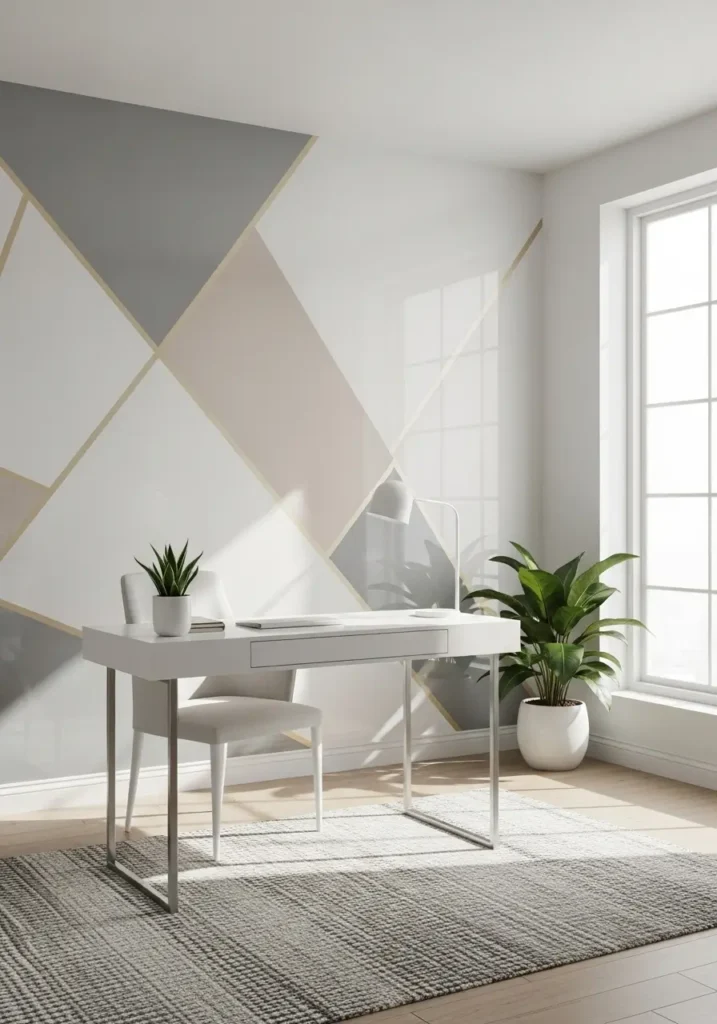
Pure whites, soft grays, and warm beiges create timeless elegance while maximizing natural light reflection. These foundation colors work exceptionally well in smaller home offices, creating the illusion of expanded space.
Warm Earth Tones
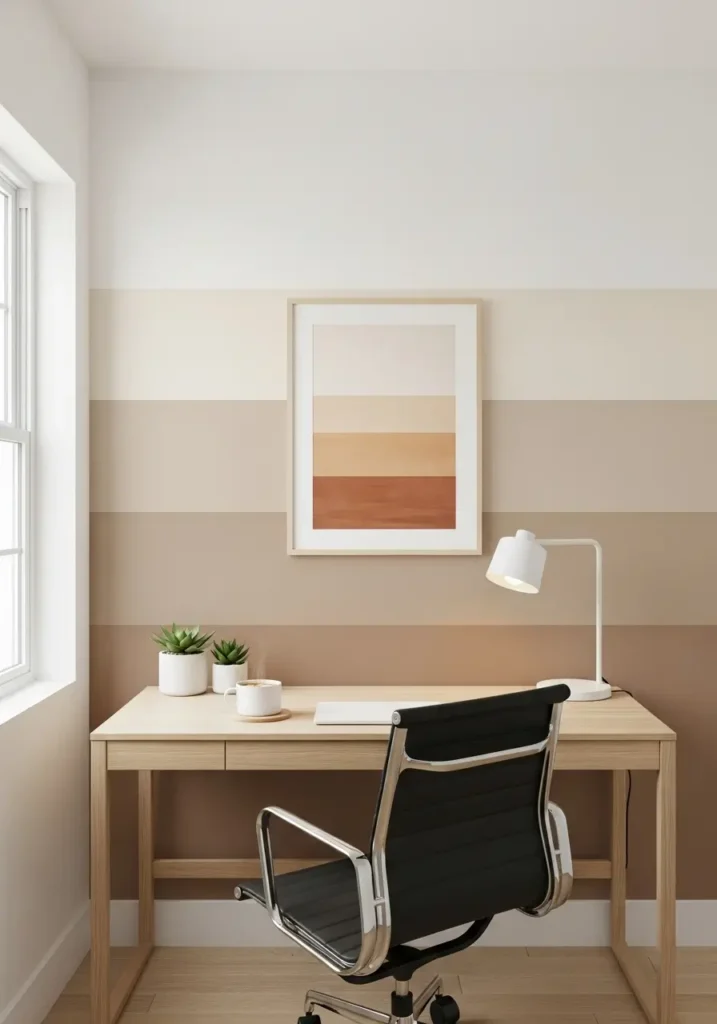
Cream, taupe, and soft browns provide warmth while maintaining minimalist sophistication. These colors align with the 2025 “warm minimalism” trend, creating cozy yet professional environments perfect for extended work sessions.
Cool Modern
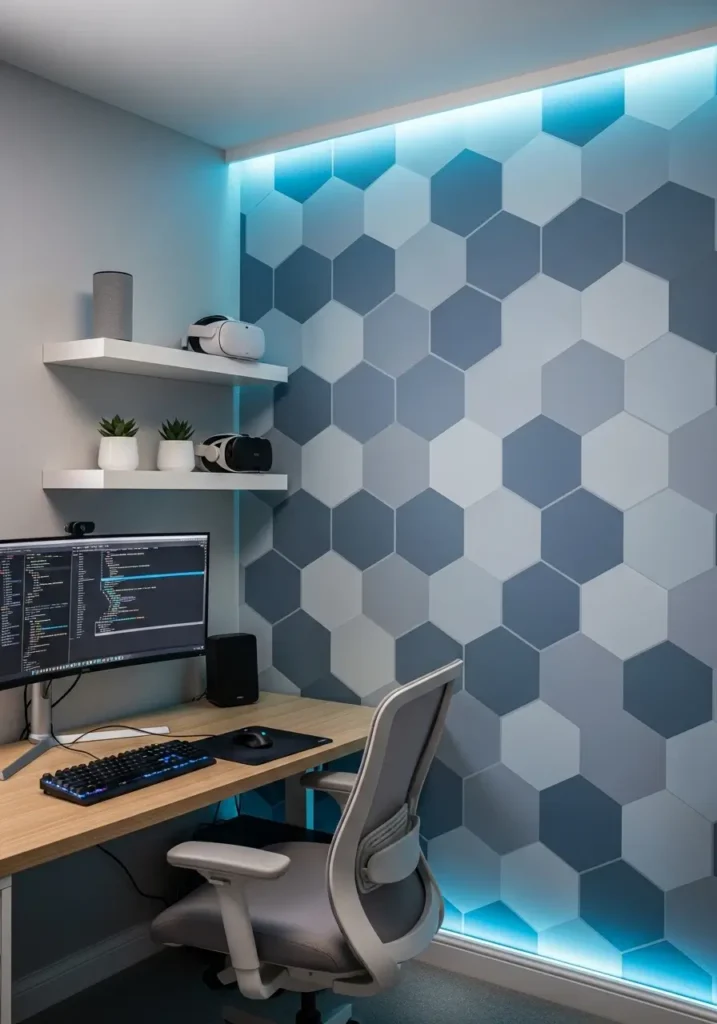
Soft blues and cool grays promote focus and create a contemporary, tech-forward atmosphere. Ideal for analytical work environments where concentration and mental clarity take priority over creative brainstorming.
What color palette dominates your current workspace, and how does it make you feel during long work sessions? Have you noticed any connection between your office colors and your energy levels throughout the day? Drop your thoughts below—we’d love to hear which colors work (or don’t work) for your productivity!
Essential Materials and Textures for Modern Office Accent Walls
Material selection defines your accent wall’s character. Each option offers unique benefits for minimalist office environments. In 2025, the trend leans heavily toward natural, sustainable materials that align with biophilic design principles while maintaining clean aesthetic lines.
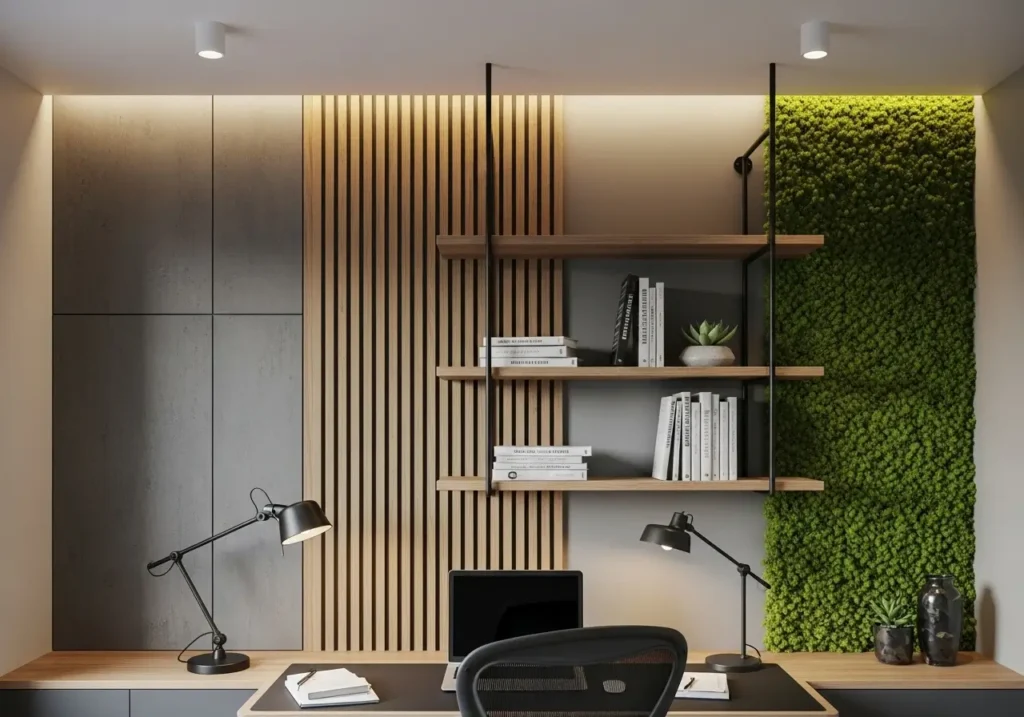
1
Premium Paint Finishes
- Matte/Flat: Hides wall imperfections, creates depth and sophistication
- Eggshell: Subtle sheen, easy to clean, perfect for high-traffic areas
- Satin: Durable, professional appearance with slight luster
2
Natural Wood Options
- Light Oak: Scandinavian minimalism, warm grain patterns
- Birch Panels: Clean grain, bright appearance, sustainable choice
- Whitewashed Pine: Rustic minimalist charm with modern appeal
3
Contemporary Materials
- Fabric Panels: Sound absorption up to 60%, adds subtle texture
- Cork Tiles: Sustainable, functional, natural insulation properties
- Metal Accents: Industrial minimalist edge, durable and modern
2025 Trending Materials
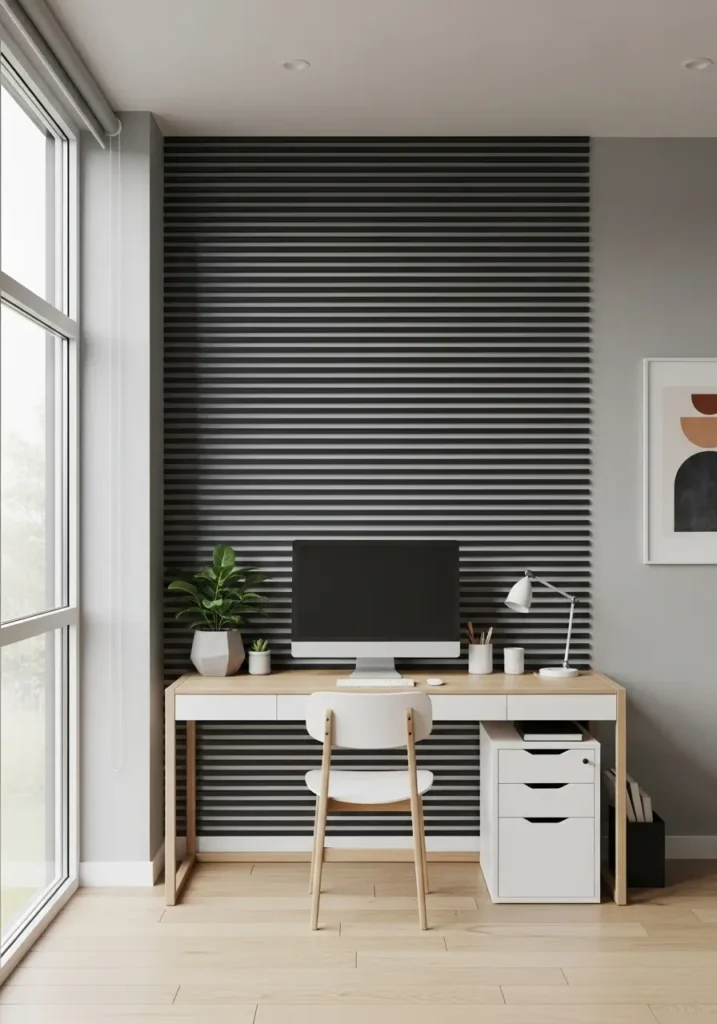
Natural stone slabs, textured plaster finishes, and sustainable bamboo panels lead current design trends. These materials add subtle texture while maintaining clean minimalist principles. 3D wood paneling, particularly geometric patterns like pyramids or hexagons, creates stunning visual depth through light-and-shadow interplay. Professional installations using premium materials like American walnut or ash range from €169-1015/m², with most projects averaging €4,500 for conference rooms or reception areas.
Minimalist Design Patterns That Make Impact
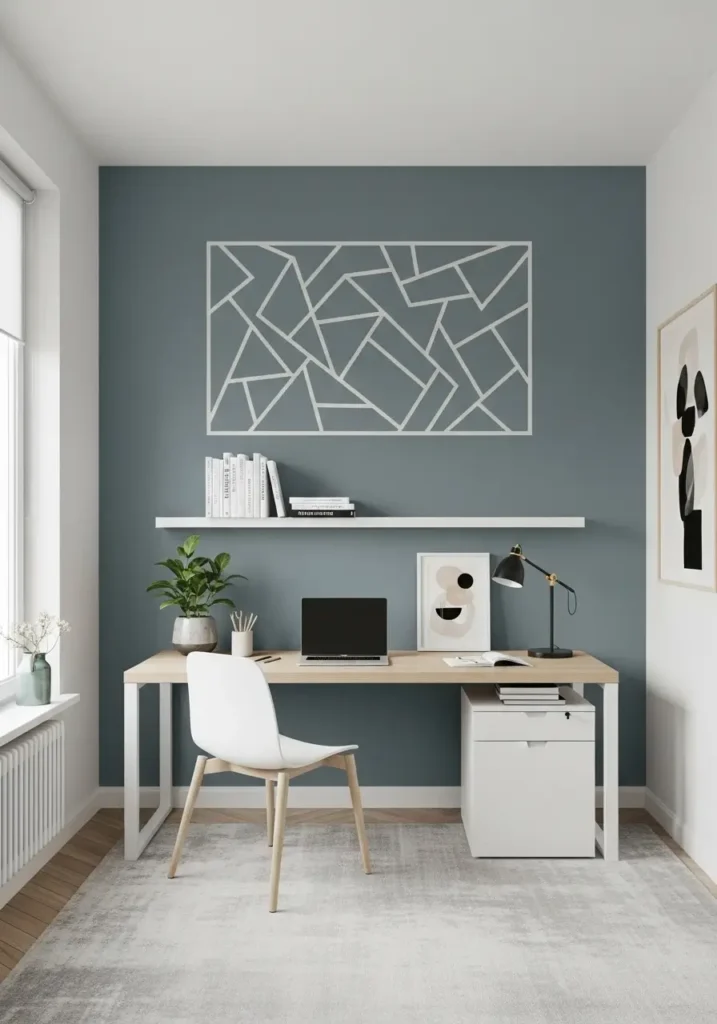
Strategic pattern placement creates visual interest without overwhelming minimalist principles. These designs work particularly well for professional office environments where you need to balance creativity with professionalism.
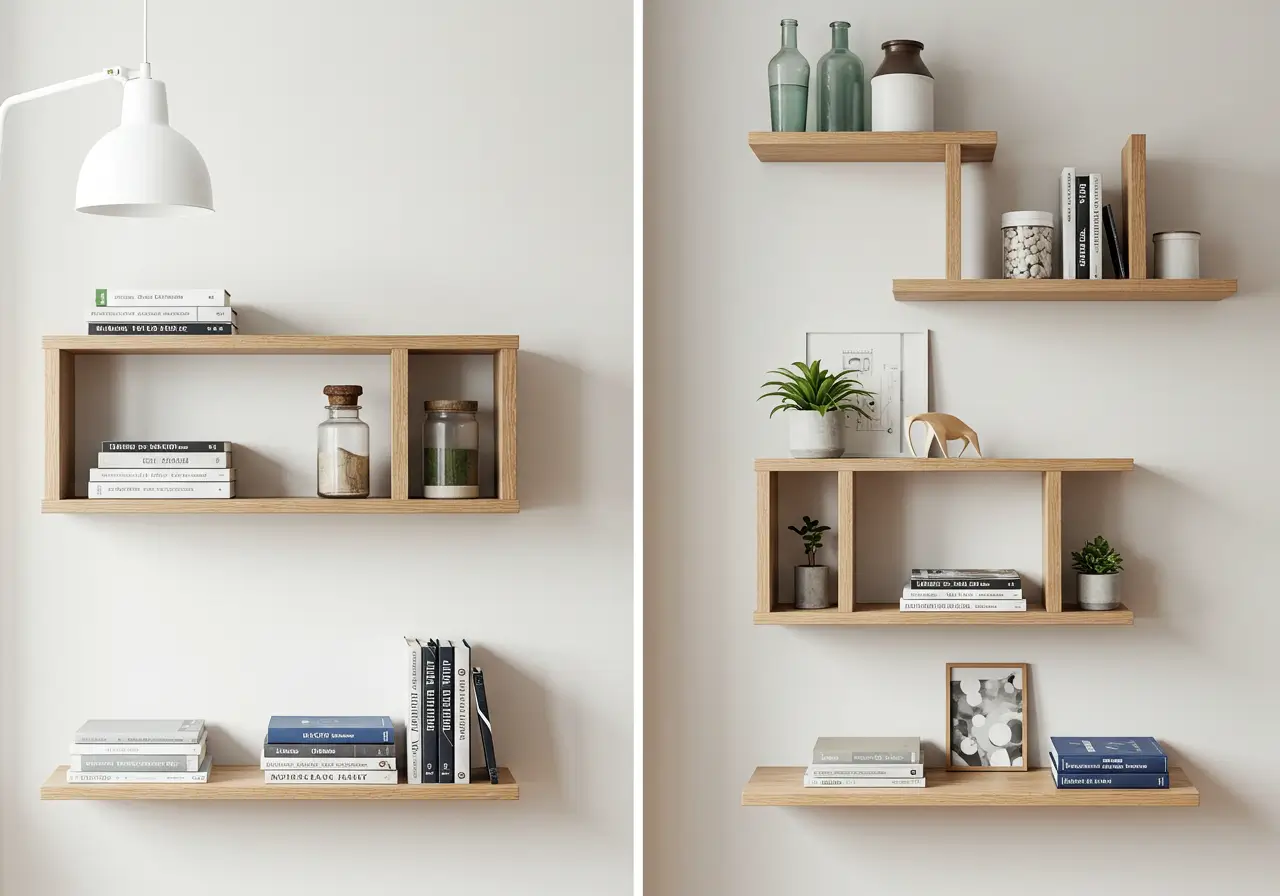
Geometric Minimalism
Subtle geometric pattern example
- • Clean lines and simple shapes
- • Maximum two-color combinations
- • Focus on proportion and balance
- • Maintains visual calm while adding interest
Textural Interest
Subtle texture pattern example
- • Raised panels or subtle relief
- • Natural material textures
- • Light-shadow interplay throughout the day
- • Adds depth without color contrast
Professional Design Principle
The most effective minimalist patterns follow the 60-30-10 rule: 60% dominant neutral, 30% secondary color or texture, and 10% accent elements. This creates visual hierarchy without overwhelming the space. This proven design ratio has been used in high-end commercial spaces and luxury residences, ensuring professional results every time.
Step-by-Step Installation Process
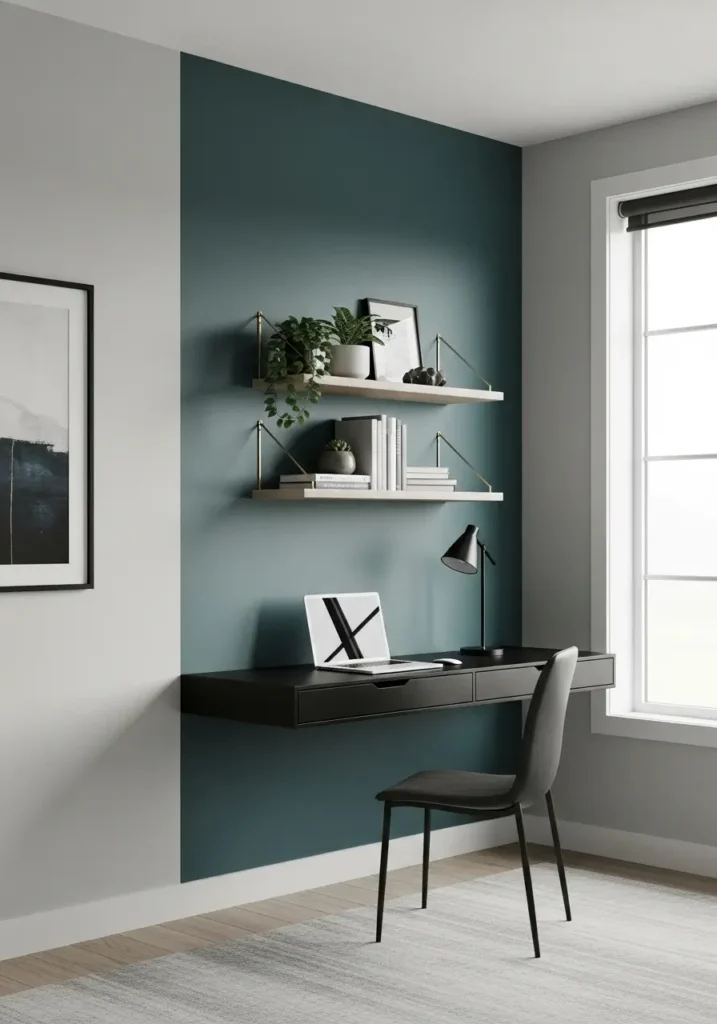
Professional installation ensures your minimalist office accent wall achieves the clean, precise finish that defines quality minimalist design. Whether you choose DIY or professional installation, understanding the process helps you make informed decisions and avoid common pitfalls.
Phase 1: Preparation and Planning
Wall Assessment
- Check for cracks or holes
- Ensure wall is plumb and level
- Identify electrical components
- Measure dimensions precisely
- Document current conditions with photos
Material Calculation
- Add 10% extra for waste
- Account for pattern matching
- Order primer and finishing materials
- Rent or purchase necessary tools
- Schedule delivery timing
Space Preparation
- Remove furniture and fixtures
- Protect flooring and surfaces
- Set up proper lighting
- Organize tools and materials
- Ensure adequate ventilation
Phase 2: Installation Process
Essential Tools and Equipment
Basic Tools
- Level (4-foot minimum)
- Measuring tape
- Pencil for marking
- Utility knife
- Putty knife set
Power Tools
- Drill with bits
- Circular saw
- Orbital sander
- Paint sprayer (optional)
- Stud finder
Finishing Supplies
- High-quality brushes
- Paint rollers and trays
- Drop cloths
- Painter’s tape
- Safety equipment
Lighting Design to Enhance Your Minimalist Accent Wall
Strategic lighting transforms your accent wall from a simple surface into a dynamic focal point that adapts throughout the day. Proper illumination showcases textures and creates depth while maintaining minimalist principles. The 2025 trend away from harsh fluorescent lighting toward softer, natural lighting solutions improves mood and productivity by up to 18%.
Ambient Lighting
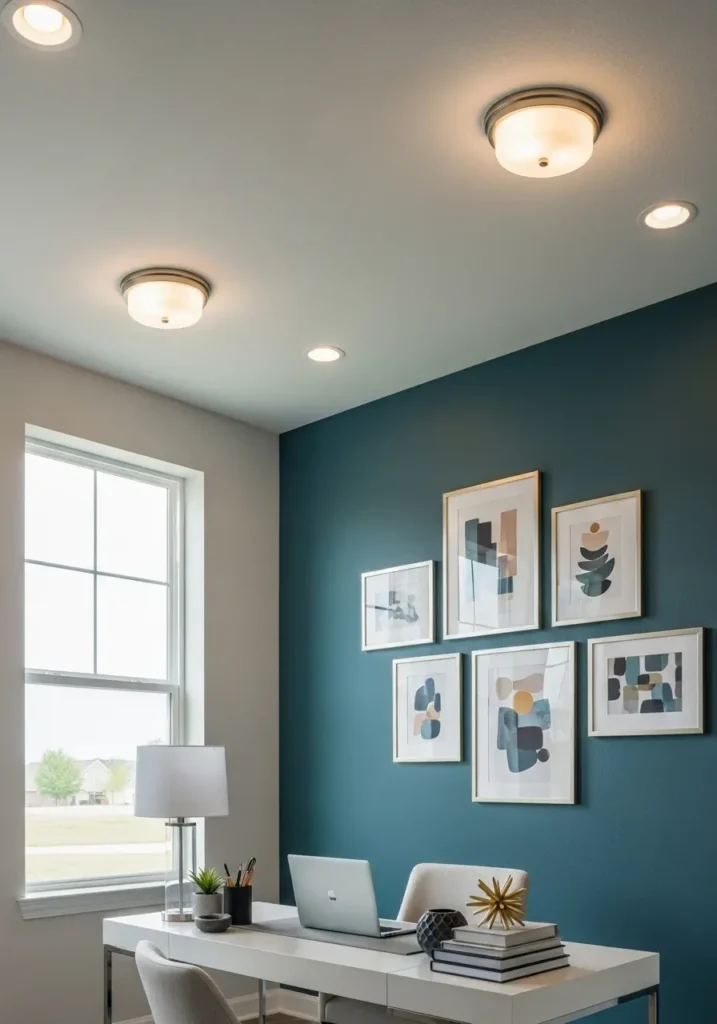
Creates overall room illumination and prevents harsh shadows on the accent wall. Essential for maintaining visual comfort during extended work periods.
- • Recessed ceiling lights
- • Flush-mount fixtures
- • Natural window light
- • Daylight-mimicking LED systems
Task Lighting
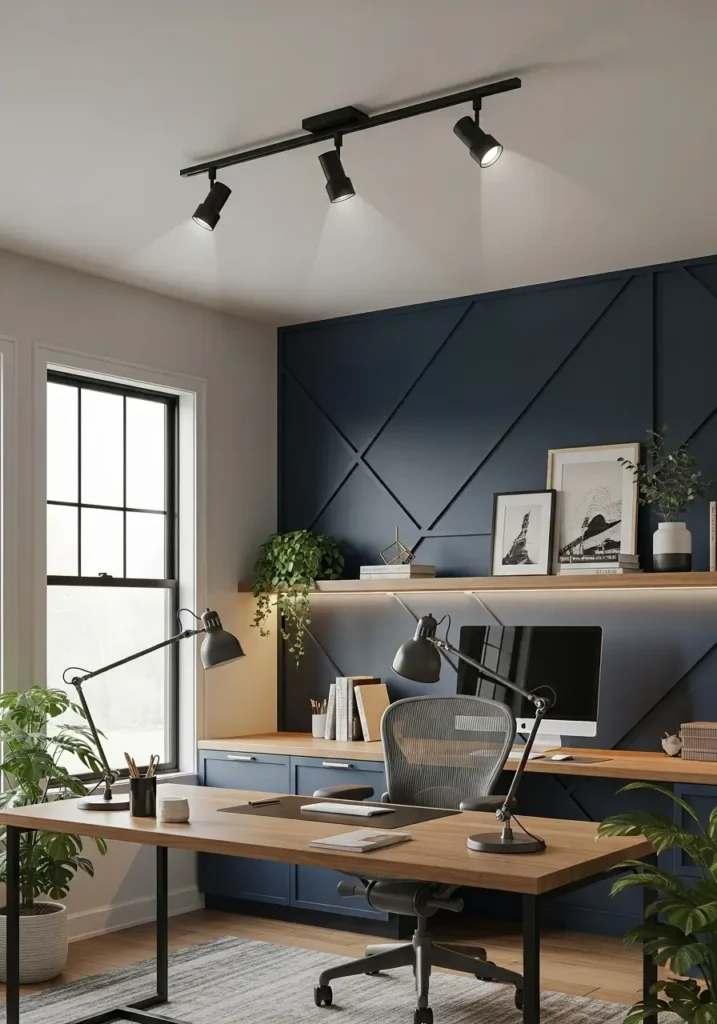
Focused illumination for work activities while complementing the accent wall design. Reduces eye strain during detailed tasks.
- • Adjustable desk lamps
- • Under-cabinet lighting
- • Track lighting systems
- • Smart lighting with color temperature control
Accent Lighting
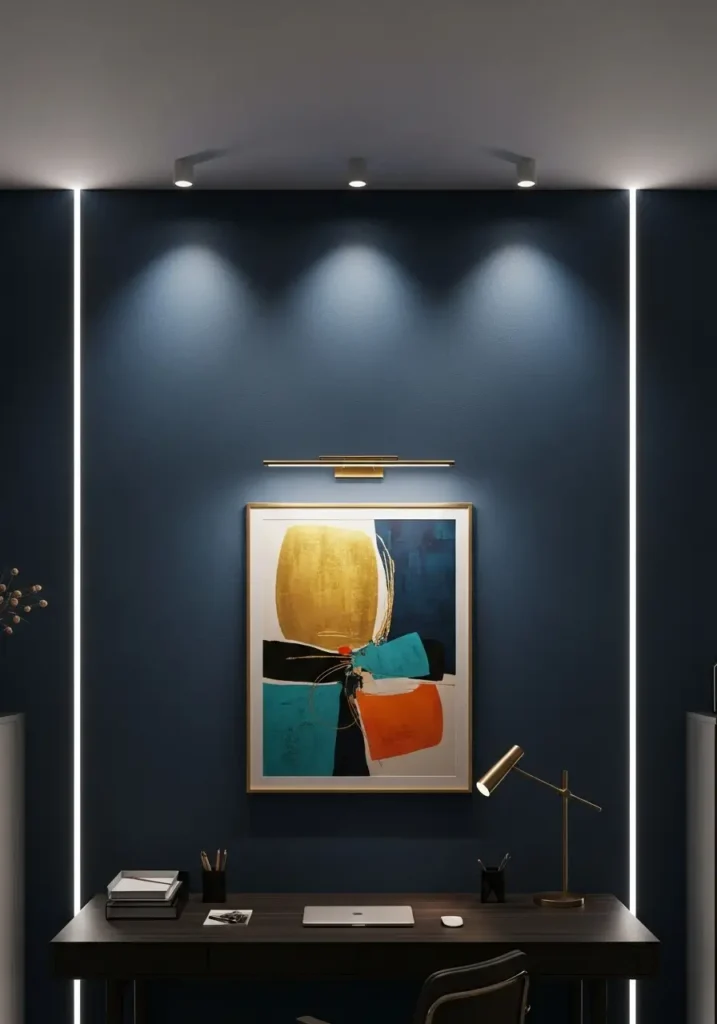
Highlights specific elements and creates visual drama on the accent wall surface. Transforms the wall into a living design element that changes throughout the day.
- • Wall-mounted uplights
- • LED strip lighting
- • Picture lights
- • Smart RGB lighting for mood changes
How does lighting currently affect your workspace mood and productivity? Have you experimented with different color temperatures or noticed how natural light changes your energy levels throughout the day? Share your lighting experiences below—your insights could help others solve their workspace illumination challenges!
Complete Budget Breakdown for Your Project
Understanding costs helps you make informed decisions while achieving professional results within your budget constraints. With the average home office renovation in 2025 ranging from $1,500-$5,000, your accent wall represents a focused investment that delivers maximum visual impact for minimum expenditure.
Avoid These Common Minimalist Design Mistakes
Learning from typical errors saves time, money, and ensures your office accent wall achieves professional minimalist standards. These mistakes plague even experienced DIYers but are completely avoidable with proper planning.
❌ Mistake #1: Overcomplexity
Adding too many elements defeats minimalist purpose. Multiple textures, colors, or patterns create visual chaos.
✓ Solution: Choose one focal element and let it shine against a simple background.
❌ Mistake #2: Poor Lighting Planning
Neglecting how light hits your accent wall throughout the day creates flat, uninspiring results.
✓ Solution: Test paint samples and materials in morning, afternoon, and evening light before committing.
❌ Mistake #3: Wrong Wall Selection
Choosing a wall with too many interruptions (windows, doors, outlets) fragments the visual impact.
✓ Solution: Select the most unobstructed wall visible from your primary work position.
❌ Mistake #4: Skipping Preparation
Rushing into installation without proper surface prep shows through finished work.
✓ Solution: Invest time in cleaning, sanding, priming, and repairing for flawless results.
❌ Mistake #5: Ignoring Scale and Proportion
Patterns or materials too large or small for the space create visual imbalance.
✓ Solution: Use design ratios like the 60-30-10 rule and view samples from actual working distance.
❌ Mistake #6: Following Trends Over Function
Choosing trendy designs that don’t suit your actual work needs creates expensive regrets.
✓ Solution: Prioritize how the wall supports your daily workflow before aesthetic considerations.
Transform Your Workspace Starting Today
Creating a minimalist office accent wall transforms your workspace from ordinary to extraordinary while boosting productivity by up to 25%. With over 90% of organizations now embracing hybrid work models, your office environment directly impacts your professional success and personal well-being. The strategies, materials, and techniques shared in this guide provide everything you need to execute a professional-quality accent wall that aligns with 2025 design trends.
Whether you choose budget-friendly DIY solutions starting at $150 or invest in premium professional installations up to $1,500, the key lies in thoughtful planning, quality execution, and staying true to minimalist principles. Your accent wall should reduce distractions, enhance focus, and create the professional atmosphere that supports your best work—all while reflecting your personal aesthetic and values.
Remember that the most successful minimalist designs prioritize function over decoration, embrace natural materials and biophilic elements, and maintain clean lines that promote visual calm. The 2025 trend toward warm minimalism, sustainable materials, and smart lighting integration offers unprecedented opportunities to create workspaces that feel both professional and deeply personal.
Now it’s Your Turn—Let’s Start the Conversation!
Which style are you most excited to try—geometric patterns, textured finishes, or natural wood elements?
What’s your biggest concern about starting your accent wall project—budget, time commitment, or achieving professional results?
Have you already completed an office accent wall project? What worked brilliantly, and what would you do differently next time?
Drop your thoughts, questions, and experiences in the comments below. Your insights could help someone else transform their workspace and boost their productivity! Let’s build a community of productive, beautifully designed workspaces together.