Roof Repair vs Replacement: How to Decide (Without Regret)
A practical, homeowner-first guide to repair of roofing, roof installation, costs, and choosing roofing companies.
What if the “cheaper” option today (repair) ends up costing more than a replacement over the next two years?
Standing in your yard and spotting missing shingles or seeing water stains inside can flip your day fast. Your brain jumps to the same question: do you need repair of roofing, or is it time for a full roof replacement?
The wrong choice can drain your budget. Repairing a roof that needs replacement often leads to repeat leaks and hidden damage. Replacing a roof that only needs a targeted fix can waste thousands.
This guide helps you choose the right path. It breaks down signs, costs, and decision rules in plain language. It also helps you compare roofing companies and understand what roof installation should look like when the work starts.
A quick decision map (repair or replace?)
Use this fast map before you go deep. It will not replace a pro inspection, but it can stop panic decisions.
If most answers are “yes,” lean toward repair
- Your roof is under 12–15 years old (asphalt) and damage is small.
- You have one leak source or one damaged zone.
- Your decking feels solid (no sagging, soft spots, or widespread rot signs).
- You can match materials and fix the root cause (wind, flashing, vent boot).
If most answers are “yes,” lean toward replacement
- Your roof nears its expected lifespan for the material.
- You see repeated leaks in different areas.
- Shingle loss or cracking affects large sections.
- You have two layers already and local code requires tear-off.
Discussion question: Which part feels hardest for you—judging damage, judging cost, or trusting the contractor?
Understanding your roof’s current condition
Before you choose repair versus replacement, you need a clear picture of what you own today. Many homeowners think about the roof only when a problem shows up. By then, small issues may have grown.
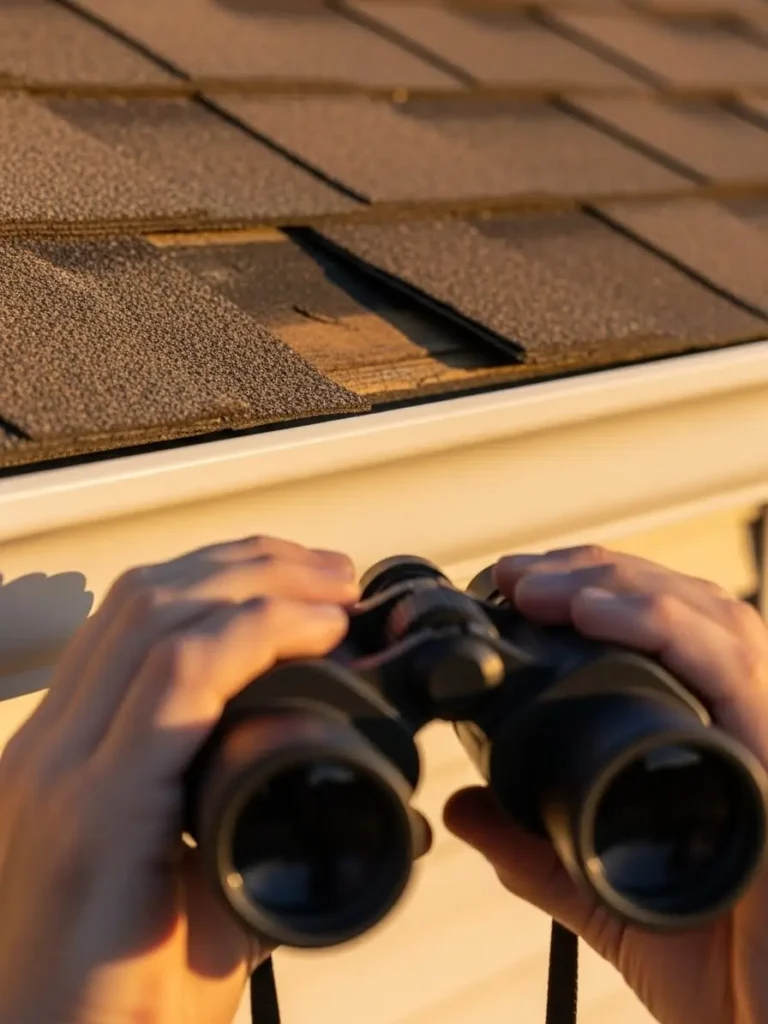
Start with a ground check. Use binoculars. Look for missing shingles, lifted edges, sagging lines, and damage around chimneys, skylights, vents, and valleys. Check gutters for heavy shingle granules because that can signal aging asphalt shingles.
Then check inside. Look in the attic for daylight through boards, water stains, damp insulation, or a musty smell that suggests moisture problems. Interior signs can reveal issues you can’t see from outside.
Age matters more than you think
Age does not guarantee failure, but it changes the math. Different roofing materials have different lifespans.
- Asphalt shingles often last 20–30 years.
- Wood shingles often last 25–30 years with maintenance.
- Metal roofs can last 40–70 years.
- Slate, copper, and tile can exceed 50 years.
- Flat roofs often need replacement every 10–20 years.
If your roof sits near the end of its expected life, repeated repairs tend to buy short time at high stress.
Your climate changes what “normal” damage looks like
Your location matters. Sun, humidity, wind, salt air, and freeze-thaw cycles can shorten material life and increase repair needs.
Quick reflection: What weather hits your home hardest—wind, hail, heat, snow, or heavy rain?
Discussion question: Do you want the “lowest cost now” choice, or the “fewest headaches later” choice?
The most common roof “problems” that aren’t really roof problems
Many homeowners pay for repairs that don’t solve the real issue. The stain disappears for a month, then comes back. That cycle often happens when the moisture source is not a failed shingle.
Problem #1: Attic condensation that looks like a roof leak
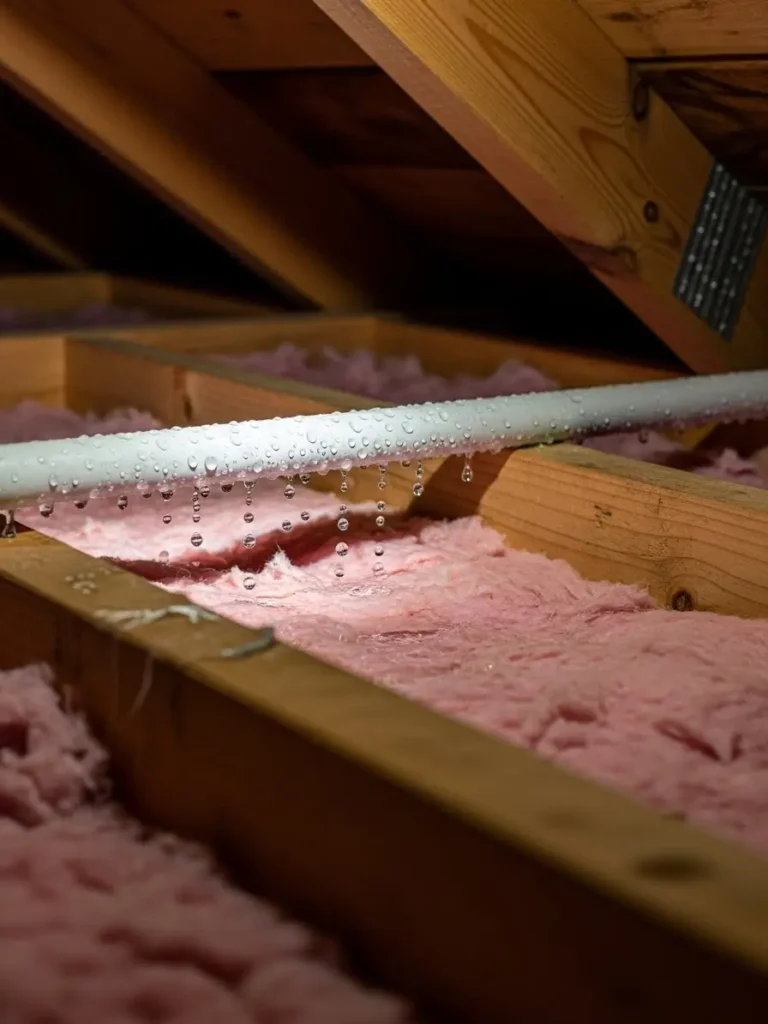
Condensation happens when warm, moist air meets cold surfaces. In an attic, that moisture can drip and mimic a roof leak. It can also create damp insulation and mold-like smells.
Realistic solutions that work:
- Track timing: If moisture shows up after rain, suspect a leak. If it shows up during cold spells or winter, suspect condensation.
- Air-seal first: Seal attic bypasses (around plumbing stacks, recessed lights, attic hatch). This reduces warm air getting into the attic.
- Check exhaust fans: Bathroom and kitchen fans must vent outside, not into the attic.
- Balance insulation + ventilation: Proper insulation slows warm air movement. Proper ventilation helps remove moisture.
Quick update: If multiple attic surfaces feel damp (not one isolated spot), condensation becomes more likely than a single-point roof leak.
Have you ever found “wet” insulation without obvious roof damage?
Problem #2: A “roof leak” that’s really flashing or a vent boot
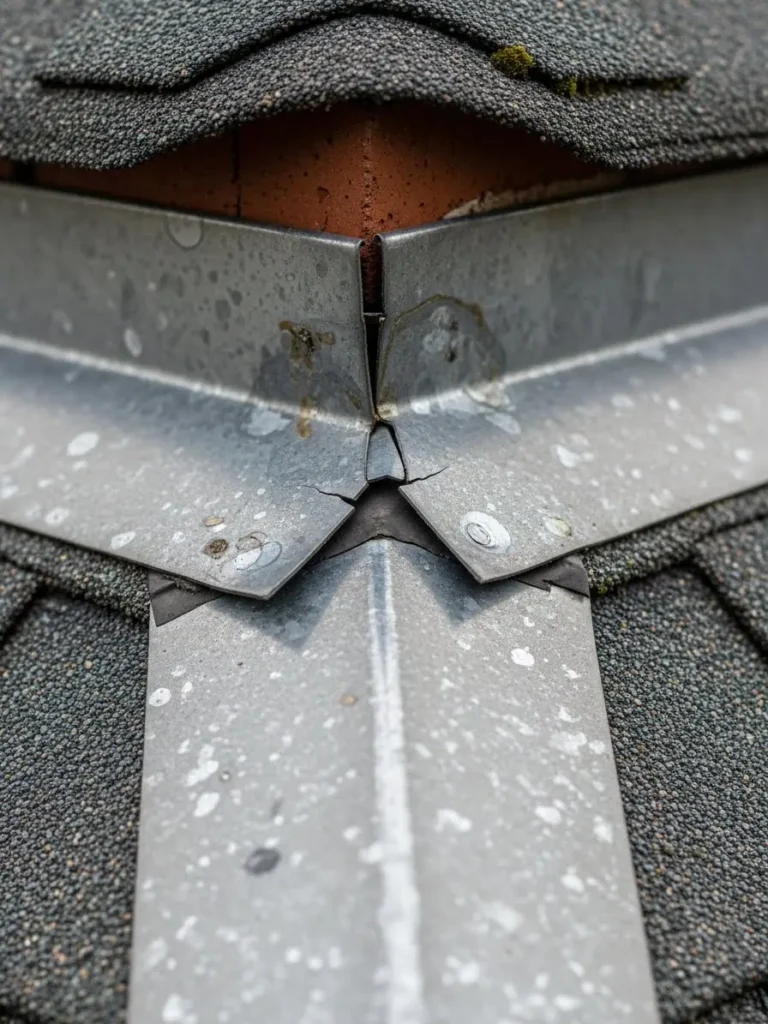
Many leaks start at roof details: chimney flashing, pipe boots, skylight edges, valleys, and transitions. A roof can look fine overall and still leak at one small weak spot.
Realistic solutions:
- Ask for close-up photos of the exact entry point (not just the ceiling stain).
- Replace the failed component (boot/flashing) instead of smearing sealant as the “main fix.”
- Insist on proper step flashing and counter-flashing at chimneys where needed.
Problem #3: Water travels before it drips
Water can enter in one place and show up far away. It can follow framing, nails, and seams. That’s why “the stain is here” does not mean “the leak is above it.”
Realistic solutions:
- Inspect during active rain if it’s safe to do so from inside the attic (never walk on a roof in bad weather).
- Look uphill from the stain toward valleys, vents, and flashing points.
- Mark wet spots with chalk or tape to track patterns across storms.
Discussion question: Which “hidden cause” surprised you most—condensation, flashing, or water travel?
Clear signs repair of roofing makes sense
Not every roof issue needs replacement. Many problems respond well to targeted fixes that extend roof life.
1) Minor shingle damage in small areas
A few missing or damaged shingles often point to wind lift on edges or corners. Pros can replace small sections and match materials.
2) Flashing problems around chimneys and vents
Flashing failures can cause leaks without meaning the whole roof failed. A contractor can replace flashing and reseal joints without touching most shingles.
3) One isolated leak you can trace
A single leak often comes from one failure point such as a vent boot or a small puncture. If leaks show up in multiple areas, replacement moves up the list.
4) Drainage issues that look like roof issues
Gutters and downspouts protect the roof edge. Clogs or poor drainage can cause backup and edge rot. Fixing drainage can stop what looks like a roof leak.
Common mistake: Many homeowners focus on the stain inside and skip the “entry point” search outside. Water can travel before it drips.
What’s the first place you would check—vent boots, chimney flashing, or valleys?
Discussion question: If a contractor offered a repair, what proof would you want to see before you agree?
Key warning signs for roof replacement
- ✓Widespread shingle damage across large areas.
- ✓Multiple leaks in different zones.
- ✓Sagging roof deck visible from inside or outside.
- ✓Heavy moss or algae that holds moisture.
- ✓Daylight visible through boards in your attic.
Real-life decision scenarios (so you can recognize your situation)
Most roof decisions are not “repair or replace” in a vacuum. They depend on patterns, age, and how fast problems repeat.
Scenario A: One stain, one storm, roof is mid-life
Likely path: a targeted repair. The smart move is to identify the entry point and replace the failed component (often flashing or a boot), then check attic ventilation so moisture does not create new symptoms.
Scenario B: Leaks “move around” and repairs keep stacking
Likely path: replacement. When new leaks appear in new areas, the roof system is often failing in multiple places. At that point, repairs can feel like buying time week by week.
Scenario C: No leaks, but shingles look tired and granules fill gutters
Likely path: you have time, but plan ahead. This is the best moment to get calm quotes and schedule work before a storm forces emergency pricing.
Quick reflection: Which scenario sounds closest to your roof right now?
Discussion question: If you had to choose, would you rather schedule work early or wait until the roof forces your hand?
When roof replacement becomes the smarter move
Sometimes replacement becomes the only choice that makes sense. It can feel painful up front, but it can stop a cycle of repairs and stress.
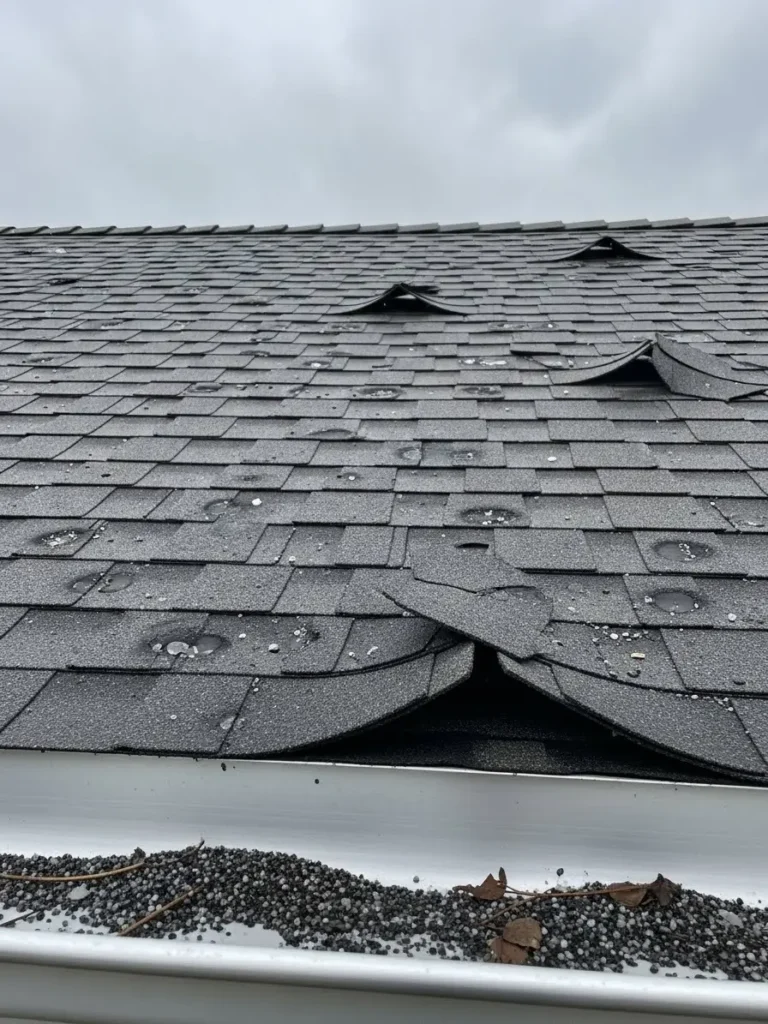
Extensive storm damage
Hail can create many impact points. Wind can lift large areas. Once large sections fail, the layers under shingles can also take damage.
Structural concerns (sagging or soft decking)
Sagging suggests deeper problems. Surface patching will not fix compromised decking or framing. Get a pro to assess fast.
Too many layers
Some homes have multiple shingle layers from older installs. Extra layers trap heat and moisture and add weight. Many codes limit layers, so tear-off may become required.
Energy and comfort
Newer roof systems can improve ventilation and reduce heat buildup. That can improve comfort and help control utility costs.
Discussion question: What would make you feel confident that “replacement” is real need, not a sales push?
Understanding roofing costs: repair vs replacement
Cost drives most decisions. It helps to split cost into: (1) the fix today and (2) the risk you keep if you delay the real solution.
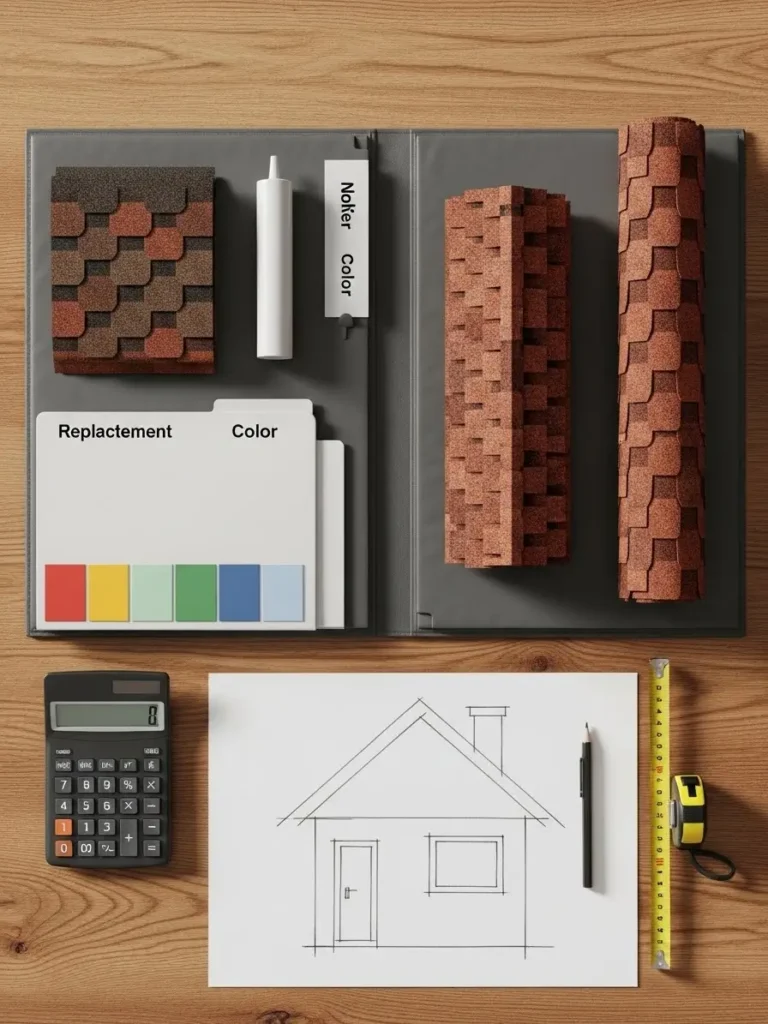
Typical repair costs
Minor repairs often fall in the $300 to $1,500 range, depending on damage and location. Simple shingle repair might run $300–$600. Flashing repairs can run $400–$1,000. Isolated leak fixes can run $400–$1,200 with diagnosis.
Typical replacement costs
Full replacement often ranges from $8,000 to $25,000 for average homes. Size, roof shape, tear-off, repairs to decking, region, and season all change the final number.
Metal roof cost considerations
Metal roof cost often runs $10,000 to $20,000 for average homes. It can cost more up front than asphalt, but metal can last longer and reduce maintenance needs.
Hidden costs people forget
- Permits and fees (varies by city).
- Disposal and tear-off charges.
- Decking repairs found after tear-off.
- Interior repairs if leaks already damaged drywall or insulation.
Useful tip most people miss: Ask each contractor to list what is “assumed included” vs “only if needed.”
Have you ever seen a quote that looked cheap until the add-ons showed up?
Discussion question: Do you prefer paying more once, or paying less in smaller rounds with more risk?
Material comparison guide
Asphalt Shingles: $5,000-$10,000 installation, 20-30 year lifespan, good for most climates, wide style selection
Metal Roofing: $10,000-$20,000 installation, 40-70 year lifespan, excellent for all climates, energy efficient
Wood Shingles: $12,000-$18,000 installation, 25-30 year lifespan, natural appearance, requires maintenance
Slate: $15,000-$30,000 installation, 75-100+ year lifespan, premium appearance, requires strong structure
Tile: $15,000-$25,000 installation, 50-100 year lifespan, excellent for hot climates, heavy weight
Related Post: DIY Halloween Displays You’ll Regret Skipping
Hiring problems that cost homeowners the most (and how to avoid them)
A roof decision can go wrong even when your diagnosis is right, because the contractor choice is wrong.

Problem #1: “Storm chasers” and pressure tactics
After storms, some crews show up fast, push you to sign fast, and vanish fast. This is common enough that payment timing becomes a major safety rule.
Realistic solutions:
- Do not pay in full up front. Tie most payment to completion and final walkthrough.
- Get multiple estimates even if one contractor seems “nice.”
- Verify license, insurance, and local references before you sign.
- Ask who will handle warranty issues two years from now.
Problem #2: Quotes that look “cheap” because they skip system parts
Some quotes focus on shingles and ignore flashing, ventilation, drip edge details, or cleanup. That can create leaks that “feel mysterious” later.
Realistic solutions:
- Ask each contractor to write out the flashing plan (chimney, valleys, vents).
- Ask what underlayment and edge protection is included.
- Ask what ventilation changes are included (or excluded) and why.
- Ask how they protect landscaping and how they collect nails.
Common headline myth: “All roofs are basically the same.”
What system detail do you want explained in plain English—flashing, vents, or underlayment?
Discussion question: Which matters more to you—lowest price, longest warranty, or best reputation?
The roof installation process (what to expect on your property)
If you know what should happen during roof installation, you can spot quality and prevent disputes.
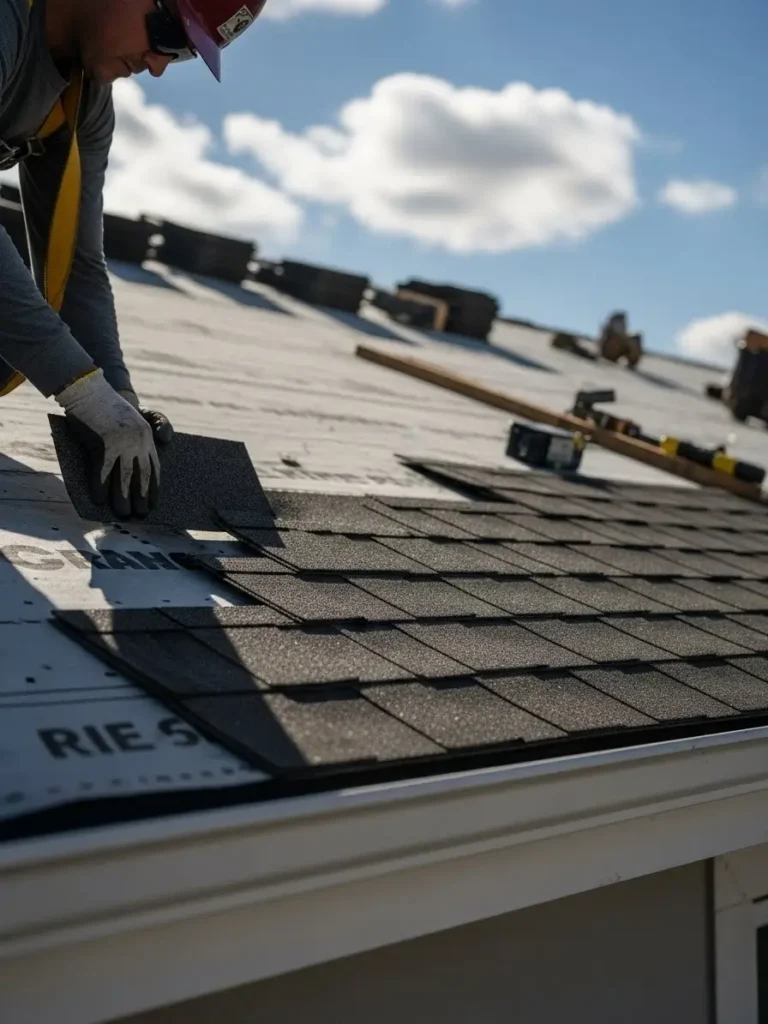
Before work starts
- Clear contract with materials, timeline, and warranties.
- Plan for driveway access and debris disposal.
- Cover attic items and move outdoor items away from fall zones.
During install (a simple sequence)
- Tear-off and decking inspection (for replacements).
- Ice/water protection in key zones.
- Underlayment application.
- Flashing and drip edge details.
- Shingle or panel install + ridge caps/vents.
- Final walkthrough and cleanup with magnet sweep.
New vs old approach: Old thinking says “a roof is shingles.” New thinking treats the roof as a system: ventilation, flashing, drainage, and underlayment work together.
Which “system part” do you want explained before you approve work?
Discussion question: If you could watch one part of the install, what would it be—tear-off, flashing, or final inspection?
Maximizing your roof’s lifespan through maintenance
Maintenance feels boring until it saves you thousands. Small habits can prevent early replacement.
A simple seasonal schedule
Do quick visual checks in spring and fall. Add a check after major storms. Take photos for records.
Gutters: the quiet problem-maker
Clean gutters at least twice a year. Make sure downspouts move water away from the home.
Moss and algae
Moss holds moisture. Avoid pressure washing because it can damage shingles and force water under layers.
Ventilation and insulation
Ventilation helps prevent heat and moisture buildup. It can reduce shingle stress and help prevent winter ice issues.
Quick reflection: What maintenance task do you skip most—gutters, attic checks, or post-storm inspections?
Discussion question: Would you pay for an annual roof check to reduce surprises, or do you prefer DIY checks?
Insurance details most homeowners don’t learn until it’s too late
Insurance can change your roof decision, but many people don’t understand what their policy actually pays for until after a storm.

Problem #1: Actual Cash Value (ACV) roof coverage surprises
Some policies pay “actual cash value,” which can mean depreciation reduces the payout on an older roof. That can create a big out-of-pocket gap.
Realistic solutions:
- Call your insurer and ask: “Is my roof covered at replacement cost or actual cash value?”
- Ask how roof age affects payout and whether there is a special roof deductible.
- Keep maintenance photos and receipts so the roof condition is documented.
Problem #2: Settlements that don’t include what you actually need
If more damage appears once work starts, you may need a supplement. Many homeowners accept the first number and get stuck later.
Realistic solutions:
- Get detailed photos and written notes from the contractor after tear-off.
- Ask the contractor how they handle supplements before you sign.
- Keep a claim folder: adjuster notes, estimates, receipts, photos.
Discussion question: Have you ever been surprised by an insurance payout or deductible?
Frequently Asked Questions
How do I know if my roof problem is a repair or a replacement?
Start with pattern. One leak, one weak spot, or one flashing failure often points to repair. Many leaks, widespread shingle failure, sagging, or near-end lifespan often points to replacement. Ask for photos of the suspected failure points and a written scope either way.
Can attic condensation really mimic a roof leak?
Yes. If warm, moist indoor air reaches a cold attic, it can condense and drip. The fix is often air sealing, proper exhaust venting to the outside, and a balanced insulation + ventilation plan.
What should I demand in a roofing quote so I can compare bids?
Ask for a written scope with edge protection, underlayment, flashing plan, ventilation plan, decking repair rates (if found), cleanup steps, and warranty terms. You want “apples to apples,” not “cheap vs expensive.”
Is metal roof cost worth it compared to shingles?
It can be if you plan to stay in the home and want long service life with lower maintenance. Compare lifetime cost, not just install price. Ask how the contractor handles underlayment, ventilation, and fastener details for metal systems.
What should I ask to understand roof installation quality?
Ask how they handle flashing, drip edge, underlayment, ventilation, nail placement, and decking repairs. Ask what they photograph during tear-off and what final checklist they use before final payment.
Final Thoughts
Roof repair vs replacement is a money decision, but it is also a stress decision. When you assess roof age, damage pattern, leak count, and decking condition, you stop guessing. Then you can compare roofing companies based on proof, not pressure.
If you choose repair of roofing, make sure the contractor fixes the root cause. If you choose replacement, make sure roof installation follows a system approach with strong flashing, ventilation, and cleanup.
What’s your situation right now—one leak, storm damage, or an older roof that keeps asking for repairs?
Share your experience in the comments below! What’s your take? Let’s discuss!