Why do some small backyard decks feel like peaceful sanctuaries while others remain cluttered, cramped outdoor spaces that nobody wants to use?
How Your Small Backyard Deck Could Feel This Peaceful: Complete 2026 Design Guide
Transform your compact outdoor space into a tranquil retreat that rivals luxury resorts with proven design strategies and expert techniques
Your small backyard deck holds incredible potential for creating a peaceful outdoor sanctuary. Many homeowners assume that compact spaces limit their design options, but the truth reveals quite different possibilities. With smart planning and creative solutions, even the tiniest yard can become a serene escape that feels surprisingly spacious and calming.
The key lies in understanding how to work with your space rather than against it. A well-designed small backyard deck can feel more intimate and cozy than larger spaces, creating that perfect peaceful atmosphere you’ve been dreaming of. The 2026 approach to outdoor design emphasizes intentional minimalism, sustainable materials, and multi-functional elements that maximize every square foot.
This comprehensive guide explores proven strategies for transforming small backyard decks into peaceful retreats. You’ll discover design principles, material selections, furniture arrangements, plant choices, lighting techniques, and maintenance strategies that create lasting tranquility in compact outdoor spaces.
Understanding Your Small Backyard Deck Potential
Small backyard decks present unique opportunities that larger spaces simply cannot offer. The intimacy of a compact area creates a cozy atmosphere, while the limited square footage forces you to be more intentional with every design choice you make. This intentionality becomes your greatest asset in creating peaceful outdoor environments.
Modern homeowners discover that small backyard decks offer surprising advantages over expansive outdoor areas. The manageable scale allows complete design control without overwhelming budgets. Every element you add carries significance and impact. Nothing gets lost or overlooked in a small space—each piece contributes to the overall atmosphere.
Why Small Backyard Decks Can Feel More Peaceful
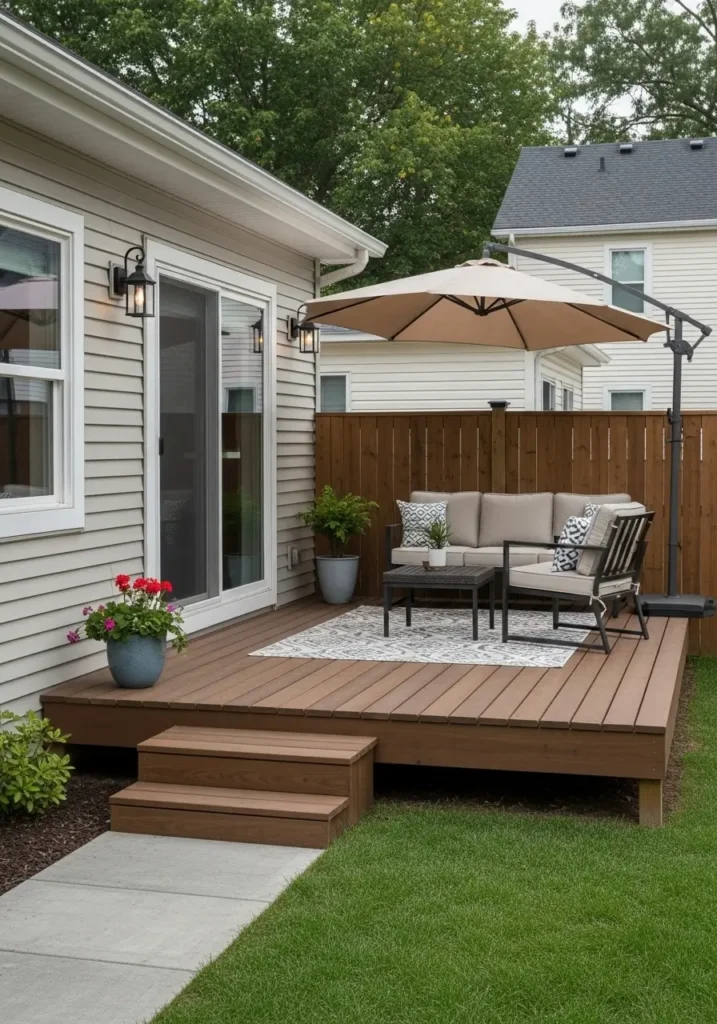
Expert Insight: Smaller spaces create what designers call “human scale” environments. These areas feel more manageable and less overwhelming than vast open spaces, promoting relaxation and peace of mind through their inherent coziness.
The psychology behind small spaces proves fascinating. When we occupy a well-designed compact area, our minds can more easily process and appreciate every element. This creates a sense of completeness and satisfaction that larger, less defined spaces often lack. Environmental psychologists note that defined boundaries create feelings of security and comfort—exactly what peaceful retreats require.
Small backyard decks excel at creating that coveted “cozy factor” that makes outdoor spaces feel like true extensions of your home. The limited space brings elements closer together, creating more intimate conversation areas and reading nooks that large decks struggle to achieve without deliberate zoning strategies.
The Intimacy Advantage
Small backyard decks naturally encourage closer connections with nature and companions. When you sit on a compact deck, plants feel within reach rather than distant. Conversations happen at comfortable volumes without shouting across expansive spaces. This intimacy forms the foundation of peaceful outdoor experiences that larger decks must work harder to cultivate.
Essential Design Principles for Small Backyard Deck Spaces
Creating peace in a small backyard deck requires understanding several key design principles that maximize both space and serenity. These principles guide every decision from material selection to furniture placement, ensuring cohesive results that feel intentional rather than haphazard.
Vertical Space Utilization
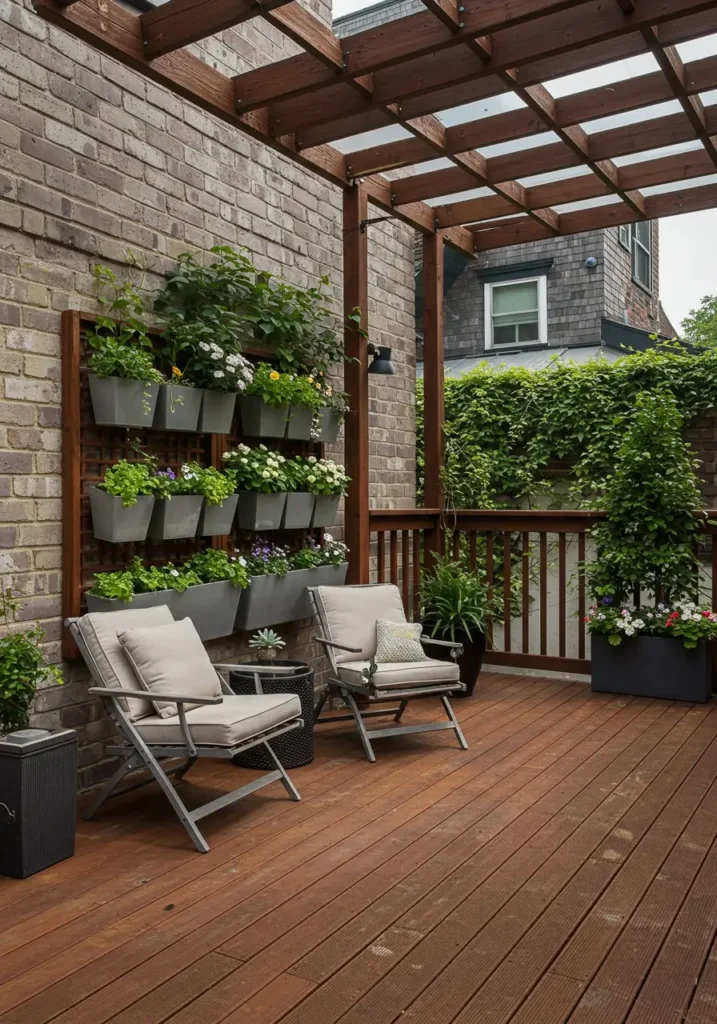
One of the most powerful tools in small backyard deck design involves thinking vertically. Your deck doesn’t have to expand outward to feel larger—it can grow upward instead. Vertical design elements draw the eye up, creating the illusion of height and spaciousness while providing practical functions.
Vertical Design Strategies
- Install tall privacy screens with built-in planters at multiple heights
- Use wall-mounted furniture that folds down when needed for activities
- Create vertical gardens with climbing plants on trellises or wire frameworks
- Add overhead elements like pergolas, awnings, or shade sails for dimension
- Mount lighting fixtures at different heights to create visual layers
- Hang shelves for potted herbs and decorative items at eye level
- Install vertical storage solutions that keep floor space clear
The 2026 trend favors vertical gardens integrated with irrigation systems that maintain themselves. Smart vertical planters with moisture sensors ensure your plants thrive without constant attention, maintaining the peaceful atmosphere without added stress.
Color Psychology for Peaceful Small Backyard Decks
Color choices impact how peaceful your small backyard deck feels. Light colors reflect light and make spaces feel larger, while certain hues promote relaxation. Understanding color psychology helps you create the atmosphere you desire without trial and error.
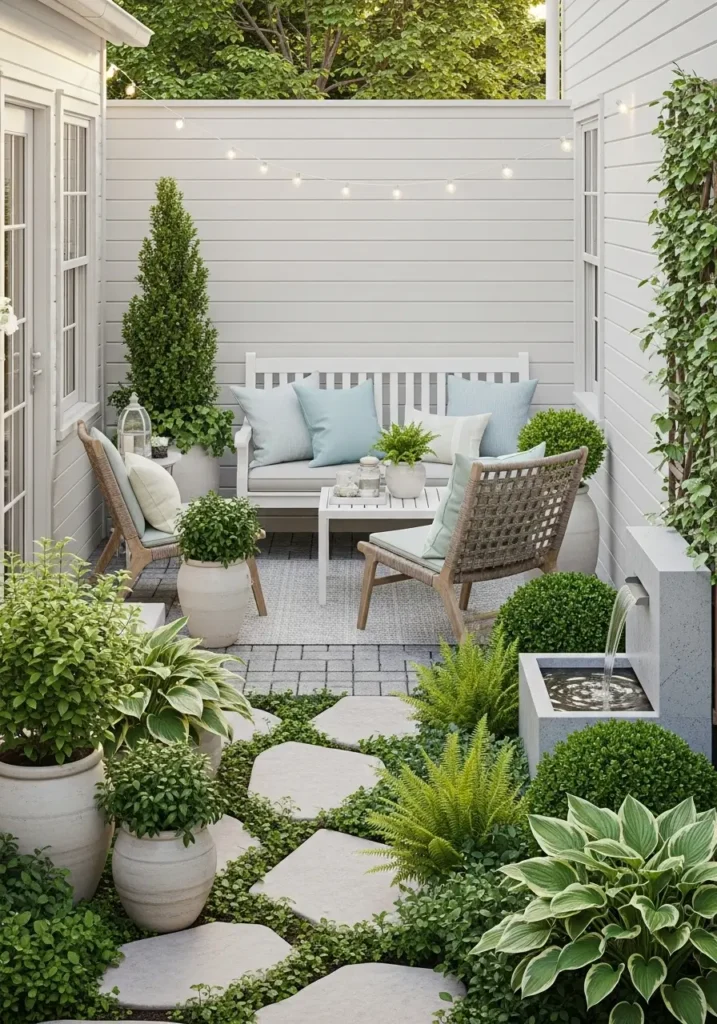
Limit your small backyard deck color palette to 3-4 main colors for cohesive results. Too many colors create visual chaos that undermines peaceful atmospheres. Choose one dominant color (60%), one secondary color (30%), and one or two accent colors (10% total) for professional-looking results.
Creating Visual Flow in Small Backyard Decks
Visual flow keeps the eye moving smoothly through your space, preventing it from feeling cramped or choppy. This concept proves crucial in small backyard deck design where every sight line matters. Good flow creates the perception of spaciousness even in compact areas.
Diagonal Lines and Curves
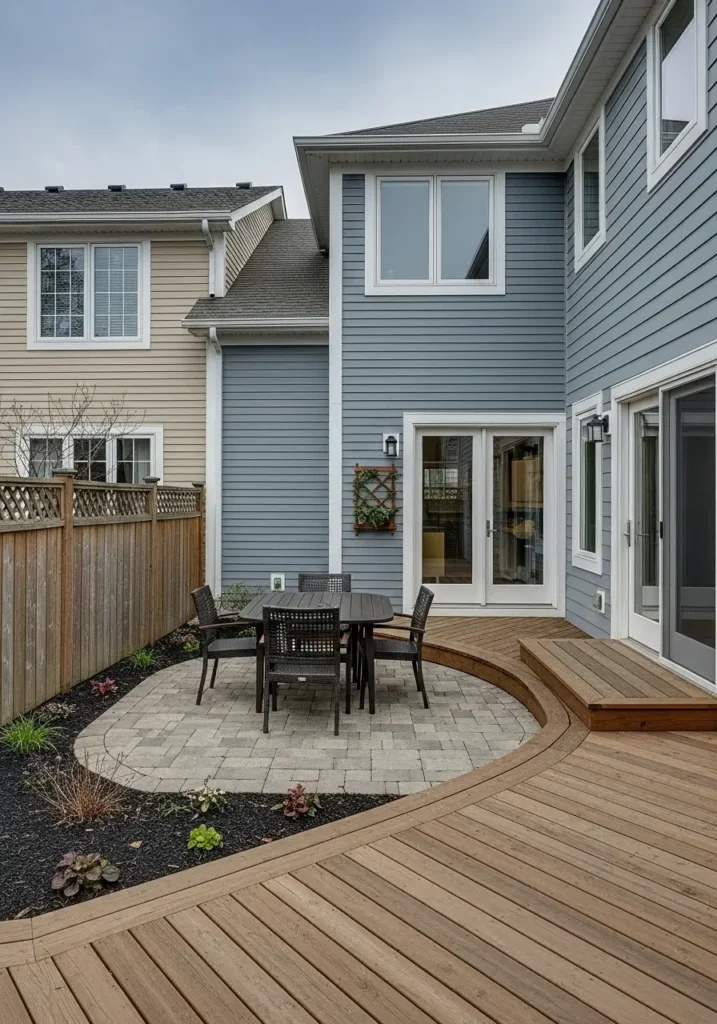
Straight lines that run parallel to property boundaries can make small backyard decks feel boxed in. Instead, use diagonal deck board patterns or curved elements to create visual interest and the illusion of more space. Diagonal lines trick the eye into perceiving greater distance.
2026 Design Trend
Biophilic design principles dominate 2026 small backyard deck trends. This approach integrates natural curves, organic materials, and living elements that connect occupants with nature. Studies show biophilic design reduces stress and increases satisfaction with outdoor spaces by up to 60%.
What’s your biggest challenge with your small backyard deck right now—lack of privacy, limited seating space, or difficulty creating the peaceful atmosphere you want? Share your specific struggles in the comments below!
Material Selection for Maximum Impact on Small Backyard Decks
The materials you choose for your small backyard deck will impact both its peaceful atmosphere and its apparent size. Smart material selection makes the difference between a deck that feels cramped and one that feels like a spacious retreat.
Decking Material Comparison for Small Spaces
Your decking material choice sets the foundation for your entire outdoor space. Each material offers distinct advantages and drawbacks that affect maintenance requirements, longevity, and visual impact on your small backyard deck.
Natural Wood Benefits
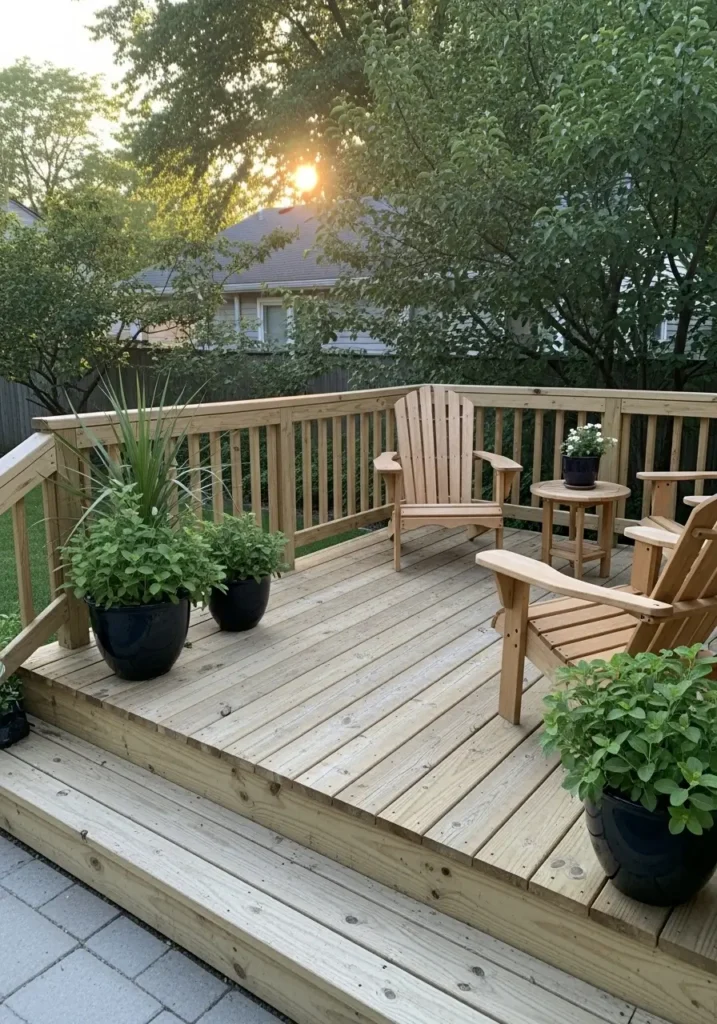
- Warm, organic feel connects you with nature
- Natural aging process adds character over time
- Can be stained in peaceful colors that suit your style
- Familiar, comfortable texture under bare feet
- Sustainable when sourced from certified forests
- Repairs and refinishing extend lifespan decades
Natural Wood Drawbacks
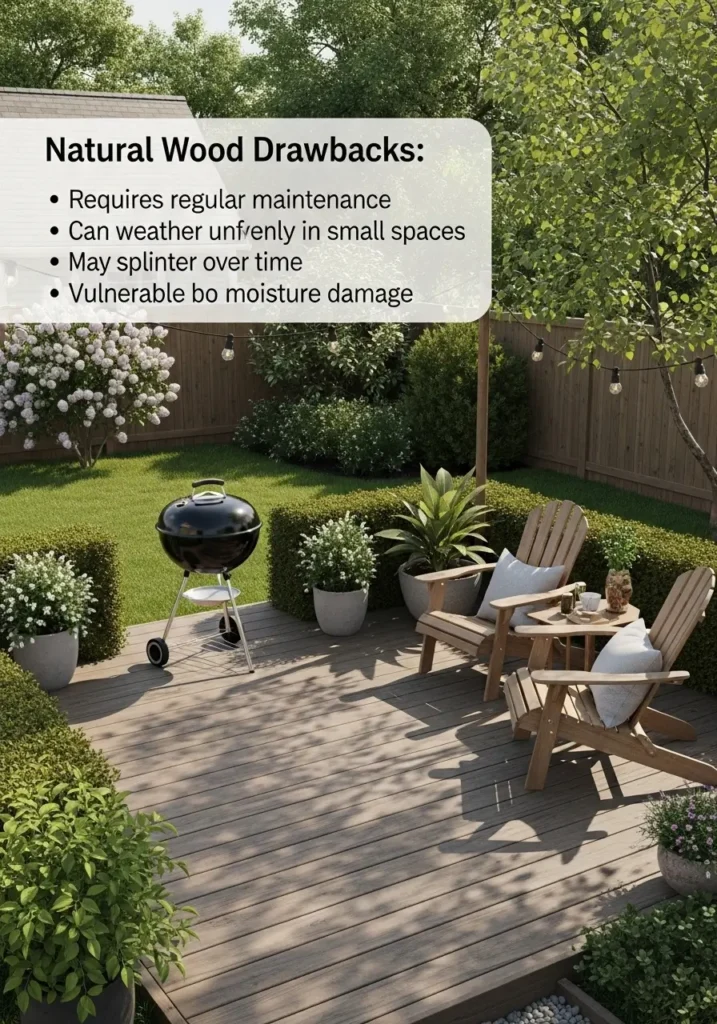
- Requires regular maintenance and sealing every 2-3 years
- Can weather uneven in small spaces with varied sun exposure
- May splinter over time without proper maintenance
- Vulnerable to moisture damage in humid climates
- Higher ongoing cost despite lower initial investment
- Susceptible to insect damage in some regions
Composite Decking for Small Backyard Decks
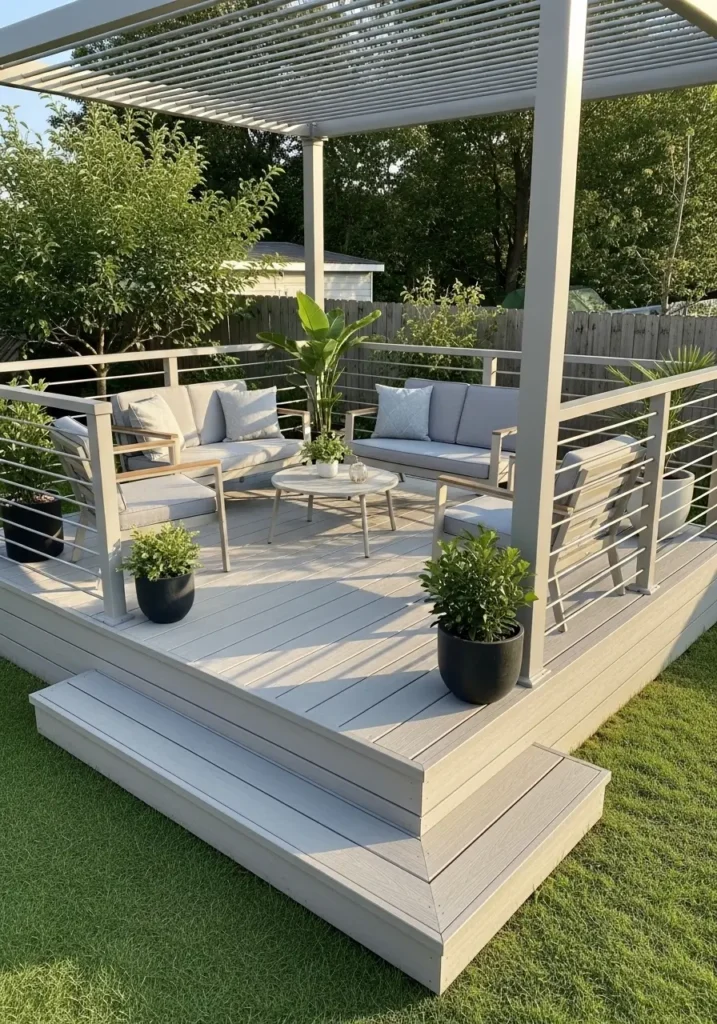
Composite materials have become popular for small backyard decks, and for good reason. They offer consistent appearance and require minimal maintenance, which proves perfect for compact spaces where every detail shows. Modern composites look remarkably natural while eliminating wood’s maintenance headaches.
Pro Tip: Choose composite decking with subtle wood grain patterns rather than bold textures. In small backyard decks, busy patterns can make the area feel even more confined. Opt for consistent coloring across boards to create visual flow.
Color Selection Strategy for Small Spaces
For small backyard decks, stick to lighter colors that reflect light rather than absorb it. Gray tones work particularly well because they’re neutral enough to complement any design style while still feeling contemporary and clean. Light grays paired with white railings create an expansive feeling that dark colors cannot match.
Avoid very dark boards in small backyard decks—they absorb heat, show every speck of dust, and make spaces feel smaller. If you love dark woods, reserve them for furniture and accent pieces rather than the entire deck surface.
Layout Strategies That Maximize Peace and Space
The layout of your small backyard deck determines how peaceful and spacious it feels. Smart layout choices can make a 100-square-foot deck feel as relaxing as spaces twice its size. Think of layout as your deck’s floor plan—it dictates traffic flow, sight lines, and how people interact with the space.
The Corner Retreat Strategy
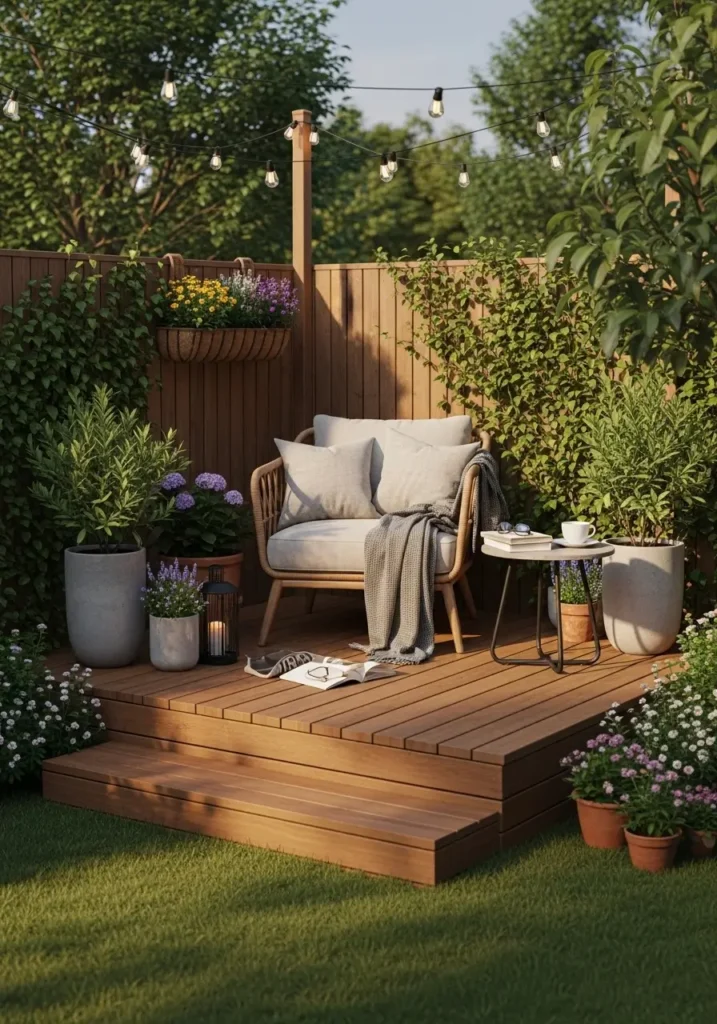
Instead of centering your small backyard deck in the yard, consider positioning it in a corner. This approach creates natural boundaries that feel protective rather than limiting, much like a cozy reading nook indoors. Corner positioning leaves the rest of your yard open for other uses while creating an intimate deck area.
Corner decks benefit from two existing walls or fence lines that provide immediate privacy and structure. You need fewer materials to achieve full enclosure, and the existing boundaries help anchor your design. This strategy proves particularly effective in urban settings where yards face multiple neighbors.
Multi-Level Design for Visual Interest
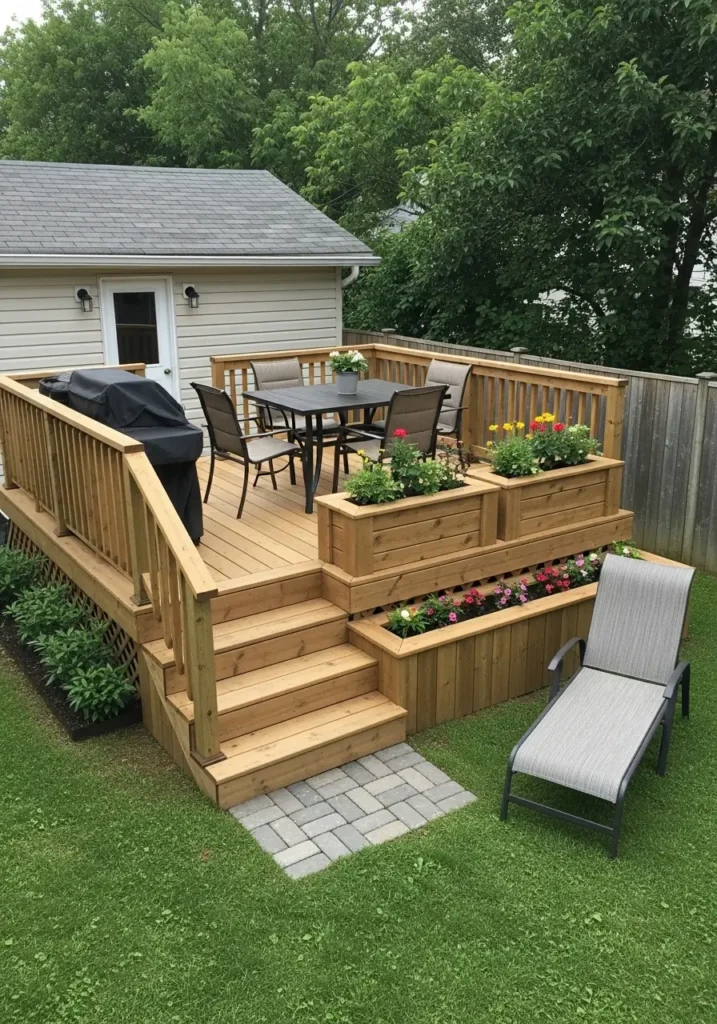
Even in small backyard decks, you can create multiple levels to add visual depth. A simple two-level design with just a 6-8 inch height difference can make your deck feel much more complex and interesting. The elevation change naturally defines different zones without physical barriers.
Level Designation Ideas
- Upper level for dining or entertaining with table and chairs
- Lower level for lounging with comfortable seating or as plant display area
- Steps that double as additional seating with cushions
- Built-in planters between levels that define zones
- Integrated lighting in level changes for evening ambiance
- Storage access under upper level for cushions and tools
Circular and Curved Layouts
Curved deck edges eliminate harsh corners that can make small backyard decks feel rigid. A gentle curve along one edge can make your deck feel more organic and flowing, even if the rest of the design remains rectangular for practical reasons. Curves soften the transition between built and natural elements.
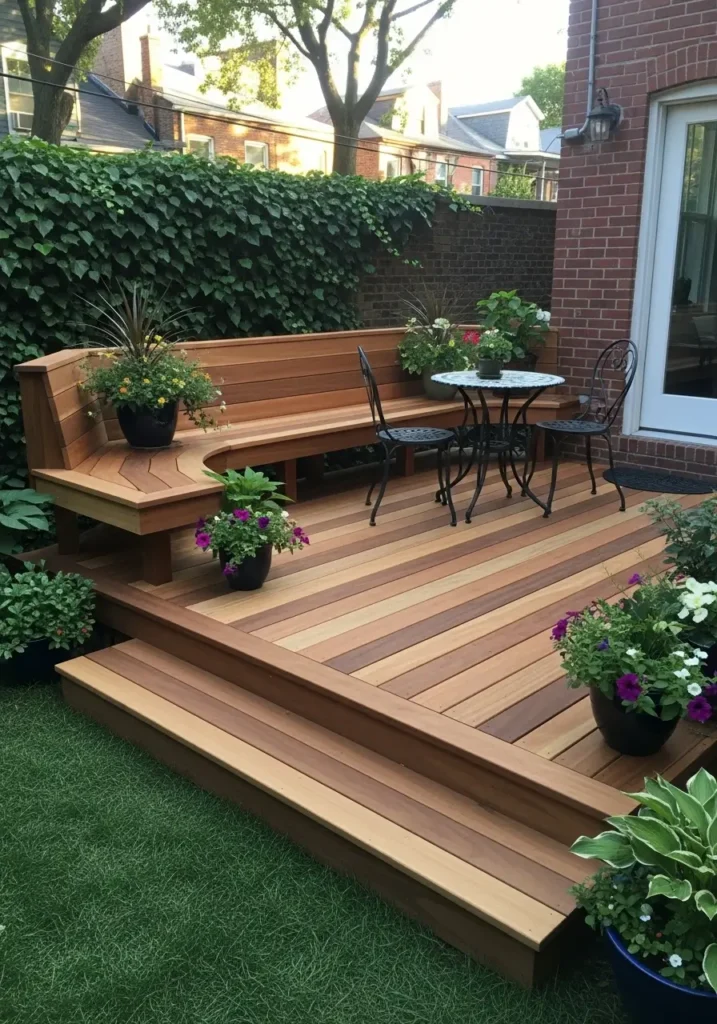
Circular decks work beautifully in small backyard corners, creating cozy gathering spaces that encourage face-to-face interaction. The round shape feels inherent welcoming and eliminates the boxy feeling that rectangular decks can create in tight spaces.
Furniture Selection and Arrangement for Small Backyard Decks
Choosing the right furniture for your small backyard deck proves crucial for maintaining that peaceful atmosphere while ensuring the space remains functional. Furniture can make or break small outdoor spaces—good choices enhance the area while poor ones create clutter and frustration.
Scale Matters More Than Size
Many people make the mistake of choosing tiny furniture for small backyard decks, but this often makes the space feel like a dollhouse. Instead, choose proportional pieces that fit the space without overwhelming it. One substantial loveseat often works better than three cramped individual chairs.
Smart Furniture Choices
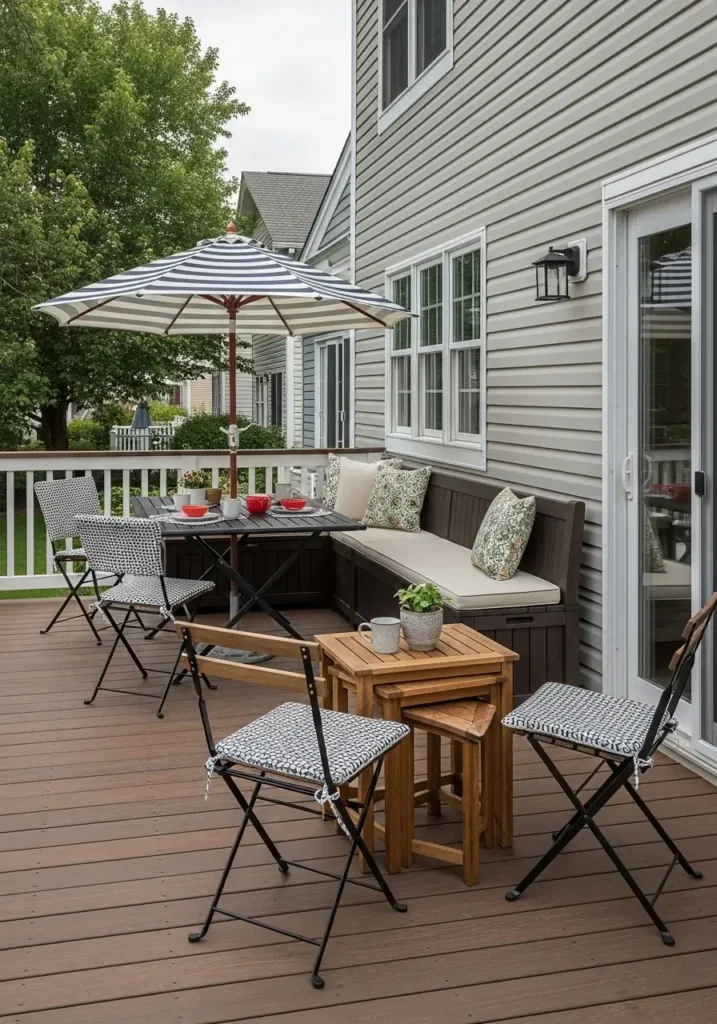
- Bistro sets instead of full dining tables for efficient seating
- Ottoman storage pieces that serve multiple functions simultaneously
- Folding chairs that can be stored when not needed for parties
- Built-in bench seating with storage underneath for cushions
- Nesting tables that can be separated or combined based on needs
- Wall-mounted drop-leaf tables that fold up when not in use
- Stackable stools that provide extra seating without taking space
Creating Conversation Areas on Small Backyard Decks
Even small backyard decks can support intimate conversation areas. The key involves arranging furniture to encourage interaction while maintaining good traffic flow. Angled arrangements work better than parallel lines in compact spaces.
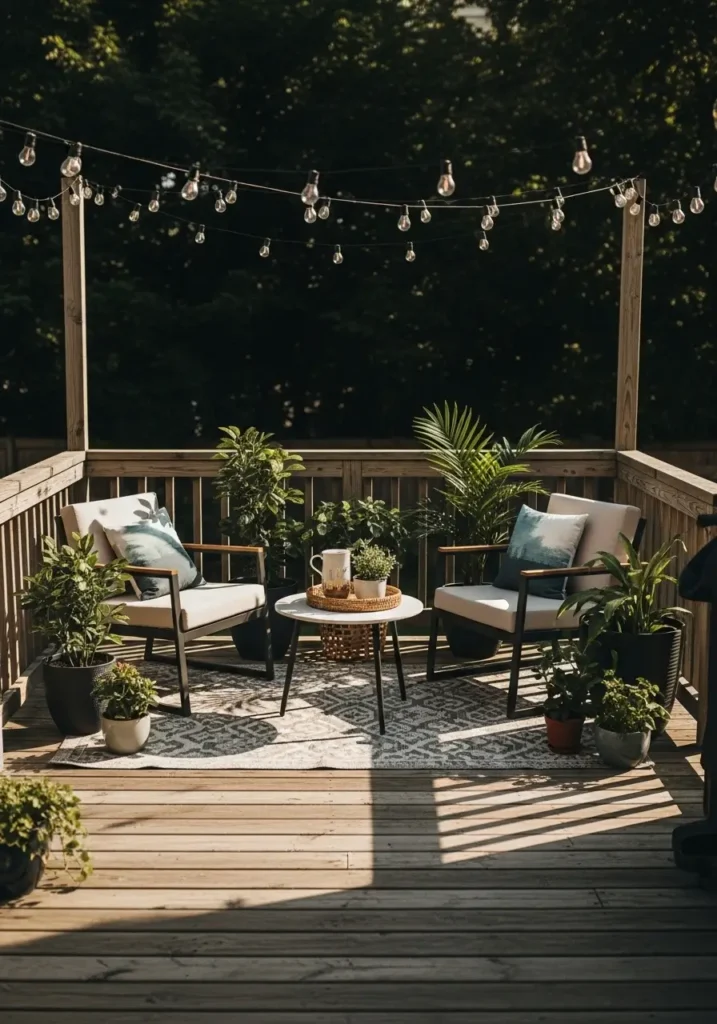
Common Mistake: Pushing all furniture against the walls makes a small backyard deck feel like a waiting room. Instead, create a central conversation area with furniture angled toward each other. This arrangement feels more intimate and uses space more efficient.
Leave at least 24-30 inches between furniture pieces for comfortable movement. This spacing allows people to navigate without bumping into things while maintaining the cozy feel that makes small backyard decks special. Less than 24 inches feels cramped; more than 36 inches loses intimacy.
Have you discovered any clever furniture arrangements or multi-functional pieces that work great in your small outdoor space? Share your space-saving furniture hacks with fellow homeowners in the comments!
Plant Selection for Small Backyard Deck Spaces
Plants play a crucial role in creating peaceful outdoor spaces, but small backyard decks require careful plant selection to avoid overwhelming the area. The right plants add life and tranquility without consuming precious space or demanding excessive maintenance.
Layered Planting Strategy
Create depth and interest by using plants of different heights and textures, arranged in layers from tallest in back to shortest in front. This technique mimics natural landscapes and creates the perception of depth even in shallow spaces.
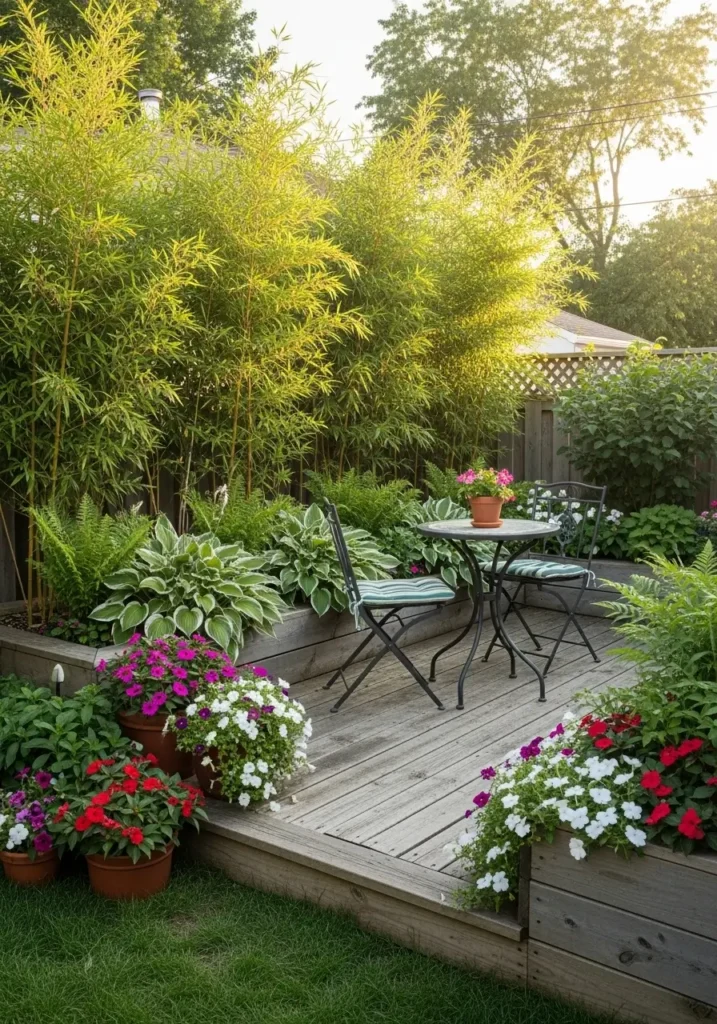
Container Gardening Excellence
Container gardening proves perfect for small backyard decks because it allows you to control soil conditions, move plants as needed, and change your design seasonal. Containers also add another design element through their materials, colors, and shapes.
Container Selection Tips
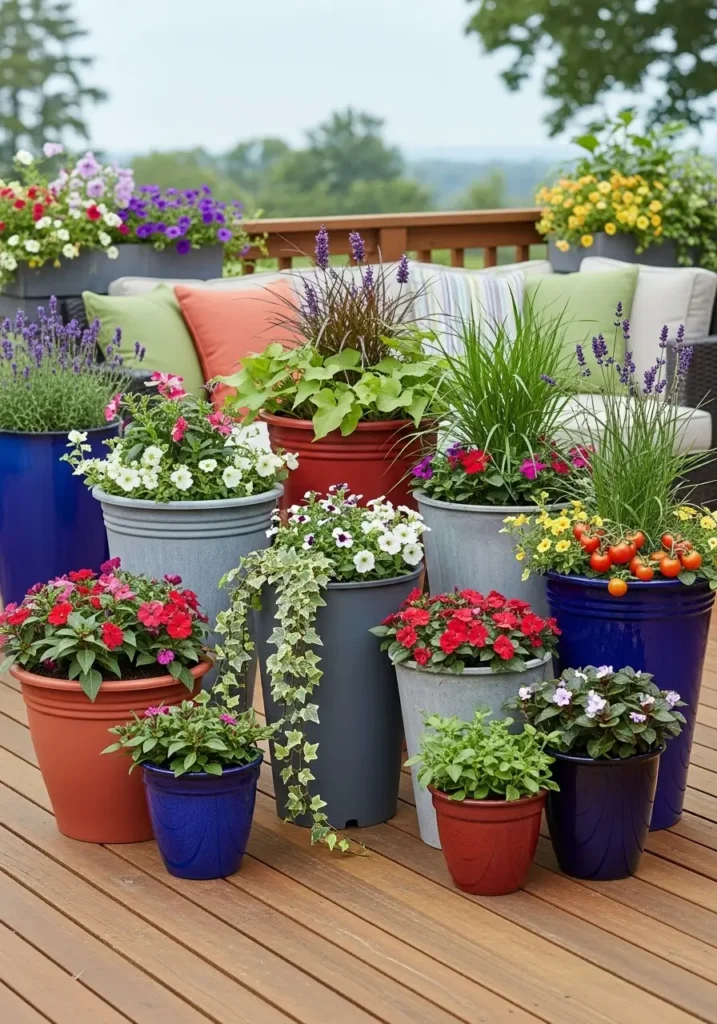
- Choose containers in odd numbers (3, 5, 7) for visual appeal
- Vary heights but keep color schemes cohesive across all pots
- Use lightweight materials for containers you might need to move seasonal
- Ensure all containers have proper drainage to prevent root rot
- Match container style to your overall deck aesthetic for cohesion
- Consider self-watering containers that reduce maintenance needs
- Group containers in clusters rather than scattering them around
Related Post: Gallery Wall Layout: A Complete Guide for Homeowners and Renters
Lighting Design for Evening Peace on Small Backyard Decks
Proper lighting transforms your small backyard deck into a peaceful retreat that can be enjoyed well into the evening hours. The right lighting scheme extends your deck’s usability while enhancing its tranquil atmosphere after sunset.
Layered Lighting Approach
Just like interior spaces, small backyard decks benefit from multiple types of lighting working together to create ambiance. Layering prevents harsh shadows and flat lighting that undermines peaceful atmospheres.
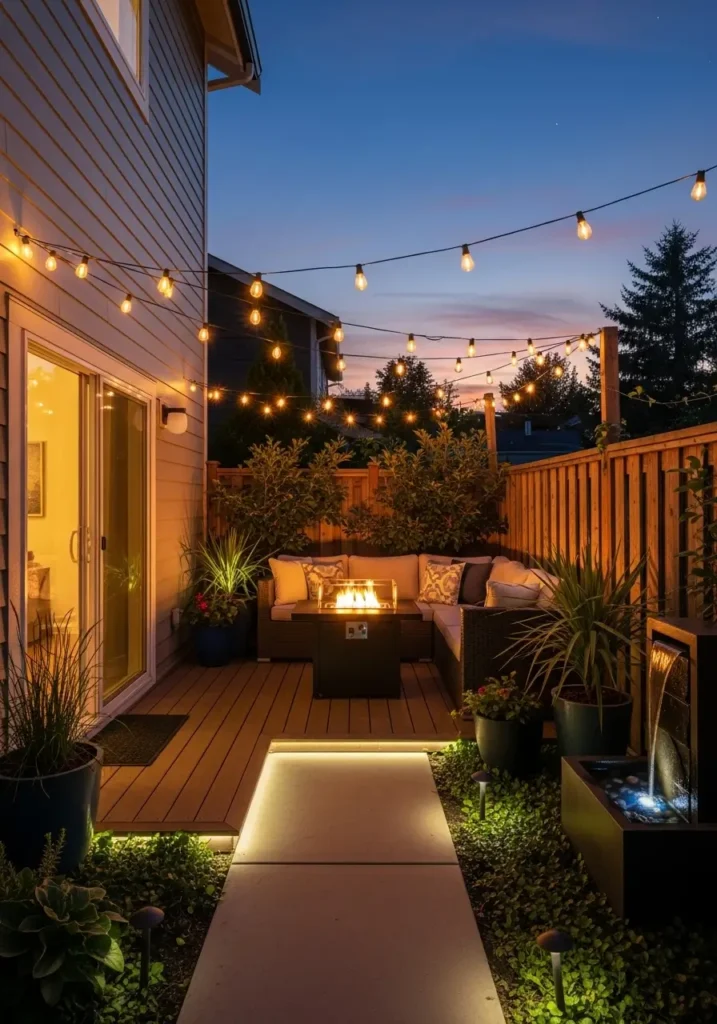
Lighting Formula: Combine ambient lighting (overall illumination), task lighting (for specific activities), and accent lighting (for visual interest) to create the perfect peaceful atmosphere on your small backyard deck. Aim for warm color temperatures (2700-3000K) that promote relaxation.
Ambient Lighting Options
- String lights hung in gentle curves rather than straight lines across deck
- Solar-powered post lights along deck perimeters for soft glow
- Recessed deck lights installed in steps or railings for safety
- Paper lanterns for soft, diffused light that creates ambiance
- LED strip lights under railings or built-in benches
- Moonlighting fixtures mounted high to mimic natural moonlight
Accent Lighting Ideas
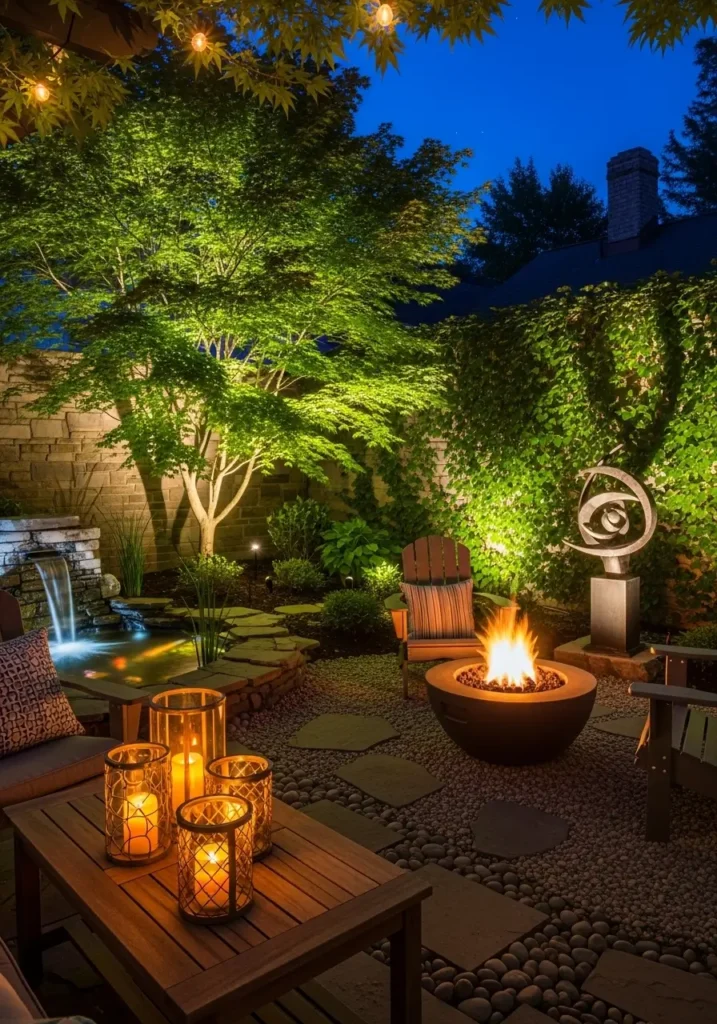
Accent lighting highlights specific features and creates visual depth in small backyard decks. Use accent lights sparingly—too many create visual clutter rather than interest.
- Uplighting for plants and vertical elements to create drama
- Small spotlights for artwork or water features as focal points
- Candles or battery-operated candles for intimate settings without fire risk
- Fire bowls or small fire pits for focal points and warmth
- Path lights that guide movement while adding visual interest
- Decorative lanterns placed at varying heights for dimension
Privacy Solutions for Small Backyard Deck Spaces
Privacy proves essential for creating a peaceful atmosphere, especially in small backyard decks that might feel exposed to neighbors. Without adequate privacy, you cannot fully relax and enjoy your outdoor sanctuary.
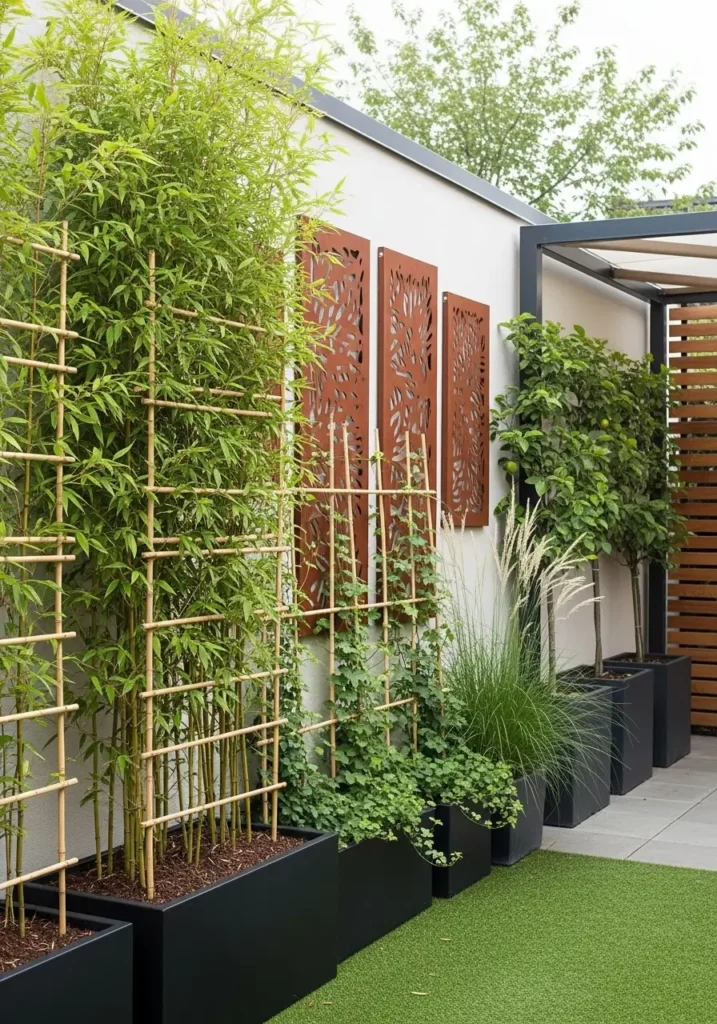
Creative Privacy Screen Ideas
Traditional privacy fences can make small backyard decks feel even smaller. Instead, consider these creative alternatives that provide screening without closing in your space:
Living Privacy Screens
- Bamboo in large planters for fast-growing vertical screening
- Trellis systems with climbing vines like clematis or jasmine
- Espalier fruit trees trained against walls for productive privacy
- Tall ornamental grasses in containers that sway with breeze
- Vertical gardens with trailing plants for living walls
- Raised planter beds with layered shrubs at varying heights
Architectural Privacy Elements
- Slatted wood screens with varying gap widths for filtered views
- Decorative metal panels with cut-out patterns that cast shadows
- Outdoor curtains that can be drawn as needed for flexibility
- Pergola structures with partial roofing and hanging plants
- Folding privacy panels that can be repositioned based on sun
- Frosted glass or acrylic panels that allow light while blocking views
Strategic Placement for Maximum Effect
You don’t need to enclose your entire small backyard deck to achieve privacy. Strategic placement of privacy elements can be more effective and less confining. Identify the specific sight lines that need screening—usually from neighboring windows or decks—and address those rather than creating complete enclosure.
Water Features for Ultimate Serenity
Few elements create peace like the gentle sound of moving water. Even small backyard decks can accommodate water features that enhance the tranquil atmosphere without consuming excessive space or requiring complex installation.
Small-Space Water Feature Options
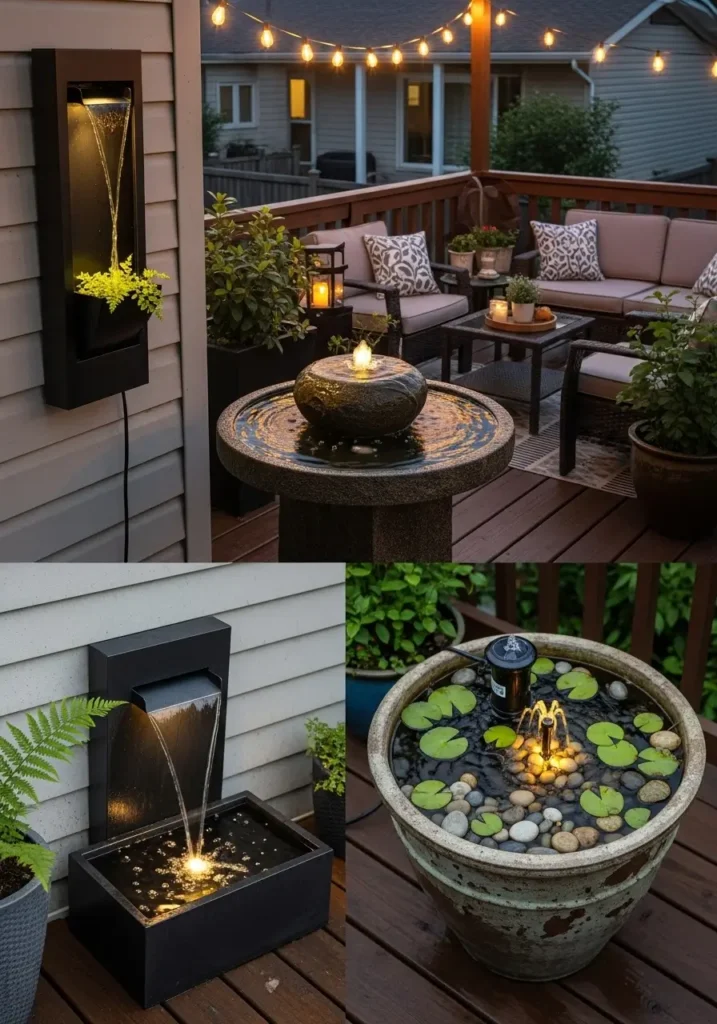
- Tabletop fountains that can be moved as needed for flexibility
- Wall-mounted water features that don’t take floor space at all
- Container water gardens with small pumps and aquatic plants
- Solar-powered fountains that require no electrical work or outlets
- Bubbling urns or spheres with recirculating water systems
- Rain chains that transform downspouts into decorative features
Placement Considerations
Position water features where they can be heard from your main seating area but won’t overwhelm conversation. Corner placements often work well in small backyard decks, creating focal points without interfering with traffic flow. Ensure water features remain accessible for maintenance and refilling.
Seasonal Adaptations for Year-Round Peace
A peaceful small backyard deck should be enjoyable throughout the year, which requires planning for seasonal changes. The most successful outdoor spaces adapt to seasonal conditions rather than fighting them.
Spring Preparation for Small Backyard Decks
- Clean and inspect all deck surfaces for winter damage and wear
- Replace or refresh container plantings with spring bloomers
- Check and repair lighting systems that may have failed over winter
- Plan new additions based on winter observations of sun patterns
- Power wash surfaces to remove winter grime and organic growth
- Repair or replace cushions and fabrics that weathered poorly
Summer Comfort Strategies
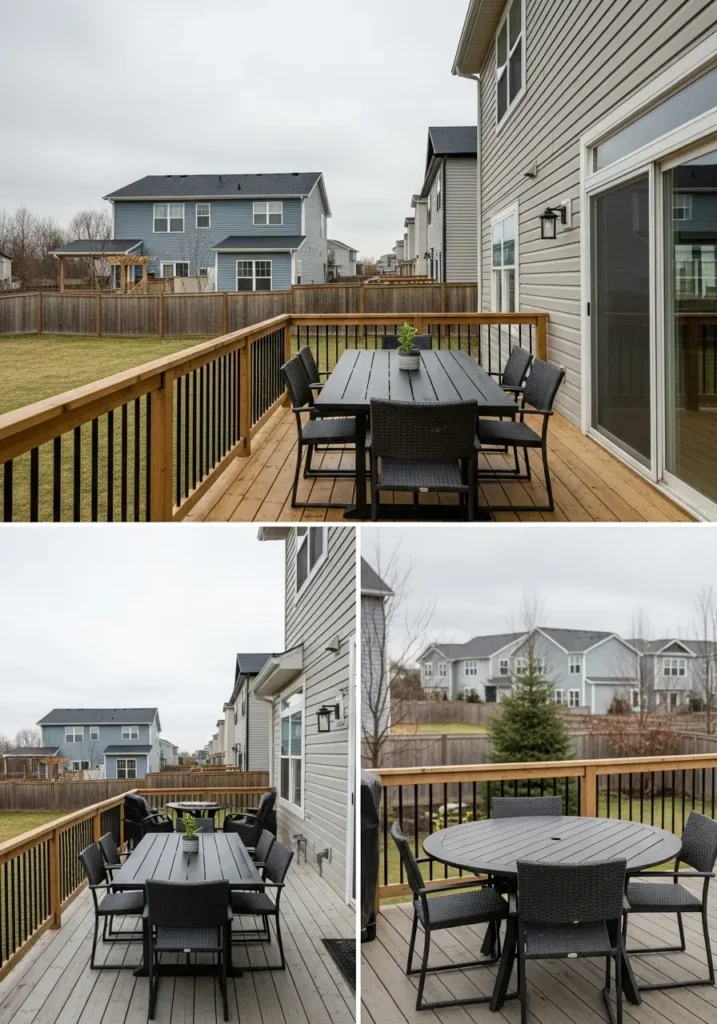
Heat Management: Small backyard decks can become uncomfortable in direct sunlight. Add shade elements like umbrellas, awnings, or pergolas with climbing plants to maintain comfort during hot months. Consider retractable options that allow sun exposure when desired.
Position shade strategically to cover seating areas during peak heat hours (noon to 4 PM). Track sun patterns on your deck throughout the day before installing permanent shade structures. Mobile shade solutions like large umbrellas offer flexibility for changing conditions.
Fall Transitions for Small Backyard Decks
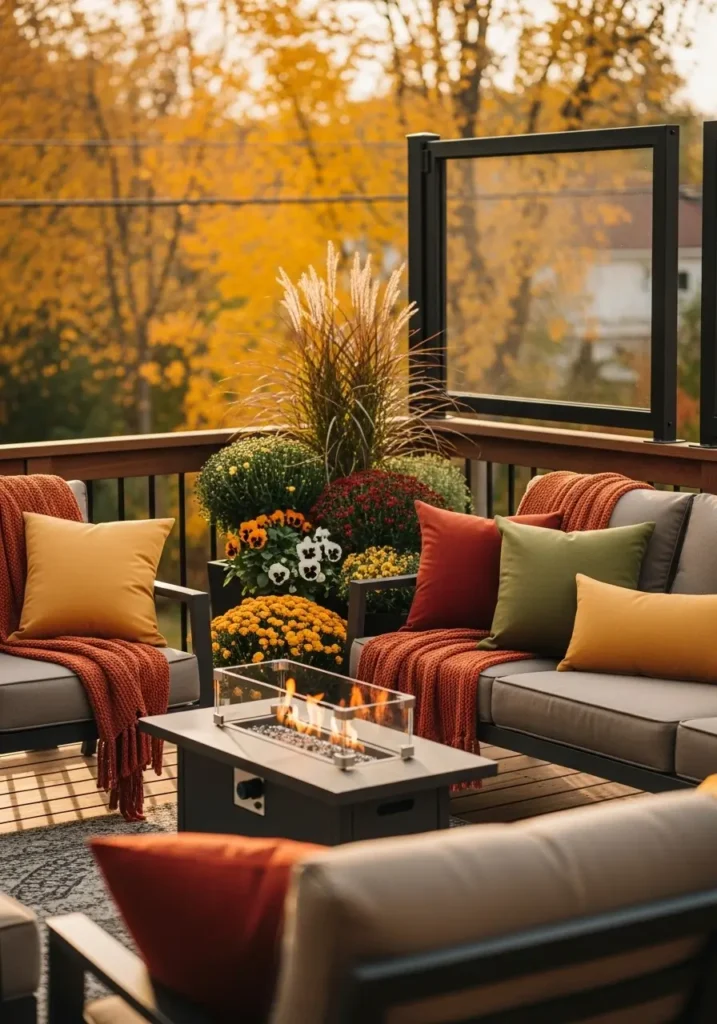
Fall presents the perfect time to add warm elements that will make your small backyard deck cozy as temperatures drop. This season allows extended outdoor enjoyment with proper preparation:
- Outdoor throw blankets and pillows in warm colors for chill evenings
- Portable fire features for warmth and ambiance without permanent installation
- Seasonal container plantings with fall colors like mums and ornamental kale
- Wind protection screens for comfort on breezy days
- Heated outdoor furniture or warming pads for extended season
- Transition lighting to warmer tones that feel cozier in cooler weather
Winter Interest on Small Backyard Decks
Don’t abandon your small backyard deck during winter months. With the right elements, it can remain a peaceful viewing space even when it’s too cold to sit outside. Evergreen plants, winter-interest grasses, and strategic lighting keep your deck attractive through the dormant season.
Budget-Friendly Solutions for Small Backyard Decks
Creating a peaceful small backyard deck doesn’t require a massive budget. Many of the most effective design elements prove surprisingly affordable when you focus on strategic improvements rather than complete overhauls.
DIY Projects That Make a Big Impact
Repurposing and Upcycling Ideas
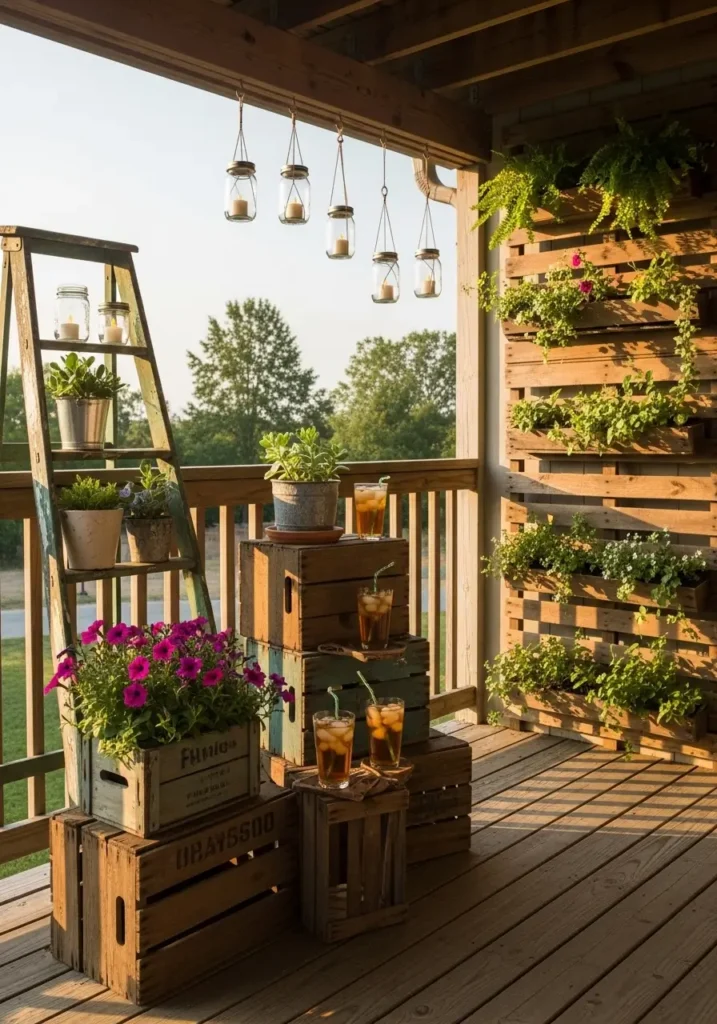
Some of the most charming small backyard deck elements come from repurposed materials that add character while saving money:
- Old wooden crates as planters or side tables with rustic charm
- Vintage ladders as plant display stands with multiple levels
- Mason jars as hanging candle holders for romantic evening lighting
- Pallets transformed into vertical garden walls or furniture
- Old shutters as decorative privacy screens with vintage appeal
- Reclaimed wood for custom planters that match your aesthetic
Maintenance Strategies for Long-Term Peace
A peaceful small backyard deck requires minimal ongoing stress about maintenance. Smart choices during the design phase can reduce future upkeep needs, allowing you to spend more time enjoying your space and less time maintaining it.
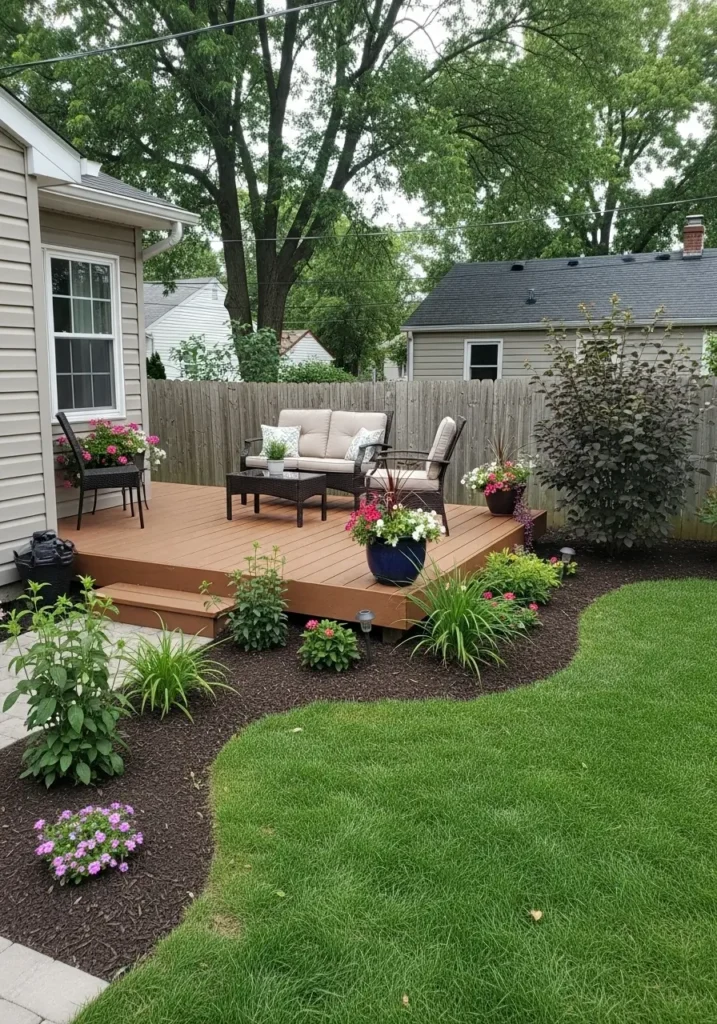
Low-Maintenance Plant Selections
Choose plants that thrive in your climate with minimal intervention. Native plants are often the best choice because they’re adapted to local conditions and require less water, fertilizer, and pest management. This reduces maintenance time while supporting local ecosystems.
Perennials prove more cost-effective than annual over time, requiring less replacement and establishment effort. Select drought-tolerant varieties for containers to reduce watering frequency during summer months. Group plants with similar water needs together for efficient irrigation.
Cleaning and Care Schedules
Establish simple maintenance routines to keep your small backyard deck looking its best without consuming excessive time:
- Weekly: Sweep surfaces and deadhead flowers (5-10 minutes)
- Bi-weekly: Water plants deeply and check for pests (15-20 minutes)
- Monthly: Clean furniture and check lighting systems (30-45 minutes)
- Seasonal: Deep clean surfaces and refresh plantings (2-3 hours)
- Annual: Inspect structural elements and plan improvements (4-6 hours)
Common Mistakes to Avoid in Small Backyard Decks
Learning from others’ mistakes can save you time, money, and frustration in creating your peaceful small backyard retreat. These common errors undermine the peaceful atmosphere you’re trying to create.
Design Mistakes That Ruin Peace
Overcrowding: The most common mistake in small backyard deck design involves trying to fit too many elements into the space. Less proves more when it comes to creating a peaceful atmosphere. Each element should have breathing room.
Ignoring Scale: Furniture that’s too large overwhelms small decks, while furniture that’s too small looks toy-like and uncomfortable. Choose appropriately scaled pieces that fit the space without dominating it.
Neglecting Privacy: Attempting to create peace without adequate privacy proves impossible. You cannot relax when you feel observed. Address privacy needs before focusing on aesthetic details.
Material and Maintenance Mistakes
- Choosing high-maintenance materials that create stress instead of reducing it
- Selecting dark colors that absorb heat and make small spaces feel smaller
- Skipping proper drainage planning that leads to water damage
- Installing inadequate lighting that renders the deck unusable after dark
- Neglecting seasonal planning that limits deck use to summer only
- Failing to establish maintenance routines that allow small problems to become big ones
What mistake did you make with your small backyard deck that you wish you’d avoided? Help others learn from your experience—share your lessons learned in the comments below!
Frequently Asked Questions About Small Backyard Decks
How small is too small for a backyard deck to feel peaceful?
No deck is too small to feel peaceful if designed thoughtfully. Even a 6×8 foot deck (48 square feet) can create a serene retreat when you apply proper design principles. The key lies in simplifying your design to match your space—choose fewer, more impactful elements rather than cramming many small things into a tight area. A compact deck with one comfortable chair, a small side table, and strategic plants can feel more peaceful than a larger deck cluttered with too many elements. Focus on quality over quantity in small spaces. The intimate scale of tiny decks creates inherent coziness that larger spaces must work harder to achieve. Consider your primary use—a reading nook requires less space than a dining area—and design specifically for that purpose rather than trying to accommodate every possible activity.
What’s the most cost-effective way to make a small backyard deck feel more peaceful?
Strategic plant placement offers the most cost-effective transformation for small backyard decks. Container gardens cost $100-300 to establish but create immediate impact through greenery, seasonal color, and natural privacy screening. Start with 3-5 containers in varying heights, focusing on plants that thrive in your climate with minimal care. Add inexpensive string lights ($30-80) to extend evening usability and create ambiance. These two improvements alone—plants and lighting—transform most decks for under $400 total. Next, address privacy with DIY solutions like outdoor curtains ($75-200) or living screens using fast-growing bamboo or climbing vines. Paint or stain existing elements in calming colors if your deck looks dated—a gallon of deck stain costs $30-50 and dramatically updates appearance. Focus spending on elements you interact with often—comfortable seating cushions prove worth the investment even on tight budgets. Avoid spending on decorative items that don’t serve functional purposes in small spaces where every element must earn its place.
How do I create privacy on a small backyard deck without making it feel closed in?
Create selective privacy rather than complete enclosure to maintain openness while achieving seclusion. Identify the specific sight lines that need screening—usually from neighboring windows or adjacent decks—and address only those rather than surrounding your entire deck with barriers. Living privacy screens using tall planters with bamboo or ornamental grasses provide screening without the psychological weight of solid fences. These green barriers feel natural and inviting rather than confining. Position privacy elements 2-3 feet in front of your seating area rather than at the deck perimeter—this arrangement blocks views without creating a boxed-in feeling. Use see-through materials like slatted wood screens or decorative metal panels that provide visual interruption without complete blockage. Vary the heights of privacy elements to create visual interest and prevent the enclosed feeling that comes from uniform barriers. Incorporate climbing plants on trellises for privacy that feels alive and changes with seasons. Consider retractable options like outdoor curtains that provide privacy only when needed, maintaining openness during times when neighbors aren’t present.
Should I choose composite or natural wood for a small backyard deck?
Choose composite materials for small backyard decks unless you specifically love the maintenance rituals of natural wood. Small decks show wear and weathering more obvious than large ones because every board remains in constant view. Composite decking maintains consistent appearance with minimal upkeep—essential for preserving the peaceful atmosphere you’re creating. The higher upfront cost of composite (30-50% more than wood) pays back through eliminated maintenance time and products. You avoid the stress of annual sealing, staining, and monitoring for rot or insect damage. Composite works particularly well in small spaces because it comes in lighter colors that reflect heat and make spaces feel larger. Modern composites look remarkably natural, eliminating the plastic appearance of older products. However, choose natural wood if you genuinely enjoy the maintenance process as a peaceful activity itself—some homeowners find deck care meditative. Wood also offers slightly better aesthetics for traditional or rustic design styles where the natural aging process adds character. Consider your climate too—composite excels in humid areas prone to mold and decay, while wood performs well in dry climates with proper maintenance.
How can I make my small backyard deck usable year-round?
Extend your small backyard deck’s season through strategic additions that address comfort in varying weather conditions. Install permanent or retractable shade structures like pergolas or awnings to make summer heat tolerable—choose designs with adjustable coverage that allows winter sun penetration for warmth. Add portable heating elements like propane patio heaters or electric infrared heaters for cool evening and fall/spring use—position heaters to warm seating areas without becoming fire hazards. Incorporate weather-resistant furniture with quick-dry cushions that handle unexpected rain without damage or extensive drying time. Create storage solutions for blankets, cushions, and seasonal decor so you can quickly adapt your deck to weather changes. Consider enclosed screen systems or clear vinyl curtains that provide wind and rain protection while maintaining outdoor connection—these removable systems work particularly well for small backyard decks where permanent structures might feel confining. Plan your plant selections to include evergreens and winter-interest varieties that keep your deck attractive even during dormant seasons. Install quality outdoor lighting that makes your deck inviting during shorter winter days. The psychological element matters too—establish a routine of daily deck visits even in less-ideal weather to maintain connection with your outdoor space throughout the year.
Transform Your Small Backyard Deck Into a Peaceful Retreat
Your small backyard deck holds incredible potential for creating the peaceful outdoor sanctuary you’ve been dreaming of. The strategies in this guide—from vertical space utilization and strategic color choices to layered lighting and living privacy screens—provide a complete roadmap for transformation. Remember that peaceful spaces emerge from intentional design choices rather than expensive materials or expansive square footage. Start with one area of improvement that resonates most with your needs, whether that’s adding container gardens for natural beauty, installing string lights for evening ambiance, or creating privacy screens that make you feel truly secluded. Each small improvement compounds to create the peaceful atmosphere that makes your small backyard deck irresistible.
We want to hear your small backyard deck story! What transformation have you made that created the most peace in your outdoor space? Are you struggling with a specific challenge like limited space, lack of privacy, or creating year-round usability? Share your before-and-after photos, questions, and creative solutions in the comments below—your experience helps fellow homeowners transform their own small backyard decks into peaceful retreats. What’s the first improvement you’ll tackle this weekend?