Why Everyone Needs a Swiss Cheese Plant (Monstera): Care, Benefits, and Easy Growth Tips
Transform your space and your wellbeing with this stunning, low-maintenance houseplant
What if one houseplant could make your room look styled, teach you plant care without stress, and grow into a statement piece you keep for years?
Walk into a stylish home or browse an interior design feed and you will spot it: the Swiss Cheese Plant.
Those split leaves and holes look bold, but the plant also stays forgiving when life gets busy.
This guide covers what a Swiss Cheese Plant is, how to care for it with simple habits, how to fix common issues, and how to propagate it so you can grow your collection.
You will also learn how to choose between Monstera deliciosa and Monstera adansonii, so you buy the right plant for your space.
Key Takeaways:
- ✓Effortless care: Give bright indirect light, then water when the top soil dries.
- ✓Healthier-feeling space: Leaves add a calm, green focal point, and the plant raises humidity through normal leaf water release.
- ✓Design versatility: Train it up a moss pole or let it trail for a softer look.
- ✓Easy to propagate: One cutting with a node can become a whole new plant.
Meet the Swiss Cheese Plant: More Than Just Holes
“Swiss Cheese Plant” often points to Monstera deliciosa, though people also use the name for Monstera adansonii.
Both plants share one iconic feature: holes and splits in their leaves, called fenestrations.
Fenestrations do not happen to impress your guests.
Many plant writers share a leading idea: the holes and splits may help light pass through to lower leaves in dense habitat.
Other theories mention wind and rain stress, but indoor growers can treat fenestrations as a signal of good light and maturity.
What drew you to the Swiss Cheese Plant: the bold leaves, the low upkeep, or the “jungle” look it gives a room?
Monstera Deliciosa vs. Monstera Adansonii: Know the Difference
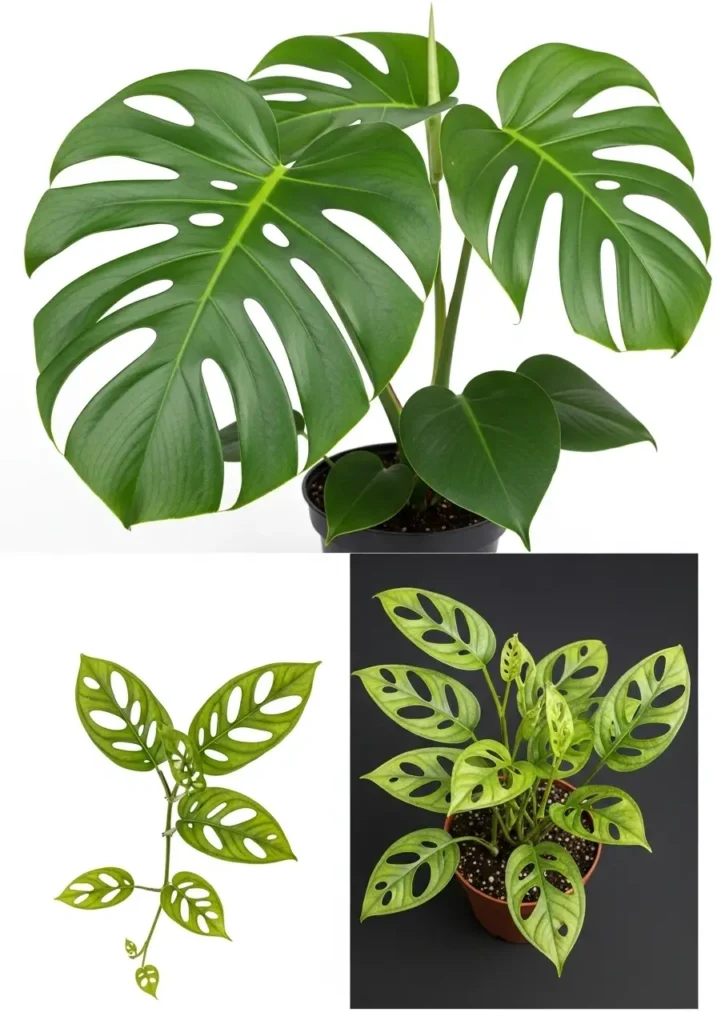
When someone says “Swiss Cheese Plant,” ask one quick question: do they mean a large, split-leaf climber or a lighter vine with more holes?
That answer changes how you style it, support it, and even where you place it.
- Monstera deliciosa: Large leaves. Mature leaves develop deep splits that can reach the edges, plus inner holes.
- Monstera adansonii: Smaller, thinner leaves. The holes often stay inside the leaf, and the plant trails or climbs like a vine.
Simple buying tip: If you want one plant to fill a corner with big leaves, start with Monstera deliciosa.
If you want a hanging basket or a shelf plant that trails, start with Monstera adansonii.
The Unbeatable Benefits of Welcoming a Monstera
A Swiss Cheese Plant earns its place because it looks high-end without high effort.
It also grows in a way that feels rewarding: each new leaf looks like progress.
1. A fresher-looking home (with a reality check)
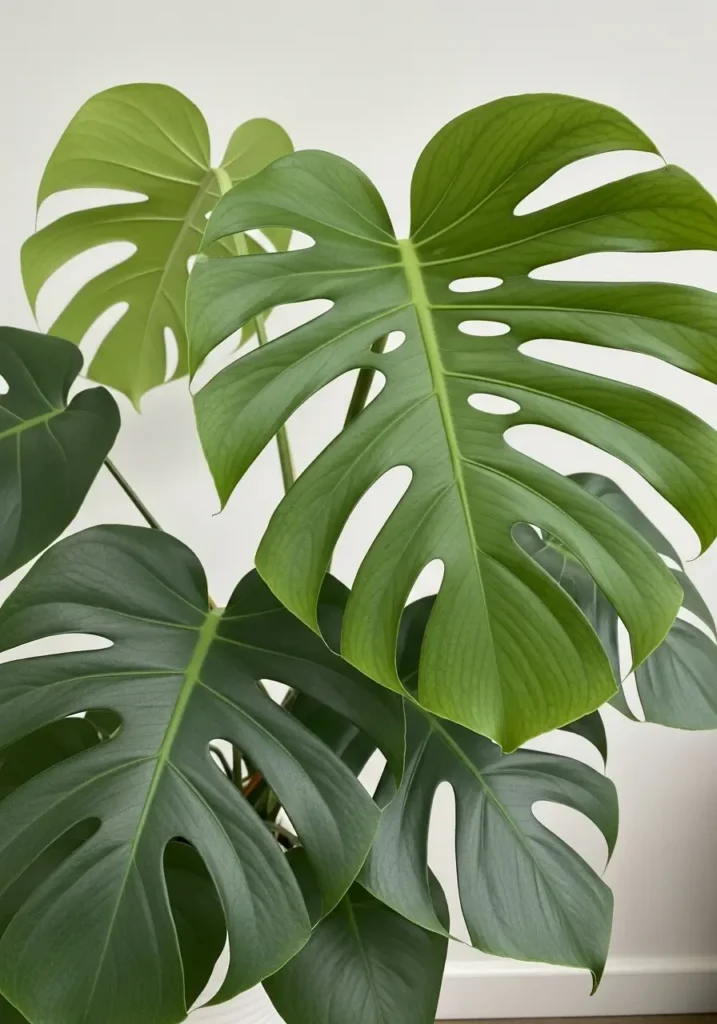
Houseplants can look “clean” because leaves trap dust that you can wipe off during care.
People often call Monstera an air purifier, but the strongest lab evidence comes from sealed-chamber research, not normal homes.
A respiratory health summary notes houseplants do not improve indoor air quality in real home conditions the way many people assume.
Monstera still helps in a practical way: its leaves release water vapor, so indoor air can feel less dry near the plant.
If you run heat or AC often, that small change can feel nice in a room you sit in each day.
2. A calm visual anchor for your space
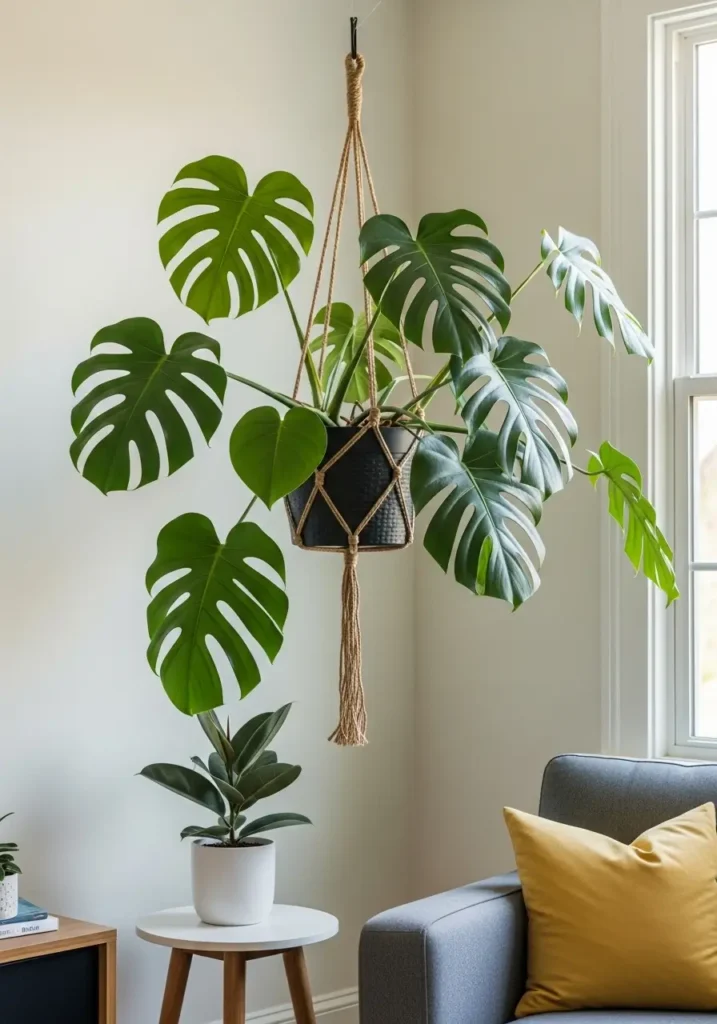
A big-leaf plant changes how a room feels.
The color, shape, and scale of Monstera foliage can make a space look warmer and more lived-in, even with simple furniture.
3. Forgiving growth for beginners
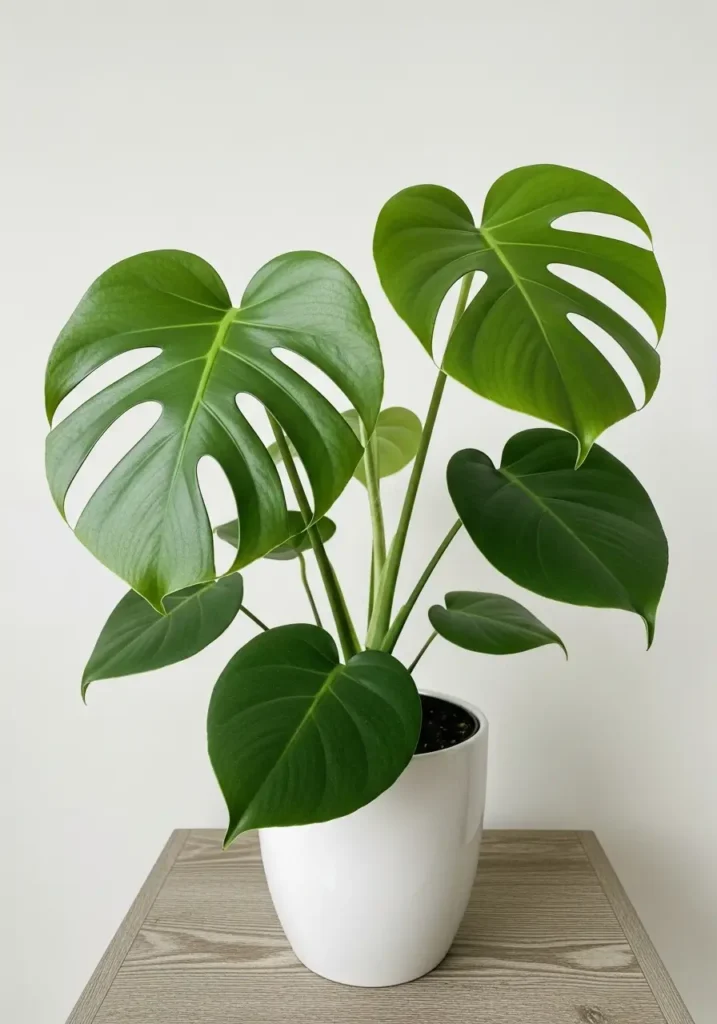
Monsteras tell you what they need through leaf color, posture, and growth speed.
If you miss one watering, the plant often recovers once you return to a steady routine.
Related Post: What a Humble Heuchera Can Do for Your Front Yard
What result matters most for you: bigger leaves, more splits, faster growth, or a plant that stays low effort?
Your Guide to Swiss Cheese Plant Care: Simple Steps for Success
Swiss Cheese Plant care stays simple when you follow a routine.
Focus on light, soil, and watering, then add support as the plant climbs.
The perfect light: Bright and indirect
Bright indirect light drives bigger growth and stronger leaf splits.
Place your plant near a bright window where it avoids harsh sun on the leaves.
- Great spots: Near a north or east window, or set back from a south or west window with a sheer curtain.
- Too much light: You may see yellowing or brown scorch patches.
- Too little light: Growth slows, stems stretch, and new leaves can stay small with few holes.
Watering wisdom: When to water and when to wait
Overwatering causes more Monstera problems than underwatering.
Water when the top 1–2 inches of soil feel dry, then water until excess drains out.
- The finger test: Touch the soil. If it feels dry to your first knuckle, water.
- Drainage matters: Empty the saucer so roots do not sit in water.
- Season shifts: Expect more water in spring and summer, less in winter.
Soil and potting: The foundation of health
Roots need air as much as they need water.
Use a chunky, fast-draining mix so water drains and roots can breathe.
- Simple mix idea: Potting soil + perlite + orchid bark for airflow and structure.
- Choose the right pot: Use drainage holes, always.
- Repot timing: Repot when roots circle the pot or when water runs through too fast.
Temperature, humidity, and support
Monsteras come from tropical regions, so they prefer warmth and steady conditions.
Keep them away from cold drafts, heater blasts, and AC vents.
- Humidity: Aim for a comfortable indoor range; use a pebble tray or humidifier if leaf edges crisp.
- Support: Add a moss pole, trellis, or stake so the plant climbs and stays stable.
- Aerial roots: Guide them into the moss pole or toward the soil instead of cutting them off.
Feeding and pruning (simple rules)
Feed during active growth, then pause when growth slows.
Use a balanced houseplant fertilizer in spring and summer, and follow the label.
- Trim damaged leaves at the base of the stem.
- Wipe leaves with a damp cloth to remove dust and help light reach the leaf surface.
- Rotate the pot once a week or once every two weeks so growth stays even.
What is your biggest Swiss Cheese Plant care challenge right now: light placement, watering timing, or getting leaves to split?
Troubleshooting Common Swiss Cheese Plant Problems
Most issues have a simple cause.
Use the chart below, then change one thing at a time so you can see what works.
| Symptom | Likely Cause | Solution |
|---|---|---|
| Yellow leaves | Overwatering or poor drainage. | Let soil dry more between waterings. Check drainage holes and soil mix. |
| Brown, crisp edges | Dry soil, low humidity, or sun stress. | Water on schedule, raise humidity, and move out of direct sun. |
| Drooping leaves | Dry soil or root stress from wet soil. | Check soil moisture. If soggy, repot in fresh chunky mix. If dry, water fully. |
| Small leaves with few holes | Low light or young plant stage. | Move to brighter indirect light and add a pole so it climbs. |
| Black spots or mushy stems | Rot from wet soil. | Cut damaged tissue, repot, and reset watering habits. |
Rule of thumb: If the plant looks sad, check soil before you do anything else.
Soil moisture gives you the best clue.
How to Propagate Your Swiss Cheese Plant: Share the Joy
Propagation gives you a backup plant and a free way to expand your space.
The key detail stays the same every time: you need a node.
Step-by-step: Water propagation
- Find the node: Look for a bump or ring on the stem where a leaf and aerial root can form.
- Take the cutting: Cut 1–2 inches below the node with clean scissors.
- Place in water: Keep the node under water and keep leaves out of the water line.
- Refresh weekly: Change water each week and keep the glass in bright indirect light.
- Pot up: Move to soil once roots reach a few inches.
Soil propagation (when you want less transplant shock)
Soil propagation skips the water phase.
It can work well if you keep the mix slightly moist and use a clear bag to hold humidity for the first weeks.
- Take a cutting with a node.
- Place it into a small pot with a chunky, airy mix.
- Water, then let extra water drain out.
- Keep it warm and bright with no harsh sun.
- Check for new growth, which signals roots.
For more detailed guidance, see this resource from the
University of Minnesota Extension.
Have you tried to propagate a Monstera before? What step felt hardest: finding the node, rooting, or moving it into soil?
Creative Ways to Display Your Swiss Cheese Plant
Monstera works as decor because it can climb or trail.
Choose a display based on your room size, light, and how much floor space you want to give up.
- Statement climber: Train it up a moss pole to fill a blank corner with a bold shape.
- Hanging look: Use Monstera adansonii in a hanging basket so vines cascade from a shelf.
- Grouped plants: Pair with smaller plants for a layered “indoor garden” feel.
- Entry focal point: Put a mature Monstera near a bright entry so the first view feels styled.
Design tip: If the plant looks messy, add support first.
A pole turns “sprawl” into “structure.”
Pet and Child Safety: What to Know Before You Buy
Swiss Cheese Plants can irritate pets and kids if chewed.
Keep the plant out of reach if you have curious cats, dogs, or toddlers.
- Use a plant stand or a tall shelf for smaller plants.
- Train a larger plant up a pole and keep lower leaves trimmed if pets snack on foliage.
- Ask a vet if your pet chews houseplants often.
Frequently Asked Questions
Why are my Monstera leaves not splitting?
Most of the time, the plant needs more bright indirect light or more time to mature.
Add a moss pole, keep watering consistent, and avoid low-light corners.
How often should I water a Swiss Cheese Plant?
Water when the top 1–2 inches of soil feel dry, then water until excess drains out.
Your schedule changes with light, season, and pot size, so trust the soil more than the calendar.
Can a Monstera live in water for the long term?
A cutting can live in water for a long time if you change water and add nutrients.
Soil still gives better support for large growth, so most owners move it into soil once roots grow.
Do houseplants clean indoor air?
Lab studies, including NASA work in sealed chambers, showed plants can remove some chemicals in controlled conditions.
Health groups note that effect does not translate into meaningful air cleaning for most homes.
What fertilizer should I use for a Swiss Cheese Plant?
Use a balanced, water-soluble houseplant fertilizer during spring and summer.
Follow the label and pause in fall and winter when growth slows.
For plant-specific notes, you can also check
NC State’s Plant Toolbox.
Final Thoughts
The Swiss Cheese Plant gives you bold style with simple care.
Place it in bright indirect light, water after the top soil dries, and give it a pole to climb.
Then watch the leaves get larger, stronger, and more split over time.
Share your experience in the comments below: what is your Monstera goal right now, and which plant do you plan to choose first—Monstera deliciosa or Monstera adansonii?